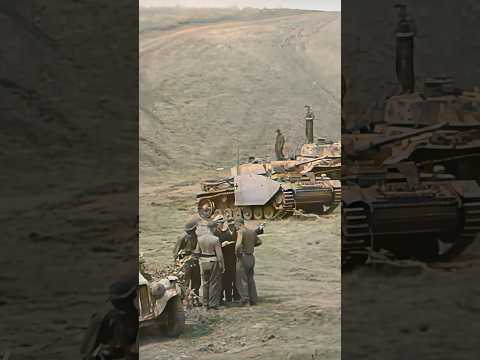
The morning of July 5, 1943, dawned with an ominous quiet on the southern flank of the Kursk salient. Field Marshal Erich von Manstein, the architect of Germany’s most brilliant campaigns, had massed his forces for a decisive blow. But this time, the Soviets were ready. The air crackled with tension as the first engines rumbled to life.
At the tip of the spear were the new heavy Tigers—42 of them—their 88mm guns gleaming under the summer sun. Flanked by medium Panthers and older Panzers, they formed a steel fist aimed at a small Russian village: Prokhorovka. “The initial target is a small Russian village named Prokhorovka,” a commander noted. “42 Tigers are followed by a further 450 tanks and assault guns across an 8-mile front.” The advance was slow, methodical—a creeping barrage of armor that seemed unstoppable.
But the Soviets had anticipated this. Deep minefields and anti-tank ditches slowed the German spearheads. Every kilometer was bought with blood. As the Tigers rumbled forward, they entered a killing zone. “It’s a slow, methodical advance,” one officer recalled, “but the enemy is everywhere.” The battle for Prokhorovka would become a cauldron of fire and steel, where the fate of the Eastern Front would be decided.
The German assault had begun, but the Soviet defense was about to unleash its own fury.
The Tigers ground forward, their engines roaring over the thunder of artillery. Suddenly, the earth shook as Soviet T-34s burst from concealed positions, their sloped armor deflecting German shells. “Enemy tanks—massive numbers, dead ahead!” a Panther commander screamed into the radio. The 8-mile front erupted into a swirling melee of fire and smoke.
Manstein watched from his command post, his face pale. He had expected a breakthrough, not this. The SS Panzer corps, once the pride of the Reich, was being swallowed by a sea of Soviet steel. “We’re taking heavy losses—the advance is stalled,” came the grim report. The methodical march had become a desperate fight for survival.
By nightfall, the fields around Prokhorovka were littered with burning wrecks. The Tigers had claimed many kills, but the Soviet tide seemed endless. “We cannot hold this pace,” a weary officer admitted. Manstein’s great gamble had met its match in the Russian steppe.
The battle would rage for days, but the initiative had slipped away. The southern spearhead, once so promising, was blunted. The war in the East would never be the same.
What would you have done differently if you were in Manstein’s position?
Report this article
Select a reason for reporting:






