The heat was biblical. It pressed down like a solid weight, shimmering in waves that turned the distant horizon liquid. Inside the repurposed cattle car, 43 German civilians waited, their wrists bound by rough hemp rope that had rubbed skin raw over three days of travel. Among them were 11 children, ages 4 to 14. They had been told this was a labor camp, that the restraints were necessary because enemy civilians could not be trusted. But when the doors finally screeched open, Texas sunlight flooded in—and shattered every assumption the regime had planted in their minds.
Maria Becker, twelve years old, held her younger brother’s hand so tightly her knuckles turned white. She remembered Hamburg before the war, before her father’s detention for working aboard merchant vessels. Now, squinting against the glare, she expected armed guards with hard faces. Instead, she saw cowboys.
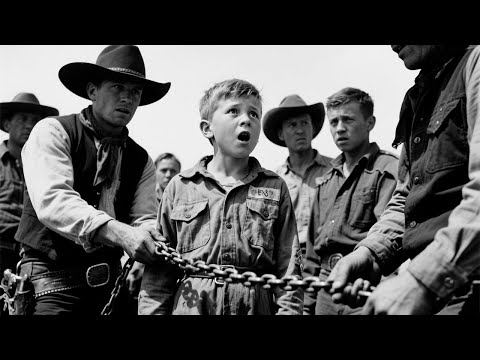
Real cowboys. Denim shirts, wide-brimmed hats, boots dusty from honest labor. One of them stepped forward—a man named Jack Morrison, foreman of the Three Peaks Ranch. He looked into the cattle car and saw rope-bound children staring back with fear. His jaw tightened.
“Why are the children restrained?” Morrison asked the young lieutenant beside him.
“Protocol, sir. Enemy civilians in transport require—”
“They are children. Remove the restraints or we don’t accept the work placement.”
The standoff lasted ten seconds. To Maria, it felt like hours. She watched the cowboy’s face, trying to understand why this American was angry about the ropes rather than indifferent to them.
The lieutenant wilted. “Fine. Cut them loose.”
A corporal climbed in with wire cutters, moving down the line. When he reached Carl, he hesitated at the raw abrasions on seven-year-old skin. “Sorry, kid,” he muttered, then cut the rope.
Maria felt the pressure release, blood returning with pins and needles. But something else shifted—a crack in the wall of fear and propaganda. The cowboy waited until all restraints were removed, then spoke loudly enough for everyone to hear.
“You folks are coming to work on my ranch. You’ll be fed properly, housed decently, and treated like human beings. Anyone have a problem with that?”
Silence. The prisoners had learned that silence was safer than speech. But Maria saw her mother’s shoulders relax slightly, saw adults exchange glances of cautious reassessment.
They climbed down one by one, assisted by cowboys who offered steady hands. Around them, the West Texas landscape stretched toward infinity—no fences, no guard towers, no barbed wire. Just open space and distant purple mountains and cowboys who looked more curious than hostile.
The transport to the ranch took an hour in open trucks that smelled of livestock and hay. Maria sat with Carl pressed against her side, watching the desert scroll past. Sparse vegetation, rocky ground, occasional cattle that looked up curiously. The cowboys spoke in relaxed tones, glancing at the German families without the weariness Maria had learned to associate with guards.
Three Peaks Ranch headquarters sat in a shallow valley where a creek provided water for livestock and a kitchen garden that looked improbably green against the desert palette. Everything was built from wood, weathered silver-gray by sun and wind.
Morrison gathered the new arrivals in the shade of the largest barn. His translator, a cowboy named Lee Hernandez, rendered his words into careful German.
“This is Three Peaks. You’ll be working here until the authorities decide otherwise. Everyone works, including children old enough to contribute safely. In exchange, you get housing, meals, and fair treatment.”
He paused, scanning the assembled faces. “I know what you were probably told about Americans—that we’re cruel, that we mistreat prisoners. I can’t speak for every camp. But on this ranch, we follow simple rules. Work hard, follow instructions, respect the property and the people. Do that and you’ll be treated as employees rather than prisoners.”
Maria watched her father, Ernst, standing near the front with an expression that mixed skepticism and desperate hope. Three years of captivity had taught him not to trust promises from authority figures. But the absence of guards, the casual demeanor of the cowboys, the fact that no one had weapons drawn—all of it contradicted expectations.
The families were assigned housing in a converted bunkhouse—simple but solid, with clean blankets, functioning lights, and windows that opened to catch evening breezes. The Crystal City Internment Center had been crowded barracks with minimal privacy. This was different.
That evening, Betty Morrison, Jack’s wife, served dinner in the main house kitchen: beef stew with fresh bread. Carl ate with focused intensity, as if the food might disappear. Maria ate more slowly, watching the interactions around them. Cowboys came and went, grabbing portions and exchanging casual greetings that gradually included the newcomers.
After dinner, Jack Morrison approached Ernst. Hernandez translated as Morrison explained the next day’s work assignments. The men would join cattle drive preparation. The women would help with food and garden work. The older children would assist where appropriate.
“And the younger ones?” Ernst asked, glancing at Carl.
“They’ll stay close to the house. Betty will keep an eye on them.” Morrison’s expression softened. “Look, I know you’re worried. You’re prisoners technically, even if we’re not treating you like criminals. But children are children. They need to feel safe, need to play sometimes, need to not carry all the weight their parents carry. We understand that here.”
Ernst nodded slowly, uncertain how to respond to unexpected consideration from an enemy rancher.
The first full day began at dawn. Maria woke to the sound of cattle lowing and the smell of coffee. She dressed in denim pants and a cotton shirt—practical garments that marked her as a worker rather than a prisoner. Men went to the corral, women to the kitchen and garden, children to small tasks. Maria found herself assigned to Betty Morrison, who spoke no German but communicated through demonstration and patient repetition.
By mid-morning, Carl had joined a group of younger children playing near the creek under supervision. Maria could hear their laughter—a sound so unexpected it made her pause each time. Children in the internment center had learned to be quiet, to not draw attention. Here, laughter was permitted.
After lunch, Morrison made an announcement. “This afternoon, some of you will learn to ride. We need everyone capable to help with the cattle drive next week, and that means sitting a horse for several hours a day.”
Maria felt her breath catch. Horses. The propaganda had said nothing about prisoners riding horses. Prisoners were kept confined, worked like animals—certainly not entrusted with animals.
Yet here was the ranch foreman offering to teach enemy civilians how to ride.
The riding lessons took place in a corral near the main barn. Six horses stood saddled and waiting—calm animals accustomed to inexperienced riders. Morrison and two other cowboys demonstrated mounting, basic rein control, how to sit balanced in the saddle. Then they began bringing prisoners forward one at a time.
Ernst went first. He climbed awkwardly into the saddle with Morrison’s assistance, the horse standing patient while he found his balance. Morrison walked alongside as the animal moved slowly around the corral.
“You’re doing fine,” Morrison said, his voice carrying the same tone he might use with his own daughters. “Just relax. Let the horse do the work.”
Maria watched her father’s expression shift from tension to something approaching wonder. Ernst had grown up in Hamburg’s industrial districts, had spent his adult life on ships and in port cities. He had never ridden a horse, had never expected to. Yet here he was atop an animal that represented everything the propaganda said Americans would deny to prisoners: trust, autonomy, dignity.
One by one, the others took their turns. Anna rode with visible nervousness that gradually eased into tentative confidence. Teenagers who had never seen horses except in photographs discovered the animals were less frightening than imagination suggested.
Then Morrison called Maria forward.
The horse was a bay mare named Rosie, fourteen years old and patient as stone. Morrison helped Maria mount, adjusting stirrups for her smaller frame. His hands were careful, impersonal, focused entirely on her safety.
“You’re lighter than she’s used to,” he told her through Hernandez. “She’ll barely notice you’re there. Just hold the reins gently. Keep your heels down and let her walk.”
Maria gathered the reins with trembling hands. The ground seemed very far away, the horse enormous beneath her. But Rosie started walking at Morrison’s quiet command, and Maria discovered the motion was rhythmic rather than frightening—that the horse responded to the slightest pressure, that this massive animal accepted her presence without resistance.
She rode around the corral three times, and with each circuit something inside her eased. The propaganda had been wrong. Not just about horses, but in a larger sense. If Americans treated prisoners well enough to teach them riding, what else had the propaganda misrepresented?
The question opened like a chasm beneath everything Maria had been taught.
That evening, Carl asked to try riding. He was small for seven, and the cowboys debated whether he was ready. But Morrison finally agreed, and they brought out the gentlest horse in the string—an old gelding named Dusty, who had taught three generations of Morrison children to ride.
Carl was lifted into the saddle, his small hands barely able to grip the reins. Dusty walked the corral with Morrison leading, and Carl’s face transformed completely. Fear gave way to joy, and he laughed—actually laughed—for the first time since the family’s detention began.
Maria felt tears sting her eyes, watching her brother experience something approaching happiness after so many months of fear and restriction.
After dinner, Ernst and Anna sat outside the bunkhouse in the cooling evening air. Maria joined them, Carl already asleep inside after the day’s excitement. The desert sky stretched overhead, stars emerging in patterns that looked the same regardless of which nation’s territory they illuminated.
“They let us ride horses,” Ernst said quietly, speaking to no one in particular. “They removed the ropes without being forced. They feed us properly. They treat us like human beings rather than enemies.”
Anna was silent for a moment. “Everything we were told was false,” she said finally. “Not exaggerated. Not partially true. Completely false.”
Maria understood what her mother meant. The propaganda’s predictions about American captivity had been comprehensive—stories of starvation, forced labor, casual cruelty, systematic dehumanization. Yet the reality at Three Peaks contradicted every element. The work was demanding but not punishing. The food was substantial and well-prepared. The cowboys were firm but not cruel.
And the treatment—removing restraints, teaching riding, allowing children to play—suggested a fundamentally different approach to captivity than propaganda had described.
The following weeks established routines that gradually normalized the surreal. The German families worked alongside ranch hands, their labor integrated into the seasonal rhythms that governed ranch life. Cattle drive preparation continued with prisoners learning skills that would have seemed absurd in any other context: roping, branding, the careful choreography of moving large herds across open range.
Maria discovered she had an aptitude for riding. Betty Morrison began giving her more responsibility, sending her on short errands that required horsemanship, trusting her with tasks that assumed competence rather than supervising her every movement. The trust felt almost dangerous. What if Maria failed? What if she proved the propaganda correct—that Germans couldn’t be trusted with responsibility?
But she didn’t fail. She completed each task successfully, and each success built confidence that captivity hadn’t completely destroyed.
Carl became unofficial mascot to the cowboys. They taught him rope tricks, showed him how to care for horses, included him in their casual conversations even though he understood perhaps one word in five. The attention wasn’t patronizing. It was the natural inclusion of a child into adult working life—the way rural communities had always educated the young through observation and participation.
One afternoon in early September, Maria was mucking out stalls when she heard raised voices near the barn entrance. She set down her pitchfork and crept toward the sound.
A military jeep had arrived from Fort Bliss. Two officers stood with Morrison, their posture stiff, their faces closed. Hernandez hovered nearby, ready to translate but clearly uncomfortable.
“The Geneva Convention requires—” one officer was saying.
“I know what it requires,” Morrison interrupted. “I’ve read the provisions. My prisoners are fed, housed, and given meaningful work. They receive medical care when needed. They’re not mistreated.”
“That’s not the issue. The issue is security. You’ve got enemy civilians riding horses across open range. Teaching them skills. Treating them like—”
“Like human beings?” Morrison’s voice was dangerously quiet. “That’s the complaint? That I’m treating them too well?”
The officer’s jaw tightened. “There are protocols for prisoner management. Procedures designed to prevent escape, to maintain proper hierarchy, to—”
“To remind them they’re defeated?” Morrison stepped closer, and Maria saw the officer flinch. “Let me tell you something about hierarchy. I’ve run this ranch for thirty years. I’ve managed men who’d rather fight than work, who’d steal from me soon as look at me. I’ve never once needed ropes or guard towers to get honest labor from people who felt respected.”
He gestured toward the bunkhouse, toward the corral where a German teenager was brushing down a horse. “Those people work harder than any hired hand I’ve had in years. They follow instructions. They don’t cause trouble. You know why? Because I treat them like they matter. Because I don’t humiliate them. Because I gave them a reason to cooperate rather than just following orders.”
The second officer, younger and clearly uncomfortable, spoke up. “Sir, with respect, these are enemy civilians. Some may harbor sympathies for the regime. We can’t simply—”
“Can’t simply what? Show them that Americans aren’t the monsters their propaganda described?” Morrison shook his head. “That’s exactly what we should be doing. Every day they’re here, they see that we’re not what they were told. That’s worth more than any propaganda campaign we could run. You want to win the peace? This is how you do it. One prisoner at a time.”
The officers exchanged glances. The older one consulted his clipboard, his authority visibly diminished.
“We’ll note your… methods… in our report,” he said stiffly.
“You do that,” Morrison replied. “And you can note that my methods are producing results. No escape attempts. No incidents. Cooperative workers who’ll go home with a different understanding of what America stands for. If that’s a problem, I’d like to see the regulation that says kindness is prohibited.”
The officers left without further argument. Maria watched the jeep disappear down the ranch road, dust trailing behind it, and felt something shift in her chest. She had witnessed an American arguing with other Americans on behalf of German prisoners. Had seen authority challenged not for cruelty but for insufficient kindness.
That night, she wrote in her diary. “The soldiers came today to complain that we are treated too well. I did not know such a thing was possible. In Germany, no one would question mistreatment of enemies. Here, a rancher defends our dignity as if it matters. I am beginning to think that everything I knew was wrong.”
The cattle drive began in mid-September. Twenty cowboys and twelve German men set out with a herd of eight hundred cattle, moving them to winter pasture forty miles south. Morrison had debated including prisoners in the drive, aware that isolation and freedom of movement created escape opportunities. But he had concluded that the Geneva Convention required offering meaningful work—and that treating the Germans as trusted employees rather than dangerous prisoners served better than constant suspicion.
Ernst rode beside Hernandez on the second day out. The landscape rolled past in endless variation on the same theme: scrub and rock, occasional water, sky that dominated everything. Ernst had not been on horseback for more than a few hours before the drive, yet here he was moving cattle across Texas as if he belonged in this strange new role.
“Why do you treat us this way?” Ernst asked during a rest break, speaking in the careful German Hernandez understood. “We’re enemies. You could work us harder, feed us less, keep us restrained. Why don’t you?”
Hernandez considered the question while rolling a cigarette. “Jack Morrison’s father fought in the last war,” he said finally. “Came back with stories about how prisoners were treated. Both sides—sometimes good, sometimes terrible. He told Jack that cruelty didn’t serve any purpose except making cruel men feel powerful. Jack listened.”
“But we’re Germans. We fought for—”
Hernandez cut him off gently. “You’re prisoners. You didn’t choose this war any more than I chose to be born in Texas. Morrison believes that how we treat you says more about us than about you. We can be cruel because we have power, or we can be decent because decency is its own justification. He chooses decency.”
Ernst had no response. The concept was so foreign to the regime’s teachings about power and weakness, about victors and defeated, about the natural hierarchy that supposedly governed human relations. Yet here was evidence that challenged those teachings. Americans who treated enemies with consideration—not because they were weak, but because they believed treating humans humanely was correct, regardless of circumstance.
The drive continued for six days. The German prisoners learned ranch work through immersion, making mistakes and correcting them, discovering that cowboys taught primarily through demonstration and expectation rather than explicit instruction. By the time the herd reached winter pasture and the crew returned to Three Peaks, Ernst and the other German men had become competent, if not expert, ranch hands.
Maria noticed the change in her father when the riders returned. He sat his horse naturally now, moved with the easy confidence of someone who had discovered unexpected capability. But more than physical skill, something had shifted in his bearing. The defeated posture captivity had imposed had begun to straighten. He looked less like a prisoner and more like a man who happened to be temporarily restricted.
October arrived with cooler temperatures. The families had been at Three Peaks for two months, and life had settled into patterns that felt almost normal. Children attended improvised lessons in the bunkhouse, taught by a former schoolteacher among the prisoners. Adults worked at assigned tasks, their labor compensated with small stipends the Geneva Convention required. Letters from Germany arrived sporadically, bearing news of destruction and chaos in the homeland that made Texas captivity seem almost preferable to European freedom.
One evening, Morrison gathered the German families with an announcement.
“The military has informed me that you’ll be repatriated in December,” he said through Hernandez. “The war is over. Europe is being rebuilt, and civilians are being returned to their home countries. You have about eight weeks left here.”
The news landed with complicated emotions. Return to Germany meant reunion with extended family, meant ending captivity restrictions, meant going home. But Germany was destroyed. Food was scarce, and the regime’s collapse had created chaos that occupation forces were still trying to manage.
And beyond practical concerns, something else troubled Maria. She had grown accustomed to Three Peaks. Had learned skills here. Had experienced treatment that contradicted everything she had been taught about enemies.
That night, Maria wrote in the small diary Betty Morrison had given her. The entry was in German, private thoughts she didn’t share even with her parents.
“We are leaving in December,” she wrote. “I should be happy to return home. But I keep thinking about the horses, about the cowboys who taught me riding without mockery, about Jack Morrison, who argued with soldiers to have our restraints removed. In Germany, I was taught that Americans were cruel and weak. But the Americans here have been kinder than many Germans I knew. I don’t know what to do with this knowledge.”
The final weeks at Three Peaks accelerated with the particular intensity that marks endings. Morrison increased training, teaching skills he thought might be useful in postwar Germany. The cowboys included prisoners in projects beyond basic labor: fence repair that required problem-solving, equipment maintenance that taught mechanical principles, land management that involved planning and foresight.
The instruction had practical value, but it also carried an implicit message: You are capable. You are trustworthy. You have value beyond your prisoner status.
Carl learned to rope. Not well—seven-year-olds rarely master skills that take years to develop—but well enough that the cowboys praised his progress and encouraged continued practice. He beamed under their attention, and Maria understood that her brother was experiencing what childhood should provide: adults who saw potential rather than burden, who invested time in teaching because they believed teaching mattered, who offered dignity to those who had none.
Betty Morrison worked with Anna and the other German women on practical skills for return to Europe. She taught food preservation, basic medicine, efficient household management under scarcity conditions. These lessons presumed that the women would face difficult circumstances in Germany, and Betty’s matter-of-fact approach to preparing them suggested that their well-being mattered even after they left Texas.
The day before departure, Morrison held a final gathering. He stood before the assembled families, hat in hand, speaking words that Hernandez rendered into German with unusual care.
“You came here as prisoners,” Morrison began. “The war had made us enemies, and you had every reason to expect harsh treatment. I want you to know that how we treated you was not charity or kindness in the sense of something extra we did. It was simply how human beings should treat other human beings. The fact that this needs explaining is an indictment of the times we live in.”
He paused, scanning faces that had become familiar over four months. “You’re going home to a destroyed country. It will be difficult—maybe more difficult than your time here. I can’t change that. But I hope you’ll remember that enemies don’t have to be inhuman to each other. That working together is possible even between people whose governments are at war. That dignity and respect aren’t rewards for good behavior. They’re inherent to being human.”
The speech was simple, unadorned, delivered by a man who spent more time with cattle than making speeches. But Maria felt every word settle into understanding that would shape how she interpreted the world. She had expected cruelty and received kindness. Had expected chains and received training. Had expected dehumanization and received the simple, powerful message: You’re not animals. You’re people, and people deserve to be treated accordingly.
The next morning, trucks carried the families back to Marfa station. Cowboys stood in loose formation to see them off—no speeches now, just handshakes that carried more weight than words. When Morrison reached Maria, he studied her a moment. “You’re a natural writer,” he said through Hernandez. “Don’t lose that. And remember—being kind to others when you have power over them isn’t weakness. It’s the only way to stay human in a world that gives you too many excuses not to be.”
Maria nodded, unable to speak around the tightness in her throat. The trucks departed, and Three Peaks shrank into the vast Texas dust until it disappeared.
Hamburg, when they reached it, was rubble and cellars and rationing that made ranch meals seem lavish. But Ernst repaired machinery with skills learned in Texas, Anna preserved food by Betty’s methods, and Maria kept her saddle blanket folded in a trunk through years of reconstruction.
She married, raised children, and told her daughter about cowboys who removed chains. “You had to live it,” she would say. “Had to feel the ropes come off.”
Jack Morrison died in 1963. The obituary noted, in three matter-of-fact paragraphs, that he had employed German detainees and treated them with respect exceeding standard practice. Maria wept in her Hamburg kitchen for a man who had taught her that enemies could be decent.
Betty wrote back: “Jack would have been pleased to know it mattered. He always said having power gave you two choices—diminish people, or remind them they were human.”
The saddle blanket passed to her daughter, then her granddaughter, each generation hearing the story. It seemed almost mythological now. But the blanket remained—physical evidence that in August 1945, cowboys removed chains that protocol required, and a rancher taught enemies to ride because everyone deserves dignity.
What would you have done, holding that wire cutter?
Report this article
Select a reason for reporting:






