1967. The war in Vietnam had been raging for years, but this year was different. This was the year North Vietnam decided to bleed America dry—not by winning battles, but by making every inch of Vietnamese soil cost more than America was willing to pay. Nowhere was that more brutal than along the DMZ, a strip of land that was anything but demilitarized. Here, in the shadow of the North Vietnamese border, American Marines fought some of the most savage, forgotten battles of the entire war.
Con Thien. Operation Buffalo. Operation Hickory. Operation Swift. Hill 488. Names that most Americans have never heard. Battles that never made the history books. Men who gave everything and came home to a country that had already moved on. This is the story of 1967—America’s bloodiest year along the DMZ—and the Marines who held the line.
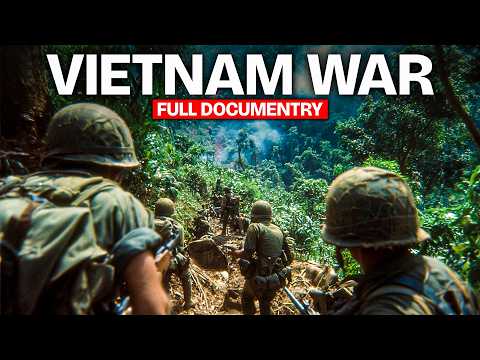
The Demilitarized Zone was supposed to be a buffer, a neutral strip separating North and South Vietnam. But in reality, it was one of the most dangerous places on earth. The North Vietnamese Army used it as a highway, a weapons depot, a sanctuary. They built bunkers, stored supplies, and launched attacks into the South—all while American forces were ordered to stay out. For two years, the Marines could only watch as the enemy moved freely through the DMZ, attacking from a place the Americans weren’t allowed to touch.
At the heart of this deadly battleground stood Con Thien—a small, heavily fortified outpost perched on three hills just two miles south of the DMZ. The Marines called it the Meat Grinder. From its summit, you could see for miles: east to the coast, north into North Vietnam. It was the perfect observation post, a fire base that could disrupt enemy infiltration routes. But that also made it a target. The North Vietnamese wanted Con Thien badly, and they were willing to pay any price to take it.
By mid-1967, intelligence reports showed the NVA massing thousands of troops near the DMZ. They were preparing for a major offensive—one that could threaten US bases and push deeper into South Vietnam. American commanders knew they couldn’t wait for the enemy to strike first. They had to take the fight to the NVA. That’s when Operation Kingfisher was launched: a large-scale sweep to engage and destroy enemy forces before they could attack.
But the NVA had been preparing for months. They had dug bunkers, tunnels, and deadly traps. The jungles and hedgerows provided perfect cover for ambushes. Their artillery, hidden just across the DMZ, could rain down on the Marines at any time. And the NVA would fight to the last man.
On the night of September 13th, 1967, the first major attack came. Under cover of darkness, a full company of North Vietnamese soldiers moved silently toward Con Thien’s northeastern perimeter. Their mission: break through, overrun the base, and wipe out the Marines inside. But the Marines were ready. As the first waves reached the perimeter, they were met with a wall of gunfire. Machine guns roared, rifles cracked, mortars exploded. The battle turned into chaos as Marines fought off wave after wave of enemy soldiers.
Then came the artillery. US howitzers from nearby firebases unleashed a devastating barrage. Explosions ripped through the jungle, sending dirt, shrapnel, and bodies flying. The enemy had no choice but to fall back into the darkness. The attack had failed. But it was just the beginning.
Just over a week later, on September 21st, the Marines took the fight to the enemy. Second Battalion, Fourth Marines launched a sweep south of the DMZ, east of Con Thien. Three companies—E, F, and G—moved through dense hedgerows, a terrain perfect for an ambush. And that’s exactly what was waiting for them. Suddenly, machine guns opened fire from multiple directions. Mortars and RPGs exploded all around. The NVA had set a perfect trap—a deadly pinwheel ambush, surrounding the Marines in a crossfire of bullets and shrapnel.
Marines took cover in the mud, returning fire as best they could. But the enemy was everywhere. Snipers picked off squad leaders. Explosions shattered trees, sending deadly splinters into the air. Despite the chaos, the Marines fought back with everything they had. Close air support was called in. Jets screamed overhead, dropping bombs dangerously close to Marine positions. Helicopter gunships unleashed rockets and machine gun fire. The battlefield was on fire.
By nightfall, the Marines managed to break free and fall back, but at a terrible cost. 16 Marines were killed. 118 were wounded. The NVA suffered about 39 confirmed dead, but their true losses remained unknown. Worst of all, 15 Marine bodies had to be left behind—a gut-wrenching reality of war. The survivors had no choice but to withdraw, leaving their fallen brothers in enemy-controlled territory. It would take weeks before they could return to recover them.
This battle was a harsh lesson in the DMZ’s unforgiving terrain. The NVA were not just hiding. They were waiting, planning, and striking with deadly precision. And the worst was still to come.
The night of October 14th, 1967, started like any other for the Marines of 2nd Battalion, 4th Marines, stationed near the Washout Bridge—a key position between Con Thien and Strong Point C2. They settled in as darkness fell, unaware that the NVA had already zeroed every gun in on their coordinates. At exactly 1:25 a.m., the silence shattered.
A massive artillery barrage came crashing down. Explosions ripped through the night sky, throwing dirt, debris, and shrapnel in every direction. The enemy’s heavy guns, positioned just across the DMZ, rained fire for nearly an hour—softening up the Marines for what was coming next. Under the cover of the bombardment, hundreds of NVA soldiers crept forward, using the darkness to their advantage.
At 2:30 a.m., they launched a full-scale assault, striking the flank of Company G with terrifying force. RPGs blasted through machine gun nests. Enemy sappers breached the perimeter. In the chaos, Company G’s command post was overrun—the company commander, platoon leaders, and forward observer were all killed, leaving the unit leaderless. Hand-to-hand combat erupted, Marines and NVA soldiers fighting at close range with bayonets, knives, and rifle butts.
But the Marines refused to break. Company F rushed in to reinforce the battered defenders. At the same time, AC-47 Spooky gunships arrived overhead, spraying thousands of rounds per minute into enemy positions. The tide of the battle slowly began to turn. By 4:30 a.m., the NVA were forced to retreat.
The ground was littered with bodies, both American and enemy. The Marines had held their ground, but at a devastating cost. 21 Marines were killed. 23 more were wounded. The NVA left behind 24 confirmed dead, though their true losses were likely much higher. This attack proved just how far the enemy was willing to go—attacking in waves, taking massive casualties, and still coming. But it also proved the determination and grit of the US Marines, who held the line despite being outnumbered and nearly overwhelmed.
By late October, Operation Kingfisher was nearing its final phase. The Marines had fought off wave after wave of NVA assaults, but the enemy was still out there—hiding, waiting, ready to strike. On October 25th, 2nd Battalion, 4th Marines launched a final sweep north from Con Thien along Route 561, pushing toward the DMZ.
The terrain was thick with brush, making visibility difficult. It was the perfect place for an ambush, but for most of the day, no contact was made. Then as night fell, the sky lit up with fire. NVA artillery and rockets rained down on the Marines’ positions, pounding them for hours. The battalion executive officer was killed, and even the commanding officer, Lieutenant Colonel James Hammond, was wounded. Despite the chaos, the Marines held their ground.
By October 26th, they continued their advance, pushing deeper into enemy territory. As they moved forward, NVA mortar and small arms fire erupted. Helicopters arrived to evacuate the wounded, but the enemy was ready. An NVA machine gun crew shot down a UH-34 transport chopper, killing the pilot and door gunner. A second helicopter was also hit, crash landing nearby.
Realizing a bigger attack might be coming, Lieutenant Colonel John Studt, who took over command, called for reinforcements. Company F was ordered to move in, along with two companies from 3rd Battalion, 3rd Marines. The night of October 26th to 27th was one of constant battle. The NVA probed the Marine lines, launching several ground attacks under the cover of mortar fire. The Marines fought back with machine guns, grenades, and close air support, pushing back every enemy assault.
By 2:00 a.m. on October 27th, the enemy finally withdrew. At first light, Marines found 19 dead NVA soldiers around their perimeter, though the true number was likely much higher. The Marines suffered eight killed and 45 wounded over the two-day battle, but they had held the line once again.
This marked the last major battle of Operation Kingfisher. The fighting had been brutal, costly, and relentless—but the Marines had stood their ground. Just days later, on October 31st, 1967, Operation Kingfisher officially ended. But the war was far from over.
After three months of brutal combat, Operation Kingfisher officially ended on October 31st, 1967. The Marines had fought through deadly ambushes, constant artillery bombardments, and relentless NVA attacks. They had prevented the enemy from launching a major offensive south of the DMZ—inflicting over 1,100 confirmed enemy dead—but at a devastating cost: 340 Marines killed, 1,461 wounded.
Some died in firefights. Others in artillery barrages. Some were left behind on the battlefield, their bodies recovered weeks later. The scars of Kingfisher would remain forever with those who survived.
Strategically, the war continued. Even before Kingfisher ended, the Marines transitioned into Operation Kentucky—another search and destroy mission in the same area. The NVA still controlled the northern jungle, and US forces would have to keep fighting for every inch of ground.
But the story of 1967 along the DMZ was never just about Kingfisher. It was about Con Thien, the Meat Grinder, where 1,200 enemy shells fell each day at the peak of the siege. It was about Operation Buffalo, where the 1st Battalion, 9th Marines—the Walking Dead—walked into a perfect ambush and lost 159 men in two days. It was about Operation Hickory, the first American incursion into the DMZ, and Operation Swift, eleven days of hell in the Que Son Valley. It was about Hill 488, where eighteen Marines held off two hundred enemy soldiers and refused to surrender.
These were America’s bloodiest battles of the year—and most Americans have never heard their names. The men who fought them came home to a country that had already moved on, a nation divided and weary, unwilling to look too closely at what had been asked of its sons.
By the end of 1967, the body counts looked good on paper. Enemy casualties were high. Commanders told Washington the war was being won. They were wrong. Just weeks later, the Tet Offensive would shatter that illusion.
And the men who had bled for Con Thien, for Buffalo, for Swift, for Hill 488, would watch their sacrifice get buried under the weight of a war nobody wanted to admit was unwinnable. Their names are not in the history books. Their battles are not in the movies. But they were real—and they deserved better.
To all the veterans who served in Vietnam, we honor you. Your courage will never be forgotten. History must never be forgotten.
So here is the question we leave you with: if these men held the line against impossible odds, what will you do to make sure their story is never buried again? Tell us in the comments—and if this story moved you, share it. Because remembrance is the only honor we can still give them.
Report this article
Select a reason for reporting:






