January 25, 1969. A rice paddy in the Mekong Delta. Ninety American infantrymen are pinned down in the open. They’ve been there for two hours. Five are dead, including their commander. The rest are out of ammunition, taking heavy fire from a fortified North Vietnamese bunker they can’t see and can’t destroy. Cobra gunships have tried, but they can’t get the right angle without killing the Americans huddled just fifty meters away. Artillery can’t reach it. The infantry can’t maneuver. They’re dying in place, and everyone watching from the air knows it.
Then a white Stetson cavalry hat appeared from the door of an OH-6 Loach scout helicopter. First Lieutenant Alan “Ace” Cozzalio dropped his bird to ten feet above the enemy bunker. The rotor wash kicked up dust from the sandbags. Machine-gun fire shattered the cockpit glass. He didn’t back off. He didn’t fire rockets from a safe distance. He was landing on top of the bunker.
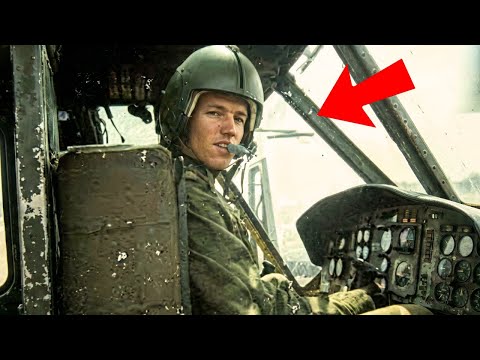
His crew chief jumped out, tossed a grenade through the firing slit, and scrambled back. Cozzalio pulled pitch and climbed as the bunker exploded beneath him. Ninety men in that rice paddy lived because a helicopter pilot from an Oregon cattle ranch decided the rulebook was nonsense. And sometimes, landing on the problem is the best solution.
This is the story of the most unconventional helicopter pilot of the Vietnam War. The man who went AWOL from a hospital to return to combat. The man who captured enemy soldiers with a Civil War cavalry saber. The man who was shot down six times in eighteen months and kept coming back. The cowboy who turned a scout helicopter into a weapon of pure chaos.
Alan Cozzalio was never supposed to be a pilot. He was supposed to raise cattle. Born in 1946 on a ranch along the California-Oregon border, he grew up in the saddle—self-reliant, the kind who fixed his own problems. In 1966, he was drafted. Instead of resisting, he leaned in. He attended Armor Officer Candidate School at Fort Knox, earned a commission as a second lieutenant, then volunteered for helicopter flight school.
Flying came naturally. Not because he was a genius, but because helicopters and horses work on the same principle. You don’t fight them. You work with them. You feel what they’re telling you.
Cozzalio graduated flight school in October 1967 and was sent to Vietnam two months later. He arrived at Dong Tam in December 1967, assigned to D Troop, 3rd Squadron, 5th Cavalry Regiment, 9th Infantry Division, operating in the Mekong Delta. The unit was nicknamed the “Illegal Lancers” because they weren’t attached to a cavalry division. They were orphans operating independently, and it suited them perfectly.
They had a proud tradition: yellow scarves and white Stetson hats, the old cavalry look. Most pilots wore them casually, a nod to history. Cozzalio went further. He showed up in a full 1860s cavalry uniform—a blue coat with brass buttons, a yellow silk scarf, a white Stetson, and an original Civil War saber hooked to his belt. Not for show. For use.
While other helicopter pilots saw themselves as modern aviators, Cozzalio saw himself as an extension of something older. The men who fought on horseback weren’t afraid to close with the enemy. They attacked with drawn sabers, trusting speed and audacity to carry them through. Cozzalio believed a helicopter was just a faster horse. And if the mission required getting closer than doctrine allowed—closer than seemed reasonable—then that’s what you did.
His call sign was “Warwagon 10.” It fit, because what Cozzalio did in the OH-6 Loach wasn’t reconnaissance. It was combat. But first, he had to survive long enough to learn the aircraft. And that almost didn’t happen.
The Hughes OH-6 Cayuse, nicknamed the “Loach,” was a small helicopter. Two seats, a bubble canopy like a flying fishbowl. It was designed for observation. Fly high, stay safe, spot the enemy, call in support. Cozzalio ignored all of that. He flew the Loach at treetop level—sometimes lower. He skimmed rice paddies so low the rotor wash carved the water, exposing hidden sampans or tunnel entrances beneath. He hovered next to canals, close enough for his door gunner to see enemy spider holes. Close enough that if someone shot at him, the muzzle flash was three meters away.
This wasn’t bravery. It was tactical logic. The OH-6 was small and nimble. At low altitude, it could maneuver faster than an enemy gunner could track. At high altitude, it was a slow target. Cozzalio’s theory was simple: get close enough to scare the enemy, degrade their aim, expose their position, then let the Cobras destroy them. These tactics became known as Pink Team operations. The scout, the White Team, would fly low to draw fire. The gunships, the Red Team, would circle high and destroy anything that shot at the scout. Pink Team—white and red together.
The plan worked, but it wasn’t without cost. In his first eighteen hours of combat flying, Cozzalio was shot down in December 1967. His helicopter crashed. He suffered a broken jaw and other serious injuries that required evacuation to the 106th General Hospital in Japan for surgery. The standard procedure was to recover in Japan, then return to the United States. The war was over for him.
Cozzalio didn’t agree with that plan. With his jaw still wired shut, he walked out of the hospital, found a C-130 cargo plane heading to Vietnam, and climbed aboard. Technically, he was AWOL—a crime punishable by court-martial. He didn’t care. His unit was in a fight. He was a pilot. The math was simple.
He landed at Dong Tam, walked into the operations tent with his jaw still wired shut, and reported for duty. His commanders could have court-martialed him. Instead, they put him back in the cockpit. Because in a war short on skilled aviators, a man willing to go AWOL from a hospital to fly combat missions was exactly the kind of crazy you needed.
Over the next eighteen months, Cozzalio was shot down five more times and walked away from all of them. The crews started calling him “the Unkillable”—not because he never got hit, but because he never stayed down. Lieutenant Colonel Hugh L. Mills Jr., a fellow scout pilot who was himself shot down sixteen times, knew Cozzalio personally. Years later, he said: “Ace was a true cavalier. He lived and breathed cavalry, embraced the historical elements of the branch. It was not unusual for him to walk around the base camp in the full 1873 uniform, including an 1860 saber. Some thought he was eccentric. I saw him as a role model.”
In September 1968, Cozzalio spotted an enemy soldier hiding in a canal. The standard procedure: mark the location, move on. Cozzalio landed his Loach, put on his Stetson, drew his Civil War saber, and waded into the muddy water, probing the bottom with the blade until he felt something solid. A man surfaced, gasping. He’d been breathing through a reed—a trick the Viet Cong used to hide from helicopters. Cozzalio marched him to the helicopter at saber point, made him stand on the skid, and flew him to base for interrogation. There’s a photograph. It actually happened. When asked why he went to such lengths, Cozzalio said: “The scouts got soda pop for prisoners. We got pretty good at it.”
But that was a sideshow. The main event—the operation that defined his entire career—happened four months later. On January 25, 1969, Charlie Company, 5th Battalion, 60th Infantry was crossing an open rice paddy near the village of Phu My when a fortified North Vietnamese bunker opened fire. The company commander was killed instantly. Four more soldiers fell in the first burst. The rest hit the dirt and couldn’t move.
For two hours, they were pinned. Every time someone tried to move, the bunker’s machine gun cut them down. They tried everything. Even the Cobra gunships, which had made strafing runs dangerously close to friendlies, had to abort. The artillery couldn’t reach the angle. The bunker was dug in deep and fortified. The infantry tried to maneuver. Three more men were hit. Ammunition was running low. The wounded were bleeding into the dirt, and the bunker kept firing.
Then Cozzalio arrived in his Cobra gunship. He circled once, twice, looking at the geometry of the problem. The bunker was fifty meters from the Americans. Any explosives powerful enough to destroy it would kill the men it was pinning down. Conventional weapons wouldn’t work. Rockets, too wide a blast radius. Artillery, too imprecise at that angle. But there was one weapon that could get close enough.
Cozzalio landed his Cobra, got out, walked to one of the OH-6 Loaches from the scout section, got in, and took off. He brought the little observation helicopter back to the battlefield and dropped it to ten feet above the bunker. Machine-gun fire shredded the plastic bubble. Rounds punched through the thin aluminum skin. Men on the ground watched in horror as the helicopter descended directly toward the bunker that was killing them. One later said it looked like a man committing slow-motion suicide.
Cozzalio kept descending. The rotor wash kicked up dust and debris from the sandbags. The bunker’s machine gun was firing directly at him, from point-blank range. Tracers flashed past the cockpit. The noise inside that little helicopter must have been deafening. Rounds tearing metal, the engine screaming, rotor blades chopping the air just feet above enemy soldiers.
Then he was down. The Loach’s skids settled onto the sandbags. His crew chief, the door gunner, kicked open the side door, jumped onto the roof of the bunker, pulled a grenade from his vest, pulled the pin, and dropped it through the firing slit. Then he leaped back into the helicopter. Cozzalio pulled pitch. The Loach lifted off. The bunker exploded beneath them. The blast shook the helicopter. Debris and smoke billowed from the fortification, then silence. The machine gun stopped. The bunker was gone. Ninety men in the rice paddy stopped breathing for a moment, then realized they were still alive. The thing that had been killing them for two hours had just been destroyed by a helicopter pilot who landed on top of it.
Cozzalio didn’t leave. He landed again, this time next to the pinned infantry, and picked up the ground commander to brief him on the battlefield from his aerial perspective—other enemy positions, the best way to attack. Then he returned to his helicopter, switched to his Cobra gunship, and provided fire support until the infantry secured the area.
Why did the plan work? Because Cozzalio understood something most people miss. The bunker’s machine gun was designed to fire horizontally across the rice paddy, not vertically at a helicopter ten feet above it. The gun couldn’t elevate enough. The firing slit faced outward, not upward. And the crew inside had never trained for a helicopter landing on their roof. It wasn’t suicide. It was geometry. And Cozzalio had calculated it perfectly during the thirty seconds it took his helicopter to circle the battlefield.
A general, watching the engagement from a command-and-control helicopter, landed immediately after the battle ended. He promoted Cozzalio from first lieutenant to captain on the spot, awarded him the Silver Star in the field, and recommended him for the Distinguished Service Cross. Cozzalio received the DSC on May 7, 1969—the nation’s second-highest award for valor. The citation described his actions as “extraordinary heroism,” which was an understatement.
In 2024, the survivors of Charlie Company wrote a letter to the U.S. Senate demanding that Cozzalio’s Distinguished Service Cross be upgraded to the Medal of Honor, posthumously. They wrote: “We owe our lives to 1st Lt. Ace Cozzalio. He attacked a fortified bunker with a scout helicopter when all other options had failed. We were almost out of ammunition and time. Without him, none of us would have made it home.” Eighteen signatures. Eighteen men alive today because a helicopter pilot decided the safe move was to land on the enemy.
Cozzalio served two tours in Vietnam, eighteen months total, logging over a thousand combat flight hours in his first year alone. He recorded more than 2,100 flight hours in-country, most at altitudes where any mechanical failure meant instant death. He earned every valor award the U.S. Army can bestow except the Medal of Honor: the Distinguished Service Cross, the Silver Star, four Distinguished Flying Crosses, the Soldier’s Medal for rescuing pilots from a burning helicopter crash, two Purple Hearts, forty-eight Air Medals, and two Bronze Stars.
His war didn’t end, but the Army decided he was too valuable—and too reckless—to send back. His request for a third tour was denied. Officially, the reason was that he’d crossed the DMZ multiple times into Cambodia and Laos to pursue enemy forces in areas American helicopters weren’t supposed to reach. In short, he was effective, but he didn’t follow the rules. And the rules said Ace Cozzalio wasn’t going back to Vietnam.
He stayed in the Army, rose to lieutenant colonel, and commanded the 4th Air Training Battalion at Fort Rucker, Alabama, where he helped develop the combat aviation manual still in use today. The scout tactics he pioneered in the Mekong Delta—low, aggressive, using the helicopter as bait—became standard operating procedure for Army aviation. Even stateside, he kept the persona. When he attended the Command and General Staff College at Fort Leavenworth, every other officer carried a briefcase. Cozzalio carried saddlebags. When he attended civilian events, he wore the 1860s cavalry uniform. He was always a cowboy.
But the war took something from him that didn’t show up for years. In 1986, Cozzalio was diagnosed with cardiomyopathy, a rare virus that causes gradual weakening of the heart muscle. The Army medically retired him after twenty years of service. He returned to California, competed in team roping, taught at the local college, and attended events with his brother. His heart kept deteriorating. By 1993, he could barely do anything. He moved to Portland, Oregon, waiting for a heart transplant.
On April 27, he received a new heart. The surgery went well. The doctors were optimistic. The next day, April 30, his new heart failed from a massive heart attack. He died at forty-six. On April 30—the same day Saigon fell in 1975, the same day the Vietnam War officially ended. Cozzalio had survived death six times in Vietnam, survived crashes that should have killed him, lived through a war that broke thousands of men, but his heart—the one that drove him to escape hospitals, land on bunkers, and charge into fire when everyone else pulled back—couldn’t survive peace.
In 2020, the Army Aviation Association of America inducted Alan “Ace” Cozzalio into the Army Aviation Hall of Fame. The citation praised his combat heroism but focused on something else: his role in developing scout tactics. And in a testament to the spirit of Army aviation—past, present, and future—there’s a memorial wall at the Living Memorial Sculpture Garden in Weed, California. Cozzalio helped build it before he died. A large bronze plaque bearing his name sits at the center of the wall’s Hot LZ section, dedicated to veterans of all conflicts.
The Pentagon is still reviewing whether to upgrade his Distinguished Service Cross to the Medal of Honor. Senators from several states have endorsed it. Dozens of surviving soldiers from Charlie Company support it. Generals who served in Vietnam support it. And whether it happens or not, the men who flew with him already know the truth.
Cozzalio redefined the scout helicopter’s role. He turned a fragile observation platform into an attack weapon. He taught himself to fly closer to the enemy than anyone thought possible, survived being shot down six times, and saved ninety men by landing on the thing that was trying to kill them. He did it all wearing a Stetson and carrying a saber. Because to him, being a pilot wasn’t about technology or tactics. It was about the same thing that drove cavalrymen to charge enemy lines on horseback a hundred years earlier: the willingness to close with the enemy, to take the personal risk so others don’t have to, and to never, ever quit.
The OH-6 Loach is still in service today as the MH-6 Little Bird. Special operations pilots fly it into combat using the same low-level tactics Cozzalio pioneered in 1968. They don’t wear Stetsons. They don’t carry sabers. But they fly the way he taught them: fast, low, and aggressive. Always a cowboy, always a cavalier, always leading the charge.
Cozzalio died at forty-six, but the spirit he brought to the battlefield—his refusal to accept that some things are impossible, his willingness to meet the problem head-on when everyone else runs—doesn’t die. It just finds a new helicopter and a new pilot willing to fly it lower than anyone else dares.
So here’s the question: In a world that increasingly values safety and protocol over audacity and instinct, is there still room for the Ace Cozzalios—the ones who ignore the rulebook and land on the problem? Or have we sanitized war, and life, to the point where the boldest among us have nowhere left to fly?
Report this article
Select a reason for reporting:






