In the rugged canyons of the Chiricahua Mountains, a storm was brewing. It was October 1860, and a young Apache chief named Cochise had just been betrayed. Invited to a peaceful conference under a white flag, he was instead arrested by a brash young Army lieutenant, George Bascom. Cochise escaped, but the damage was done. From that moment, he vowed a war of extermination against all white men in Arizona—a vow that would plunge the territory into a decade of bloodshed and terror.
Cochise was no ordinary warrior. Born around 1815, he had risen to become the chief of the Chiricahua Apache, a man of striking presence—over six feet tall, with long black hair and a commanding dignity. For years, he had been friendly to Americans, even protecting immigrant trains from other tribes. But the Bascom Affair changed everything. “I am no prisoner of yours!” he had roared as he slashed his way out of a tent, wounded but unbroken. The betrayal festered, and when Bascom hanged several of Cochise’s relatives in retaliation, the chief’s rage became absolute.
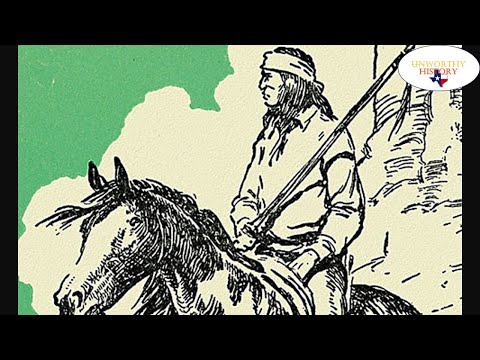
For the next twelve years, Cochise and his warriors waged a guerrilla war that baffled the U.S. Army. They knew every trail, every crevice, every hidden spring. From their strongholds high in the Dragoon and Chiricahua mountains, they launched lightning raids—ambushing wagon trains, stampeding cattle, and vanishing into the rocks before soldiers could respond. “He held the armed forces of the United States at bay for more than ten years,” one historian noted. Settlers lived in constant fear; entire valleys were abandoned. The mountains were rich in gold and silver, but mining them was suicide. The mail stages stopped running. Arizona was paralyzed.
Yet Cochise was not merely a ruthless fighter. He was a man of complex honor. He admired truthfulness and straight dealing, and he despised deceit. When a white man named Tom Gardner tried to parlay with him in bad faith, Cochise shot him without hesitation—but when Bill Kirkland, a wood hauler, showed courage, Cochise let him go. He could be generous, even kind, as when he returned a captive Mexican boy to a trader who had shamed him. But above all, he was a leader who inspired loyalty. His warriors followed him not out of fear, but out of respect.
As the years passed, the war took its toll. President Grant’s peace policy had pacified most tribes, but Cochise remained unreachable. Commissioners and generals tried and failed to find him. It was not until a tall, red-haired former steamboat captain named Thomas J. Jeffords—a man the Apaches called “Red Whiskers”—rode alone into Cochise’s camp that a crack appeared in the wall of hostility. Jeffords’s courage and frankness won Cochise’s trust, and the two became blood brothers. But even that bond would be tested as the government prepared one final attempt at peace.
General Oliver O. Howard, a devout and determined peace commissioner, was sent to find Cochise. With Jeffords as his guide, he journeyed deep into the Dragoon Mountains, following smoke signals and Apache scouts. After days of tense waiting, Cochise finally appeared, resplendent in war paint, and agreed to talk. The negotiations would be fraught with suspicion and ceremony, but for the first time in years, there was a glimmer of hope. Yet the question remained: could a lasting peace be forged from so much blood and betrayal?
The council that followed was unlike anything General Howard had ever witnessed. Cochise sat upon a folded blanket, his warriors arranged in a wide semicircle behind him, and he spoke for hours about the wrongs his people had suffered. He recounted the treachery at Apache Pass, the hanging of his relatives, the broken promises of white men. Howard listened without interruption, and when Cochise finished, the general admitted that his grievances were just.
Then came the demand that would define the peace. “Give me Apache Pass,” Cochise said. “Give me that, and I will protect all the roads. I will see that nobody’s property is taken by Indians.” Howard proposed instead a reservation on the Rio Grande, but Cochise refused. The mountains of his birth were not negotiable. In the end, Howard agreed to a reservation encompassing the Chiricahua strongholds—the first time the government had ever granted a tribe its homeland by treaty.
But Cochise had one more condition. He pointed to Jeffords. “He must be the agent,” he declared. Jeffords protested bitterly—he knew the thankless difficulty of the office and the financial ruin it would bring. Yet Cochise was inflexible, and Jeffords, bound by blood brotherhood, consented on one condition: absolute authority, free from political interference.
That evening, on a small plateau near Howard’s camp, the Apaches held a ceremony Jeffords later called a prayer meeting. The women began a low, muffled moaning, imitating the wind, and then the singing rose—higher and higher, a wild, eerie chorus that sent chills through the white men. A tall Apache with braids down his back came running toward Howard and invited the whites to join the gathering.
When the singing ceased, an authoritative voice silenced the rest. It was Cochise, speaking in a mournful recitative, discussing the whole matter with his people. Howard and his companions waited in anxious silence, unable to read the mood. Then Cochise rendered the decision: “Hereafter the white man and the Indian are to drink of the same water, eat of the same bread, and be at peace.”
The next day the party set out for Dragoon Springs, where the soldiers from Camp Bowie would meet them for the final formalities. Cochise rode at the head of his mounted warriors, his face hideous with fresh vermilion war paint, and as the column of blue-coated soldiers appeared in the plain below, a dangerous tension rippled through the Indian ranks. Any small incident could have sparked a massacre.
But Cochise, with consummate skill, had already positioned his men so that every one of them could have vanished into a ravine within two minutes and escaped behind a protecting hill within three. It was a display of wary genius—and yet the moment passed. The peace was completed without a shot.
When all was finished and Howard prepared to leave for home, Cochise looked at him steadily, then stepped forward and put his arms around the general. “Goodbye,” he said in plain English. It was the only word of the language he offered, and it carried the weight of a nation’s exhausted hope.
With the treaty signed, Cochise kept his word. The roads through Apache Pass reopened, and for a time, the mail stages ran unmolested. Jeffords, true to his promise, took charge as Indian agent, and the Chiricahua reservation became a haven—not just for Cochise’s people, but for other Apache bands seeking refuge from the relentless pursuit of the Army. Yet peace on the frontier was fragile, and the old chief knew it.
Cochise settled into the life of a reservation leader, but his authority was never absolute. Young warriors, restless and hungry for glory, chafed under the new constraints. They remembered the old days of raid and plunder, and some began to slip away from the reservation to join renegade bands in Mexico. Cochise, aging and plagued by illness, could not always rein them in. “I have tried to keep the peace,” he told Jeffords wearily, “but the young men do not always listen.”
Meanwhile, the government’s promises began to fray. Politicians in Washington, pressured by settlers and miners who coveted Apache land, started to question the reservation’s boundaries. Rumors spread that the Chiricahua stronghold would be moved, its people relocated to a barren stretch of the Rio Grande. Cochise, who had fought for a decade to keep his homeland, watched these developments with growing despair. He had trusted Howard and Jeffords, but he knew that treaties were only as good as the men who honored them.
One evening, as the sun set over the Dragoon Mountains, Cochise summoned Jeffords to his wikiup. The old chief lay on a bed of robes, his once-powerful frame gaunt with illness. His eyes, however, still burned with the old fire. “I have been thinking of the white man’s God,” he said slowly. “Do you think we will meet again, after death?” Jeffords, taken aback, admitted he did not know. Cochise nodded, as if he had expected that answer. “It is not clear to my mind,” he murmured, “but I think we will, somewhere up there.”
The two blood brothers sat in silence for a long while, the weight of their shared history hanging between them. Jeffords had seen Cochise at his worst—the torture of captives, the merciless raids—and at his best, the fierce loyalty, the unyielding sense of honor. Now, at the end, they were simply two men pondering the great mystery that had confounded sages and savages alike.
The next morning, Cochise asked his warriors to carry him up the western slope of his stronghold. He wanted to see the sun rise over the eastern ridges one last time. They laid him on a blanket, and as the first light touched the peaks, he closed his eyes. He died at precisely ten o’clock, just as he had predicted. Jeffords, who had ridden through the night to fetch the Army surgeon, returned too late. “He knew,” Jeffords later said. “He knew when he would die, and he was not afraid.”
Cochise was buried somewhere in the Mason range, near the entrance to his beloved stronghold. The exact spot was never revealed. His warriors rode their horses over the grave, trampling the earth until no trace remained. Jeffords alone knew the location, and he carried the secret to his own grave, forty years later. “He was a man of distinction,” Howard wrote in his memoirs. “Born and bred a savage, yet he had the same qualities of person, intellect, and moral force that mark our leaders among the civilized nations of men.”
The peace Cochise had won did not long outlive him. Within a few years of his death in 1874, the government broke its word yet again. The Chiricahua reservation was dissolved, and his people were driven from their mountain strongholds to the barren flats of San Carlos. Jeffords, sickened by the betrayal, resigned his post in disgust. “I gave my word to Cochise,” he said, “and the government broke it for me.”
Yet the old chief’s legend refused to die. The Apaches who had followed him carried his name into exile, whispering of the days when one man had held an empire at bay. And in the canyons of the Dragoon Mountains, where the wind still moans through the rocks, some say the spirit of Cochise lingers—watching, waiting, remembering.
He had loved and hated, shown cruelty and mercy, and pondered the mystery of death with the same fierce honesty with which he had lived. In the end, he asked only to see the sun rise one last time over the land that was his. He got his wish—and then he was gone, buried in a grave no white man would ever find.
Was Cochise a savage, as his enemies called him—or a leader of rare honor, betrayed by men who wore the cloak of civilization? What do you think? Share your thoughts in the comments below.
Report this article
Select a reason for reporting:






