Lieutenant Raymond Holt pressed his headphones tighter, adjusting the frequency for the third time. The radio was functioning perfectly—no static, no interference. The transmission was coming through in plain English, unencrypted. Yet he could not understand a single word. He rewound the tape, played it again. The voice was clearly speaking English, Australian English. The vowels were recognizable. The cadence was human. But the content might as well have been Mandarin. After 18 months of cracking Imperial Japanese naval codes, Holt had never felt such pure confusion.
It was 1942, at a joint Allied signals monitoring station in the South Pacific. Holt slid the transcript across the desk to his supervisor, Major Charles Whitfield. “What language is this?” Whitfield asked after reading it three times. “English, sir. Australian English,” Holt replied. Whitfield stared at the words—individual terms he could identify, but strung together they formed something that resisted comprehension like a locked door resists a shoulder. “Get me someone who speaks Australian,” he said, not joking.
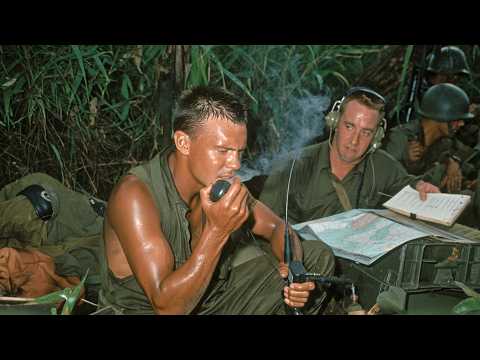
What happened next spans two wars, three decades, and one of the most accidentally brilliant communications advantages in modern military history. The Australian military never set out to create an unbreakable code. They never designed a cipher or developed a substitution system. They simply talked the way Australians talk, and it broke the brains of every signals intelligence team that tried to follow along—allied and enemy alike.
To understand what defeated Lieutenant Holt that night, you need to understand what Australian English actually is. Not the sanitized export version with a few g’days sprinkled in for flavor. The real thing: the dense, evolving, self-referencing, deliberately obscure language that Australian soldiers used among themselves. It was not slang in the way Americans understood slang. American slang was informal vocabulary. Australian slang was a parallel language with its own grammar, logic, and rules of construction—invisible to outsiders, instinctive to insiders. And it moved constantly. A term that meant one thing in January meant something different by March. A phrase coined in one battalion would spread to three others within a week, mutating as it traveled.
The first formal complaint arrived on the desk of Allied Signals Command in April 1942. A US Navy communications officer in Brisbane filed a report stating that Australian radio traffic was “incomprehensible to trained American signals personnel despite being transmitted in the clear.” In the clear. No encryption. No cipher. Just Australian.
The report detailed a specific incident. An Australian infantry unit coordinating a patrol near Kokoda transmitted a message: “Tell Bluey the wogs got him crook. He’s chucking a wobbly. And if the brass don’t send a tinny of the good stuff, he’s going to go troppo before smoko.” The American team transcribed every word correctly but could not determine what any of it meant. Their analysis concluded it might be a coded message using agricultural terminology. It was not. It was a soldier telling headquarters that a man named Bluey (a nickname for a redhead—because Australians name things by what they are not) had contracted a tropical illness, was having a breakdown, and if command didn’t send some beer, he was going to lose his mind completely before the morning tea break.
Every Australian who heard that message understood it instantly. Every American who heard it was lost. “We had blokes in the next room who could crack Japanese naval codes,” said Corporal Dennis Gallagher, an Australian signals operator. “Proper genius types. And they’d come to us with a transcript of our own blokes chatting and ask what it meant, like we were the Rosetta Stone.” Gallagher found it hilarious. The Americans did not.
Major Whitfield authorized the creation of an Australian English translation glossary—a serious, classified document treated with the same institutional seriousness as a Japanese codebook. A team of four American intelligence analysts interviewed soldiers, recorded conversations, and cross-referenced terms. The glossary took 11 weeks to complete. It was obsolete within three. “They gave us this booklet,” said Staff Sergeant William Brennan, an American liaison officer. “About 40 pages, alphabetized, very thorough. And the Australians thought it was the funniest thing they’d ever seen. They started making up new words specifically because they knew we had the glossary. It became a game.”
The Australians turned the Americans’ attempt to understand them into sport. New terms appeared overnight. Old terms were deliberately repurposed. The glossary became not just outdated but actively misleading, because the Australians began using terms from the glossary with inverted meanings specifically to confuse anyone relying on it.
This was not malicious. This was Australian. You need to understand something about the Australian relationship with language. Australians do not use language to communicate clearly. They use language to establish who is inside the group and who is outside. Clarity is a secondary function. The primary function is belonging. If you understand, you belong. If you do not, you do not. And the language evolves specifically to maintain that boundary.
The Japanese encountered the same wall. Imperial Japanese signals intelligence had invested enormous resources in learning English. Their best analysts had studied at American universities. They could read the New York Times and decode American military jargon with reasonable accuracy. Australian radio traffic defeated them completely. A captured Japanese intelligence report from 1943 categorized American traffic as “difficult but penetrable,” British traffic as “formal and predictable,” and Australian traffic as “impossible. Suggest focusing resources elsewhere.”
Impossible. The Japanese gave up—not on breaking a code, but on understanding the way Australians naturally speak. The most sophisticated signals intelligence operation in the Pacific theater threw its hands up because a group of soldiers from Sydney, Melbourne, and the Queensland Outback were talking the way they talked at the pub.
Think about that. Every military in history has invested enormous resources in secure communications—cipher machines, encryption protocols, one-time pads. The Americans had SIGABA. The British had Typex. The Germans had Enigma. Billions of dollars and thousands of the finest mathematical minds, all devoted to making communications unintelligible to the enemy. The Australians achieved the same result by talking normally. No machine, no algorithm, no key. Just words.
“We didn’t even know we were doing it,” said Private Arthur Rawlings, an infantry radio man in New Guinea. “We just talked, same way we talk at home, and apparently nobody could understand us. Which, honestly, explained a lot about the looks the Yanks kept giving us.”
The specific mechanisms of Australian unintelligibility fall into several categories. Each individually would cause problems for a non-Australian listener. Combined, they created something approaching a natural cipher.
The first mechanism was rhyming slang, borrowed from Cockney London but mutated beyond recognition. Australian rhyming slang replaced common words with rhyming phrases, then dropped the rhyming part, leaving only the non-rhyming word. So telephone became dog and bone became simply dog. Look became Captain Cook became Captain. Road became frog and toad became frog. An Australian soldier saying, “Get on the dog and tell the Captain to check the frog,” was asking someone to use the telephone to tell the person to look at the road. To an American ear, it was a sentence about an animal, an officer, and an amphibian. It made no sense. It would never make sense without the key, and the key was not written down anywhere because every Australian already had it.
The second mechanism was abbreviation. Australians shortened everything, not occasionally, compulsively. Afternoon became arvo. Breakfast became brekky. Ammunition became ammo, which the Americans also used, but then became the good gear, which they did not. Reconnaissance became recky, pronounced recky, which the Americans heard as a proper name and spent hours trying to identify which soldier named Ricky was being discussed.
Sergeant Peter Malloy of the 7th Division told a story that became famous in joint operation circles. “We had an American officer sitting in on a briefing, full operational briefing. Went for about 40 minutes—maps, objectives, the lot. Afterwards, he came up to me and said he’d understood roughly 12% of what was said. 12%. And he wasn’t thick. He had a degree from Princeton. He just couldn’t follow us.” 12%.
The third mechanism was cultural reference. Australian slang drew heavily from cricket, horse racing, and rural life—three domains that most Americans had zero familiarity with. A soldier who was on a sticky wicket was in trouble. Someone batting on a flat deck had it easy. A unit that had come a gutser had failed badly. A plan that was rough as guts was poorly conceived. An officer who was all hat and no cattle was incompetent. These phrases were not random. They followed internal logic, but the logic was invisible to anyone who had not grown up in the culture.
“The racing terms were the worst,” admitted Captain Howard Jensen, an American intelligence officer who spent six months working alongside Australians in New Guinea. “They’d say something was roughly odds, or a bloke was past the post, or they needed to scratch an operation. I grew up in Connecticut. I had never been to a horse race in my life. It was like they were speaking from inside a world I couldn’t see.”
A world he could not see. That is exactly what it was.
The fourth mechanism, and perhaps the most maddening for outsiders, was deliberate inversion. Australians routinely said the opposite of what they meant. A large man was called Tiny. A bald man was called Curly. A stupid plan was bloody brilliant. A dangerous mission was a bit of a picnic. A terrified soldier was relaxed as. This was not sarcasm in the way Americans understood sarcasm. American sarcasm was obvious, signaled by tone. Australian inversion was seamless. The tone did not change. The delivery was flat. You either knew it was inverted, or you did not, and the Americans did not.
Multiple instances are documented where American officers took Australian descriptions at face value and reached wildly wrong conclusions. In one case, an Australian liaison reported that an upcoming patrol route was “quiet as a church mouse, mate, nothing to worry about.” The American commander interpreted this as confirmation that the route was safe. The Australian had meant the exact opposite. The route was extremely dangerous. Nothing to worry about meant everything to worry about. The patrol was redirected only because a second Australian officer intervened and, in an act of extraordinary cultural translation, said, “He means it’s bad, sir, real bad.”
The American stared at the Australian. “Then why did he say there was nothing to worry about?”
“Because there’s everything to worry about.”
“That doesn’t make sense.”
“It does if you’re Australian.”
The fifth mechanism was speed. Australian soldiers spoke fast, extraordinarily fast. Words ran together. Consonants dropped. Vowels shifted. Good day, how are you going? became goodayou going—a single sonic event that registered to American ears as one indistinguishable word. What happened to him? became woppened to him. Military terminology suffered the same compression. What is the situation at the forward observation post? became was it like up the OP—four words delivered in under a second, containing an entire tactical question.
The speed was not affected for radio. This was simply how they spoke. And on radio, without visual cues, without context, without the ability to ask someone to slow down—because asking an Australian soldier to slow down was culturally the equivalent of admitting you did not belong—the speed was ruinous to comprehension.
Lieutenant Holt eventually compiled a report on Australian communications that ran to 67 pages. It was titled Linguistic Challenges in Allied Radio Traffic: The Australian Problem. It was classified. It circulated among senior American signals intelligence staff. Its central recommendation was extraordinary: Do not attempt to decode Australian voice communications using standard analytical methods. Holt wrote, “The language system is self-modifying and culturally encrypted beyond the capacity of conventional signals intelligence to penetrate. Recommend assigning native Australian speakers to all joint monitoring stations.”
Culturally encrypted. An American signals intelligence officer used the term culturally encrypted to describe the way Australians talk—not as a metaphor, as a formal analytical classification.
The report caused a stir. Some officers dismissed it as an exaggeration. Others recognized the operational reality. General Douglas MacArthur, who commanded the Allied Forces in the South Pacific and had a complicated relationship with the Australians under his command, was reportedly briefed on the issue. His response is not recorded in official documents. An aide’s memoir recalls him saying, “If we can’t understand them, neither can the Japanese. Leave it.”
MacArthur, perhaps unwittingly, had identified the strategic advantage. The Australians’ natural speech patterns were providing communication security that no machine could match. Because a machine-generated code can be broken by a machine. A culturally generated code cannot. There is no algorithm for understanding that she’ll be right means either everything is fine or everything is terrible, depending on context that exists only in the shared experience of the speaker and the listener. You cannot crack what was never encoded.
The war ended. The problem did not. When Australian forces deployed to Korea in 1950, American signals teams encountered the same wall. The slang had evolved. New terms had replaced old ones. The glossary from World War II was useless—not outdated by years, but by an entirely new generation of vocabulary.
And then came Vietnam, where the language barrier grew even more impenetrable. The Australian task force in Phuoc Tuy brought slang shaped by rock and roll, television, and conscription. “At least with the World War II guys, you could sometimes pick out individual words,” said Corporal James Tierney, an American signals analyst. “The Vietnam-era Australians—I’m not even sure they were using words.”
The Americans tried again with a 212-page manual. The Australians found a copy and began using every term wrong, on purpose, over open radio, laughing. Humor as encryption. Captured North Vietnamese reports reached the same verdict as the Japanese: Australian traffic used an “unknown dialect.” Resources were better spent elsewhere.
In 1969, the Australian Vernacular Project ran 14 months and 400 pages, concluding that no guide could substitute for growing up Australian. The Americans formally accepted the barrier was permanent. Warrant Officer Kevin Doyle later found the paradox: “The moment you pin it down, it dies. A dead language is a crackable language.”
Decades later, a 1983 exercise yielded zero actionable intelligence. The Australians handed out a certificate for “most unintelligible communicator.” The code was never built—it was lived. So tell us: what’s the most baffling slang you’ve ever heard?
Report this article
Select a reason for reporting:






