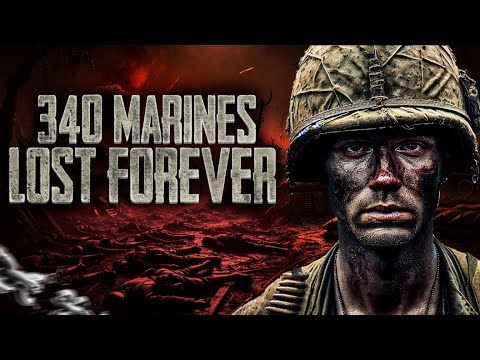
The jungle was silent—too silent. Then, at 1:25 a.m., the darkness erupted. A massive artillery barrage slammed into the Marine positions near the Washout Bridge, turning the night into a hellscape of fire and shrapnel. For nearly an hour, the North Vietnamese Army pounded the outpost, softening the defenders for what was coming next.
Under the cover of the bombardment, hundreds of NVA soldiers crept forward, using the darkness to mask their advance. At 2:30 a.m., they struck Company G’s flank with terrifying force. RPGs blasted through machine gun nests, and enemy sappers breached the perimeter. In the chaos, the company command post was overrun—the commander, platoon leaders, and forward observer were all killed, leaving the unit leaderless.
Hand-to-hand combat erupted. Marines and NVA soldiers fought at close range with bayonets, knives, and rifle butts. The Marines refused to break. Company F rushed in to reinforce the battered defenders, and AC-47 Spooky gunships arrived overhead, raining thousands of rounds per minute into enemy positions. By 4:30 a.m., the NVA were forced to retreat, leaving the ground littered with bodies.
The Marines had held—but at a devastating cost. Twenty-one were killed, twenty-three wounded. The NVA left behind twenty-four confirmed dead, though their true losses were likely much higher. This attack proved just how far the NVA were willing to go, and it tested the grit of the Marines who held the line.
But this was just one night in a battle that would rage for months. Operation Kingfisher was far from over.
The days that followed the Washout Bridge fight settled into a grim rhythm. Patrols pushed out at first light, sweeping the cratered ground for signs of the enemy. Every thicket could hide a sniper; every trail could be wired with a trip flare or a claymore. The Marines learned to move slow, to watch the birds, to read the jungle like a language.
By late October, Operation Kingfisher was entering its final phase. The Marines had weathered assault after assault, but the NVA was still out there—waiting, watching, ready. On October 25, 2nd Battalion, 4th Marines launched a final sweep north from Con Thien along Route 561, pushing toward the DMZ.
The terrain was thick with brush, cutting visibility to a few dozen meters. It was perfect ambush country, and the Marines knew it. For most of the day, no contact. The silence itself felt like a warning.
Then night fell—and the sky lit up. NVA artillery and rockets rained down on the Marine positions, pounding them for hours. The battalion executive officer was killed, and the commanding officer, Lieutenant Colonel James Hammond, was wounded. Yet the Marines held their ground, hugging the earth as the shells walked across their lines.
By October 26, the advance resumed, pushing deeper into enemy territory. Mortar and small-arms fire erupted as they moved. Helicopters swooped in to evacuate the wounded—but the enemy was ready. An NVA machine gun crew shot down a UH-34 transport chopper, killing the pilot and door gunner. A second helicopter was hit and crash-landed nearby.
Realizing a larger attack might be coming, Lieutenant Colonel John Studt, who had taken over command, called for reinforcements. Company F was ordered in, along with two companies from 3rd Battalion, 3rd Marines.
The night of October 26 to 27 was one of constant battle. The NVA probed the Marine lines, launching several ground attacks under the cover of mortar fire. Marines fought back with machine guns, grenades, and close air support, pushing back every enemy assault. By 2 a.m. on October 27, the enemy finally withdrew.
At first light, Marines found nineteen dead NVA soldiers around their perimeter—though the true number was likely much higher. The Marines had suffered eight killed and forty-five wounded over the two-day fight. But they had held the line once again.
This marked the last major battle of Operation Kingfisher. The fighting had been brutal, costly, and relentless—but the Marines had stood their ground. Just days later, on October 31, 1967, Operation Kingfisher officially ended.
But the war was far from over. Even before Kingfisher ended, the Marines transitioned into Operation Kentucky, another search-and-destroy mission in the same area. The NVA still controlled the northern jungle, and US forces would have to keep fighting for every inch of ground.
The men who fought at Con Thien would carry the DMZ with them forever. The sound of incoming artillery, the smell of cordite and wet earth, the faces of friends who never came home—these things did not end when the operation did. For many Marines, the battle followed them long after they left the jungle. Some would wake in the night reaching for a rifle that wasn’t there.
Back in the States, the war was becoming something else entirely. Protests were growing louder, and the evening news brought the body counts into living rooms every night. But in the mud and heat of the DMZ, politics meant nothing. There was only the man beside you and the next patrol.
The NVA, though bloodied, had learned something from Kingfisher. They had seen that they could absorb punishing losses and keep coming. They had tested Marine firepower and found the seams—the night attacks, the close-quarters assaults, the artillery that came from sanctuaries the Marines could not touch.
Those lessons would not be wasted. Intelligence analysts in Saigon began to notice a troubling pattern. Enemy units were not simply rebuilding after Kingfisher—they were repositioning, shifting away from the DMZ and moving toward the interior. Supply caches were being stockpiled in places they had never been before.
What the Marines at Con Thien did not know—what almost no one knew—was that Kingfisher had been only a piece of a much larger design. The NVA’s aggression around the DMZ had served its purpose: it had pulled American attention and firepower north, toward the border, while something far bigger took shape in the south.
In the weeks after the operation ended, patrols from the 3rd Marine Division began reporting strange findings. Abandoned bunker complexes. Fresh trails cut through the jungle, wide enough for trucks. Weapons caches hidden in villages that had been quiet for months. Something was coming, and the signs were everywhere.
The Marines of 2nd Battalion, 4th Marines settled into a brief, uneasy lull. Replacements arrived—young men fresh from the States, their faces still soft, their eyes not yet hardened by the DMZ. The veterans watched them quietly, knowing what they would soon learn.
Operation Kentucky pushed them back into the same deadly ground, the same hedgerows and trails where their brothers had fallen. The NVA was still there. They were always there.
And far to the south, in the cities and towns of South Vietnam, a storm was gathering that would make Kingfisher look like a prelude.
The replacements learned quickly. You did not survive the DMZ by being brave—you survived by being careful. The veterans taught them the small things: how to read the jungle, how to listen for the difference between wind and footsteps, how to keep your helmet low when the mortars started.
But the signs kept coming. Patrols found freshly dug bunkers, abandoned in haste. They found trails wide enough for bicycles loaded with supplies—thousands of them, moving south under the canopy. Intelligence reports painted a picture no one wanted to see: the enemy was not rebuilding. They were repositioning.
In late November, a prisoner was taken near Con Thien. He was young, scared, and he talked. He spoke of a massive operation, of attacks planned on cities and bases across the south. He spoke of a date. He said the war was about to change.
The Marines of 2nd Battalion, 4th Marines did not know if he was telling the truth or telling them what they wanted to hear. But they passed the report up the chain. And they kept patrolling.
Christmas came and went. The jungle did not care. The NVA was still out there, and the Marines still held the line. Operation Kentucky ground on, another name for the same deadly work. More patrols. More ambushes. More names added to the lists.
Then, on January 31, 1968, the storm broke. The Tet Offensive erupted across South Vietnam. Cities under attack. Bases under siege. The NVA and Viet Cong striking everywhere at once. The reports from the prisoner had been true.
For the Marines at Con Thien, Tet changed everything and nothing. The war was still the same—mud, blood, and the man beside you. But now the world was watching. The body counts on the evening news were no longer just numbers. They were a reckoning.
Operation Kingfisher was over. But its lessons echoed on. The Marines had held the line at Con Thien, and they would hold it again. The war would go on for years, but the men who fought in that brutal corner of the DMZ had already given everything they had.
Today, the jungle has reclaimed the bunkers and the trails. The craters have filled with rain and leaves. But the story remains. Operation Kingfisher was not just a battle—it was a testament to the courage of the Marines who fought it. They did not win the war. But they did not break.
And that, perhaps, is the truest measure of their sacrifice.
What do you think—should the story of Operation Kingfisher be taught in schools, or is it a chapter of history better left in the past?
Report this article
Select a reason for reporting:






