Just before midnight on September 18, 1944, an American outpost near the small French village of Laisy heard the low rumble of heavy tracks in the darkness. Artillery was called in, but the clanking stopped, and the night fell silent again. It was a silence that screamed of impending doom.
At dawn, Captain William Dwight drove straight into the back of a German tank column, swallowed by the thick Lorraine fog. He radioed Lieutenant Colonel Creighton Abrams: 42 Panther tanks were out there, spearheading an entire Panzer army that Hitler had assembled for one purpose—to stop George Patton.
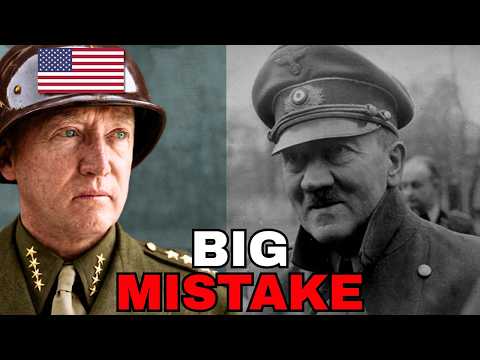
Patton had been warned. On September 12, Omar Bradley had restricted his supplies, ordering the Third Army to go on the defensive if it couldn’t cross the Moselle River in strength by the 14th. But Patton dismissed the idea. The Germans in front of him, he reasoned, had no reserves and no defenses in depth. Break their line once, and the road to the Rhine would open.
He was wrong. Hitler had personally selected General Hasso von Manteuffel to lead the Fifth Panzer Army, fresh from the Russian front. Manteuffel’s orders were explicit: attack no later than the 18th, retake Lunéville, and smash the American bridgehead over the Moselle. Despite Manteuffel’s protests that his army was too weak, Hitler insisted.
Two plans raced toward each other on a collision course. Patton’s army would start rolling toward the Rhine on the 18th. Manteuffel’s had to attack on the same day, on the same ground.
At 7:00 a.m., German Panthers struck the American cavalry south of Lunéville. The cavalry’s six assault guns were no match; three were destroyed in minutes, and the squadron commander was killed. Yet Patton and his corps commander were not greatly concerned. The attack toward the Rhine stayed on the books for the next morning.
That night, Combat Command A of the Fourth Armored Division, under Colonel Bruce Clark, was spread thin around Arracourt. Out front at Lezey, Captain Richard Lamason’s tank company sat in the fog. At midnight, Manteuffel phoned his corps commander with orders to attack in the morning and threats of severe punishment if they weren’t carried out to the letter.
The column Dwight ran into was the 113th Panzer Brigade—42 Panthers pushing through heavy fog after a night march. The official history notes that the fog hid the German tanks from American planes but also forced them to fight up close, where the Panther’s long-range gun gave it no advantage at all.
South of Lezey, two Shermans sat in an outpost position. The first Panther came out of the fog barely 75 yards away. That Panther and two more were destroyed in seconds. Dwight was sent back out with four tank destroyers. They spotted German tanks in the fog, dropped into a shallow dip, and opened fire at about 150 yards. Three of the four American vehicles were knocked out, but not before they destroyed seven German tanks.
Lamason, meanwhile, took four Shermans and raced about 3,000 yards to a ridge. He arrived roughly three minutes before eight Panthers appeared below. His tanks knocked out four before the Germans could fire back. Then they backed over the crest, moved south, came up in a new spot, and finished the other four. The second German brigade never showed up that morning—a patriotic French farmer had sent it the wrong way.
In the afternoon, two companies of the 37th Tank Battalion swung through Rechicourt, hit the Germans in the flank, and knocked out nine Panthers for three tanks of their own. That night, the ventilation found its way back to Laisy by the light of burning German tanks.
That evening, Patton came down from his headquarters at Etang and sat down with General Wood. Here’s what you’d expect after an enemy Panzer army hits your spearhead: dig in, bring up reinforcements, wait. Patton did none of it. He and Wood agreed that Combat Command A would resume its push east towards Sarreguemines the next morning.
By its own count, Combat Command A had destroyed 43 German tanks and lost six men killed. And what makes this unusual is not that Patton held his ground at Arracourt. It’s that he spent the whole battle trying to leave it. The next morning, his columns were already driving northeast when German tanks hit Arracourt again. And Colonel Clark had to turn his whole command around to clear the area once and for all.
On the German side, Manteuffel begged to call the attack off. He got a reprimand for lacking the offensive spirit. On the 21st, Hitler used the failure as an excuse to fire the army group commander, General Johannes Blaskowitz. On the 22nd, the fog came back. German patrols had laid white tape right up to the American cavalry lines, and their tanks followed it in. Some to within 75 yards before anyone saw them.
Then the sun came out. American P-47s flew in, and Abrams counterattacked. From a hill looking down into the valley, his tanks and the artillery destroyed 14 German tanks. The German brigade commander, Colonel Heinrich Bronzart von Schellendorf, was mortally wounded. Manteuffel begged the Luftwaffe for help. Nobody answered.
By nightfall, the 111th Panzer Brigade, the unit that had opened the battle at Lunéville, had seven tanks and 80 men left.
The arithmetic of that afternoon was brutal in its simplicity. Two German panzer brigades had been thrown into the fog expecting to overrun a thin American screen, and instead they had been ground down tank by tank, ridge by ridge. The Fifth Panzer Army got no closer to the Moselle than it had been on the morning of the 19th.
But here is where the story turns, and it turns on something Patton could not shoot his way out of. On September 23, the order he had been sure he would never need finally arrived. Bradley told him the Third Army was going on the defensive. The supplies were going north, to the Allied push into Holland. Patton called it one of the bad days of his military career. But he obeyed.
His forward units pulled back to a line they could hold. And still the Germans came, for another week, because Hitler refused to cancel the attack. On the 26th, when the Fourth Armored pulled its line back slightly under the defensive order, Manteuffel reported his troops’ uncontested entry into two empty villages as victories. The last big fight came on Hill 318, where German infantry crept up through old trenches from the First World War. By the 29th, they pulled back for good. The Fifth Panzer Army was finished as an attacking force.
So the number. How many German tanks were lost at Arracourt? Online you will find 285. You will find approximately 200. You will find 86 destroyed and 114 damaged. Some timelines even have American planes breaking the attack in the fog on day one. The official history is more careful. The fog protected the German tanks from the air; the big P-47 strikes came later. And on German losses, the official historian wrote that they cannot be accurately determined.
What he could say was that two panzer brigades had been wrecked as fighting units, and that the Fifth Panzer Army got no closer to the Moselle. Sometimes the most honest number is the one nobody can give you.
So what did George Patton do when Hitler sent a panzer army after him? On the first day, he barely noticed. After the fog battle, he ordered his spearhead to keep going east. When his own side ordered him to stop, he called it a bad day and pulled back. Remember what he believed on the 12th of September—no German reserves. He was wrong. Hitler found a whole panzer army. But in open country against the Fourth Armored Division, that army broke.
And John Wood’s two words? No blitz. Wood was right. Arracourt was a slugging match in fog and rain, one hill at a time. The last word goes to the other side. The ground Patton gave up wasn’t taken by German tanks. He gave it up because his own side sent the supplies north. And the German general who lost the battle called it a victory.
Three months later, Manteuffel and the Fourth Armored Division would meet again in the Ardennes. Different fog, same two opponents, and this time the stakes would be a break for the sea.
But before that meeting in the Ardennes, there was one more reckoning at Arracourt. On September 29, the day the Germans pulled back for good, the men of Combat Command A walked the battlefield. They counted the burned-out Panthers in the fog-soaked fields and along the ridgelines where Lamason’s Shermans had made their stand.
The official history would later refuse to put a number on the German dead. But the men who were there knew what they had seen. Two panzer brigades had come into those fields as fighting units. They left as scrap.
What made Arracourt matter was not the tally of destroyed tanks. It was the answer to a question every commander faces when the other side finally lands a punch. Patton’s answer was to keep driving east. Wood’s answer was to fight close and dirty, where the Panther’s reach meant nothing. And the tank crews’ answer was to back over a crest, reappear somewhere else, and finish the job.
The legend of Patton is built on speed and audacity. Arracourt shows the other half of the man—the part that, when Hitler sent a panzer army to wreck his plans, refused to flinch. He pulled back only when his own side ordered it, and even then he called it a bad day.
Three months later, in the fog of the Ardennes, Manteuffel and the Fourth Armored would meet again. But that is another story, and another fog. At Arracourt, the question was answered: when the punch landed, the American tankers punched back harder.
So here is what we want to know—which overlooked battle do you think deserves its own documentary? Drop it in the comments below, and we might just go back to the documents for the next one.
Report this article
Select a reason for reporting:






