On the morning of August 18, 1862, the prairie around Beaver Creek, Minnesota, was bathed in the golden light of late summer. Helen Carothers, a 19-year-old mother of two, was tending to a sick neighbor when four Sioux Indians appeared at the door. They looked in silently, then departed. It was the last quiet moment she would know for days.
Within hours, Helen’s world would shatter. The Sioux uprising had begun, and she would soon be a captive, separated from her children, and fighting for her life.
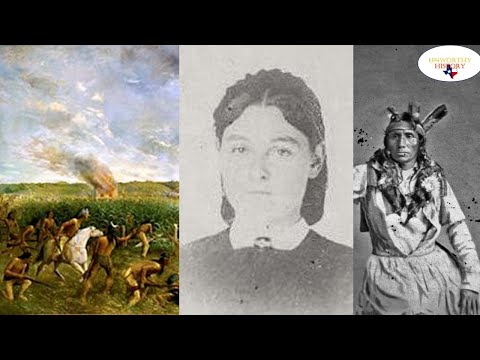
Helen’s husband was away, so she and her two young children—Althea, 3, and Thomas, 2—joined neighbors fleeing to Fort Ridgely. They had barely gone 15 rods when they were surrounded by Indians. “The whites were all to be killed,” the Indians told them. After tense negotiations, the settlers surrendered their teams in exchange for their lives. But it was a lie.
As they continued on foot, pulling the wagon that carried the sick Mrs. Henderson, shots rang out. Mr. Wedge fell dead at the wagon. The white flag they raised was riddled with bullets, and Mr. Henderson’s fingers were shot off. Helen heard the Indians singing and saw the gunfire. “The dreadful truth flashed upon my mind. The Indians were actually killing us.”
Helen and the other women and children were captured. They were taken to Little Crow’s house, where the chief welcomed them with a cordial hand. But kindness quickly turned to terror. That night, as the Indians prepared for war, Helen sat up, unable to sleep. The next day, Little Crow told her that four Indians wanted her for a wife. Unable to decide between them, he had concluded to settle the quarrel by killing her. “A squaw was ordered to take me into a cornfield nearby and disrobed me. And the Indians were then to come and kill me.”
Helen refused to remove her clothes until given something else to wear. She was handed a ragged quilt and skirt. Left alone in the cornfield, she saw an Indian approach, but he passed by without seeing her. “I took fresh courage.” She slipped out of the corn, through a potato patch, and into the woods. That night she hid in the grass at the head of Tiger Lake.
For days, Helen and her children wandered, trying to cross the Minnesota River, hiding in cellars, and scavenging for food. She found a small boat and attempted to cross, but it leaked so badly she had to abandon it. “Had the boat not leaked so badly, I had intended to go down the stream in it opposite the fort.” Instead, she pulled herself ashore and continued on foot.
Finally, after eight days of unimaginable hardship, Helen reached Fort Ridgely. “A gray blanket was brought and in this I wrapped myself head and ears and in this manner made my joyous entry into Fort Ridgely. After all, I exclaimed, I am safe.” She had carried her children most of the way, had eaten nothing but raw potatoes and a cucumber, and had traveled over 30 miles.
But her ordeal was not over. At the fort, her eldest child cried out in her sleep, “Mama, mama, I can’t walk.” And Helen, with a full heart, could only reply, “When we get to the fort, you shall have something good to eat.”
Helen’s story of survival is one of many from the Minnesota Sioux uprising of 1862. But her escape from the cornfield, her perilous journey, and her determination to save her children make it one of the most remarkable. Yet, as we will see, her trials did not end with her rescue.
The years that followed brought their own quiet battles. Helen’s marriage to James Carothers had been strained even before the uprising—he was often away, and she had been little more than a girl when they wed. After her capture, something between them had broken beyond repair. “After my capture by the Indians, there was discord between me and my husband and at St. Peter, we agreed to disagree,” she later wrote, with a restraint that concealed far more than it revealed.
James joined the First Wisconsin Battery of Light Artillery and marched south to fight in the Civil War. Helen, meanwhile, took work at the Northwestern Hotel in St. Peter, boarding the men who labored alongside her. For two years she rebuilt herself in the small routines of labor and survival, until at last she returned to her parents, who had moved from Wisconsin to Dodge County, Minnesota.
It was there she met Dennis McNanny, a native of Ireland with a steady manner and a kind regard for her two children. They married in October 1869, and in time three more children came—Helen Marr, Arthur, and Moses. The name Helen Mar, drawn from the heroine of a novel her mother had loved, carried on through four generations of daughters.
But the shadow of August 1862 never fully lifted. Helen had learned the Dakota language as a young bride, had gathered herbs with the medicine man and nursed the sick beside him. She had known these people as neighbors, and then as captors, and then as the terror that drove her through cornfields and cellars with two children in her arms. That knowledge—of friendship and betrayal, of kindness and cruelty bound together in the same hands—stayed with her for the rest of her life.
She lived quietly, raising her children and keeping her story close, until friends urged her to set it down. In June 1863, at St. Peter, she furnished her account—the simple, unadorned testimony of a young mother who had walked thirty miles through enemy country and refused to die in a cornfield.
Historians would later note what her narrative did not say. She never described what happened to the other women taken with her—Mrs. Earl, Mrs. White, the German girl claimed as a squaw. She never explained the divorce, though some who knew her wondered whether the discord had deeper roots, as it had for other captive women whose husbands could not bear what captivity had done to them.
The Minnesota Sioux uprising of 1862 would claim some 600 white settlers before it was over, and the trials that followed would hang thirty-eight Dakota men in the largest mass execution in American history. Helen Carothers McNanny lived on into a new century, a quiet woman in a growing nation, carrying within her the memory of a golden August morning that ended in gunfire.
Yet her story, published just a year after the massacre, would outlast her—a voice from the prairie, preserved in ink, still speaking across the decades.
What the printed narrative could not capture was the texture of those eight days—the small, unbearable details that Helen carried in her body long after the words were set down. She never forgot the taste of raw potatoes no larger than the end of her thumb, or the way the mosquitoes covered her face until she could not see the road ahead. “I could not protect myself from them as I had two children to carry,” she wrote, as though that explained everything.
Nor did she forget the moment she heard horses in the darkness and believed the Indians had come back for her. She had gone off the road and hidden in the grass, certain that death had found her at last. “I was in fact afraid to go to the fort for Little Crow had told me that everyone at the fort would be killed.” Hope, for Helen, was a thing she had to choose against all evidence.
And there was the German in the cellar—the frightened man who had dug himself into a haystack and dared not run for the fort. When he asked her for food, she answered, “This is what I am looking for.” Two strangers, each as ragged as the other, sharing a bowl of sugar in a plundered house three miles from safety. He carried her little girl the rest of the way, and for that Helen never forgot him.
There is another silence in her account, and it is perhaps the loudest of all. Helen never wrote of what became of Mrs. Henderson—the sick woman in the wagon, the one they had bargained so desperately to save. She only noted, flatly, that she saw a fire where Mrs. Henderson had last been seen, and that she supposed they had burned her and her little children. “This turned out to be so, as I afterward learned.” The sentence sits in the narrative like a stone in a field.
Nor did she dwell on the moment of her capture, when the Indians shook hands with each of the women and told them they were now going to live with them. She did not describe the terror of that handshake, or the way the prairie opened around her, empty and indifferent. She was nineteen years old. She had two children clinging to her skirts. And somewhere in the days that followed, she made a decision that no one had taught her: to run, to hide, to keep moving, to refuse the fate that Little Crow had settled upon her.
Her escape from the cornfield was not a single act of courage but a hundred small ones—the refusal to undress, the walk deeper into the rows, the moment she sat down and let the searching Indian pass within six rows of her. “As he disappeared, I took fresh courage.” Courage, for Helen, was not a flame but a flicker, relit again and again in the dark.
When she finally reached Fort Ridgely and wrapped herself in that gray blanket, she thought her trials were over. She could not have known that the hardest years were still ahead—the discord with James, the divorce, the quiet rebuilding of a life in hotels and parents’ homes and a second marriage to a kind Irishman. She could not have known that her story would be printed in a book in 1863 and read by strangers more than a century later.
But on that morning in the cornfield, with her children hidden in the grass and the Indians singing somewhere behind her, Helen Carothers knew only one thing: she was alive, and she meant to stay that way.
She lived to see her children grow, to see Althea and Thomas become adults in a nation that had changed utterly. Dennis McNanny proved a steady companion, and the McNanny household in Dodge County became a place of small, ordinary joys—gardens, church suppers, the laughter of children who would never know the terror their mother had carried through the corn.
But Helen never forgot. She had learned the Dakota language as a girl, had gathered herbs with the medicine man, had nursed the sick beside him. She had known these people as neighbors before she knew them as captors. That knowledge—of friendship and betrayal bound together in the same hands—shaped her silence as much as her words.
When she died, her story passed into the quiet keeping of family and local historians. It surfaced again in old books, in the recollections of descendants, in the careful preservation of a narrative given by a young mother who had refused to die in a cornfield.
And so Helen Carothers McNanny endures—not as a symbol, but as a voice. A voice that said, against all evidence, “I am safe.”
What do you think her silence about the other captive women and her divorce truly concealed—was it trauma, discretion, or something she simply could not bear to put into words?
Report this article
Select a reason for reporting:






