June 7th, 1945. A cold gray dawn crept over a ruined German village near Leipzig. Behind a crumbling stone wall, 22 women huddled together, their hands clasped tight, expecting death. They had been told to fear bayonets, bullets, and cold orders—but not kindness. The air smelled of damp straw, burning wood, and diesel from a distant armored column. Somewhere a factory bell tolled. Somewhere else a radio hissed Allied commands. Between the sounds, the silence felt endless, like the world had forgotten them.
Then American trucks rumbled down the lane. Crates clattered, metal struck wood, and the impossible arrived before the sun fully rose. Mercy, not violence. Hot soup, bread, and care for women who had prepared to die. It was a moment that would challenge everything they had been taught about enemies, fear, and survival.
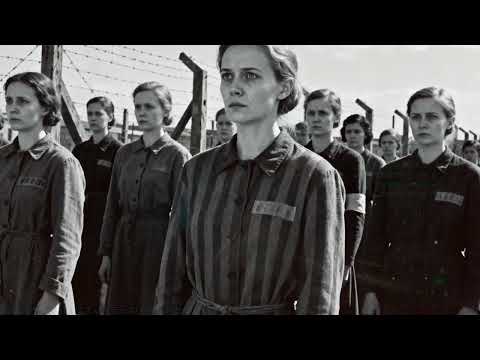
Behind the wire fence of the American holding camp, 23 German women prisoners stood quietly, waiting for the sun to rise. Many had been factory workers drafted into military support units. A few had been nurses. Some were barely older than schoolgirls. Yet all shared the same fear: they believed the Americans would execute them at sunrise.
The fear had begun the night before when word passed from one woman to another that enemy armies often killed prisoners who were not worth feeding. One of the older women, a former clerk named Hilda, whispered that she had heard distant gunshots. Another said she saw a guard sharpening a bayonet. None of it was true, but fear does not wait for truth. It grows in the dark, fed by imagination and war memory.
For years, German propaganda had shown Americans as brutal, wild, and unforgiving. Now, behind the wire, those imaginary enemies felt real enough to kill them.
Inside the American camp kitchen, the atmosphere could not have been more different. The cooks were already awake, working among the clang of metal pans and the steady hiss of hot stoves. They were preparing the most ordinary thing in the world: breakfast. The supply records from that week show the usual rations—eggs, flour, canned fruit, and nearly 200 pounds of bread issued every two days. Even in areas close to the front, American logistics remained strong. They fed more than 12 million soldiers across Europe, a scale unmatched by any army in history.
To the prisoners, however, even the idea of breakfast felt impossible. “We expected death,” one young woman later told an interviewer. “We told each other to be brave, to stand straight. That is what we thought sunrise would demand of us.” Her hands had shaken so badly she could barely tie her hair.
When the first guards approached, boots crunching on the frozen dirt, several prisoners closed their eyes, certain the moment had come. But the guards simply unlocked the gate and motioned for the women to walk. Their faces were calm, almost bored. One lifted a hand and said, “Come on, let’s go.” The prisoners did not understand the English words, but the tone was not cruel.
Confusion spread quickly through the group. Executioners did not speak so casually. As they marched across the yard, a warm smell reached them. Bread, coffee, and something sweet. Many froze midstep. One woman covered her mouth and began to cry. The Americans were not leading them to death. They were leading them to food.
Inside the mess tent, long wooden tables were set with metal trays. The cooks worked quickly, sliding scrambled eggs onto plates, pouring hot coffee into tin cups, and handing out thick slices of bread. Some prisoners trembled so hard they could barely hold their trays. Others kept looking over their shoulders as if expecting a trick, but the Americans simply served them.
One cook, a young man from Ohio, later said, “They looked like scared kids. I just wanted to get them fed.” This was the first real shock for the German women. The enemy they feared treated them not as criminals, but as human beings. They were not shoved, threatened, or mocked. They were greeted with calm routine, as though kindness were simply part of the daily orders.
The contrast was almost painful. For years, they had been told America was a land of violence and chaos. Yet here, in a cold tent near a destroyed village, the greatest danger was spilling hot coffee on their hands.
As the women ate in silence, their fear slowly loosened. Hunger made the food taste stronger—the salt of the eggs, the warmth of the bread, the bitter comfort of the coffee. A few tried to whisper to each other, but emotion caught in their throats. One of the prisoners later wrote, “It felt like the world had tilted. Everything we believed about the Americans cracked in one morning.”
But this was only the beginning. What they experienced at breakfast would soon open the door to an even deeper understanding—one that challenged not just their fears, but the entire world they thought they knew.
The German women walked out of the mess tent, still shaken by what they had seen. Their bodies were warmer, their stomachs full, but their minds were crowded with disbelief. Only hours before they had expected violence. Instead, they had received a calm, simple meal. The sudden shift left them unsure of how to think or even how to stand.
Many had been taught their whole lives that enemies were monsters. Now they had to face a strange truth: the Americans treated them better than their own officers had during the final months of the war.
Just outside the tent, an American sergeant took account of the prisoners. His clipboard was clean, his pencil sharp. He worked quickly, barely looking up as he marked each number. Allied records show that by early 1945, the US Army was holding more than 400,000 German prisoners across Europe, and daily counts were part of strict routine. This simple routine—order, process, predictability—was something the women had not seen in a long time. For months, their lives had been full of sudden evacuations, collapsing front lines, and commanders who cared little for their safety.
One prisoner, a former nurse named Greta, whispered to the woman next to her, “If this is captivity, it is kinder than what we left.” Her voice was soft, but the American sergeant heard the tone, if not the words. He glanced up briefly, then continued his count. His face remained neutral, but the women noticed something important. There was no anger in his eyes.
The prisoners were moved to a small work area on the edge of the camp. Here they helped with simple tasks: sorting cloth, cleaning tools, or folding blankets. None of the work was heavy. Much of it was the same type of work they had done in factories or field hospitals. But there was a difference that surprised them. In the American camp, no one yelled, no one threatened, no one slapped hands or barked insults. If a prisoner worked too slowly, a guard might tap the table and say, “Here, like this,” showing the movement with his hands. The tone was firm, but never cruel.
One of the younger women, who had worked in a munitions plant, later told an interviewer, “The Americans corrected us the way a teacher corrects a student, not like officers who think you are an insect.” Her comment highlighted a truth that cut deep. They had expected brutality from the Americans and gentleness from their own officers, but the opposite had been true for much of the later war.
Around mid-morning, the temperature rose slightly, lifting the fog from the fields. The camp sounds became clearer—the clatter of trucks, the hum of generators, the distant chatter of English words the prisoners could not understand. There was also the steady smell of gasoline, canvas, and damp soil. These small sensory details reminded the prisoners that the world outside the fence was still damaged, still dangerous. Yet inside the camp, routine almost felt like peace.
While they worked, one American private tried to speak with them. He used simple words, pointing to objects as he named them. Blanket. Rope. Box. The women hesitated at first, unsure if it was a joke, but his face was friendly, and slowly they answered with their own broken English. Their voices were quiet at first, then a little stronger. The private smiled, pleased that they tried. Later, one woman wrote, “It was the first time I heard laughter since the war reached my town.”
This moment of shared understanding was small, but it mattered. It showed the women something they had never been told: that the Americans did not hate them. They were simply doing a job. And that simple truth began to crack old beliefs that had ruled their thinking for years.
As the morning continued, an officer walked by with a folder of reports. He spoke to a guard and pointed toward the women. The guard nodded and then turned to them. “Break soon,” he said. The word was clear enough, and a few women exchanged unsure smiles. A break during work was something they had rarely been given in the last year of the war, when German factories demanded long hours with little food.
But the real surprise came during that break. A group of American soldiers stood nearby eating apples from a crate. One of them, seeing the women watching, walked over and set two apples on the table beside them. He said nothing, just nodded and walked away. The prisoners stared at the fruit as if it were gold. Fresh apples were rare in Germany by 1945. Most farms had been stripped, and food shipments were limited. The simple act of giving food—not ordered, not required—felt almost impossible.
The women did not eat the apples right away. They held them gently, feeling their smooth, cold surface, breathing in their sweet smell. One said quietly, “We thought they would kill us. Instead, they feed us again.” This growing contrast—fear turning into surprise, then into a cautious respect—was the second step in changing everything they believed. What they saw that morning prepared them for the next discovery. One that would challenge not just their expectations, but their understanding of how two nations could see the same war so differently.
Later that day, the German women were moved toward a large storage tent near the center of the camp. Inside, boxes of canned beans, sacks of flour, and crates of medical bandages were stacked taller than a person. According to US Army supply reports, a single infantry division received more than 600 tons of food, fuel, and equipment each day. The women had never seen such abundance.
A captain spoke through a translator, a German-speaking American corporal. “You will help sort and clean supplies. Work steady, no rush.” His voice carried no threat. The women nodded, still surprised that the Americans bothered to explain anything.
As they worked, they noticed small details that contradicted everything they had been told. Guards helped lift heavy crates instead of shouting. When a box fell and spilled bandages, no one was punished. The Americans simply knelt and picked up the items, motioning for the women to help. One woman, Marta, remembered how German officers had struck anyone who slowed the group. Now she watched an American sergeant gently adjust a crate so it wouldn’t fall again.
Around noon, the women were allowed to rest. A tall soldier from Kansas removed a small packet from his pocket—chewing gum. He offered a piece to one of the prisoners. She froze, unsure if it was a trick, but he simply smiled and held it out, waiting. She took it carefully. The mint was sharp and cool, something she had never tasted. “It is strange,” she said quietly in German. The soldier did not understand the words, but he understood her expression and laughed softly, kindly.
Later, the corporal returned. “If you have injuries or sickness, the medic will see you this afternoon.” The prisoners exchanged confused glances. A medic for them? In the last months of the war, injured German women were often ignored. Yet here, their captors offered help without hesitation.
That afternoon, several women visited the small medical tent. A doctor cleaned an infected cut and wrapped it in a clean bandage. Another woman with a fever received aspirin and water. One prisoner, a former teacher named Elsa, later said, “It felt impossible. The people we feared were now the ones protecting us.” Her words captured the growing paradox the women were living inside. The enemy was treating them better than their own system had in years.
By the end of the day, the women felt a new, cautious understanding forming. They still did not trust the Americans completely, but something inside them had changed. Their fear was no longer the loudest voice in their minds. Instead, a quieter question began to rise. If everything we believed about the Americans was wrong, what else had been untrue?
That question would shape what happened next—and it is the question history still asks of us today. When fear and propaganda collide with simple human kindness, which one do we choose to believe?
Report this article
Select a reason for reporting:






