The scream tore through the dawn: “Awanux! Awanux! English! English!” A Pequot sentinel’s warning, but it was too late. Captain John Mason and his men were already upon them, and what followed would become one of the most controversial and brutal battles in early American history. This is the story of the Pequot War—a conflict born of escalating atrocities, where survival meant making impossible choices.
In 1634 Connecticut, the Pequot were a powerful and warlike tribe, feared by their neighbors and determined to defend their ancestral lands. But tensions with English settlers had reached a boiling point. The brutal murders of traders, the slaughter of entire families, and the gruesome torture of captives had shattered any hope for peace. The English, convinced that the Pequot sought their total annihilation, prepared for a war of extermination.
The Pequot, led by the proud sachem Sassacus, viewed the English as invaders who had no right to their land. They had tried to unite other tribes against the newcomers, arguing that unless they stood together, the English would soon drive them all from their homeland. But not all tribes were convinced. The Mohegans and Narragansetts, longtime rivals of the Pequot, chose to ally with the English, seeing an opportunity to settle old scores.
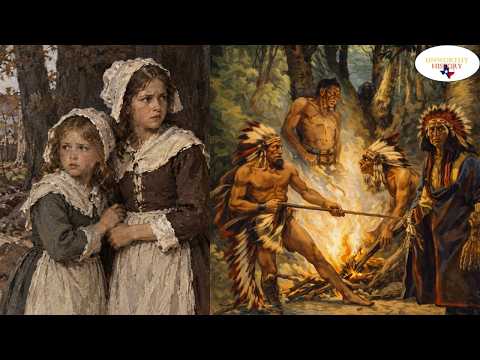
In May 1637, a combined force of English soldiers and Native allies marched into Pequot territory. Among them was Uncas, the Mohegan sachem, whose hatred for the Pequot ran deep. As they advanced, they captured a Pequot traitor who had once lived among the English, learning their language and customs before betraying them. Uncas and his warriors insisted on executing him according to their ancient customs—a gruesome spectacle that would foreshadow the horrors to come.
The prisoner was tied to a stake, a fire lit nearby. Slowly, methodically, the Mohegans tortured him, slicing off pieces of his flesh as he screamed. Then, in a ritual that shocked even the English, they roasted and ate his body, singing and dancing around the flames. It was a message to the Pequot: there would be no mercy.
On May 26, Mason’s force, now joined by hundreds of Narragansett and Niantic warriors, approached the main Pequot fort near the Mystic River. The night before the attack, they could hear the Pequot singing and dancing, unaware of the doom that awaited them. Before dawn, Mason roused his men. “We must burn them!” he would later shout, but first, they had to breach the fort.
The attack began with a volley of gunfire, then a charge through the main entrance. The Pequot fought with desperate courage, but the English were relentless. As the battle raged, Mason seized a firebrand and set the wigwams ablaze. The flames spread quickly, and the fort became an inferno. Pequot warriors, women, and children were trapped—some shot as they fled, others consumed by the fire. Within two hours, over 800 Pequot were dead. The English lost fewer than 25 men.
The massacre at Mystic broke the back of the Pequot nation. Survivors fled west, only to be hunted down by Mohegan and Mohawk warriors. Sassacus himself was killed, his scalp delivered to the Massachusetts authorities. The Pequot War was over, but its legacy—of brutality, alliances, and the cost of survival—would echo for centuries.
But the story does not end with the flames of Mystic. In the weeks that followed, the English and their Native allies pursued the scattered remnants of the Pequot with a ferocity that matched the earlier atrocities. Captain Mason, joined by Captain Stoughton of Massachusetts, led a force westward, determined to capture Sassacus and extinguish any hope of Pequot resistance.
On June 27, they came upon a large group of Pequot near present-day Guilford. The fight was brief and brutal. Around fifty Pequot were taken captive, including two sachems who were offered their lives in exchange for guiding the English to Sassacus. When the sachems refused—or perhaps could not—provide the information, they were beheaded at a place the English called “Sachem’s Head.” The name stuck, a grim marker of the war’s ruthlessness.
By the end of June, the English had reached Quinnipiac, now New Haven, where friendly Pequot informed them that the enemy was encamped in a nearby swamp. The English advanced and found the swamp nearly impenetrable—a dense, muddy thicket that only Native warriors could navigate. Rather than risk a frontal assault, the English decided to surround the swamp and harass the Pequot whenever possible.
After several skirmishes, the Pequot requested negotiations. Thomas Stanton, the English interpreter, was sent to parley. He offered mercy to any who had not shed English blood. About three hundred Pequot emerged, claiming innocence, and were allowed to leave. But the rest—those who proudly declared they had drunk the blood of Englishmen—refused to surrender. They would fight to the end.
The English officers argued over how to attack. Some wanted to set the swamp on fire, others to cut a path through with axes, and still others to build a high fence around it. No single plan was fully adopted. As night fell, the English managed to cut off part of the swamp, shrinking its perimeter and trapping the enemy inside. There would be no escape under cover of darkness.
At dawn, the Pequot realized they were completely surrounded. They launched a desperate charge, trying to break through the English lines. They were met with a hail of gunfire and cut down in droves. Then they tried to break through the Connecticut forces, but found them even more resolute. The fighting became close and vicious.
One Pequot warrior, described as the most determined of them all, charged directly at Captain Mason, raising his war hatchet for a killing blow. Mason struck first, decapitating the warrior with a single swing of his sword. The Pequot fought on, but their resistance was crumbling. In a final surge, about sixty of their bravest warriors managed to break through and escape. The rest were killed or captured.
The English losses were eleven dead and about twenty wounded. The captives were divided among the troops—some kept as servants, the rest shipped to the West Indies and sold to planters. The prisoners revealed that the Pequot nation was nearly annihilated: over two thousand killed and about one thousand captured, including thirteen sachems. Only six sachems remained alive, and one of them was Sassacus, who had fled with the remnants of his people to the lands of the Mohawk along the Hudson River.
But even there, safety eluded him. The Mohawks, persuaded by English diplomacy or eager for plunder, turned on the refugees. In the autumn of 1638, the scalp of Sassacus was delivered to the governor and council of Massachusetts. The last great sachem of the Pequot was gone, and with him, the dream of a united Native resistance against the English.
The Pequot War was over, but its consequences were only beginning to unfold. The tribe that had once dominated southeastern Connecticut was now scattered, enslaved, or absorbed into other nations. The English had secured their foothold in New England, but at a cost that would haunt the region for generations.
Some historians would later call the Mystic massacre a genocide—a deliberate campaign to exterminate an entire people. Others would argue that the Pequot had brought destruction upon themselves through their own brutal tactics. What is certain is that the war set a precedent: the English would no longer tolerate Native resistance, and any tribe that stood in their way would face annihilation.
The Mohegans and Narragansetts, who had allied with the English, soon learned that their victory came at a price. They had helped destroy a rival, but they had also strengthened the very power that would eventually turn against them. Uncas, the Mohegan sachem, would spend the rest of his life navigating the treacherous politics of English colonialism, sometimes ally, sometimes adversary.
And what of the Pequot survivors? Those who escaped the sword and the fire were not simply allowed to fade away. Some were granted small reservations, where they lived under English supervision. Others were enslaved, their labor enriching the very colonists who had destroyed their world. The Pequot name, once feared across New England, became a footnote in the chronicles of conquest.
Yet the story of the Pequot War raises questions that still resonate today. Was this a just war, fought in self-defense against a ruthless enemy? Or was it a war of extermination, driven by greed and a belief in English superiority? The men who fought at Mystic believed they were defending their families and their faith. But the methods they used—the burning of women and children, the enslavement of captives, the systematic destruction of a people—would be condemned by later generations.
In 2020, the town of Windsor, Connecticut, voted to remove a statue of John Mason, the man who led the attack at Mystic. The vote was close—five to four—and it reflected a growing discomfort with honoring those who committed acts that many now consider atrocities. Was Mason a hero or a butcher? The answer depends on whose history you are reading.
This is why the work of preserving these old books matters. The accounts written by men like Joseph Pritts, who published “Mirror of Border Life in Ancient Times” in 1849, offer a window into a world that many would prefer to forget. They are not comfortable reading. They describe torture, massacre, and the triumph of one people over another. But they are real. They happened.
And if we do not remember them—if we allow the uncomfortable parts of our history to be smoothed over or erased—we lose something essential. We lose the ability to understand who we are and how we came to be. The Pequot War is not just a story about the past. It is a mirror held up to the present, asking us what we value, what we condemn, and what we are willing to do to survive.
The survivors of the Pequot nation, those few who remained after the fires and the hunts, did not vanish. They endured. Today, the Mashantucket Pequot Tribal Nation and the Eastern Pequot Tribal Nation still exist in Connecticut, their people carrying forward a heritage that was nearly destroyed. Their presence is a reminder that even in the face of annihilation, something can survive.
But the question remains: was the Pequot War a necessary defense of civilization, or was it a brutal conquest dressed in the language of righteousness? The English and their Native allies believed they were doing God’s work. The Pequot believed they were defending their homeland. Both sides were willing to commit unspeakable acts to achieve their goals.
Perhaps that is the true lesson of the Pequot War—not that one side was right and the other wrong, but that war, especially war between peoples who do not understand each other, brings out the worst in human nature. The line between soldier and murderer, between justice and vengeance, is thinner than we would like to admit.
As we close this chapter of history, let us not look away from the flames of Mystic or the scalp of Sassacus. Let us remember what happened there, not to glorify it, but to understand it. For only by facing the darkest parts of our past can we hope to build a future that is truly worthy of the name civilization.
The Pequot War ended in 1638, but its echoes can still be heard today—in the land disputes that continue to this day, in the names of towns and rivers that carry the memory of what was lost, and in the ongoing struggle for justice and recognition by Native peoples across America. The story is not over. It never really is.
Today, the Mashantucket Pequot and Eastern Pequot still call Connecticut home, their museums and tribal councils a living rebuke to the men who thought the fires of Mystic had erased them forever. They survived. That is the ending no history book can take away.
So when you drive past that empty pedestal in Windsor—or wherever John Mason’s statue now stands or falls—remember what it cost to build this land, and who paid the price. The past is never truly buried.
Now we ask you: should statues of men like Mason stand, or should they fall? And can a nation ever truly make peace with a history written in fire? Tell us in the comments below.
Report this article
Select a reason for reporting:






