The flashbulbs popped, but the smiles were real. In the golden age of Hollywood, the public saw the premieres, the red carpets, and the perfectly staged photo ops. But what happened when the cameras stopped? When the biggest stars of the 1940s through the 1970s slipped away for their honeymoons, they entered a private world rarely captured on film. Until now.
Welcome to the Retro Reel Archive, where forgotten Hollywood moments come back to life. Today, we’re opening a vault of never-before-seen honeymoon photos—intimate, candid, and sometimes surprisingly raw. These aren’t the polished studio portraits. These are stolen glances, sandy kisses, and quiet mornings after the wedding frenzy. “These rare shots are something truly special,” whispers the archivist, and you can almost hear the reverence in their voice.
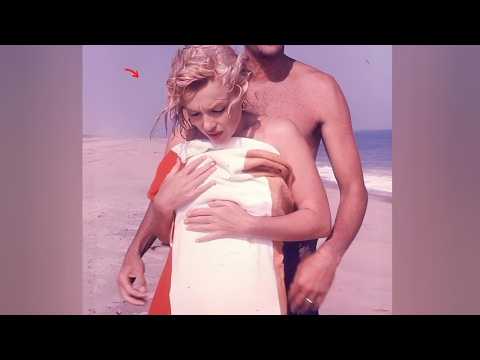
Which classic era tugs at your heartstrings the most? The golden 1940s, the elegant 1950s, or the dramatic 1970s? Each decade brought its own flavor of romance, and these photos capture it all. From the beaches of Malibu to the quiet streets of Paris, the stars let their guard down—if only for a moment.
You might spot a legendary actor you’ve admired for years, but seeing them like this? It’s like meeting them for the first time. “Is there a legendary actor or actress you’d love to see in the next showcase?” the narrator asks. The comments section is already buzzing with names—some expected, some surprising.
These images don’t just show faces; they evoke a feeling. Nostalgia, perhaps. Or the thrill of peeking behind the curtain of fame. “Do you feel these old Hollywood photos transport you to another time?” The answer is almost always yes. There’s a magic in the graininess, the faded colors, the unguarded laughter.
If you’re still watching, you’re a true classic cinema lover. A quick like means the world to us—it helps keep this archive alive. What has caught your attention so far? Was there a specific moment that stood out? Maybe it’s the way a famous couple looked at each other when they thought no one was watching. Or the solitary stroll of a starlet on a foreign shore, miles from the Hollywood machine.
The Retro Reel Archive curates these rare, carefully preserved Hollywood images. Subscribe so you don’t miss these hidden gems. “Have you seen your favorite Hollywood icon in today’s collection?” If not, who would you like to see next time? The choices are endless, and the archive is deep.
If old cinema and timeless beauty inspire you, make sure to subscribe and hit the bell. Among all these rare photos, which moment felt the most emotional or impactful to you? Share your pick. Did you enjoy exploring these forgotten Hollywood moments? Tell us which era or star you want to see next.
As we continue through the archive, the stories behind these photos begin to emerge—stories of love, scandal, and the relentless pursuit of privacy in a world that demanded everything. Stay with us, because the most surprising images are yet to come.
Take, for instance, the shot of a certain Oscar-winning leading man, barefoot on the deck of a borrowed yacht, his new bride laughing as she tries to wrestle a straw hat from his grip. No stylist, no lighting crew—just the two of them, squinting into the sun. “That one was taken by a friend with a pocket camera,” the archivist notes. “They forgot it existed for forty years.”
Then there’s the Paris balcony series. A raven-haired actress in a rumpled robe, coffee cup in hand, watching the rooftops as if she’s just discovered the city for the first time. Her husband is out of frame, but his shadow falls across the railing. You can almost hear the morning quiet.
Not every honeymoon was a postcard, though. Some of these images carry a different weight entirely. A famous couple, married only six weeks, sit apart on a stone bench in the South of France. Their hands don’t touch. Their eyes don’t meet. “The marriage lasted a year,” the narrator says quietly. “But this photo lasted forever.”
And that’s the thing about the archive—it doesn’t just preserve happiness. It preserves the truth of a moment, whatever that truth happened to be. The faded Kodachrome doesn’t judge. It simply remembers.
Which brings us to a discovery that has even the archivists puzzled. Tucked inside a manila envelope, unlabeled and undated, sits a single photograph of two enormous stars—each married to someone else at the time—sharing a quiet dinner at a roadside café. No tablecloth, no champagne. Just two people, caught in the amber glow of a table lamp, laughing at something the camera will never reveal.
The narrator pauses before the image appears. You can hear a page turn, then silence. “We almost didn’t include this one,” they admit. “But the archive isn’t here to protect reputations. It’s here to remember.”
When the photo finally fills the screen, the comments below it begin to move faster than anyone can read. Names are guessed. Denials are typed. Theories are spun. And somewhere in the middle of it all, a single question rises above the noise—one the archive itself seems to be asking.
Who were they to each other, really? And what else is still waiting in that envelope?
The camera lingers on the image longer than it should. The woman’s hand rests near her wine glass, her head tilted back mid-laugh. The man leans forward, elbows on the table, completely unaware of the lens. “The negative was found in a box of studio outtakes,” the archivist explains. “Mislabeled. Someone wrote ‘publicity still, 1953’ on the back. It isn’t.”
What gives it away? The clothing is too casual. The setting too ordinary. And the look on their faces—that particular ease—belongs to no publicity department on earth.
Viewers begin to notice details. A wedding band, clearly visible on his left hand. Hers, absent. The way the café’s neon sign reflects in the window behind them, spelling out half a word. “Every clue makes the mystery deeper,” the narrator admits. “We’ve consulted three film historians. None of them agree.”
Then there’s the second envelope. This one wasn’t even supposed to be in the collection—it arrived by mistake, mixed into a shipment of 1960s press kits from a defunct studio. Inside: eleven photographs, all of the same couple, all taken over what appears to be a single weekend.
The locations shift. A motel pool. A dusty highway. A diner booth at dawn. In each frame, they grow a little more relaxed, a little less guarded. By the final photo, she’s wearing his jacket, and he’s asleep against her shoulder.
“Whoever took these knew them,” the archivist says. “You don’t get this close with a stranger’s camera.” The question hangs in the air—was it a friend? A confidant? Someone who understood exactly what they were documenting?
The archive has digitized only four of the eleven so far. The rest remain in climate-controlled storage, awaiting restoration. But even those four are enough to spark a frenzy among vintage photography collectors. Offers have reportedly come in. The archive has declined them all.
Meanwhile, the comments continue to pile up. Some viewers swear they recognize the motel—a faded establishment on Route 66 that burned down in 1971. Others insist the woman is a B-movie actress who vanished from the screen after 1957. No one can prove anything.
And that, perhaps, is the point. The archive doesn’t solve mysteries. It preserves them. “We’re not detectives,” the narrator says with a small laugh. “We’re just the ones who kept the box.”
The camera pulls back from the final photo, the one of the sleeping man and the woman in his jacket. The screen fades to black, then a single line of text appears: “Some stories are meant to stay in the darkroom.” The archivist’s voice returns, softer now. “We’ve shown you everything we can for today. But the envelopes are far from empty.”
As the credits roll over grainy outtakes—a wave here, a laugh there—the narrator offers one last thought. “Every photograph is a door. You’ve walked through dozens tonight. The rest? They’re waiting for the next visitor.”
Before the screen goes dark, a final image flickers: the same roadside café, years later, empty. The neon sign now reads only “CAF.” A single chair is pulled out, as if someone just left. “We’ll be back with more from the vault,” the narrator promises. “Until then, keep looking. Keep wondering.”
And with that, the Retro Reel Archive signs off—leaving you with a mystery, a mood, and a question that lingers long after the video ends. What do you think really happened in that café—and would you want to know the truth, or does the mystery make it sweeter?
Report this article
Select a reason for reporting:






