In the quiet town of Stratham, New Hampshire, where neighbors knew each other by name and violent crime was almost unheard of, a young mother dropped off her three-year-old son at her ex-husband’s house on a warm August morning. She was never seen alive again. The town would soon learn that the man she had once loved, the father of her child, was capable of a betrayal so cold it would haunt investigators for years.
Vicki Bader was not just another missing person. She was a woman who had already survived a failed marriage, the loss of twins, and a bitter custody battle—only to find herself fighting for her life against the very person who had promised to love her. What happened behind closed doors in that Stratham home would expose a twisted web of manipulation, greed, and murder that no one in this idyllic community could have imagined.
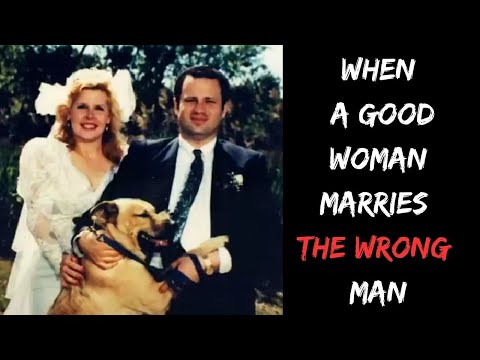
Vicki Lynn Busby was born in 1961, the middle child of a middle-class family. She grew up in Long Island, was a gifted student, played the clarinet, and had a smile that drew people to her. But her parents’ marriage crumbled, and she learned early that love could be fragile. Still, she believed in it—perhaps too much.
After a brief first marriage that ended amicably, Vicki found herself lonely at 28. She placed an ad in the Lonely Hearts column and met Seth Bader, a law student from a wealthy Jewish family. He was not handsome or charming, but he seemed stable. Her mother saw something else: arrogance, rudeness, and a coldness that made her uneasy. “He interrupted people mid-conversation and ate like an animal,” she later recalled. But Vicki was in love.
They married in 1991. Within days, Seth handed her a bill for $1,500—his share of the wedding expenses. It was the first red flag, but Vicki paid it, hoping to keep the peace. Then came the twins, a pregnancy that ended in heartbreak at six months. The couple took in Seth’s young cousin Joseph, and later his brother Matthew, and Vicki poured her love into them. She read bedtime stories, hosted birthday parties, and gave them the security they had never known. For a while, it seemed they had built a family.
But Seth’s frugality turned to cruelty. He criticized everything Vicki did, kept the house in his name alone, and flew into a rage when she became pregnant again—not because he didn’t want the child, but because she would stop earning. When she gave birth to Samuel in 1993, the cracks widened. Seth was arrested for soliciting a sex worker, and Vicki finally left, taking the children. Instead of remorse, Seth filed for divorce and custody, claiming she was unstable. He won primary custody by exploiting her fragile mental health, then left the children with his mother-in-law while he romanced his new fiancée, Mary Jean Martin.
Vicki spiraled. She attempted suicide three times, once falling into a coma. While she lay in a hospital bed, Seth and Mary Jean went to her home and helped themselves to her jewelry. He then accused her of hiding sleeping pills in Samuel’s pudding, a lie that turned her older sons against her. Joseph and Matthew wrote her venomous letters—calling her a “fat cow” and a “psycho”—letters that Joseph later admitted were dictated by Seth. “I hope you rot in hell,” Vicki had written to Seth in her own farewell note. The hatred between them was now absolute.
But Vicki refused to give up. She sent Valentine’s Day cards, tried to mend the broken bonds, and documented every threat and act of harassment—slashed tires, a snake in her home, dead parrots in her oven. She knew Seth was behind it all, but the police had no proof. Then, on August 24, 1996, Seth called her, claiming he had evidence against Mary Jean. Vicki trusted him enough to go to his house. She never came out.
For eight months, Vicki’s family lived in a fog of uncertainty. Her mother, Lois, called the police weekly, begging for updates. Flyers with Vicki’s face hung on telephone poles across New Hampshire, the paper curling and fading in the sun. Seth played the role of the concerned ex-husband perfectly, telling reporters he just wanted her home safe for Sam’s sake. “I have no idea what could have happened to her,” he said on camera, his voice steady, his eyes dry.
But the household on Stratham’s quiet street was anything but calm. Mary Jean had moved in, bringing her daughter and her breeding dogs. Joseph, now fourteen, was doing the work of a parent—changing Sam’s diapers, cooking meals, and cleaning up after the animals while Seth spent long hours at his law office. The house smelled of neglect. Social workers who visited noted the soiled carpets and the toddler’s persistent rashes, but Seth always had an explanation, always shifted the blame to Vicki’s absence.
Mary Jean grew nervous. She had heard Seth’s recorded statements to police, the ones where he painted her as the mastermind. She knew he was building a wall of self-preservation, and she was standing on the wrong side of it. In early 1997, she walked into the police station and told investigators she believed Seth had gotten rid of Vicki. It was not a confession—more a calculated act of survival—but it cracked the case open.
Then came the argument that changed everything. Joseph and Seth fought constantly, and one night the shouting spilled into the driveway. Seth, furious, told the boy he was worthless, that he had done nothing but cause trouble since the day he arrived. Joseph stood there, fists clenched, and something inside him broke. The next morning, he went to the police and said he wanted to talk.
He led detectives into the Maine woods, to a shallow grave beneath a canopy of pine. Vicki’s remains were there, a plastic bag still over her head. The medical examiner would later confirm what the boy already knew: she had been shot once, close range, in the back of the head. Joseph told them everything—the shotgun in the study, the sound of the shot, the drive north with his father, the shovel, the silence on the way home. “I did what he told me,” Joseph said, his voice flat. “I always did what he told me.”
Seth was arrested on April 14, 1997. In court, he pointed fingers at everyone but himself—Mary Jean, Joseph, even Vicki’s own instability. But the jury saw through him. In May 1998, he was convicted of first-degree murder and conspiracy. The judge sentenced him to life without parole, and the courtroom erupted in applause. Vicki’s mother wept in the front row, clutching a photograph of her daughter.
Sandro Stuto, the man who had waited in the study with a shotgun, took a plea deal and testified against Seth. He served five to ten years and was deported to Italy. Mary Jean’s charges were dismissed after prosecutors cited problems with her immunized statements, and she walked free—a fact that infuriated Vicki’s family for decades. Joseph, still a minor, pleaded true to a delinquency petition and was placed in foster care, given a chance to rebuild his life far from the man who had trained him to obey.
Sam, just three when his mother was killed, grew up with Vicki’s relatives. Matthew, the younger adopted son, was spared the horror of that day because Mary Jean had taken him to the supermarket. Both boys were permanently removed from Seth’s reach. In time, Joseph would speak publicly about his role, not as an excuse, but as a warning. “He made me believe I had no choice,” he said years later. “But I did. I just couldn’t see it then.”
Vicki rests at Edgewood Cemetery in Nashua, New Hampshire. Her headstone bears a simple inscription: Beloved mother, daughter, friend. The town of Stratham never forgot her, and neither did the investigators who spent years piecing together the truth. Her story became a cautionary tale about the danger of trusting the wrong person, and about the courage it takes to leave.
But for those who loved her, the story does not end at the grave. It lives on in the sons she raised, in the foster children she saved, and in the quiet determination of a woman who, even in her darkest hours, kept trying to be a mother.
What the public never fully grasped was the sheer scale of the deception Seth had engineered long before that August morning. He had not simply killed his ex-wife in a moment of rage. He had spent months constructing a narrative, recruiting accomplices, and rehearsing the crime with the cold precision of a man who believed the law was a tool he could bend to his will.
The pipe bomb that was meant for Vicki’s mailbox—the one Sebastian Karadona allegedly planted six months before the murder—had failed to detonate. But it had served its purpose. It had terrified her. It had made her feel hunted in her own home, and it had given Seth exactly what he wanted: a woman too frightened to think clearly, too exhausted to fight back.
Prosecutors would later argue that the motive was money. Seth was drowning in alimony and child support payments, furious that his ex-wife was draining the lifestyle he had built for himself and Mary Jean. But those who knew him best believed the truth was darker. He could not tolerate the idea that Vicki might one day be happy without him. He had to erase her, not just from his life, but from the world.
Mary Jean’s role remained the most contested piece of the puzzle. She had taken Matthew to Shaw’s supermarket on the morning of the murder, a convenient alibi that kept the eight-year-old from hearing the gunshot. She had asked Sandro to dispose of Vicki’s car. She had joined in the campaign of terror—the slashed tires, the dead dogs, the threatening letters. Yet when the moment came to face a jury, she invoked her Fifth Amendment right and refused to testify, and the charges against her were dismissed.
Vicki’s mother, Lois, spent years writing letters to prosecutors, begging them to reopen the case. “She knew,” Lois said in one interview, her voice trembling with a grief that never aged. “She knew what was going to happen, and she did nothing to stop it. How can she walk free while my daughter lies in the ground?”
But the legal system had spoken. Without Mary Jean’s testimony, the case against Seth had been built on Joseph’s word and Sandro’s plea deal, and those had been enough. Mary Jean faded from the headlines, relocated, and rebuilt her life out of the public eye. She never faced a day in court for her alleged role in the conspiracy.
Joseph, meanwhile, carried a burden no teenager should ever have to bear. He had lured his adoptive mother into the house. He had buried her body in the Maine woods. He had written the letters that broke her heart, letters dictated by the man he was desperate to please. In the years that followed, he would struggle with what he had done—not as a monster, but as a boy who had been groomed into obedience by a father who treated him like a servant.
When he testified against Seth, his voice never wavered. He described the shotgun, the study, the sound of the shot. He described the drive north, the shallow grave, the silence on the way home. And when the prosecutor asked him why he had waited so long to come forward, Joseph gave an answer that silenced the courtroom.
“Because I was afraid of him,” he said. “And because I thought if I told the truth, I would lose the only family I had left.”
He was placed in foster care under probationary terms, given a new school, a new home, a new chance. But the past does not simply disappear. In the years that followed, Joseph would speak publicly about his role in the murder—not to excuse himself, but to warn others. He became, in his own way, a voice for the voiceless: a reminder that manipulation can turn love into a weapon, and that the people we trust most are sometimes the ones we should fear.
Sam, the youngest, grew up surrounded by Vicki’s relatives, shielded from the worst of the truth until he was old enough to understand. He bore his mother’s smile and her quiet strength, and those who knew her saw her spirit living on in him.
Matthew, too, was raised by Vicki’s family, far from the chaos of Seth’s household. He had been spared the horror of that August morning, but he had not been spared the loss. He had lost a mother who had loved him as her own, and he had lost the brother who had been his protector.
The Bader case became a landmark in New Hampshire—a cautionary tale taught in law schools and domestic violence shelters alike. It exposed the gaps in the system that had allowed a man like Seth to manipulate the courts, to weaponize his children, and to silence his ex-wife with a single bullet. It also exposed the courage of a woman who, even in her darkest hours, had refused to stop fighting for the sons she loved.
Years later, Joseph sat in a small apartment far from New Hampshire, staring at a photograph of Vicki he had kept hidden for decades. “She was the only mother I ever really had,” he said softly. “And I helped bury her.”
He had spent his adult life working with troubled youth, trying to repay a debt that could never be fully paid. Sam grew into a quiet, thoughtful man who rarely spoke of his father. Matthew built a life of his own, far from the headlines. None of them ever escaped the shadow of that August morning.
Vicki’s grave in Nashua remains a place of pilgrimage for those who remember her story. Her mother Lois visited every week until her own passing, always leaving fresh flowers and a handwritten note. “You were never forgotten,” one note read. “Not for a single day.”
What do you think—can a person like Joseph ever truly be forgiven for the role he played, or does the past always follow us home?
Report this article
Select a reason for reporting:






