The desert sun blazed down on April 10, 1941, as 14,000 Australian soldiers stood surrounded by 35,000 German and Italian troops. The odds were impossible. The orders were simple: hold at all costs. Yet over the next 241 days, these men would do the unthinkable—they would hold the line until the world remembered how to fight back.
In the grand chess game of World War II, Tobruk was the queen. This dusty port town on the Libyan coast was the only deep-water harbor between Alexandria and Benghazi. Whoever controlled it controlled the supply lines to the entire North African campaign. For Hitler’s Afrika Korps, it was the gateway to Egypt, the Suez Canal, and the oil fields of the Middle East. For the Allies, it was the last fortress standing between Rommel and Cairo.
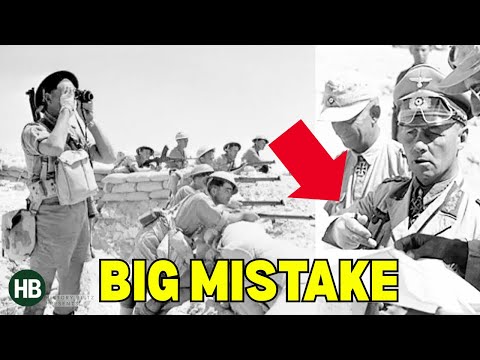
General Erwin Rommel, the Desert Fox himself, had swept across Libya like a sandstorm, crushing everything in his path. His reputation was built on lightning victories—unstoppable, unbeatable, untouchable. But now he faced a problem. His supply lines stretched over 1,000 miles back to Tripoli. Every gallon of fuel, every shell, every drop of water had to be trucked across the desert. Tobruk’s harbor could change everything. With it, German ships could deliver supplies directly to the front. Without it, Rommel was fighting on borrowed time.
The Australian 9th Division, commanded by Lieutenant General Leslie Morshead, had been handed what looked like a death sentence: Hold Tobruk no matter what.
April 11, 1941. Dawn broke with the thunder of artillery. Rommel launched his assault with typical German precision. Panzer tanks rolled forward like steel beasts, their tracks chewing up the desert sand. Stuka dive bombers screamed down from the sky, their sirens wailing like banshees. The perimeter defenses, originally built by the Italians, seemed pathetic against this mechanized fury. Concrete bunkers cracked under direct hits. Machine gun nests vanished in clouds of smoke and debris.
But the Australians had learned something in their brief time at Tobruk. The real fortress wasn’t the concrete and wire above ground. It was the maze of caves, tunnels, and hidden positions carved into the limestone cliffs. As German shells pounded the surface, the defenders melted underground like ghosts. When the barrage lifted and German infantry advanced, they found not empty positions, but a hornets’ nest of hidden Australians ready to fight.
On the night of April 13th to 14th, German infantry broke through the wire defenses and established positions with machine guns and mortars. It looked like the beginning of the end, but Corporal John Edmondson and five privates had other ideas. Led by their officer, they fixed bayonets and charged straight into the German positions under heavy fire. Edmondson fell mortally wounded, but not before his bayonet charge shattered the German foothold. For his courage, he would receive the Victoria Cross. For the Germans, it was their first taste of what they were truly up against.
The siege settled into a rhythm of death. Every dawn brought fresh artillery barrages. The German 88mm guns, originally designed as anti-aircraft weapons, now turned their deadly attention to Australian positions. These weren’t random bombardments. They were surgical strikes designed to break both fortifications and spirits.
The heat was unbearable. Daytime temperatures soared above 120° Fahrenheit. Water was rationed to half a gallon per man per day, and that had to cover drinking, washing, and cooking. But worse than the heat were the flies. Millions of them swarming over everything—food, wounds, faces. Disease followed close behind. Dysentery swept through the garrison. Desert sores festered. The field hospitals worked around the clock performing amputations by candlelight in underground bunkers.
One Australian medic wrote in his diary, “We’ve got three kinds of patients here: those who are dying, those who wish they were dying, and those too stubborn to die. Thank God for the stubborn ones.”
But the Rats of Tobruk, as German propaganda mockingly called them, weren’t content to just survive. They were going to bite back.
Lieutenant Colonel Ralph Honner of the 2/48th Battalion devised a strategy that would drive Rommel to distraction: aggressive night raids. Under cover of darkness, small teams of Australians would slip out through gaps in the wire, crawl across no man’s land, and strike German positions with devastating effect. These weren’t desperate last stands. They were calculated acts of warfare designed to keep the enemy off balance and afraid.
Australian snipers, many of them farmers and hunters in civilian life, turned the siege into a deadly game of cat and mouse. German officers learned to keep their heads down. The Australians were picking them off with terrifying accuracy.
But it was the psychological warfare that really got under German skin. The Australians would blast music across no man’s land at night—everything from “Waltzing Matilda” to American jazz. They’d shout taunts in broken German: “Hey Fritz, your Führer’s got one ball!” The laughter echoing from the Australian positions was more unnerving than gunfire.
One German soldier wrote home: “The Australians are mad. They sing while we shell them. They laugh when we attack. We cannot understand these people.”
But holding the fortress was only half the battle. The other half was happening 300 miles away across the dark Mediterranean.
While the siege raged on land, a desperate gamble played out at sea. The Royal Australian Navy had to keep Tobruk supplied, but every voyage was a death sentence waiting to happen. The journey became known as the “Rat Run,” a 300-mile dash from Alexandria to Tobruk and back through seas crawling with German U-boats and under constant attack from the Luftwaffe.
Australian destroyers made this run 139 times during the siege, covering a total distance of 50,000 miles—equivalent to circling the globe twice. The ships could only operate at night, racing across the dark Mediterranean like phantoms. They’d arrive at Tobruk Harbor just after midnight, frantically unload supplies, evacuate wounded, and disappear before dawn brought German bombers.
HMAS Waterhen became legendary for these runs—until May 29th when German dive bombers finally caught her in daylight. She limped toward Alexandria for 36 hours, her crew fighting floods and fires before finally sinking just 15 miles from safety. But she’d completed her mission. The supplies were delivered.
Every crate that made it to shore meant another day the garrison could hold. Every failure meant Australians would go hungry, go without ammunition, go without hope.
As weeks turned to months, the Desert Fox was becoming increasingly desperate. His reputation, built on lightning victories across France and North Africa, was being slowly destroyed by a handful of Australians who simply refused to quit. For the first time in his career, Erwin Rommel was failing—and the world was watching.
Rommel intensified the bombardments. German artillery pounded Tobruk around the clock. The Luftwaffe flew sortie after sortie, dropping everything from high explosives to incendiary bombs. At night, German patrol boats tried to cut the sea supply line. But something strange was happening. With each failed assault, with each unsuccessful bombardment, it wasn’t Australian morale that was cracking. It was German morale.
German soldiers, accustomed to quick victories and rapid advances, found themselves bogged down in siege warfare against an enemy that seemed to thrive on punishment. Letters home began expressing doubt. The myth of German invincibility was cracking like concrete under Australian artillery.
Rommel himself admitted in his war diary: “The Australians fought with a tenacity I have seldom seen equaled.” For a man who had conquered France, this admission was devastating to his legend. The Desert Fox was being outfoxed, and he knew it.
Through the scorching summer months, the Australians held their ground against impossible odds. But by August 1941, after four and a half months of brutal siege warfare, the Australian government demanded their battle-worn troops be withdrawn. The Rats of Tobruk had done their job. They had broken Rommel’s momentum, shattered his reputation, and proven that the German war machine could be stopped.
As the ships arrived to evacuate them under cover of darkness, they left behind something more valuable than territory. They left behind hope. The British 70th Division and Polish Carpathian Brigade took over the fortress, inheriting positions carved from limestone and determination. The siege would continue for another three and a half months, but the Australians had already achieved the impossible. They had turned Tobruk from Rommel’s stepping stone into his stumbling block.
In November 1941, Operation Crusader finally broke the siege entirely. British armor struck from the east while the new garrison broke out from within. After 242 days total, the siege of Tobruk was over. But it was the first four months—those crucial 120 days when the Australians stood alone against the Desert Fox—that changed the course of the war.
When the dust settled and the casualty reports were counted, the world began to understand what had happened at Tobruk. This wasn’t just another battle. It was the moment the myth of German invincibility died in the desert sand. Winston Churchill, never one for excessive praise, called the defense of Tobruk a turning point in the war. The Australians had done something no other Allied force had managed. They had stopped Rommel cold and held their ground for eight months against impossible odds.
But perhaps the greatest tribute came from Rommel himself. In his postwar memoirs, he wrote: “The Australians fought with exceptional courage and tenacity. I have found nowhere in the world an adversary more difficult to crack than the Australian soldier.”
The nickname Rats of Tobruk, originally meant as an insult by German propaganda, became a badge of honor. These were ordinary men—farmers, factory workers, clerks, and tradesmen—who had become extraordinary soldiers through sheer bloody-minded determination.
Today, streets across Australia bear the name Tobruk. In suburbs from Sydney to Perth, memorials honor men who refused to surrender when surrender seemed the only rational choice. They didn’t ask to be heroes. They didn’t ask for glory or parades or speeches from politicians. The Rats of Tobruk asked for just one thing: the chance to do their job.
That job was simple. Hold the line. Hold it when the artillery fell like rain. Hold it when the Stukas screamed overhead. Hold it when the water ran low and the flies swarmed and the heat baked them like clay in a kiln. Hold the line because if they didn’t, no one else would.
For 241 days, they held that line. They held it with Lee-Enfield rifles and Mills bombs, with barbed wire and sandbags, with courage and stubbornness, and that peculiar Australian ability to find something to laugh about even in the depths of hell. They held it until help arrived. They held it until the siege was broken. They held it until the myth of German invincibility lay shattered in the North African desert.
The Rats of Tobruk proved something that the world had forgotten in those dark days of 1941: that ordinary people, when their backs are against the wall, are capable of extraordinary things.
When you face impossible odds, when the enemy seems overwhelming, when defeat appears inevitable, remember Tobruk. Remember that 14,000 Australians looked at 35,000 German and Italian troops and said, “Come on then, let’s have a go.” They didn’t just hold the line. They held the line until the world remembered how to fight back.
If you believe the Rats of Tobruk should never be forgotten, share this story. Because heroes like these deserve to be remembered—not just by their countrymen, but by anyone who has ever had to stand up when standing up seemed impossible.
The Rats came out of their holes and they bit back harder than anyone ever expected. Then they vanished into legend.
But legends don’t vanish—they echo. In the decades that followed, the men who crawled out of Tobruk’s tunnels returned to their farms and factories, never speaking of what they’d done unless asked. When asked, they’d shrug and mutter something about doing their duty. That was the Australian way.
Yet their children and grandchildren wore the name with pride. “My grandfather was a Rat of Tobruk” became a phrase spoken with quiet reverence in pubs from Brisbane to Fremantle. The rats had become a tribe, bound not by blood but by shared survival.
So here’s the question that lingers like desert heat: when your own moment comes—when the odds stack against you and surrender whispers its seductive logic—will you remember Tobruk? Will you find that stubborn, bloody-minded courage to hold your line?
What line are you holding today?
Report this article
Select a reason for reporting:






