July 1945. The war in the Pacific is grinding toward its bloody conclusion, yet on the island of Borneo, Japan’s empire still clings to one final prize. Off the coast, over 33,000 Australian troops wait aboard ships, poised to launch the largest amphibious assault ever conducted by Australian forces. Their target: Balikpapan—a city transformed into a fortress, bristling with bunkers, artillery, and thousands of Japanese defenders sworn to fight to the bitter end. What unfolds on those beaches and in those streets will become one of the most harrowing and heroic chapters of World War II.
For the men of the 7th Division, this is not just another mission. It is a brutal fight for every inch of ground, a test of courage against an enemy who has spent years preparing. The Japanese, cut off from reinforcements and supplies, have turned Balikpapan into a death trap. Mines line the beaches, bunkers are carved into cliffs, and the urban center is fortified for house-to-house combat. The Australians know the cost will be high—but they also know that victory here could sever Japan’s last major oil supply and bring the war one step closer to its end.
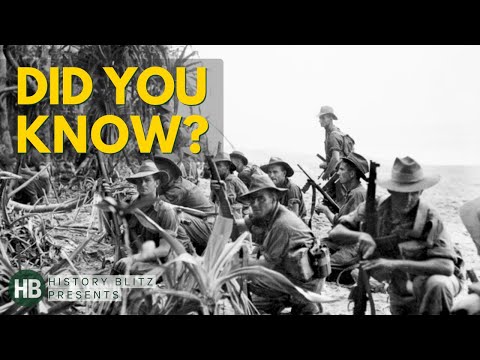
As the assault begins, the air thickens with gunfire and explosions. The first wave hits Green Beach near Klandasan, and immediately the horrors of battle unfold. Machine guns rake the shoreline, artillery shells scream overhead, and the Australians press forward through a labyrinth of defenses. Amid the chaos, ordinary men perform extraordinary acts of valor. One of them is Captain Raymond Jesse Alsop, a medical officer with the 2nd/5th Commando Squadron. When his comrades are pinned down by fire from six machine-gun positions, Alsop doesn’t hesitate. He rushes into the open, treating the wounded and dragging them to safety, repeatedly exposing himself to enemy fire.
“I have never known a unit medical officer to equal him, nor have I ever known a braver man,” his commanding officer would later write. Alsop’s selflessness saves at least three lives, but at the cost of his own. His story is just one of many that emerge from the hell of Balikpapan.
On the beaches, Australian sappers work tirelessly under fire to clear mines and barbed wire, while tanks from the 29th Armored Regiment provide crucial support, blasting bunkers and machine-gun nests. The 25th Brigade, led by Brigadier Kenneth Eather, pushes into the city, where every building becomes a stronghold. The fighting is grueling, room by room, and the Australians adapt quickly to the demands of urban combat. The 2/16th Battalion distinguishes itself with exceptional discipline and tactical precision, but the cost is heavy.
By July 3rd, much of Balikpapan is in Australian hands, but the Japanese retreat into the jungle, launching guerrilla attacks on supply lines. The Australians respond with coordinated patrols and airstrikes, systematically rooting out the remaining pockets of resistance. As the battle rages, the question remains: how much longer can the Japanese hold out? And what will be the final price of victory?
The answer comes sooner than expected. By July 21st, organized Japanese resistance collapses. Major General Yamamoto’s forces have suffered over 2,000 killed, with the remainder captured or scattered. The Australians have won—but the cost is staggering. Over 229 soldiers lie dead, 634 wounded. The beaches and streets of Balikpapan are littered with the wreckage of war, and the silence that follows is heavy with the weight of what has been lost.
Yet even in victory, the Australians face a new challenge. The Japanese occupation has left thousands of civilians and prisoners of war in dire conditions—starving, sick, and traumatized. The men of the 7th Division, who have just fought through hell, now turn their hands to mercy. They distribute food and medicine, set up field hospitals, and begin the slow process of repatriation. For many of the liberated, it is the first taste of kindness in years.
“We came as conquerors, but we stayed as caretakers,” one Australian officer later recalled. The soldiers who had stormed the beaches now found themselves rebuilding water supplies, restoring health care, and helping to reestablish local governance. Martial law is imposed initially, but under the British Borneo Civil Affairs Unit, civil administration is gradually reinstated. The oil facilities, so vital to Japan’s war machine, are repaired—this time to fuel peace, not conflict.
As the weeks pass, the Australians begin to withdraw. By early 1946, most have left Borneo, their mission complete. But the legacy of Balikpapan endures—not just in the history books, but in the lives they saved and the freedom they restored. The battle was the last major Australian ground operation of World War II, a final, bloody chapter in a war that had already claimed so much.
And yet, the story of Balikpapan is not just about military triumph. It is about the incredible bravery of individuals like Captain Raymond Alsop, who gave his life so others might live. It is about the sappers who cleared mines under fire, the tank crews who blasted bunkers, the infantrymen who fought room by room. It is about the nurses and medics who worked tirelessly, the engineers who rebuilt, and the ordinary soldiers who, in the face of unimaginable horror, held on to their humanity.
Today, the oil fields of Balikpapan no longer fuel a war. The city has grown, its scars faded but not forgotten. And somewhere in the hearts of those who remember, the story of the 7th Division lives on—a testament to courage, sacrifice, and the enduring cost of peace.
But victory on the battlefield did not mean the fighting was truly over. In the weeks that followed, small bands of Japanese soldiers—some unaware the war had ended, others refusing to believe it—continued to emerge from the jungle. Australian patrols swept the hills inland, calling out in Japanese and dropping leaflets that promised fair treatment. Some defenders surrendered quietly, hollow-eyed and starving. Others chose a different end.
“We found them in caves, in riverbeds, in the ruins of villages,” recalled one Australian sergeant. “Boys who looked like they hadn’t eaten in weeks. They’d lay down their rifles without a word.”
The humanitarian work, meanwhile, grew more urgent by the day. Liberated prisoners of war—Dutch, British, Australian—poured into makeshift hospitals, many barely able to walk. The Australians shared their own rations, their own blankets, their own morphine. It was a strange inversion of war: men who had spent weeks trying to kill one another now stood side by side, passing out rice and bandages.
It was during this fragile peace that a curious episode unfolded—one that would become a favorite story among the troops. With organized resistance collapsed, the Australians sought to open surrender negotiations with the remaining Japanese command. Leaflets were dropped over the hills, instructing the enemy to monitor a specific radio frequency at a designated hour. And to identify the Australian station, a call sign was chosen: “Drongo.”
In Australian slang, a drongo was a fool—a harmless, dim-witted sort. The Japanese, unaware of the insult, dutifully tuned in and responded. “Drongo, this is Japanese headquarters. We are listening.” The Australians, listening in their forward bunker, struggled to keep straight faces. The negotiations proceeded smoothly, and two blindfolded Japanese officers were escorted to Australian lines to formalize the surrender. The war’s final act in Borneo was being written with a joke.
Yet beneath the humor lay exhaustion. The men were worn thin—weeks of combat, then weeks of clearing and rebuilding. Malaria and dysentery swept through the camps. Some soldiers who had survived the beaches fell ill in the relative quiet that followed. The medics, like Alsop before them, worked without rest.
And then, in mid-August, word arrived that changed everything. The atomic bombs had fallen on Hiroshima and Nagasaki. The Soviets had entered the war in the north. Japan was surrendering. The men of the 7th Division greeted the news with a strange, quiet relief. There were no parades, no wild celebrations—just men sitting on crates, staring at the sea, thinking of the friends who would never go home.
The formal surrender of Japanese forces in Borneo came on September 10, 1945, aboard HMAS Burdekin at Balikpapan harbor. Major General Yamamoto, his sword surrendered, signed the document with a trembling hand. The Australians watched in silence, the weight of the moment settling over them. “It’s over,” someone whispered. “It’s really over.”
For the men of the 7th Division, the victory parade would come later—but the real work had already begun. The oil fields were repaired, the hospitals filled and emptied, the shattered city slowly stitched back together. Australian engineers cleared booby traps from schools and churches. Medics treated Japanese prisoners alongside Allied survivors. The war had ended, but the healing had only just begun.
Captain Raymond Alsop never saw that peace. He fell on the first day, in the hell of Green Beach, dragging wounded men from the fire. His Star of Gallantry—awarded seven decades later—now rests in a museum case, a small medal for a man who gave everything. His commanding officer’s words echo still: “Nor have I ever known a braver man.”
Today, Balikpapan is a bustling Indonesian city, its oil refineries humming, its streets alive with traffic. The bunkers are gone, the beaches lined with fishing boats. But in a quiet corner of the city, a small monument stands—a simple stone bearing the names of the Australians who fell. Few tourists stop there. But those who do read the inscription and wonder at the cost.
The Battle of Balikpapan was the last major Australian ground operation of World War II. It was costly, controversial, and in some eyes unnecessary. But for the men who fought there, it was never about strategy. It was about the mate beside you, the wounded man in the open, the promise that no one would be left behind.
And as the sun sets over the Makassar Strait, casting gold across the water where the landing craft once roared, the story endures—a reminder that courage is not measured in victories, but in the lives we save and the peace we build.
What would you have done, standing on that beach, with the guns roaring and a wounded man calling your name?
Report this article
Select a reason for reporting:






