The Queen Mother—beloved matriarch, symbol of resilience, the smiling face that guided Britain through war and peace. But beneath the polished exterior and pearl-studded facade, a secret obsession festered, hidden from the world for decades. What could possibly haunt the woman who seemed to have everything? The answer lies in the shadows of history, waiting to be uncovered.
It began in the quiet hours before dawn, when the palace slept and the weight of the crown pressed heaviest. In a secluded chamber, far from prying eyes, she indulged in a ritual so private, so consuming, that even her closest confidantes remained oblivious. But secrets have a way of seeping through the cracks of even the thickest walls.
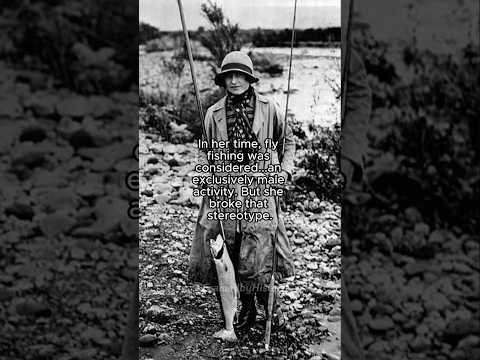
The first clue emerged from a dusty archive, a single letter tucked between the pages of a forgotten diary. The handwriting was unmistakable—elegant, controlled, yet trembling with an emotion the Queen Mother rarely displayed in public. “I cannot escape it,” she wrote. “It follows me, a specter in the daylight, a whisper in the dark.” What was she referring to? The letter offered no answers, only a tantalizing glimpse into a mind plagued by something she could neither name nor conquer.
As researchers delved deeper, they uncovered a pattern—a series of clandestine meetings, always at the same hour, always in the same remote corner of the royal estate. Who—or what—was she meeting? The staff who served her then have long since passed, but their descendants whisper of strange occurrences: lights flickering in the abandoned chapel, a figure draped in black slipping through the hedges, the faint sound of chanting carried on the wind.
The Queen Mother’s obsession was not merely a private quirk; it was a force that shaped decisions, strained relationships, and left a trail of unanswered questions. Why did she insist on visiting the old tower alone, even as her health declined? Why did she order the destruction of certain documents, and why did she keep a single, faded photograph hidden beneath her pillow—a photograph no one was ever allowed to see?
Some say it was grief, a desperate attempt to reconnect with a lost love. Others claim it was guilt, a penance for a long-buried sin. But the truth, as always, is far stranger than fiction. The Queen Mother’s secret obsession was not a mere hobby or a fleeting fancy—it was a compulsion that would ultimately lead her down a path from which there was no return.
And as we peel back the layers of myth and memory, we begin to see the woman behind the crown: vulnerable, haunted, and driven by a desire so powerful it defied reason. The story that follows is not one of royalty and grandeur, but of a soul entangled in its own mysteries.
To understand what gripped her, one must return to the winter of 1910—a season of bitter cold and bitterer grief. The young princess, barely more than a girl, had watched her father’s coffin pass through the streets of London, the crowds weeping, the bells tolling. It was then, in the hollow silence that followed, that she first heard the voice.
Not a voice of comfort. Not a voice of reason. Something older, rougher, like stones grinding beneath the earth. It spoke to her in the darkness of her bedchamber, and though she pressed her hands to her ears, it would not be silenced. “You are not alone,” it said. “You will never be alone.” She told no one. Who would believe a princess haunted by a whisper?
The years passed, and the voice faded—or so she believed. She married, bore children, wore crowns, and smiled for cameras. But on certain nights, when the wind rattled the windows of Balmoral and the fire burned low, it returned. Always the same words. Always the same promise. And always, always, it asked for something in return.
The archives reveal a turning point: a letter dated 1943, addressed to no one, found sealed inside a hollowed-out book. In it, the Queen Mother describes a bargain—a pact made in desperation during the Blitz, when bombs fell on London and her daughters cowered in the cellars. “I offered it my fear,” she wrote. “And it gave me strength.” The handwriting here is jagged, almost frantic, a stark contrast to her usual elegance.
But what had she offered beyond fear? The letter cuts off mid-sentence, the final line smeared as if water had been spilled—or tears. Researchers have debated that smear for years. Some say it was rain. Others insist the paper was dry when discovered. One archivist, now retired, swears the smear was not water at all, but something darker.
Her staff, in those wartime years, reported oddities they dared not speak of openly. Candles found burned down to stubs in the locked chapel. A circle of salt discovered on the floor of the old tower, hastily swept away. And once, a maid swore she saw the Queen Mother kneeling before an empty mirror, speaking to a reflection that did not match her own.
The maid was dismissed within the week. No reference was given. No explanation offered. She never spoke of it again—until now, through a granddaughter who finally broke the family’s silence.
What emerges is not a portrait of a monster, but of a woman caught between duty and something far older than the monarchy itself. The obsession was not merely hers; it was inherited, passed down through blood and silence. And the photograph beneath her pillow—the one no one was ever allowed to see—holds the key.
The granddaughter, a woman in her sixties named Eleanor, agreed to meet in a small café in Edinburgh, far from the pomp of palaces. She brought nothing with her but a worn leather satchel and a reluctance that hung about her shoulders like a shawl. “My grandmother never spoke of it while she lived,” Eleanor said, her hands wrapped around a cooling cup of tea. “But she left something behind. A warning, I suppose. Or a confession.”
From the satchel she drew a bundle of letters bound in faded ribbon, and a single photograph, its corners soft with age. The image was grainy, the work of an amateur, but the subject was unmistakable: the Queen Mother, younger then, standing in the doorway of the old tower. And beside her, half-swallowed by shadow, stood a figure that did not seem entirely human.
It was tall, impossibly so, its outline wavering as though drawn in charcoal and then smudged. No face could be discerned—only a suggestion of a head, tilted slightly, as if listening. Eleanor had kept the photograph hidden for thirty years. “I tried to destroy it once,” she admitted. “I held it over the fire. But I couldn’t. It felt like killing something that was still alive.”
The letters, she explained, were written in the Queen Mother’s hand but addressed to no living soul. They were dated across four decades, from 1943 to the year before her death. Each one began the same way: “To the one who waits.” And each one ended with a plea for patience, for silence, for a promise yet unfulfilled.
“She was buying time,” Eleanor whispered. “That’s what I finally understood. Whatever she bargained with, whatever answered her in that chapel—it wasn’t done with her. It never was. It wanted more, and she kept giving, piece by piece, until there was almost nothing left.”
The final letter, dated just months before her death, was different. The elegant script had collapsed into something cramped and hurried, the pen pressing so hard it tore the paper in places. “It is coming for what remains,” the Queen Mother had written. “Not my fear this time. Not my strength. It wants the child. It has always wanted the child.”
Eleanor’s voice dropped to a whisper. “There was no child in the family then. Not yet. My mother was already grown. But she was pregnant—secretly, quietly, with me.” She paused, and the café seemed to grow colder around them. “I was born seven months after that letter was written. And for the first three years of my life, I slept in a room with salt beneath the crib and a mirror turned to the wall.”
The archivist’s account of the mirror, the kneeling, the reflection that did not match—it all circled back to this. The Queen Mother had not been worshipping something. She had been negotiating. And the price of her long reign, her unshakeable strength, her very survival, had been paid in installments of blood and silence.
But the story does not end with her death. Eleanor reached into the satchel one final time and produced a small velvet box. Inside, nestled on a bed of silk, lay a tarnished silver locket. “She gave this to my mother on her deathbed,” Eleanor said. “She told her to keep it closed. She said that as long as it stayed shut, the bargain held.” Her fingers trembled over the clasp. “I opened it last month. I don’t know why. I just—I needed to know.”
She did not describe what she saw inside. She only looked up, her eyes wet, and said the words that would echo long after the tea grew cold between them. “It’s not a photograph. It’s a name. And it’s mine.”
Eleanor closed the locket with a snap, her hands shaking. “I’ve carried this for weeks,” she said. “The name is mine, but it’s not the one I was given at birth. It’s older. It’s what it called me before I was born.” She slid the locket across the table. The silver was cold, unnaturally so, and the clasp seemed to pulse faintly against her palm.
She explained that the bargain had never been about power or protection. “She was buying time for me,” Eleanor whispered. “Every letter, every plea—she was stalling it. It wanted me from the start, and she kept it waiting.” The Queen Mother’s obsession was not a haunting but a vigil, a decades-long standoff fought in shadows and silence.
But the locket had been opened. The name had been read aloud. “It knows I’m here now,” Eleanor said, her voice steady despite the tears. “The bargain is broken.” She looked toward the café window, where the afternoon light seemed to dim, just for a moment, as if something vast had passed between the sun and the glass.
She stood, tucking the locket back into its box, and left without another word. The tea sat cold, the ribbon lay unspooled on the table, and the question hung in the air like a held breath. What happens when the thing that waits is finally invited in?
If you found a locket with your own secret name inside, would you open it—or would you keep it shut and hope the bargain holds?
Report this article
Select a reason for reporting:






