The jungle was silent—too silent. Lieutenant Colonel Andre Lucas stood at the edge of Firebase Ripcord, staring into the mist-shrouded valley below. It was July 1, 1970, and the 101st Airborne had been holding this remote hilltop for weeks. But today felt different. The air was thick with humidity and something else—a tension that crawled under the skin. Lucas had seen the intel reports. Thousands of North Vietnamese Army troops were massing in the A Shau Valley, hidden beneath the triple-canopy jungle. They were coming, and Ripcord was the prize.
Perched on Hill 927, the firebase was a strategic linchpin—a dagger pointed at the heart of NVA supply lines. But it was also a trap. Surrounded by higher ridges, the base was a bowl, and the enemy held the high ground. Every supply run, every evacuation, every breath depended on helicopters that braved relentless anti-aircraft fire. For 23 days, the Screaming Eagles would fight not just for victory, but for survival.
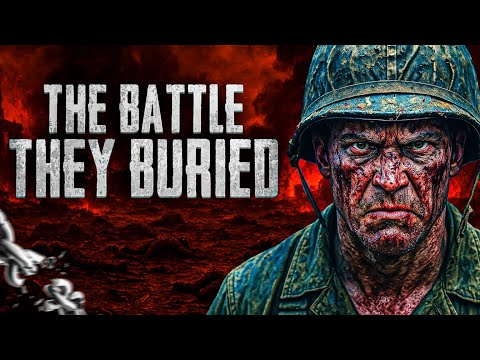
The first mortar round hit at 07:15. It slammed into the tactical operations center, shredding sandbags and sending men diving for cover. Within seconds, dozens more rained down, a thunderous barrage that turned the hilltop into a hellscape of fire and shrapnel. “Incoming! Get to your positions!” someone screamed, but the words were swallowed by explosions. From the surrounding ridges, NVA soldiers poured out of hidden bunkers, their AK-47s and RPGs adding to the chaos. The siege of Firebase Ripcord had begun.
Lucas moved through the carnage, his voice calm but urgent. “Hold the line! Keep firing!” he shouted, rallying his men. But the enemy was everywhere and nowhere—invisible beneath the jungle canopy, their positions marked only by the flash of muzzle fire. American howitzers roared in response, 105mm and 155mm shells arcing into the hills, but the dense foliage swallowed the impact. Air support arrived—Cobra gunships and F-4 Phantoms—but even their firepower couldn’t silence the relentless assault.
As night fell, the attacks didn’t stop. Flares lit the sky, casting eerie shadows that danced among the trees. Soldiers huddled in foxholes, sleep a distant memory. “They’re trying to break us,” whispered Private First Class Jimmy Torres, his hands trembling as he reloaded his M16. Beside him, Sergeant Mike Rourke nodded. “Then we don’t break.”
The battle for the surrounding hills would prove just as brutal. Hill 805, Hill 902, Hill 1000—each a bloody crucible. On Hill 805, Bravo Company fought inch by inch, scaling steep terrain under a hail of bullets. “Go! Go! Go!” screamed Lieutenant Daniels as they leaped from hovering helicopters into enemy fire. The NVA had the high ground, but the Americans had something else—grit. They took the hill, but the cost was measured in blood.
Hill 902 was a different story. Charlie Company, compromised and exposed, faced a night attack by NVA sappers who crept through the perimeter like ghosts. “They’re inside! They’re inside!” The cry went up too late. Captain Huitt was killed in the first volley, and the company fought for its life in the darkness. By dawn, seven men were dead, and the survivors were shattered.
But the worst was yet to come. Hill 1000, a fortress of enemy bunkers and machine guns, would become a graveyard. On July 6, a recon team led by Sergeant Granberry was sent to scout the enemy positions. “Just a recon,” they were told. But orders changed. “Attack? That’s suicide!” Granberry protested. The response was cold: “Orders are orders.” The team crawled forward, and then all hell broke loose. RPGs tore through the jungle, and men fell screaming. Granberry, wounded, ran through gunfire to find help. “We need backup! Now!” he shouted, blood streaming down his face. But the hill remained in enemy hands, and the cost mounted.
As July wore on, the siege tightened. Supplies dwindled. Morale cracked. Men hadn’t slept in days, their nerves frayed by the constant boom of mortars. “I can’t do this anymore,” whispered a young soldier, his eyes hollow. But when the next attack came, he was there, rifle in hand. They held, not because they had to, but because they refused to let each other down.
Lieutenant Colonel Lucas was everywhere—walking the perimeter, checking foxholes, sharing a word of encouragement. “He didn’t lead from behind,” one soldier later recalled. “He was right there with us, in the mud and the blood.” But on July 23, as the final evacuation began, a mortar round found him. He died shortly after, his men devastated. “He gave everything,” said Sergeant Rourke, tears cutting through the grime on his face.
The evacuation was chaotic. Helicopters braved withering fire, some crashing, some limping away. “Leave no one behind!” was the order, and they didn’t. The last chopper lifted off at 20:07, carrying the survivors. Behind them, B-52s turned the hill into a wasteland, denying the enemy their prize. But the victory was hollow. 75 Americans were dead, over 400 wounded. The 2nd Battalion, 506th Infantry, was a shadow of its former self.
In the years that followed, Ripcord was forgotten—overshadowed by larger battles, buried by politics. But for those who were there, the memories never faded. “It was the fiercest fight of my life,” said one veteran. “And no one remembers.” But the story of Firebase Ripcord is one of courage, sacrifice, and the unbreakable bond of brothers in arms. And it deserves to be told.
But the story of Ripcord didn’t end with the last helicopter. It echoed on, quiet and persistent, in the lives of the men who came home. Some carried the hill in their bones—literally. Shrapnel too deep to remove, knees that ached before every rain, ears that rang with phantom mortars in the dead of night. Others carried it somewhere deeper, in the places no doctor could reach.
Sergeant Mike Rourke returned to his hometown in Ohio and took a job at a hardware store. For months, he said nothing about the war. “People didn’t ask,” he later recalled. “And I didn’t volunteer.” But the Fourth of July was the worst. Every firework, every crack of a backfiring truck, sent him diving behind counters. His wife learned to warn him before she dropped a pan.
Jimmy Torres, the trembling private from the first night, made it home too. He married, had two daughters, and coached Little League. On the surface, he was fine. But he kept a shoebox in the closet—medals, letters, a single spent casing from the first mortar barrage. He never opened it while his children were awake.
Then, in 1985, a letter arrived. A reunion. The men of the 2nd Battalion, 506th, were gathering in Kentucky. Rourke almost threw it away. Torres almost did the same. But something pulled them both toward it—a need to see if the others were real, if those 23 days had actually happened.
The hotel ballroom was filled with men who looked older, heavier, quieter. For the first hour, nobody spoke about the hill. They talked about jobs, kids, football. Then someone—nobody remembered who—said Lucas’s name. And the room went silent.
One by one, they began to talk. About the mortar that killed Captain Huitt. About Wilcox dragging his wounded down Hill 1000 while Delta men rested below. About Schnar carrying his buddy on his back, refusing to leave him. “I thought I was the only one who still dreamed about it,” Torres said, his voice cracking. “Turns out we all do.”
They laughed. They cried. They drank too much. And somewhere in that ballroom, the silence that had followed them for fifteen years began to break. They weren’t forgotten heroes. They were just men—tired, scarred, and finally among people who understood.
But the world outside the ballroom was still slow to remember. Books on Vietnam filled shelves, but Ripcord rated barely a footnote. Documentaries focused on Khe Sanh, Hamburger Hill, Ia Drang. Ripcord, the last major battle, the forgotten siege, stayed in the shadows.
That began to change in the 2000s. Historians dug through declassified records. Veterans spoke on camera for the first time. A few books finally told the story right—not as a defeat, but as a stand. And the men of Ripcord, many now grandfathers, found themselves being thanked by strangers.
Torres opened his shoebox one last time, then gave it to his daughter. “This is who I was,” he told her. “Before I was your dad.” She held the spent casing and wept.
Rourke visited the Vietnam Veterans Memorial in Washington and found Lucas’s name on the black granite. He stood there a long time, then left a small stone at the base. “He went there with us,” Rourke whispered. “And he never came all the way back.”
The years passed, but the bond forged on Hill 927 never faded. At the 2005 reunion, Rourke and Torres stood together, watching a new generation of soldiers—young men and women in desert camouflage—mingle with the old veterans. “They don’t know,” Torres said quietly. “They don’t know what we did up there.” Rourke nodded. “But they will.”
That night, a historian addressed the group. She spoke of recently declassified documents, of NVA casualty estimates that dwarfed American losses, of the strategic impact of the siege. “Ripcord wasn’t a defeat,” she said. “It was a stand that bought time and saved lives elsewhere. You held the line.” The room erupted in applause, but the loudest cheers came from the men who had been there.
In 2010, a memorial was dedicated at Fort Campbell, Kentucky—a simple granite monument bearing the names of the 75 fallen. Lucas’s widow attended, her hair now silver. She touched her husband’s name and whispered, “You always said you’d bring them home.” The survivors stood at attention, their medals gleaming, their eyes wet.
Today, the story of Firebase Ripcord is taught in military academies and told in books and documentaries. But for the men who lived it, it remains something more—a scar, a badge, a brotherhood. They were ordinary soldiers who did extraordinary things when no one was watching. And they never stopped carrying each other.
At the 50th anniversary in 2020, only a handful of veterans remained. Rourke, now in a wheelchair, raised a glass. “To Lucas,” he said. “To the hill. To the 23 days.” The others echoed, their voices thin but steady. “To the 23 days.”
And as the sun set over the Kentucky hills, a bugler played taps. The sound drifted across the field, a final salute to the forgotten siege. The men of Ripcord had done their duty. They had held the line. And they had come home—changed, but unbroken.
What will you do to keep their memory alive?
Report this article
Select a reason for reporting:






