Beneath the surface of America’s past lies a world where people were bought and sold like cattle, and families could vanish overnight. With just a stroke of a pen, freedom could be stripped away and entire lives uprooted. This is the story of the most horrific slavery breeding farms of the cotton plantations—a tale of greed, cruelty, and unbreakable spirit.
Starting in the late 1400s, the transatlantic slave trade cast a shadow across history. For more than three centuries, an estimated 12.5 million Africans were torn from their homes and forced across a merciless ocean. Only about 10.7 million survived the journey. In 1619, a ship docked at Point Comfort, Virginia, carrying around 20 enslaved Africans—a small event that planted the seeds for a system of systematic cruelty.
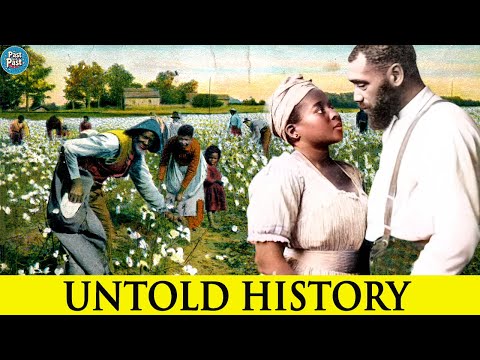
Why did such horror happen? The answer lies in profit. Colonists saw vast potential in the New World’s fertile fields. Tobacco, cotton, and sugar promised unimaginable riches. At first, they relied on indentured European servants, but demand quickly outstripped supply. Greed took over, and plantation owners began viewing Africans not as people, but as property—commodities to be bought, sold, and exploited.
As the 1700s dawned, slavery transformed into an organized, relentless machine. In 1705, Virginia passed legislation that would echo for centuries: slaves and their children would be enslaved for life, cementing the brutal concept of chattel slavery. In the eyes of the law, people were no longer just people. They were property—bought, sold, inherited, and treated as mere commodities.
What fueled this shift? Two powerful forces: economics and fear. The southern colonies’ prosperity hinged on labor-intensive crops like tobacco, rice, indigo, and soon cotton. The demand for cheap, controllable labor was insatiable. And as more Africans were forcibly brought to America, white colonists grew anxious about potential uprisings. To maintain dominance and protect their wealth, they wrote laws that kept enslaved people and their descendants in bondage forever.
Even Benjamin Franklin, one of the era’s most respected thinkers, publicly questioned the logic of the British Empire in 1773. He highlighted how Britain could boast about offering freedom to enslaved people who landed on its shores while simultaneously growing rich from the trade that kept millions in chains. His words exposed the deep contradiction at the center of both British and American society.
But the roots of this system stretched back even further. As early as 1619, the first slave farms appeared in Jamestown, Virginia. What started as a small-scale experiment in forced labor would over the next century grow into a vast and powerful engine that fueled the entire southern economy. By the late 1600s and early 1700s, slavery was no longer just tolerated—it was essential.
Then came a turning point: Eli Whitney’s invention of the cotton gin in 1793. With this new machine, processing cotton became dramatically faster and easier. Suddenly, growing cotton was so profitable that plantation owners rushed to plant it everywhere they could. But this new white gold came at a devastating cost. The explosion of cotton farming drove the demand for enslaved labor to staggering new heights.
States like South Carolina saw their enslaved population soar as the region became the world’s center for raw cotton production, feeding textile mills in the North and as far away as Britain. By the early 1800s, slavery had become deeply woven into every aspect of southern society. Enslaved people weren’t just workers—they were the backbone of the economy. They were listed on ledgers, used as collateral for loans, and passed down like family heirlooms.
But the moral crisis could not be ignored forever. Voices like abolitionist William Lloyd Garrison grew louder, demanding that America finally confront the true cost of its prosperity. In 1831, Garrison put the nation on notice: “We are going to decide whether the slaveholding system shall be continued.” The country stood at a crossroads. Could a society that claimed to value liberty and equality continue to justify such cruelty?
As the 19th century wore on, slave farms and plantations spread relentlessly across the South. By 1860, the census painted a stark picture: nearly 4 million people enslaved, the vast majority living and working on plantations. Their labor fueled the wealth and comfort of a nation, but their suffering was largely ignored by those in power. This deep entrenchment of slavery left scars that would take generations to heal.
Imagine waking before dawn each day knowing your fate was never your own. For millions of enslaved people, life under the shadow of the plantation was a relentless cycle of toil, deprivation, and fear. As the sun rose over endless fields of cotton, the enslaved were already at work. Their days began in darkness and often ended there, too. Every hour was measured by the demands of overseers. Work was grueling—men, women, and even children as young as three or four were expected to pick, chop, haul, or clean from sunup to sundown.
In the cotton fields, hands were often raw and bleeding as workers were forced to meet impossible quotas—sometimes 200 pounds of cotton a day. Failure to keep up could mean violent punishment: the crack of the whip or public humiliation in front of family and peers. Overseers ruled with cruelty, using fear to control and break spirits. Frederick Douglass recalled how the loudest cries only made overseers beat harder and longer.
Living conditions offered no refuge. Enslaved families were crowded into tiny, dilapidated cabins, often with dirt floors and leaky roofs. At plantations like Magnolia in South Carolina, as many as 10 people might share a space smaller than a modern bathroom. Privacy was non-existent. Basic dignity was stripped away. Nutrition was barely enough to sustain backbreaking labor—food rations were meager, usually cornmeal, a bit of pork fat, and sometimes molasses. Vegetables or fresh meat were rare treats, and malnutrition was rampant.
The psychological toll was deep and relentless. One of the most haunting cruelties was the routine separation of families. Children could be torn from their mother’s arms and sold off like livestock. Parents were left in anguish, powerless to protect the ones they loved most. Enslaved women were especially vulnerable to abuse. The harrowing story of Celia, a young woman forced to defend herself against the relentless sexual assaults of her owner, shows the daily terrors many endured. When Celia fought back, killing her abuser in self-defense, she was not granted mercy or justice. Instead, she was executed.
Former slave William Wells Brown captured the emotional devastation: “Slavery has fixed a deep gulf, a dark abyss,” he wrote. A chasm of pain, trauma, and loss that separated enslaved people from the rest of humanity. This abyss was filled with grief, broken families, stolen childhoods, and the constant threat of violence and exploitation.
Even under the constant threat of violence and heartbreak, the human spirit among the enslaved was not broken. In the dim glow of the slave quarters, whispers of resistance moved like a secret wind, quiet but unstoppable. Some acts of defiance were subtle: work slowdowns, feigned illness, or deliberately broken tools. Songs became a powerful tool of resistance—spirituals and work songs carried secret messages, plans, and dreams. The act of singing itself was defiant, a reminder that enslaved people still owned their voices and their dreams.
But resistance did not stop at subtle sabotage. Many risked everything to pursue freedom. The Underground Railroad, a vast secret network of safe houses and allies, stretched from the Deep South to the free North. Harriet Tubman became the legend of this movement—a woman who escaped slavery herself, then returned again and again, leading at least 70 people to freedom. “I had reasoned there was one of two things I had a right to: liberty or death,” she declared.
Rebellion sometimes exploded into open revolt. In 1739, the Stono Rebellion shook South Carolina as dozens of enslaved Africans seized weapons and struck back. Nat Turner’s rebellion in Virginia in 1831 became one of the most famous insurrections in American history. Turner, an enslaved preacher, gathered around 70 followers and launched a bloody attack that left dozens dead. The retaliation was swift and brutal, but the fear among slaveholders was unmistakable. Before his death, Turner declared, “I am loaded with chains, but this is nothing compared to how I have been bound by my fellow creatures.”
The German Coast Uprising of 1811 near New Orleans was the largest slave revolt in U.S. history. Armed with sugarcane knives and sheer determination, as many as 500 enslaved people marched, burning plantations and demanding recognition as men, not beasts. Though violently suppressed, their bold cry, “We will show these whites that we are men, not beasts of burden,” echoed through history.
Women played a vital role as leaders and visionaries. Maria Stewart, a free black woman and abolitionist, rallied black women to rise up, declaring, “Oh, ye daughters of Africa, awake! Show forth that you are endowed with noble faculties.” Her voice galvanized a new generation to demand their rightful place in the fight for liberation.
Despite the ever-present danger of retaliation, the flame of resistance never went out. William Wells Brown, once enslaved and later a prominent abolitionist, said it best: “The slave is a thing, a marketable commodity, and yet he is a man.” Through rebellion, large and small, enslaved people insisted on their humanity, their dignity, and their right to freedom, no matter how dark the night.
To truly understand America’s emergence as a global economic powerhouse, you have to look beneath the surface—to the fields, the plantations, and the lives of millions who toiled there. Slavery wasn’t just an ugly footnote in American history. It was the engine that powered the nation’s rise. By the time of the American Revolution, enslaved people already formed a crucial part of the population, especially in the South. Cotton, tobacco, rice, and sugar weren’t just valuable crops—they were cornerstones of an economy built almost entirely on forced labor.
The invention of the cotton gin in 1793 supercharged the demand for cotton and, with it, the demand for enslaved labor. What became known as King Cotton quickly dominated the landscape and the balance sheets of southern planters, whose wealth skyrocketed on the backs of those forced to work their land. By 1860, enslaved people represented nearly 13% of the total U.S. population—almost 4 million souls. The value of enslaved people as property was estimated at an astronomical $3.5 billion, making them the single most valuable asset in the country, worth more than all the nation’s banks, railroads, and factories combined.
Cotton alone accounted for over half of all U.S. exports by the mid-19th century, fueling not only the southern economy but the rise of the North as well, where textile mills processed raw cotton into finished goods. The ripple effect of slave labor was global. British factories ran on American cotton, and merchants from New York to Liverpool profited from every bale that left the docks of New Orleans or Charleston. In 1858, Senator James Henry Hammond boldly proclaimed, “Cotton is King, and no power dares to make war upon it.”
But the wealth generated by slavery didn’t stop at the Mason-Dixon Line. Northern textile mills depended on southern cotton, while banks and shipping companies across the country profited from the booming trade. Historian Eric Foner noted that the slave economy had ripple effects, with plenty of merchants profiting from the slave trade, revealing that many in the North were deeply complicit. Internationally, American cotton fueled the British textile industry, driving the Industrial Revolution. By 1860, nearly 80% of the cotton used in British factories came from the American South.
When the fields finally emptied and darkness fell across the plantations, a different kind of life quietly awakened in the slave quarters. In these crowded, weathered cabins, enslaved people carved out moments of comfort, meaning, and resistance far from the eyes of the overseers. Here, family and community took on new significance, offering a fragile sense of belonging in a world determined to break every bond. In the flickering light of a single lamp, elders shared stories from their African homelands—tales of distant rivers, ancestors, and legendary tricksters. These stories did more than pass the time. They preserved memories that slavery tried to erase and gave hope to new generations born in captivity.
Spiritual life was central and complex. While slaveholders often forced Christianity onto their captives, many enslaved people secretly maintained elements of their original religions, adapting them into new spiritual practices that could be hidden in plain sight. Worship often happened in hidden places—brush arbors or hush harbors—where enslaved people could gather away from the master’s gaze. There they could pray, sing, and mourn together, building a sense of unity and spiritual strength.
Music and dance became central to this hidden world. Work songs, spirituals, and field hollers echoed across the fields, helping people coordinate their efforts, express sorrow, or signal hope. These songs were more than entertainment. As scholar Lawrence Levine noted, the spirituals are full of double meanings, including secret codes for escape or protest. Songs like Steal Away to Jesus or Go Down, Moses spoke of deliverance and freedom, even as they masked their true purpose from white overseers.
Family and kinship were the foundation of enslaved communities. Even though families could be shattered at any moment by sale or forced relocation, people worked hard to forge and maintain strong bonds. Naming practices reflected this determination. Parents often gave children African names or used surnames to declare kinship, defying a system that refused to acknowledge their ties. Historian Brenda Stevenson wrote, “Surnames provided a means to assert self and kin, a quiet yet powerful form of resistance.” Claiming one’s own name was sometimes a radical act. Sojourner Truth, born Isabella Baumfree, chose a new name after escaping slavery—a symbol of her freedom and her mission as a preacher and activist.
The hidden culture of the quarters was more than survival. It was a form of resistance. Every song sung, story shared, or ritual performed was an assertion of identity and hope. Frederick Douglass captured this spirit when he wrote, “The slave system was utterly hateful to me. I hated everything that reminded me of my condition.” In the shadows, enslaved people refused to be defined only by their chains. They built beauty, meaning, and connection. And through that, they kept the dream of freedom alive, whispering hope into the darkness.
By the early 19th century, America was at a crossroads—a nation with a founding promise of liberty, yet shackled by the grim reality of slavery. The battle for freedom would span generations, testing the country’s conscience and resolve. In 1831, on the cobblestone streets of Boston, a small but determined group of reformers founded the New England Anti-Slavery Society. Among them was William Lloyd Garrison, a fiery journalist whose words would ignite a movement. Garrison was relentless, launching his newspaper, The Liberator, with a promise that thundered through every issue: “I will be as harsh as truth. I do not wish to think, with moderation.” His insistence on immediate abolition galvanized allies and enraged opponents, pushing the issue of slavery to the heart of public debate.
But the fight against slavery didn’t begin with Garrison. Its roots ran deeper—back to the Quakers, one of the earliest religious groups to denounce slavery. In 1775, Anthony Benezet, a French immigrant and devout Quaker, founded America’s first abolitionist society. As early as 1762, he wrote, “The Negroes are our fellow creatures. They have the same right to liberty that we have.” These early voices planted seeds of conscience that would grow for decades.
The 19th century saw the abolitionist movement catch fire, powered not only by white reformers but also by the searing testimony of black Americans who had survived slavery themselves. Frederick Douglass, born into bondage, escaped in 1838 and became a voice that could not be ignored. His speeches and writings shattered the convenient illusions of the North and South alike. Douglass wrote of his childhood, “I have often been awakened by the shrieks of an own aunt whom he used to tie up and whip.” His vivid, unflinching accounts brought the realities of slavery to audiences who might otherwise have looked away.
The abolitionists faced towering obstacles. The southern economy, political system, and social order all depended on slave labor. And those in power were determined to protect their interests. Even some founding fathers who spoke about freedom and the evils of slavery failed to take action. Thomas Jefferson once acknowledged the moral depravity of the slave trade, writing, “The whole commerce is a perpetual exercise of the most boisterous passions.” Yet, when the invention of the cotton gin turned slavery into a profit machine, the hope for a voluntary end to the institution faded. In the South, resistance to abolition grew fierce and violent.
But beneath the surface, anger and desperation simmered among the enslaved. In 1831, Nat Turner, an enslaved preacher, led a bloody uprising in Virginia that left more than 50 white people dead. Turner’s rebellion shattered the myth of a docile slave population and terrified the South. After Turner’s capture, his lawyer Thomas R. Gray described him as “a complete fanatic or plays his part most admirably”—a comment reflecting the fear, confusion, and denial many white southerners felt.
The courage of black abolitionists remained undaunted. Frederick Douglass, Sojourner Truth, and Harriet Tubman risked everything for freedom and to help others achieve it. Sojourner Truth, born Isabella Baumfree, became both an abolitionist and a champion for women’s rights. Her 1851 speech in Akron, Ohio, rang out: “That man over there says, ‘Nobody ever helps me,’ and ain’t I a woman?” Truth’s words called out the hypocrisy of a society that denied both women and black people their rights.
Meanwhile, the fight over slavery’s future raged in Congress and on the frontier. The Fugitive Slave Act of 1850 forced Northerners to participate in the capture of runaway slaves, sparking outrage and acts of civil disobedience. Harriet Beecher Stowe’s Uncle Tom’s Cabin, published in 1852, became a cultural lightning rod. Through her story, she humanized enslaved people and exposed the cruelty of their bondage, declaring, “The law of God cannot be repealed by any human enactment.” Stowe’s words reached across class and regional lines, pushing many to see the moral cost of complicity.
As the 1850s wore on, the country lurched toward crisis. The Kansas-Nebraska Act of 1854, which left the fate of slavery up to voters in new territories, ignited violent clashes known as Bleeding Kansas. Political divisions deepened. The new Republican Party, born of anti-slavery sentiment, rallied behind slogans like “Free Soil, Free Speech, Free Labor, and Free Men.” Its first presidential candidate, John C. Frémont, carried the banner of abolition to the national stage.
The election of Abraham Lincoln in 1860 marked a turning point. Lincoln, a Republican who opposed the spread of slavery, alarmed the South, leading to the secession of 11 states and the eruption of the Civil War. Although the conflict began as a battle to preserve the Union, it soon became inseparable from the issue of slavery. Lincoln’s Emancipation Proclamation of 1863 declared freedom for enslaved people in the rebelling states, transforming the war into a fight for both unity and human liberty. As the war dragged on, Lincoln reflected on its heavy toll in his second inaugural address, expressing hope for peace and an end to the nation’s suffering.
The Civil War ultimately resulted in the abolition of slavery with the passage of the 13th Amendment. While the war’s end marked a monumental victory for freedom, it was just the beginning of a long and challenging journey toward true equality in America—a journey defined by resilience, moral courage, and an unwavering belief in human dignity.
Yet the scars of bondage did not vanish with a single amendment. Reconstruction’s brief dawn gave way to Jim Crow’s long night, where Black families rebuilt under the shadow of terror, their names still whispered in ledgers of a different kind. “Slavery has fixed a deep gulf, a dark abyss,” William Wells Brown had warned—and that abyss echoed through generations.
But the same spirit that sang in the hush harbors endured. In churches, schools, and quiet acts of defiance, the descendants of the enslaved carried forward the dream their ancestors whispered into the darkness. Their labor built a nation; their courage shaped its conscience.
Today, the fields lie silent, but the stories remain. To remember is to honor, and to honor is to strive for the justice they never knew. What will you carry forward from their story?
Report this article
Select a reason for reporting:






