Just before midnight on September 18, 1944, an American outpost near the small French village of Laisy heard something moving in the dark. The sound was unmistakable: heavy tracks. They called for artillery, and the clanking stopped. The night went quiet again—but the tension hung in the air like the thick Lorraine fog that would soon envelop the battlefield.
At about 7:30 the next morning, Captain William Dwight, a liaison officer, was driving down a country road through that same fog when he drove straight into the back of a German tank column. Nobody saw him. The fog swallowed him whole, and the column rolled on. Dwight got on the radio to his battalion commander, Lieutenant Colonel Creighton Abrams. Out there in the fog were 42 Panther tanks. Behind them stood an entire German Panzer army that Adolf Hitler had assembled for one purpose: stopping George Patton.
By that evening, Patton himself would drive up to see what was left. What he did when he got there tells you more about him than any speech he ever gave. Speed is easy to admire when nobody is hitting back. The real test of any commander—or anyone whose plan someone set out to wreck—is what you do when the other side finally lands a punch. Arracourt was that moment. It was the biggest tank-versus-tank fight the US Army had in Western Europe until the Battle of the Bulge.
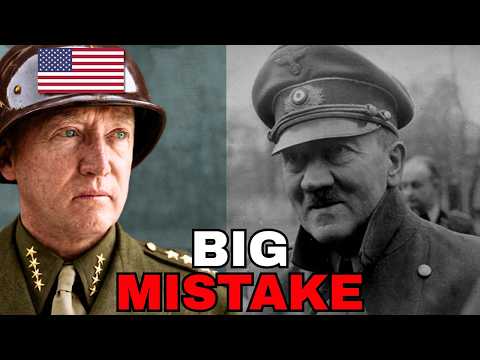
This channel goes back to the documents. Here, the US Army’s official history of the Lorraine campaign. There’s a number at the end of this, the one everyone argues about, and we’re going to get to it. But first, you need to know what Patton thought was about to happen. If you’ve never heard of Arracourt, you’re in the majority. Drop a comment with the tank battle you think gets way too little attention.
On September 12, Omar Bradley put a string on Patton. Supplies were tight. If the Third Army couldn’t get across the Moselle River in strength by the evening of the 14th, it would have to go over to the defensive. Patton dragged his feet; the backup plan was sound. He just didn’t think he’d need it. The Germans in front of him, he reasoned, had no reserves and no defenses in depth. Break their line once, and the road to the Rhine would open.
He got across. And on the 16th, he handed out objectives. His 12th Corps would advance rapidly to Darmstadt and grab a bridgehead over the Rhine. The spearhead would be the Fourth Armored Division, already deep in German territory around Arracourt, punching through the German border defenses between Sarreguemines and Saarbrücken. Patton wanted three armored divisions in that punch. Target date: September 18. Hold on to that plan. Every part of it is about to meet something it didn’t expect.
That same week, the Fourth Armored’s commander, Major General John Wood, phoned Corps headquarters to warn that getting supplies across the river was turning into a major problem. “This will not be a very fast operation, no blitz,” he said. Remember those two words: no blitz.
Near Lunéville, a cavalry commander, Colonel C. H. Read, learned from prisoners that German tanks were unloading around Saint-Dié. He reported it and was told the German armor was headed for the Seventh Army further south. Hitler’s instrument was the Fifth Panzer Army. When its headquarters arrived from Holland on September 9, it was an operation staff and a few signal troops. Hitler personally picked its commander, General der Panzertruppe Hasso von Manteuffel, fresh from the Russian front, where he’d been leading a single division.
Look at what he got. One Panzer Brigade lost 11 Panthers to air attack and breakdowns before it even arrived. Another was scattered by an air attack while still sitting on its trains. He asked for artillery and never got it. He was promised the Luftwaffe instead. The official history’s verdict on that promise: “It proved empty indeed.” The orders were fixed anyway. Attack no later than the 18th. Retake Lunéville, then smash the American bridgehead over the Moselle. Manteuffel protested that his army wasn’t strong enough. He was told he would attack on the 18th.
So, two plans were racing toward each other. Patton’s army would start rolling toward the Rhine on the 18th. Manteuffel’s had to attack on the 18th. Same date, same ground. About 7:00 a.m., German Panthers hit the American Cavalry south of Lunéville. The Cavalry threw six assault guns at them. The American shells bounced off the German armor, and three of those guns were destroyed in about 3 minutes. The squadron commander, Major J. H. Pittman, was killed. Colonel Read was severely wounded. The tanks from Saint-Dié had not gone to the Seventh Army.
And Patton? The official history says neither he nor his corps commander was greatly concerned. The attack toward the Rhine stayed on the books for the next morning. If you’re enjoying this, hit subscribe. The next part is the reason we made this video.
That night, Combat Command A of the Fourth Armored, under Colonel Bruce Clark, was spread thin around Arracourt. Out front at Lezey, sat one tank company under Captain Richard Lamason. At midnight, Manteuffel phoned his corps commander with orders to attack in the morning and threats of severe punishment if they weren’t carried out to the letter. The column Dwight ran into was the 113th Panzer Brigade. 42 Panthers pushing through heavy fog after a night march. The official history makes a point about that fog. It hid the German tanks from American planes, but it also forced them to fight up close where the Panther’s long-range gun gave it no advantage at all.
South of Lezey, two Shermans sat in an outpost position. The first Panther came out of the fog barely 75 yards away. That Panther and two more were destroyed in a matter of seconds. Dwight was sent straight back out with four tank destroyers. They spotted German tanks in the fog, dropped into a shallow dip, and opened fire at about 150 yards. Three of the four American vehicles were knocked out, but not before they destroyed seven German tanks.
Lamason, meanwhile, took four Shermans and raced about 3,000 yards to a ridge. He arrived roughly 3 minutes before eight Panthers appeared below. His tanks knocked out four before the Germans could fire back. Then they backed over the crest, moved south, came up in a new spot, and finished the other four. The second German Brigade never showed up that morning. A patriotic French farmer had sent it the wrong way. In the afternoon, two companies of the 37th Tank Battalion swung through Rechicourt, hit the Germans in the flank, and knocked out nine Panthers for three tanks of their own. That night, the ventilation found its way back to Laisy by the light of burning German tanks.
That evening, Patton came down from his headquarters at Étang and sat down with General Wood. Here’s what you’d expect after an enemy Panzer army hits your spearhead: dig in, bring up reinforcements, wait. Patton did none of it. He and Wood agreed that Combat Command A would resume its push east towards Sarreguemines the next morning. By its own count, Combat Command A had destroyed 43 German tanks and lost six men killed. And what makes this unusual is not that Patton held his ground at Arracourt. It’s that he spent the whole battle trying to leave it.
The next morning, his columns were already driving northeast when German tanks hit Arracourt again. And Colonel Clark had to turn his whole command around to clear the area once and for all. On the German side, Manteuffel begged to call the attack off. He got a reprimand for lacking the offensive spirit. On the 21st, Hitler used the failure as an excuse to fire the army group commander, General Johannes Blaskowitz.
On the 22nd, the fog came back. German patrols had laid white tape right up to the American cavalry lines, and their tanks followed it in. Some to within 75 yards before anyone saw them. Then the sun came out. American P-47s flew in, and Abrams counterattacked. From a hill looking down into the valley, his tanks and the artillery destroyed 14 German tanks. The German Brigade Commander, Colonel Heinrich Bronsart von Schellendorf, was mortally wounded. Manteuffel begged the Luftwaffe for help. Nobody answered. By nightfall, the 111th Panzer Brigade, the unit that had opened the battle at Lunéville, had seven tanks and 80 men left.
Wow. Tell me in the comments, would you rather have been in Lamason’s Shermans on that ridge, or in Dwight’s tank destroyers at 150 yards? On September 23, the order Patton had been sure he’d never need arrived anyway. Bradley told him the Third Army was going on the defensive. The supplies were going north to the Allied push into Holland. Patton called it one of the bad days of his military career. But he obeyed, and his forward units pulled back to a line they could hold.
The Germans kept coming for another week because Hitler refused to cancel the attack. On the 26th, when the Fourth Armored pulled its line back slightly under the defensive order, Manteuffel reported his troops’ uncontested entry into two empty villages as victories. The last big fight came on Hill 318, where Germans crept up through old trenches from the First World War. By the 29th, they pulled back for good. The Fifth Panzer Army was finished as an attacking force.
So, the number I promised. How many German tanks were lost at Arracourt? Online, you’ll find 285. You’ll find approximately 200. You’ll find 86 destroyed and 114 damaged. Some timelines even have American planes breaking the attack in the fog on day one. The official history is more careful. The fog protected the German tanks from the air. The big P-47 strikes came later. And on German losses, the official historian wrote that they “cannot be accurately determined.” What he could say was that two Panzer Brigades had been wrecked as fighting units, and the Fifth Panzer Army got no closer to the Moselle. Sometimes the most honest number is the one nobody can give you.
So, what did George Patton do when Hitler sent a Panzer Army after him? On the first day, he barely noticed. After the fog battle, he ordered his spearhead to keep going east. When his own side ordered him to stop, he called it a bad day and pulled back. Remember what he believed on September 12: no German reserves. He was wrong. Hitler found a whole Panzer Army. But in open country against the Fourth Armored Division, that army broke. And John Wood’s two words? No blitz. Wood was right. Arracourt was a slugging match in fog and rain. One hill at a time.
The last word goes to the other side. The ground Patton gave up wasn’t taken by German tanks. He gave it up because his own side sent the supplies north. And the German general who lost the battle called it a victory. Three months later, Manteuffel and the Fourth Armored Division would meet again in the Ardennes. Different fog, same two opponents.
If you want more of the battles the legends skipped, told from the documents up, subscribe. That’s all we do here. And if there’s a Patton story you’ve always wanted checked, put it in the comments. It could be our next video.
So here is the question the documents leave us with. Patton never got his Rhine bridgehead at Arracourt, yet his division wrecked two Panzer brigades and gutted an entire Panzer army. Was that a victory, or just a battle that happened to end first?
The official history refuses to hand you a clean number, and maybe that is the point. Fog, mud, and paperwork swallowed the truth as thoroughly as they swallowed Captain Dwight on that country road.
What survives is the contrast: one general who kept trying to advance, one who was ordered to and couldn’t, and a hilltop full of burning Panthers that neither side could fully explain afterward.
If you have read this far, you already know more than most. So tell us—when the histories disagree, which account do you trust: the one with the number, or the one that admits it doesn’t know?
Report this article
Select a reason for reporting:






