They took off from Missouri at 2 a.m., the cockpit narrower than a sedan, carrying 40,000 pounds of precision munitions and a mission that would keep them airborne for over 30 hours. Two crew members—a pilot and a mission commander—sat side by side, surrounded by glowing displays, as the B-2 Spirit stealth bomber climbed into the dark. They would cross the Atlantic without landing, refuel midair multiple times, and enter airspace defended by surface-to-air missiles designed to kill exactly what they were flying. Nobody on the ground would know they were there.
On February 28, 2026, that’s exactly what happened. Operation Epic Fury, one of the largest American air campaigns in two decades, unleashed over 1,000 targets in the first 24 hours. Among the assets: B-2 Spirits armed with 2,000-pound bombs, striking Iran’s hardened ballistic missile facilities buried deep underground. The aircraft that almost nobody talks about—the one designed for a war that never happened—was the only thing that could do the job.
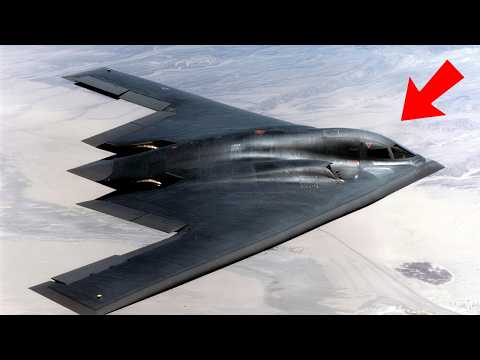
The B-2 was born in the early 1980s, built for a single purpose: deliver nuclear weapons into the Soviet Union through the densest air defense network ever constructed. The Soviet Union collapsed in 1991. The threat vanished before most of the fleet was even delivered. The original plan called for 132 aircraft. Congress cut it to 21. At roughly $2 billion per airframe, the B-2 became the most expensive military aircraft ever built—and one of the smallest combat fleets in American history.
Two have since been lost: one destroyed in a crash, one retired after fire damage. Nineteen remain, all based at Whiteman Air Force Base in central Missouri. And here’s the irony that defines the aircraft’s entire story: 37 years after it was designed for a war that never happened, the B-2 remains the only manned aircraft in the U.S. inventory that can penetrate modern air defenses and deliver heavy penetrating munitions onto hardened underground targets. When Operation Epic Fury required strikes on Iran’s buried missile facilities, there was no alternative.
To understand why the B-2 was irreplaceable over Iran, you have to understand what makes it invisible. And invisible isn’t a figure of speech—it’s physics. Radar works by sending electromagnetic pulses and measuring what bounces back. A conventional fighter, with vertical tail fins and external weapons, is a collection of surfaces that reflect energy straight back. The B-2 eliminates virtually every one of those features. No vertical tail, no angular fuselage, no external weapons. The entire aircraft is one continuous curved wing, shaped so incoming radar energy deflects away rather than returning to the source.
The skin uses radar-absorbing materials that convert electromagnetic energy into negligible heat. These coatings are so precisely engineered they must be applied by robotic systems, and so fragile the aircraft requires climate-controlled hangars just to keep the surface intact between missions. The engines are buried deep inside the wing, exhaust routed over the top surface to mix with ambient air before ground-based infrared sensors can detect the heat. The intake ducts are serpentine S-shaped curves that prevent radar from reaching the spinning compressor blades. And every pound of the 40,000-pound weapons payload rides inside two internal bays, sealed behind doors that expose the aircraft’s profile for a fraction of a second during release.
One more system worth understanding: the aircraft carries a passive sensor suite. No transmission, just listening. It detects hostile radar emissions from hundreds of miles away and maps the gaps in enemy coverage in real time. The B-2 doesn’t jam enemy radar. It routes around it. It flies through the seams in the defense network that the defenders don’t know exist.
Put yourself in that cockpit. You took off from Missouri around 2 a.m. By hour six, you’re over open ocean. The cockpit is narrow, two crew side by side, surrounded by displays. There’s a small area behind the seats where one crew member can rest while the other flies. Rest is a generous word. You’re in a flight suit in a space the size of a closet, trying to sleep while four turbofan engines vibrate through the airframe at 40,000 feet. By hour 12, you’ve refueled at least once. The Atlantic is behind you. You’re approaching the mission area. The cockpit smells like recycled air, sweat, and the faint chemical tang of environmental control systems that have been running without interruption since Missouri. Your eyes ache from the instrument glow. Your lower back stopped registering as pain somewhere over the mid-Atlantic and became a dull, permanent compression.
Everything changes. The defensive management system lights up. Iranian radar emissions—early warning systems, acquisition radars, fire control radars—painting across the display. Each one represents a surface-to-air missile battery that can kill you if it finds you. Your aircraft is designed to ensure it doesn’t, but designed to and guaranteed to are different concepts, and the crew knows the difference. You’re not jamming anything. You’re not outrunning anything. You’re threading through gaps in coverage that mission planners calculated before you took off. Routes plotted against intelligence on every known radar position, every known frequency, every known capability. If the intelligence is right, you’re invisible. If it’s wrong, you’ll find out the same way everyone finds out in air defense environments: suddenly.
The target area. The aircraft’s radar activates in low probability of intercept mode. Synthetic aperture mapping confirms the target coordinates against preloaded mission data. Bomb bay doors open. The weapons eject. Doors close. Total exposure time measured in fractions of a second. 2,000-pound penetrating munitions fall under GPS guidance, fins steering them toward hardened underground facilities that conventional aircraft cannot reach. The aircraft is already turning west. The return leg requires additional tanker rendezvous over the Gulf or the Mediterranean, then the long Atlantic crossing. Total mission time, based on comparable documented missions, somewhere north of 30 hours. Two crew members, one takeoff, one landing, and 6,000 miles of hostile airspace in between.
But the weapons themselves deserve a closer look, because what the B-2 dropped over Iran was not ordinary ordnance. The GBU-31 JDAM is a guidance kit married to a bomb body—and when that body is the BLU-109, you get a 2,000-pound steel penetrator with a hardened casing designed to survive impact with reinforced concrete and detonate after it has buried itself inside. Against a mountain facility, that is the difference between scratching the paint and reaching the launch bay. Aviation analysts assess this as the variant employed during Epic Fury, though the specific identification has not been officially confirmed.
The tactical logic becomes clear when you understand how Iran engineered those subterranean complexes. These were not simple tunnels. They featured overhead launch apertures—reinforced blast doors built directly into the ceiling of the cave structure—with automated rapid-loading systems beneath them designed to raise a ballistic missile to the surface for launch without ever exposing it to open air. The B-2s were tasked with dropping penetrators directly onto those ceiling doors, punching through rock and steel to destroy the launch bays underneath before the missiles could ever leave the mountain. You cannot reach a target like that with a cruise missile. You cannot reach it with a fighter carrying a shallow-blast warhead. You reach it with an aircraft that can carry a 2,000-pound penetrator into defended airspace, arrive undetected, and place it within meters of a door the size of a garage.
And there is one more option in the B-2’s arsenal that no other operational aircraft on earth can carry: the GBU-57 Massive Ordnance Penetrator. Thirty thousand pounds. Twenty feet long. Designed to punch through 200 feet of earth and reinforced concrete before detonating. The MOP exists for exactly one reason—to destroy facilities that are otherwise untouchable—and the B-2 is the only aircraft that can lift it. Whether MOPs were employed during Epic Fury remains classified. What is public is that the capability existed, and that the planners had it on the table.
Now pull back from the target and look at the machine that made the whole thing possible. Every capability the B-2 demonstrated over Iran comes with a constraint that its supporters and critics agree on: there aren’t enough of them, and they are extraordinarily difficult to keep flying. Nineteen operational aircraft for global coverage. The stealth coatings that make the aircraft invisible require climate-controlled hangars and meticulous repair under strict environmental conditions. Every nine years, each B-2 is pulled from service for months of programmed depot maintenance at Northrop Grumman’s Palmdale facility. Government Accountability Office reporting has documented that low-observable materials are a major driver of maintenance burden and reduced fleet availability.
Losing one aircraft—to combat, to mechanical failure, to an accident—isn’t a setback. It’s a strategic event. There is no production line. There will never be another B-2 built. One was destroyed in a crash on Guam in 2008. A second caught fire on the runway in 2022, damage so severe the Air Force retired the airframe entirely because repair costs exceeded what the program could justify. Twenty-one became nineteen. Ten percent of the entire force, gone to two incidents. And the long-range missions that define the B-2’s value depend entirely on aerial refueling tankers—aircraft that are not stealthy, not fast, and not built to survive in contested airspace. The B-2 can disappear. The tankers that sustain it cannot.
For 37 years, when the question was what can reach the target, the answer was always the same aircraft. By 2032, that answer will change for the first time. The Northrop Grumman B-21 Raider is the aircraft designed to make the B-2 unnecessary—a next-generation stealth bomber built from the ground up with updated low-observable technology, modern composites, and an open architecture that allows rapid integration of new weapons and sensors without the costly overhauls the B-2 demands. As of early 2026, the B-21 is in flight testing at Edwards Air Force Base and has entered low-rate initial production. The Department of Defense announced a $4.5 billion investment to expand production capacity by 25 percent. First operational delivery is projected for Ellsworth Air Force Base in South Dakota by 2027. The baseline procurement target: at least 100 aircraft. Five times the current B-2 fleet.
The Air Force plans to gradually retire the remaining B-2 Spirits as the B-21 scales, with complete sunset of the fleet expected by 2032. The aircraft that outlived the Soviet Union, that flew when nothing else could, is approaching the end of its operational life—not because it failed, but because the Air Force finally built something to carry what it started.
But before the sun sets on the Spirit, look back one more time at what it accomplished. The B-2 was designed in the early 1980s to fly nuclear weapons into the Soviet Union. The Soviet Union doesn’t exist anymore. The fleet was supposed to be 132 aircraft strong. Twenty-one were built. Two were lost—one to a crash, one to a fire. Nineteen remain, maintained in climate-controlled hangars by specialists, sustained by tanker aircraft across oceans, operated by two-person crews who fly longer and further into defended airspace than any pilots in modern military aviation.
Nobody knows their names. No press conference after Epic Fury identified the crews who crossed the Atlantic, threaded through Iranian air defenses, and released weapons onto underground targets that no other manned aircraft could reach. The mission happened. The aircraft returned. The crew stepped out of a cockpit they’d occupied for more than 30 hours and went back to a base surrounded by Missouri farmland.
The most important aircraft of this century was designed for a war that never happened, built in numbers too small to lose even one, and flown by people the public will never meet. On February 28th, 2026, it did what it was built to do. Three decades late, against an enemy its designers never imagined, over country that didn’t know it was there. By the time the world found out, the aircraft were already home.
So here’s the question worth asking: when the last B-2 rolls into permanent storage and the B-21 takes its place, will we ever again build a machine this irreplaceable—or have we learned to stop relying on miracles we can count on two hands? What do you think—was the B-2 the greatest engineering gamble America ever won, or the most expensive lesson in planning for a war that never came?
Report this article
Select a reason for reporting:






