In the dimly lit world of the sideshow, where the line between the extraordinary and the unsettling blurred, a select few turned their rare conditions into a spectacle that both horrified and fascinated millions. They were the ‘freaks’—a word that once carried a mix of awe and stigma—but behind the curtain, they were artists, survivors, and legends in their own right. From a man who could pierce his body without flinching to a woman who turned her four legs into a dance, these performers challenged everything we thought we knew about the human body and spirit.
For decades, their stories were whispered in hushed tones, banned from polite conversation, yet they drew crowds that packed tents and theaters across the globe. Now, we pull back the curtain to reveal the truth behind the myths. These were not just side-show attractions; they were pioneers who redefined what it means to be different.
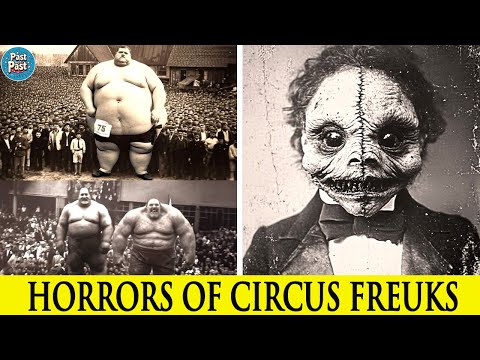
Consider Myne Dego, born in 1912 in the Netherlands, who could slide swords and giant needles through his flesh without a drop of blood. Doctors were baffled, X-rays revealed nothing, and to this day, his secret remains unsolved. He was a walking miracle, a man who made the impossible look effortless. Or Prince Randian, born without arms or legs in 1871, who could roll and light a cigarette, even shave, using only his lips. His agility on stage left audiences gasping, proving that the human will knows no bounds.
Then there was Martin Laurello, the man who could rotate his head a full 180 degrees. Imagine locking eyes with someone behind you without turning your body—it was a feat that blurred the line between reality and nightmare. He toured with Barnum & Bailey, leaving spectators both mesmerized and terrified. His performances were a testament to the strange and wonderful capabilities of the human body.
These individuals were more than their conditions. They were actors, musicians, comedians, and even filmmakers. Johnny Eck, born without a lower body, starred in the 1932 film ‘Freaks’ and became a symbol of resilience. Myrtle Corbin, the four-legged girl from Texas, captivated crowds and lived a full life despite her parasitic twin. They turned their differences into strengths, challenging society’s narrow definitions of normal.
But their stories are not just about spectacle. They are about survival, exploitation, and the unyielding human spirit. As we delve deeper, you’ll discover how these performers navigated a world that often saw them as oddities, and how they left an indelible mark on history. The curtain is rising on the untold tales of the circus freaks who existed beyond the myths.
Alice, born in Minneapolis in 1887, was known as the ‘Wolf Girl’ due to a rare condition called hypertrichosis, which covered her body in a fine layer of hair. Her parents made the difficult decision to exhibit her to support the family, and she quickly became a sensation. But Alice’s story was not just about her appearance; she found strength in her uniqueness and brought joy to audiences everywhere. Her journey teaches us that our differences can be a source of power.
Pascual, a Mexican railway worker, had a large tumor on his head that caught the attention of a sideshow promoter. The promoter crafted an artificial second face on the tumor, complete with makeup, turning Pascual into a two-faced man. Despite the exploitation, Pascual used the opportunity to support his family, touring North America and astonishing crowds. His story reflects both human curiosity and the lengths people go to survive.
Pauline, born in the Netherlands in 1876, was the smallest woman in the world at just 58 cm tall. She was a star of the sideshow, known not only for her size but for her charisma and warm presence. She brought joy to countless faces and proved that size does not define strength or spirit. Tragically, her life was cut short at 19 due to pneumonia and meningitis.
Chang and Eng Bunker, born in Thailand in 1811, were conjoined twins joined at the chest and liver. They became the first well-known conjoined twins and their name became synonymous with the condition. They married, had 21 children, and toured the world, proving that differences are not obstacles but opportunities for a rich life. Their story is one of love, success, and resilience.
Schlitzie, born in 1901, had microcephaly, which resulted in a small head and some intellectual challenges. Yet he found happiness and success as a sideshow performer, singing, dancing, and telling jokes. His infectious laugh warmed hearts, and he starred in the 1932 film ‘Freaks’, showing the world that he was more than his condition. His life reminds us to embrace differences and celebrate what makes us unique.
Felix Wehrle, born in Wisconsin in 1858, discovered his extraordinary ability early: he could stretch his skin like rubber and bend his limbs backward with ease. He was a true rubber man, touring with Ringling Brothers and amazing audiences. Experts believe he may have had Ehlers-Danlos syndrome, but whatever the cause, he turned his condition into a career, entertaining crowds and showing the incredible capabilities of the human body.
Tom Thumb, born Charles Stratton in 1838, stood just 63 cm tall, but his talents were anything but small. Discovered by P.T. Barnum at the age of four, he became the star attraction of the American Museum in New York. He could sing, dance, act, and even impersonate historical figures, dazzling audiences with his remarkable abilities. His fame spread worldwide, and he toured Europe, where he met Queen Victoria herself. His image appeared on trading cards, tea cups, and in the hearts of fans everywhere.
Coco, born in Georgia in 1880 as Minnie Woolsey, had a rare condition known as Virchow-Seckel syndrome or bird-headed dwarfism. This gave her a small head, a beak-like nose, and a receding jaw, making her stand out in any crowd. But Coco was not defined by her condition—she was a star in her own right. With her cheerful voice, charming personality, and ability to dance in ways that captivated audiences, she was a force to be reckoned with. Known as the ‘Bird Girl,’ she often wore a bird-like costume adorned with feathers and a feathered crown. She flapped her arms like wings and danced in a way that mimicked birds, bringing vitality and joy to her performances.
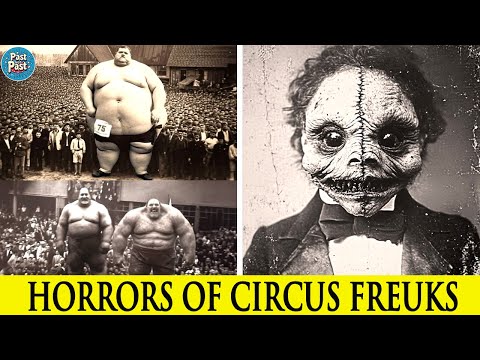
Edward Mordake, born into a wealthy English family in the 19th century, suffered from a terrifying condition: a second face on the back of his head. Imagine that—two faces, one in front and one behind. But it gets stranger. This second face was not just a quirk; it was said to whisper disturbing thoughts to him at night, haunting him with horrifying and unsettling voices. In a desperate attempt to rid himself of this curse, Edward sought help from doctors and spiritualists, but no one could offer a solution. Driven to madness and despair, according to legend, he took his own life at a young age. He became a tragic figure consumed by a medical mystery. But here’s the twist: Edward Mordake’s story is considered an urban legend, with no concrete evidence of his existence. Yet generations have passed it down, adding a dark dimension to our folklore.
Frank Lentini, born in Sicily in 1889, had a third leg—a congenital condition that made him unique in a way few could imagine. But instead of letting this define his identity, Frank embraced his uniqueness and turned it into a source of humor and wonder. At age eight, his family moved to Connecticut, and he soon became a star in the circus world. He was a natural performer, using his third leg to perform amazing and entertaining feats like jump rope and kicking footballs. Can you imagine that? A man with three legs kicking off his shoes! Frank was also a skilled storyteller, sharing his experiences of overcoming challenges and finding acceptance in the sideshow world. He even had a funny line about needing to eat 15% more food to feed his extra leg. He showed the world that differences are not limitations but can become strengths. Through laughter and acceptance, he proved that we can all find happiness and success no matter the challenges we face.
Annie Jones, prepare to meet the bearded woman—one of the most famous figures in the sideshow world. Born in 1865 in Virginia, she began showing signs of hypertrichosis, a condition causing excessive hair growth, at a very young age. By the age of five, she had grown a beard. Can you imagine that? P.T. Barnum, the legendary showman, discovered Annie and quickly made her a star at his famous American Museum in New York City. He introduced her to the world as the ‘Bearded Lady,’ and she captivated audiences not only with her unique appearance but also with her charming personality. She was a symbol of acceptance and strength, proving that being different is something to be proud of.
Ella, born in 1870, suffered from a rare condition called genu recurvatum, which caused her knees to bend backward, allowing her to move more easily on all fours. This unusual ability made her stand out in a way few could have imagined. Ella became a star in the circus and freak shows in the 1880s, starting her career at just fourteen. She was an instant hit, with crowds flocking to see the girl with backward-bending knees perform her extraordinary movements. People traveled from far and wide to witness this natural wonder. Her unique talent earned her a place on posters and advertisements, making her one of the most famous performers of her era. Ella became a household name in the sideshow world. However, in 1886, despite her fame, Ella chose to leave the circus. She yearned for a quieter life and was determined to get an education. While details of her later life are scarce, records indicate she married and lived a more peaceful and fulfilling life away from the spotlight.
Fanny, born in Ohio in the 1860s, suffered from Milroy’s disease, a form of lymphedema that swelled her legs and feet to astonishing sizes—her feet alone measured 50 cm long and 20 cm wide. Crowds flocked to see the ‘Big Foot Girl,’ but Fanny was no victim; she built a successful career and supported her family with her unique talents. She died in 1929, likely from complications of her condition.
Levinia Warren, known as Charmion, was an acrobat who shattered barriers. Born in 1858, she performed daring trapeze acts while undressing—shocking, thrilling, and utterly captivating. She challenged gender norms of her time, proving women could be as strong and fearless as men. Her courage inspired others to break free from societal constraints.
George and Willie Muse, born in Virginia in the late 19th century, were kidnapped in 1899 and forced into a sideshow as ‘Eko and Iko,’ falsely billed as cannibals. Despite the exploitation, they developed musical talents and eventually their mother, Harriet, won a long legal battle to bring them home. Their story is a testament to family resilience and the fight for justice.
Stephan Bibrowski, or Lionel, born in Poland in 1890, had hypertrichosis, covering his face and body in thick hair, giving him a lion-like appearance. Sold to a German circus at age four, he became a star, charming audiences with his gentle personality. Fluent in several languages, Lionel was more than a spectacle—he was a true symbol of intelligence and charisma.
Isaac, born in Massachusetts in 1841, began losing weight rapidly at age twelve, becoming so thin his bones showed through his skin. He joined P.T. Barnum’s circus in 1865 as the ‘Living Skeleton,’ proudly displaying his skeletal frame and sharing his life story. His condition remained a medical mystery.
Grady, born in 1937, had ectrodactyly, making his hands and feet resemble lobster claws. He followed his father into the circus, dazzling crowds with his dexterity. But his personal life was marred by anger and alcoholism; in 1978, a violent incident led to a manslaughter conviction, and in 1992, he was killed in a violent act. His journey highlights the importance of understanding human experience and personal struggles.
Daisy and Violet Hilton, born in England in 1908, were conjoined at the hips and buttocks, sharing a circulatory system. Exploited by their adoptive mother and later her daughter, they nonetheless became talented singers, dancers, and musicians. In 1931, they sued for exploitation and won their freedom, later starring in films like ‘Freaks.’ Their story is a testament to the power of the human spirit and the fight for rights.
Grace McDaniels, born with Sturge-Weber syndrome, was cruelly labeled ‘the ugliest woman in the world.’ She resisted the label, insisting on being called ‘the mule-faced woman’ and covering her ears during performances to block hurtful words. Despite her son’s later mistreatment, she lived life on her own terms, dying in 1958. Her story inspires us to find inner strength.
James Morris, the ‘Elastic Skin Man,’ was a circus performer who pushed the limits of human flexibility, often competing with Felix Wehrle. Experts believe he may have had Ehlers-Danlos syndrome, allowing him to twist his body in unbelievable ways. He toured with Ringling Brothers, amazing audiences and proving the incredible capabilities of the human body.
These performers were more than their conditions—they were artists, survivors, and legends. They turned their differences into strengths, challenging society’s narrow definitions of normal and leaving an indelible mark on history. Their stories remind us that the human spirit can overcome any obstacle and that our unique traits are what make us truly extraordinary. Which of these incredible artists inspired you the most? Share your thoughts in the comments below!
Report this article
Select a reason for reporting:






