The joint operations center at Balad was silent except for the hum of servers. On the main screen, a live feed showed an empty compound in the Aldora neighborhood of Baghdad. Twelve Delta Force operators had fast-roped onto the roof at 0200, expecting to capture a mid-level Al-Qaeda leader. Instead, they found nothing but cooling tea and a laptop missing its hard drive. The intelligence was three hours old. The target had heard the rotors from four miles out and vanished. “The intelligence was three hours old,” a Delta sergeant muttered. “He was gone before we even lifted off.”
Forty miles away, in a neighborhood the Americans had quietly abandoned, a battered Toyota Land Cruiser coasted to a stop two blocks from a different compound. Four men stepped out, their PVS-14 monoculars taped to their helmets with riggers tape. No air support. No ISR feed. No quick reaction force. They moved in silence, counting their magazines by hand. Two hours later, they walked back into base with a Mukhabarat-trained bomb maker in zip ties and a laptop with the hard drive still inside. “Jackpot,” came the single word over the radio.
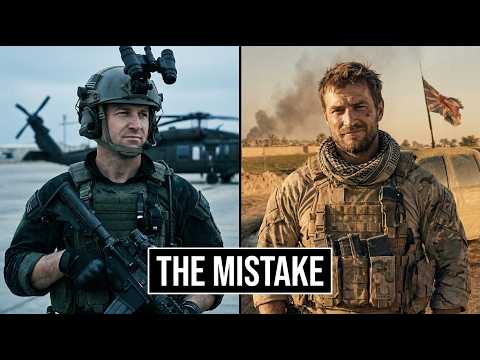
When the JSOC commander asked his American operators what the British had done differently, one Delta sergeant gave him the answer his entire $2 billion-a-year command had been built to make impossible: “They did not show up.” The room fell silent. The implication was clear: the most advanced military machine on earth had been outclassed by four men with cheap gear and a doctrine that valued stealth over firepower.
That night was the opening move of a 72-hour stretch that JSOC analysts would later call the most efficient run of capture operations in the entire Iraq war. And the kit those four men carried would have failed an inspection at Fort Bragg. Their rifles were Diemaco C8s hand-fitted in a Hereford workshop, trigger groups filed down by hand. Their plate carriers had been stripped of side and shoulder armor, weighing 6 kg instead of 19. Their night vision was a single-tube PVS-14—the same monocular issued to a US Army rifleman—taped to a 300-pound British helmet with green rigger’s tape because the dovetail mount was the wrong pattern.
Three years earlier, at Pope Field, North Carolina, a Delta sergeant had watched this same team clear a shoot house in six seconds. Every target down, every hostage bypassed, every doorway breached without a single radio call. He leaned over to his team leader and whispered, “Leave it to the stupid Brits.” Nobody in the gallery said anything for a long time. The performance was filed away as an anomaly. It was not an anomaly.
By the summer of 2007, the kit gap had widened. Delta operators carried loadouts retailing at $45,000 to $50,000 per man. SAS operators across the wire at the British compound at Masan were still hand-filing trigger groups and cutting down rifle furniture with hacksaws. JSOC’s annual Iraq budget had climbed to between $1.5 and $2 billion. The entire five-year budget for Task Force Black—the British contribution to the joint hunt for Al-Qaeda in Iraq—was £120 million. JSOC spent that in three weeks.
But the budget gap was buying something else: noise. A Black Hawk in flight is audible at four miles in still desert air. The compound in Aldora had four to six minutes of warning from the moment the rotors became audible. Cell phones were already moving in the alleys before the fast rope went out. Al-Qaeda in Iraq had built an entire counter-doctrine around American tactics. They lived in compounds with multiple exits. They moved every six hours. They removed hard drives from laptops as soon as the warning came through, because they knew the Americans would take the laptop—and a laptop without a hard drive was useless.
The American system was an engineering masterpiece. And the engineering had created a vulnerability the enemy had learned to exploit. The British system had no moving parts to break. Task Force Black drove to targets in unmarked Mitsubishi Pajeros and Toyota Land Cruisers, indistinguishable from civilian traffic. Squadron sergeant majors carried six magazines—180 rounds total. The doctrine written into the Hereford training pipeline thirty years earlier said that if a job was not finished in those 180 rounds, more ammunition was not the answer. Speed was the answer. Surprise was the answer. The Black Hawk was the problem.
Three nights, three captures. Night one, Adamiyah: the bomb maker captured alive, laptop intact. Night two, a courier safe house in Dora: two combatants neutralized, one detained, a USB drive recovered with active cell tasking. Night three, a bomb factory in West Rashid: four men cleared four rooms in under ninety seconds, two combatants killed, three detained, a fully assembled vehicle-borne IED found in the back garage. Three operations, three captures, zero British casualties, zero shots fired that could be heard beyond a fifty-meter radius.
And the men running these jobs were doing them on equipment a JSOC procurement officer would have rejected on a quality control review. This is where the story stops being about kit and starts being about something harder to name.
By 2008, the combined effort of Task Force Black and JSOC had neutralized roughly 3,500 Al-Qaeda fighters in Iraq. The British contribution came from a force that never exceeded sixty operators on the ground at any one time—yet its impact was disproportionate enough that JSOC commanders began quietly rewriting their own doctrine in response. Internal reassessments inside the command at Balad looked at the SAS operational pattern and asked the question nobody at the senior level wanted to ask out loud.
What were they spending the two billion dollars a year on?
The answer was buried in captured documents. AQI zone internal communications recovered after the war and studied by allied analysts told a story their public statements never did. The fighters distinguished between American forces and the British operators in writing. The British were a separate category of threat. The British were marked. The British were to be avoided when possible and never engaged on equal terms when not.
Sixty men with rigger’s tape on their helmets had done what JSOC’s full technology stack had spent five years trying to engineer. Hereford never put out a press release about Task Force Black. There was no parade when the squadron rotated home in the autumn of 2008. The £120 million budget that had funded five years of operations was the same amount JSOC was spending every two weeks in the same theater.
The kit the SAS handed back at the end of their tour was the kit they had taped together at the start. Same Diemaco C8s. Same hand-filed trigger groups. Same PVS-14s with the wrong-pattern dovetail mounts. A JSOC logistics officer who inspected the returned equipment wrote a memo that circulated briefly at the senior level and then disappeared. The memo noted that the British rifles had fired an average of 11,000 rounds each during the rotation with zero reported malfunctions. The American SOPMOD uppers in the same theater had averaged one stoppage per 1,200 rounds in the same conditions.
The real question was never whether American operators were better trained or better equipped. They were better equipped. The real question was the one a Delta sergeant asked himself in that gallery at Pope Field watching four men in cheap helmets clear a building in six seconds.
What is the actual weapon? The equipment or the man holding it?
Hereford answered that question a long time ago. JSOC is still working on it. But the answer was already written in the after-action reports nobody wanted to file. The most efficient run of capture operations in the entire Iraq war was conducted by men who had been left alone in the Brecon Beacons in midwinter, who had navigated without acknowledgement of being observed, who had made decisions under extreme fatigue with no colonel watching over their shoulder. The men who passed did not need a tactical operations center telling them what to do at a doorway. They were the doorway.
And somewhere in the mountains of North Carolina, a new generation of Delta operators was already being taught the lesson the hard way—not by PowerPoint, but by the quiet, uncomfortable memory of four men in cheap helmets who had made their entire two-billion-dollar machine look like a very expensive way to announce your arrival.
The lesson did not end with the rotation. It followed the officers who had watched it, into classrooms at Fort Bragg and staff rooms at Balad, into promotion boards where the words “Task Force Black” were spoken in lowered voices. Some of them learned. A few of them even changed the way they trained—cutting the fat, trusting the man, letting the doorway be the doorway.
But institutions do not surrender their assumptions easily. The procurement cycle rolled on. The next generation of helmets arrived, lighter and smarter, with mounts that actually fit. The budget grew again. The Black Hawks kept flying, loud and magnificent, announcing themselves four miles out.
And in Hereford, the same hand files were still being used on the same trigger groups. The same rigger’s tape was still being wrapped around the same wrong-pattern dovetails. Because the men who passed selection had already learned the only lesson that mattered: the weapon was never the kit. The weapon was the man who carried it, and the silence he brought with him.
Hereford answered that question a long time ago. JSOC is still working on it.
So here is what I want to ask you. If you had to choose between a two-billion-dollar machine that announces itself from four miles away, and sixty quiet men with taped-together helmets who never make a sound until the door is already open—which one would you want walking into the compound at 0200?
Report this article
Select a reason for reporting:






