The air in the chamber was thick with the scent of polished wood and unspoken rules. Men in tailored suits shifted in their seats, their voices a low murmur of expected business. Then she stood up.
She was not supposed to be there. Not like this. Not with that fire in her eyes and a truth so sharp it could cut through stone. “You will listen to me,” she said, and the room fell silent. Not the silence of respect, but of fear.
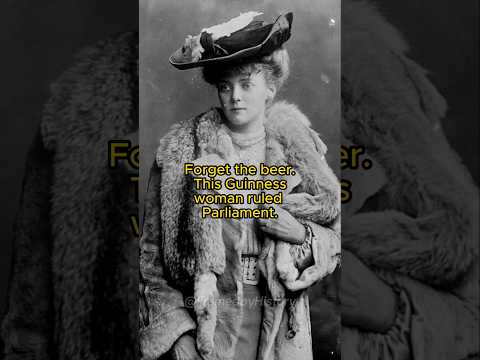
For generations, the men of Parliament had controlled the narrative. They had built walls of procedure and tradition, and they had never imagined a woman would scale them. But here she was, unyielding, her voice echoing off the vaulted ceiling like a bell that could not be unrung.
She spoke of injustice, of lives ignored, of a system that had failed the very people it claimed to serve. Each word was a hammer blow to the fragile glass of their complacency.
Some men laughed nervously, trying to dismiss her. Others looked away, unable to meet her gaze. But a few—the ones who truly understood power—felt a cold knot form in their stomachs. They recognized what was happening: she was not asking for permission. She was taking it.
The chamber, once a fortress of male authority, now felt like a cage. And she held the key.
What happened next would be whispered about for years—a moment that cracked the foundation of everything they believed. But for now, she simply stood there, waiting, as the silence stretched into eternity.
She let the silence do its work. It was a tool, she had learned, more effective than any shout. The men who had spent their lives filling rooms with their own voices had no defense against a woman who refused to fill the void they left.
Finally, the Speaker cleared his throat. “Madam, you are out of order.” His voice was steady, but his knuckles were white against the polished mahogany.
She turned to him slowly, as if she had all the time in the world. “I have been out of order my entire life, sir. Out of order in the factories where women worked for half the wage. Out of order in the courts where our testimonies were dismissed. Out of order in this very building, where we were not permitted to speak until a generation ago.”
A ripple went through the benches. Somewhere to her left, a young clerk stopped writing and stared.
She reached into her coat and withdrew a folded sheaf of papers. The sound of them unfolding was like a blade being drawn.
“You asked for evidence,” she said, holding them aloft. “Here are the names of four hundred women. Their wages. Their hours. Their injuries. Their deaths. All of it signed, sealed, and ignored by the very committees that were meant to protect them.”
The man who had laughed loudest earlier had gone very still. He was calculating, she could see it—wondering which of those four hundred names might belong to someone he knew, someone whose silence he had purchased.
She laid the papers on the table before the Speaker with deliberate care. “I do not ask you to believe me. I ask you to read.”
For a long moment, no one moved. Then, one by one, the papers began to disappear into the hands of the men who had once been so certain of their own authority.
And in that small, quiet theft of attention, the fortress began to crumble.
The Speaker’s gavel hovered, then fell with a crack that startled even him. “This session is suspended,” he declared, but his voice lacked its usual iron. The men rose in a rustle of wool and unease, some already folding the papers into their breast pockets as if they were contraband.
She did not move. She stood her ground as the chamber emptied around her, a lone figure in grey against the dark wood. Only when the last clerk had slipped through the doors did she allow herself to exhale.
Outside, the corridor was a river of whispers. A young woman in a plain dress—a typist, by the look of her ink-stained fingers—touched her sleeve. “Is it true? All of it?”
She nodded once. “Every word was sworn before a magistrate. The ones who wouldn’t swear are the ones you should ask about.”
The typist’s eyes widened, and she hurried off, already composing the letter she would write to her sister in the mill town.
By evening, the city’s newsrooms were ablaze. Editors who had spent decades printing flattering portraits of the men in that chamber now faced a choice: bury the story or ride it. The smarter ones rode it.
But the men who had taken the papers were not idle. In a private club off St. James’s, three of them sat in leather chairs, their whiskies untouched. The oldest, a lord with a face like a crumpled banknote, spoke first. “She’s not the danger. The papers are. We need to know who else has copies.”
The youngest, a rising minister with a careful smile, leaned forward. “And if she has more? If she’s prepared to go further?”
The lord set down his glass. “Then we discredit her. Find the cracks. Every woman has them.”
But even as he said it, his hand trembled—just slightly—against the arm of the chair. He had read the fourth page of her evidence, and he had recognized a name: his own sister’s, listed among the injured.
He had not known. Or perhaps he had chosen not to know, which was worse.
Across the city, she was walking home through the lamplit streets, her coat pulled tight against the evening chill. She did not look back. She had learned long ago that the past could not be outrun; it could only be faced.
And she was not finished facing it.
The next morning, the newspapers arrived on doorsteps wrapped in a thin layer of frost. The headline was simple, devastating: “The Four Hundred.” By noon, the story had crossed borders, carried by wire and by women who whispered it to each other in kitchens and queues.
In the club off St. James’s, the lord read the same headline and felt the floor tilt beneath him. His sister had not spoken to him in years. Now he understood why. He set the paper down and, for the first time in his life, picked up the telephone to call her.
She did not answer. But he left a message, his voice cracking on the word sorry.
That afternoon, a special committee was convened—not in the grand chamber, but in a smaller room with fewer witnesses. She was invited to speak again. This time, no one called her out of order.
She brought the typist with her, and two of the four hundred. Their names were read aloud, one by one, into the official record. Each name was a small stone dropped into still water, and the ripples touched every corner of the room.
When she finished, the youngest minister—the one with the careful smile—stood up. “I move that a full inquiry be opened, with subpoena power.” His voice wavered, but he did not sit down until the motion passed.
The lord abstained. It was the closest thing to surrender he could manage.
Weeks later, the first reforms were drafted. They were not enough—they never are—but they were a beginning. And in the corridors of power, a new rule took root: if she was in the room, you listened.
She never sought a seat in that chamber. She didn’t need one. She had something better: a list of names, a network of women who had learned that their voices could not be ignored, and the quiet knowledge that she had cracked the foundation wide enough for light to pour in.
On the last night of the session, she walked past the Parliament building and paused. The windows were dark, but she could hear the echo of her own words still bouncing off the vaulted ceiling.
She smiled, and kept walking.
But the story doesn’t end there—it never does. What do you think happened to the four hundred women whose names were read into the record? Did their lives change, or did the system find new ways to silence them? Share your thoughts below.
Report this article
Select a reason for reporting:






