In the annals of American history, few tales are as harrowing and controversial as that of Peter Williamson, known as ‘Indian Peter.’ Born in Scotland around 1730, he was kidnapped as a child and sold into indentured servitude in America. By 1754, he had built a new life on the Pennsylvania frontier—only to have it shattered by the outbreak of the French and Indian War. What follows is a story of survival against impossible odds, a narrative so brutal it has been both hailed as truth and condemned as fiction.
As the war raged, every settlement on the western frontier stood in constant fear of attack. Indian war parties, often paid by the French for scalps, terrorized the countryside. For Peter, the nightmare began on the night of October 2, 1754, when his home was surrounded by twelve warriors. His wife was away, and he was alone. “How great was my surprise and Terror when about 11:00 at night I heard the Dismal War whoop of the Savages and found that my house was beset by them,” he later wrote. What happened next would test every ounce of his endurance.
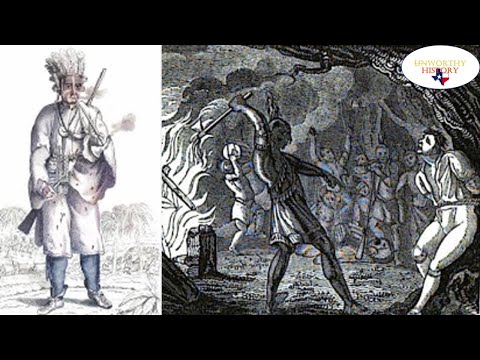
Peter surrendered, hoping for mercy, but was immediately bound and forced to watch as his home, barn, and livestock were set ablaze. “They bound me to a tree, went into the house, plundered it of everything that they could carry off, and then set fire to it,” he recalled. The warriors then subjected him to ritual torture, holding burning coals to his face and limbs. “Thus tortured almost to death I suffered their brutalities without being allowed to vent my anguish otherwise than by shedding silent tears,” he wrote. Miraculously, he survived, but his ordeal was only beginning.
Forced to carry plunder, Peter was marched through the wilderness. Along the way, he witnessed unspeakable horrors: the massacre of the Jacob Snider family, the scalping of children, and the brutal murder of a young servant who could no longer walk. “The suddenness of this murder shocked me to such a degree that I was in a manner motionless,” Peter recounted. He learned to hide his emotions, knowing any sign of weakness could mean death. When the group joined with other war parties, he heard stories of even greater atrocities—prisoners roasted alive, disemboweled, and tortured for hours. “Such agonizing torments did this unhappy creature suffer for near 2 hours before he was quite dead,” he wrote of one victim.
As winter set in, Peter was taken to a distant Indian village, where he spent two months enduring bitter cold and near-starvation. Stripped of his clothes, he was given only a blanket and moccasins. “The severity of the cold increasing they stripped me of my clothes for their own use,” he remembered. He built a small wigwam to survive, always watched, never trusted. When spring came, he was forced to join another expedition against the settlements. But deep in the mountains, left behind with a small group of warriors, Peter saw his chance. One night, while his captors slept, he slipped away—naked, unarmed, and terrified.
His escape was a desperate flight through the wilderness, haunted by the fear of recapture. “I was struck with the greatest Terror on hearing the wood cry as it was called which the Savages I had left were making upon their missing their charge,” he wrote. For days he hid in hollow trees and traveled by night, his feet cut and bruised. Finally, after four days, he reached the home of an old acquaintance, John Bell. “His wife who opened it seeing me in such a frightful condition flew from me screaming into the house,” Peter recalled. He was emaciated, scarred, and barely recognizable. But he had survived.
Peter’s return to his father-in-law’s house brought both joy and sorrow. He learned that his beloved wife had died two months earlier. “This fatal news greatly lessened the joy I otherwise should have felt,” he wrote. Despite his grief, Peter’s story was far from over. He would go on to fight in the French and Indian War, be captured by the French, and eventually return to Scotland, where he published his account and became a controversial figure. Some called him a liar; others hailed him as a hero. But the truth of his experiences would remain a matter of debate for centuries.
But the story of Indian Peter does not end with his return to Chester County. His account, published years later, would ignite a firestorm of controversy. Some modern historians, like the one who in 1964 called him “one of the greatest Liars who ever lived,” point to inconsistencies in his narrative. Yet others argue that the brutality he described was all too real for frontier settlers. The debate continues, but what remains undeniable is the harrowing detail with which Peter recounted his ordeal—details that few could invent.
After his wife’s death, Peter found himself alone and restless. The frontier that had once been his home now held only painful memories. Seeking purpose, he enlisted in the British Army, driven by a desire to fight the French and their Indian allies who had destroyed his life. “I enlisted in an Army regiment to fight in the French and Indian War,” he later wrote, though he did not specify which regiment. His military service would lead him into yet another captivity—this time at the hands of the French.
Captured by French troops, Peter was marched to Quebec, a journey of hundreds of miles through hostile territory. Conditions were brutal, and many prisoners did not survive. But Peter’s resilience, forged in the fires of his earlier captivity, sustained him. “He would then be captured by French troops and march to Quebec where he was exchanged for other prisoners,” according to historical records. In 1756, he was sent back to England, arriving in Plymouth. From there, he made his way to Scotland, returning to the land of his birth after more than two decades away.
It was in Scotland that Peter transformed himself into a public figure. He wrote a book documenting his capture as a boy into indentured servitude and his time of Indian captivity. To sell copies, he dressed in Indian clothing and walked the streets of Aberdeen, a spectacle that drew both curiosity and scorn. “He would dress up in Indian clothing to sell his book on the streets of Aberdeen,” the transcript notes. Many people claimed his story was false, but these were likely the same people who did not want Peter to expose the truth about being abducted by Aberdeen merchants as a child.
Peter was not content to let the lies stand. He later won legal cases against the Aberdeen magistrates and some of the men personally involved in his kidnapping. “He later won legal cases against the Aberdeen magistrates as well as some of the men personally involved in his kidnapping,” the account states. This legal victory was a remarkable feat for a man of humble origins, and it lent credibility to his claims. Yet the controversy over his narrative persisted, fueled by those who preferred to dismiss him as a fraud.
Modern historians continue to debate the authenticity of Peter’s story. Some argue that his account contains exaggerations, perhaps embellished to sell books and garner sympathy. Others point out that the horrors he described—scalping, torture, the massacre of families—were well-documented realities of frontier warfare. “One historian said in a 1964 article that Williamson was one of the greatest Liars who ever lived,” the transcript notes. But such dismissals may say more about the skeptics than about Peter himself.
What is clear is that Peter Williamson’s life was extraordinary by any measure. Kidnapped as a child, sold into servitude, captured by Indians, escaped, fought in a war, captured again, and finally returned home to seek justice—his story is a testament to human endurance. Whether every detail is true or not, the broader picture of frontier life during the French and Indian War is one of unimaginable hardship and terror. Peter’s narrative, whatever its flaws, offers a window into that world.
Yet the question of Peter’s credibility is not so easily dismissed. The 1964 historian’s charge that he was “one of the greatest Liars who ever lived” was not made lightly. Scholars have pointed to discrepancies in his timeline, inconsistencies in his descriptions of Indian customs, and the suspiciously convenient parallels between his narrative and other captivity stories of the era. Some argue that Peter, a canny Scotsman, may have embellished or invented details to sell books and win sympathy—and later, legal victories.
But others counter that the absence of corroborating evidence is hardly proof of fabrication. The frontier was a place where records were sparse and witnesses often dead. “The horrors he described—scalping, torture, the massacre of families—were well-documented realities of frontier warfare,” one defender noted. Indeed, the French and Indian War was marked by atrocities on both sides, and Peter’s account, however extreme, was not unique in its brutality.
What is often overlooked is the political dimension of Peter’s story. His accusations against the Aberdeen merchants—that they had kidnapped children and sold them into slavery—threatened powerful men. “Many people claimed that his story was false, but these were probably people who did not want Peter to share his story about being abducted by Aberdeen Merchants as a boy,” the transcript suggests. In winning his legal cases, Peter not only vindicated himself but also exposed a dark chapter in Scotland’s commercial history.
After his legal victories, Peter settled into a quieter life, but he never stopped telling his story. He continued to sell his book, dressed in his Indian garb, a living reminder of the empire’s violent edges. Some saw him as a charlatan; others as a living witness to the costs of colonization. Either way, he had transformed his suffering into a kind of power—a voice that could not be silenced.
Today, the debate over Indian Peter’s truthfulness continues. But perhaps the more important question is not whether every detail of his narrative is accurate, but why his story resonates so deeply. It speaks to something universal: the human capacity to endure, to escape, and to seek justice. And it reminds us that history is not always written by the victors—sometimes it is written by the survivors, in their own words, however contested.
In the end, whether Indian Peter was a liar or a truth-teller may be less important than what his story reveals about us. We are drawn to captivity narratives because they promise a clear line between civilization and savagery—and then blur it. Peter, dressed in Indian clothing on the streets of Aberdeen, was a living blur. He had been the kidnapped child, the frontier husband, the tortured captive, the escaped survivor, the soldier, the prisoner of the French, and finally the litigant who won. Few lives span so many roles.
Perhaps that is why the skeptics bristled. A man who refuses to stay in one category—victim, villain, hero, fraud—is unsettling. He forces us to ask which parts of his story we doubt, and why. The scalps, the burned homes, the murdered families: these were documented. The question is whether one man could truly have seen so much and lived to sell the tale.
Peter died in 1799, but his narrative outlived him. It remains a Rorschach test for historians: a mirror reflecting our assumptions about class, empire, and credibility. The Aberdeen merchants he accused were powerful; the historians who dismissed him were comfortable. Peter was neither.
So the debate endures—truth, lie, or something in between. What do you think? Was Indian Peter a survivor telling his truth, or a canny storyteller spinning a fortune from fiction? Leave a comment below and tell us where you stand.
Report this article
Select a reason for reporting:






