In 1972, radio waves carried songs that seemed to materialize from thin air, each one a sudden gift that belonged to everyone. They were the one-hit wonders—the acts that burned bright for a moment and then faded, leaving behind a melody that refused to die. From the sunny bounce of “Beautiful Sunday” to the haunting piano of “Thunder and Lightning,” these records became larger than the names on the label. Some were true flashes in the pan; others had careers that continued elsewhere, but in America, they were defined by a single, unforgettable hit. This is the story of those songs—the ones that still open a door to another time, no matter how many years have passed.
Consider “Dancing in the Moonlight” by King Harvest—a tune so carefree it masks a dark origin. Songwriter Sherman Kelly wrote it after surviving a brutal attack, imagining a peaceful night where people could gather without fear. That contrast between the song’s breezy melody and its harrowing backstory is just one of the many surprises hidden in these forgotten hits. Then there’s “Popcorn” by Hot Butter, an instrumental so bizarre it sounded like a transmission from the future. And “Brandy (You’re a Fine Girl)” by Looking Glass—a tale of a sailor and a barmaid that became so iconic it briefly influenced baby names. Each of these songs has a story that extends far beyond the charts, a reminder that pop music is as unpredictable as it is enduring.
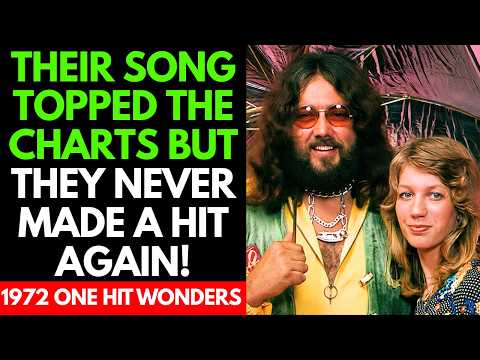
But what makes a one-hit wonder? Is it the lack of a follow-up, or the sheer dominance of a single record that swallows an entire career? For every “Go All the Way” by The Raspberries—a burst of power-pop that hit number five but was banned by the BBC—there’s a “Good Time Charlie’s Got the Blues” by Danny O’Keefe, a melancholy masterpiece that Elvis Presley himself later covered. These songs didn’t just climb the charts; they embedded themselves in the cultural fabric, becoming touchstones for a generation. And as we revisit them, we find that the stories behind the songs are often as compelling as the music itself.
Take “How Do You Do” by Mouth & MacNeal, a Dutch duo whose playful call-and-response vocals charmed American audiences but who never replicated that success Stateside. Or “Hold Your Head Up” by Argent, an anthem of encouragement powered by Rod Argent’s organ and a chorus that hides a surprising final word. These acts remind us that a hit can come from anywhere—a demo, a test pressing, even a studio accident. And when the spotlight faded, the songs remained, waiting to be rediscovered by new ears.
As the countdown continues, we’ll dive into the stories of these 15 forgotten one-hit wonders from 1972. We’ll explore how they came to be, why they resonated, and what happened to the artists behind them. Some found success overseas, others continued in different guises, but all left behind a piece of music that time hasn’t erased. From the soulful “In the Rain” by The Dramatics to the rebellious “Sunshine” by Jonathan Edwards, each song offers a glimpse into a year when radio was a melting pot of sounds and styles.
So join us as we celebrate the strange beauty of 1972—a year when a Moog synthesizer could top the charts, a power ballad could become a timeless anthem, and a simple tune about a Sunday morning could make an ordinary day feel special. These are the songs that outlived the stars, the melodies that still linger, and the stories that deserve to be told. And perhaps, in revisiting them, we’ll remember where we were when the music first found us.
The stories behind these records often reveal more than the songs themselves. “Nice to Be With You” by Gallery, for instance, was written in just fifteen or twenty minutes at Jim Gold’s kitchen table—a humble beginning for a tune that would climb to number four on Billboard and hit number one in Canada. Yet before the public embraced it, the song appeared on American Bandstand’s Rate-a-Record segment, where a panel of teenagers gave it a lukewarm 57.5. That lukewarm verdict proved meaningless. The listeners who mattered disagreed, and the song became Gallery’s defining moment, a reminder that charts and panels rarely predict what will stick in the heart.
Then there’s “Thunder and Lightning” by Chi Coltrane, a debut single that announced its creator like a thunderclap. Coltrane wrote it herself, pounding the piano with a force that set her apart from the softer singer-songwriter sound surrounding her. Columbia signed her after hearing a six-song demo, and her first single reached number seventeen on the Billboard Hot 100. America never gave her another comparable pop hit, but her story didn’t end there—“Go Like Elijah” later reached number one in the Netherlands, and she built a stronger following in Europe. For US listeners, though, this remained the flash everyone remembered: one introduction that promised a storm, then disappeared from American Top 40 radio.
Not every forgotten hit arrived smiling. “Good Time Charlie’s Got the Blues” by Danny O’Keefe sounds like the party has ended and someone stayed behind to think about it. O’Keefe had carried the song for years before producer Arif Mardin helped strip the arrangement down and recut it in Memphis. That restraint made the difference. In 1972, the single climbed to number nine on Billboard and became O’Keefe’s defining pop moment. Elvis Presley, Willie Nelson, and Waylon Jennings later recorded it, extending its life far beyond the original chart run. O’Keefe kept writing and recording, but never returned to the same pop heights. Its sadness still feels familiar—the quiet realization that people leave, seasons change, and even good times end.
Some records become encouragement before we know where that feeling began. “Hold Your Head Up” by Argent reached number five in America in 1972, powered by Rod Argent’s organ and a chorus built for crowded rooms. Chris White wrote the words while his pregnant wife was having a difficult time, so its hope began somewhere deeply personal. Argent later recalled that the band recorded thirty-two takes, yet the finished record used take one. Even the chorus hides a surprise—the final word is woman, not the wordless cry many listeners assume. Argent never placed another single on the Billboard Hot 100, but the song’s message of resilience outlived the band’s chart run.
And then there’s the record that barely sounded human at all. “Popcorn” by Hot Butter bounced through 1972 radio with no singer, no conventional chorus, and a Moog synthesizer making sounds that seemed imported from tomorrow. Composer Gershon Kingsley had first recorded the piece in 1969, and keyboardist Stan Free—who had played in Kingsley’s first Moog quartet—later revisited it with Hot Butter and turned the experiment into an international smash. Their version reached number nine on Billboard and number five in Britain. Hot Butter never placed another single in the UK top 40, leaving this quirky instrumental as their enduring calling card. What once sounded futuristic now feels wonderfully retro, a one-hit wonder that captures an era before electronic music became ordinary.
Few entries carry a stranger timeline than “Layla” by Derek and the Dominos. Recorded in 1970 with Eric Clapton pouring his feelings for Pattie Boyd—then married to George Harrison—into the song, it featured Duane Allman’s slide guitar transforming the first half while drummer Jim Gordon played the famous piano coda, recorded separately and joined to the main section. An edited US single initially stalled in 1971. When the full version returned in 1972, it finally reached the American top ten. By then, the band had already fallen apart. Clapton was hardly a forgotten musician, but Derek and the Dominos became defined by this towering record. Its success arrived like an echo—the group was gone, while the song was beginning to become immortal.
And then there’s “Brandy (You’re a Fine Girl)” by Looking Glass, a song that wasn’t even Epic’s first choice for a single. The band initially promoted another track, but Washington D.C. disc jockey Harv Moore played Brandy from a test pressing, and listener requests exploded. The response was strong enough that the label rushed the song out as a single. By August 1972, it had reached number one on the Billboard Hot 100. Around the same period, Brandy surged as a baby name in America, though direct causation cannot be proven. Looking Glass later returned to the top forty with “Jimmy Loves Maryann,” but nothing approached this record’s cultural afterlife. Its sailor, barmaid, and bittersweet choice became bigger than the band—the perfect finale for a song that ultimately swallowed the career around it.
That was the strange beauty of 1972. Some of these acts were true one-hit wonders in America. Others had smaller follow-ups, success overseas, or careers that continued under different names. But each left behind one record that eventually became larger than everything surrounding it. Maybe that is why these songs still matter. We do not always remember the chart statistics, the album covers, or even the faces, but we remember where we were when the music found us.
Those records also remind us how unpredictable pop music can be. A singer can spend years chasing a breakthrough, only to discover that one unexpected single becomes the song strangers carry for decades. Radio programmers move on, fashions change, and entire careers drift out of view. But a melody can remain untouched.
Maybe that is why revisiting 1972 feels so personal. The charts belong to an era, but the memories still belong to us, whenever those old records start spinning. “A song can outlive the hand that made it,” and these fifteen prove it—each one a small time capsule that opens at the first chord.
So the next time an oldies station crackles to life, listen closely. Somewhere between the static and the chorus, a forgotten star is still singing. Which song from 1972 brought back the strongest memory for you? Share it in the comments below—we’d love to hear your story.
Report this article
Select a reason for reporting:






