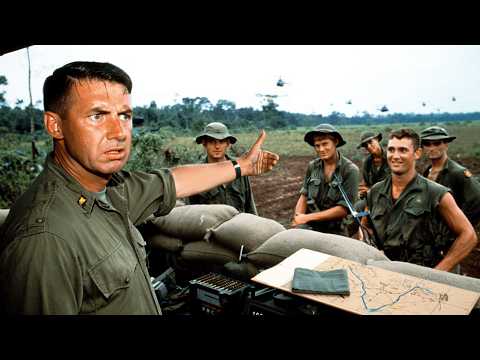
Colonel Marcus Hartwell wanted the Australians gone. Not reassigned. Not repositioned. Removed. He called them clowns—a disgrace to the uniform—and he put it in writing through official channels, with the full weight of his rank and twenty-two years of service behind it.
The Australians he was talking about had the highest kill ratio in Vietnam. They operated where US forces wouldn’t go. They walked into Viet Cong base camps held for five years and walked out alive. Enemy documents would later call them the jungle devils who cannot be killed.
But Colonel Hartwell looked at them and saw circus performers.
The first American patrol to link up with an Australian SAS team in the A Shau Valley couldn’t believe what they were seeing. The Australians looked like they’d been living in the jungle for six months. It had been nine days. They smelled like decomposing vegetation mixed with human waste. Their uniforms were black with grime, deliberately stained with mud patterns that made no tactical sense. One of them had pink orchids tucked into his webbing.
The American lieutenant asked the obvious question. “What the hell are you people doing?”
The Australian sergeant—a cattle station hand from northern Queensland named Barry “Baz” Henderson—looked at him like he’d asked why water was wet. “Being invisible, mate.”
The lieutenant thought it was a joke. It was not a joke.
The Australians weren’t just camouflaged. They’d become part of the jungle itself. They moved through triple-canopy rainforest without a sound, could sit three meters from a Viet Cong position for forty-eight hours without being detected. They smelled like the jungle because they’d rolled in animal feces, rotting vegetation, and stagnant water until their human scent was completely masked. The flowers weren’t decoration—they were local blooms placed so the wind would carry their scent instead of human odor.
The American patrol filed a report. It reached Colonel Hartwell—a West Point graduate who’d commanded a tank battalion in Korea and believed in overwhelming firepower, proper military bearing, and the chain of command. He read about soldiers wearing flowers and rolling in waste and made his decision. These people were not serious war fighters. They were playing dress-up in the jungle. They were undermining military discipline. They needed to go.
What Colonel Hartwell could not have known from that single report was that the Australian SAS squadron in his sector had spent the previous six weeks doing what three US battalions had failed to do in eight months. They’d found the tunnel networks—not the famous Cu Chi tunnels near Saigon. These were different: a forty-kilometer network of underground facilities connecting Viet Cong base camps, weapons caches, and command centers throughout the Central Highlands.
US intelligence knew the tunnels existed. They had informant reports, signals intercepts, aerial photography. What they did not have was a single entrance. Four separate US reconnaissance missions had gone into the area. All four found nothing. Two were ambushed—sixteen Americans killed, twenty-three wounded, no enemy casualties confirmed. The area was designated a free-fire zone. B-52 strikes dropped hundreds of tons of ordnance, turning rainforest into moonscapes. The tunnels remained operational.
That’s when someone at MACV made a quiet phone call to the Australian Task Force Headquarters at Nui Dat. Not an official request. Just a suggestion that maybe the SAS might want to take a look at something the conventional forces were struggling with.
Three days later, a six-man Australian patrol inserted by helicopter fifteen kilometers from the suspected tunnel complex. No radios except for emergency extraction. No fire support on standby. They carried ten days of rations, suppressed weapons, and instructions to observe and report. They found the first tunnel entrance in eleven hours. The second, fourteen hours after that. By the end of day three, they’d mapped seven separate entrances, identified three Viet Cong bunker complexes, and were sitting thirty meters from what their patrol commander—a former school teacher from Adelaide named Lieutenant Michael Keen—correctly identified as a battalion-level command post.
They’d achieved in seventy-two hours what US forces had failed to do in eight months. And they’d done it by doing everything Colonel Hartwell would consider unmilitary, undisciplined, and borderline insane.
The Australian SAS didn’t patrol through the jungle. They inhabited it.
US doctrine emphasized movement, security, and firepower. Move during daylight. Establish defensive positions at night. Maintain 360-degree security. Keep noise discipline. The Australians threw out the manual. They moved at night and slept during the day. They didn’t establish defensive positions, because defensive positions had to be defended—and defending a position made noise, required movement, created patterns the enemy could detect. Instead they found natural concealment—dense vegetation, fallen logs, depressions in the earth—and simply stopped existing as soldiers.
One trooper, a former railway worker from Brisbane named Kevin Walsh, described it in his debrief. “We became logs. We became rocks. We became part of the decomposition happening all around us. You lie in the jungle long enough, absolutely still, and the jungle accepts you.” Insects crawled over them. Leeches attached. They did not react. Their body temperature dropped to match the environment. Their breathing slowed. They entered a state that was not quite sleep and definitely not alertness. They existed in between.
This was not hyperbole. It was documented physiology. Australian SAS troopers regularly returned from extended patrols with core body temperatures two to three degrees below normal. They had trained themselves to slow their metabolic processes, reduce their breathing rate, lower their heart rate to levels that would trigger medical alerts in a hospital. They were inducing a controlled hypothermic state to reduce their thermal signature.
And it worked. Viet Cong patrols walked within arm’s reach of Australian positions and saw nothing—not because the Australians were hidden behind cover, but because they’d stopped registering as human beings. The enemy’s pattern recognition, that evolved ability to detect threat and spot anomalies, simply didn’t trigger.
But this approach required something US forces were never trained to tolerate: absolute stillness for extended periods. Not minutes. Not hours. Days.
The patrol that found the tunnel network sat in position for four consecutive days without moving more than ten meters. Four days of lying in rotting vegetation, controlling their breathing, not swatting mosquitoes, not adjusting when muscles cramped, not reacting to the parade of jungle wildlife that crawled over them and around them. Trooper David Morrison, a former apprentice electrician from Melbourne, had a python pass over his legs on day two. He estimated it at eight feet, maybe nine, thick as a man’s thigh. It slithered directly over his calves, paused for perhaps thirty seconds—possibly sensing warmth, possibly just resting—then continued on its way. Morrison did not move. Did not flinch. Did not reach for his weapon.
Another trooper had leaf-cutter ants establish a trail across his arm. Hundreds of them, marching in a disciplined line, each carrying a piece of vegetation, treating his forearm like a convenient highway. The ants were there for six hours. He described the sensation in his after-action report as “like someone was pouring rice grains across your skin, except the rice grains had legs and occasionally bit you.” He did not move.
This level of operational discipline was not taught at any Western military academy. It was not in any manual. The Australians had developed it through trial, error, and a fundamental reconceptualization of what combat meant in the jungle.
Sergeant Henderson explained the philosophy years later. “American doctrine was about controlling the battlefield. Our doctrine was about becoming part of the battlefield. You cannot control the jungle. It’s too big, too old, too hostile. But you can join it. You can submit to it. You can let it absorb you. And once you’re absorbed, you’re invisible—not hidden. Invisible. There’s a difference.”
The difference was measurable. US patrols in the Central Highlands averaged one enemy contact every 3.7 days. Australian SAS patrols averaged one every 11.3 days—not because they were avoiding the enemy, but because the enemy couldn’t find them. The Australians operated in areas with higher confirmed Viet Cong presence, stayed in the field longer, covered more ground, and were detected less than a third as often.
When they were detected, the kill ratios were savage. Contact reports from March through August 1967 show forty-three confirmed engagements. Enemy casualties: 387 confirmed, 162 probable. Australian casualties: seven wounded, zero killed. A kill ratio of roughly fifty-five to one on confirmed kills alone. Include the probables and it climbed above seventy-eight to one.
But Colonel Hartwell didn’t see the numbers. He saw the reports—and the reports described soldiers who looked homeless, smelled inhuman, and violated every conventional standard of military appearance. He saw clowns.
The breaking point came on March 19th, 1967. An Australian patrol extracted after fourteen days of continuous operations. The helicopter had to fly with the doors open despite the altitude and heat because the smell was unbearable. When they landed at the US firebase that served as the staging area, Colonel Hartwell was there. He watched six men climb out—men who looked like they’d been exhumed from shallow graves. Their uniforms were unidentifiable, caked with mud and what appeared to be animal feces. Their faces were streaked with camouflage paint mixed with sweat, grime, and jungle debris into patterns that resembled disease. One of them had vegetation growing in his webbing—not tucked in for camouflage, actually growing, moss or lichen rooted in the fabric.
Lieutenant Keen stepped forward to report. Hartwell took one look at him and made his decision. “Get these clowns out of my sector.”
Not a request. An order. Direct, unambiguous, official. Keen, to his credit, maintained his composure. “Sir, we have intelligence on—”
“I don’t care.” Hartwell’s voice carried across the firebase. “You are a disgrace to the uniform. Your men are a disgrace to the uniform. You will clean up, report to your command, and you will not return to this operational area. Is that clear?”
Keen looked at the colonel, at the crowd of American soldiers watching, then back. “Crystal clear, sir.”
By that evening a formal complaint had reached Brigadier Stuart Graham, commander of the Australian task force. Graham made a phone call to MACV that was not diplomatic. If Hartwell wanted the Australians out of his sector, the Australians would leave—all of them, the entire task force, taking their intelligence findings and operational maps with them. MACV blinked. A meeting was arranged. Hartwell refused to attend.
Then the Viet Cong attacked Firebase Coral. March 23rd, 0342 hours. A full battalion assault—sappers, heavy weapons, detailed knowledge of the defensive layout. Forty-seven minutes. Fourteen Americans dead, forty-one wounded, two ammunition bunkers destroyed, the commanding officer killed. It was the most successful enemy attack on a US position in the Central Highlands in eight months.
Hartwell swept three companies into the jungle at first light. Two days, hundreds of artillery rounds, multiple air strikes. Zero enemy contact. On day three, a message arrived from Australian headquarters: Lieutenant Keen had information relevant to the attack. Would Colonel Hartwell like to see it? He was ordered to see it.
The briefing took place at MACV headquarters with three US generals present. Keen presented facts, no theatrics. The tunnel network was a staging area. The battalion that hit Firebase Coral had assembled there. The patrol had observed the movement, counted personnel, identified heavy weapons—and filed a report four days before the attack. It had been noted, acknowledged, and ignored.
A general read the report, then looked at Hartwell. “Did you see this?”
“Intelligence assessments are filed daily. I made a judgment call based on the source.”
“The source was a patrol in continuous observation for six days with eyes on confirmation—and you dismissed it because you didn’t like how they smelled.” Hartwell had no answer.
The general turned to Keen. “Can you find this network again?”
“Sir, we never left it. We have a patrol in position now. They’ve been there four days.”
Keen shook his head at the idea of an assault. Too well defended, too thick, the enemy would hear a battalion coming a kilometer away. “We collapse the tunnels. Hit the entrances simultaneously. Seal them. Pump CS gas into any opening we can’t destroy. Then we wait. They’ll suffocate, surrender, or break out through an exit we don’t know about yet. If they run, we track them. If they stay, they die.”
“How many men would you need?”
“Twelve. Maybe sixteen if you want redundancy.”
The general stared. “You want to assault a battalion-strength position with sixteen men?”
“No, sir. I want to collapse their infrastructure with sixteen men. The assault will be fought by gravity, chemistry, and time.”
The operation was designated Copper Canyon. Two eight-man patrols, seven tunnel entrances, seven demolition targets, two command-detonated claymores covering escape routes. They walked in fifteen kilometers through darkness, nine hours to cover ground a road would eat in two. Then they stopped moving. Sixteen men spread across a four-hundred-meter perimeter, each finding his position, settling in, becoming part of the landscape. Seventy-two hours to watch and confirm.
Trooper Morrison took a depression near entrance number three, covered by a fallen log and a curtain of vines. Hour three: two Viet Cong walked past at eleven meters, laughing. Hour twelve: a sentry, maybe nineteen, smoked three cigarettes and read a letter twice. Hour twenty-four: rain filled the depression to chest level. He lay in it, controlling his breathing, letting the water cover everything but his face. Hour forty-eight: he’d counted forty-seven enemy moving through the entrance and hadn’t shifted more than six inches in two days.
At 0200 on March 30th, exactly seventy-two hours after insertion, Keen sent the signal. Seven explosions, simultaneous. Shaped charges focusing the blast inward, collapsing tons of earth and rock into the tunnel mouths. Entrance number three simply ceased to exist.
Viet Cong emerged from openings the Australians hadn’t found—emergency exits, ventilation shafts. The Australians did not open fire. They watched, tracked, documented. Only when the enemy began to organize did Keen give the order. Sixteen rifles from sixteen positions the enemy had walked past for three days. The engagement lasted eleven minutes. Forty-three enemy dead. Then CS gas into every opening they could reach.
By 0800 it was over. Seventy-three confirmed enemy dead, fourteen captured. The entire complex rendered unusable. Australian casualties: zero killed, two wounded—shrapnel from their own demolitions.
When the patrols landed at the firebase, Hartwell was there. He looked at the sixteen men climbing out—filthier than before, three days of lying in the jungle followed by a night of combat. Then he did something no one expected. He saluted. A formal parade-ground salute, held until Keen returned it. “I was wrong.”
“Yes, sir, you were.”
“I owe you an apology.”
“You owe me nothing, sir. But you owe your intelligence staff a new policy on evaluating source credibility.”
Hartwell almost smiled. “Already done. Anything else?”
“Yes, sir. My men need a shower.”
“They need more than a shower. They need fumigation.” He turned to his aide. “Get these men whatever they need. And find me the supply officer—I need sixteen cases of beer delivered to the Australian compound. One case per man. They’ve earned it.”
Three days later, documents captured forty kilometers north included a letter from a Viet Cong battalion commander. The translation was filed in the official report: “We have been defeated by devils who cannot be killed. They do not move like men. They do not smell like men. We walked past them, over them, around them, and they were invisible. When they struck, they struck from the jungle itself, as if the trees had learned to fire rifles. The commanders say we were defeated by incompetence. This is false. We were defeated by ghosts.”
Hartwell never formally retracted his order, but he sent a new directive to all units: Australian reconnaissance reports were to be given priority attention, their recommendations seriously evaluated, and any personnel making disparaging comments about Australian methods would face disciplinary action. Seventeen US patrols took him up on the offer to coordinate directly with the Australians in the next month alone.
Years later, Australian veterans would sometimes call themselves Hartwell’s clowns—half irony, half pride. There was even an unofficial reunion patch: a grinning clown face covered in camouflage paint, the text reading Invisible Since ’67. The joke was that Hartwell never retracted the word. He just changed what it meant.
In his retirement interview, asked what he’d do differently, he said: “I’d have listened to the clowns earlier.” He paused, then added, “Best damn clowns I ever worked with.”
They were the kind who lay in the jungle for four days without moving. The kind who could sit three meters from an enemy sentry and remain undetected. The kind who made the Viet Cong write letters about devils who could not be killed. You can call that many things—professional, effective, terrifying—or you can call it what Colonel Hartwell called it that first day. Just make sure you understand what kind of clowns they were.
So here’s the question worth asking: in your own field, are you judging people by how they look—or by the results they quietly deliver while everyone else is making noise?
Report this article
Select a reason for reporting:






