The earth trembled under the relentless barrage. Shells screamed through the smoke-choked sky, pounding the already shattered city into dust. Exceptionally intense shelling and bombing paved the way for the first German assault groups. The air was thick with the stench of cordite and blood, and the ground shook with every explosion. This was Stalingrad—a city being annihilated piece by piece.
From the north, the main attack spearheaded by the 14th Panzer and 35th Infantry Divisions drove relentlessly toward the tractor factory, a sprawling industrial complex that had become a fortress. To the south of the giant plant, the 24th Panzer Division launched another assault, aiming to encircle and crush the defenders. The Germans threw everything they had into the fray, determined to break the Soviet resistance once and for all.
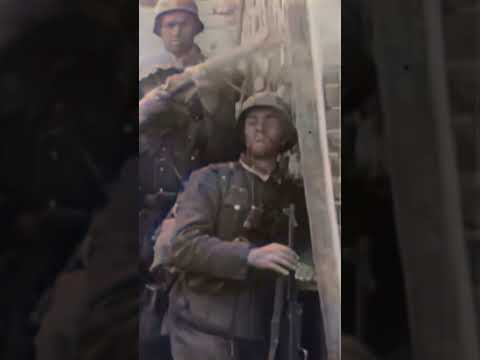
But the defenders were not about to yield. Among them was the Siberian division, a unit that would become legendary for its tenacity. Throughout the course of an entire month, German forces launched 117 assaults at the division’s regiments. On one particularly hellish day, they launched 23 attacks. The Siberians fought with a ferocity born of desperation, holding their ground against wave after wave of enemy infantry and tanks.
Each assault was a test of will. The Germans advanced behind a curtain of artillery fire, their tanks rumbling over rubble and bodies. The Siberians, dug into the ruins, met them with rifles, machine guns, and grenades. “Not a step back!” was the order, and they obeyed it with grim determination.
The tractor factory became the epicenter of the struggle. Its workshops and assembly lines, now choked with debris, were transformed into killing grounds. German soldiers fought room to room, corridor to corridor, while Soviet defenders snipered from broken windows and ambushed from cellars. The noise was deafening—the roar of tanks, the crack of rifles, the screams of the wounded.
Worth, a German officer, later recounted the difficulties the Siberian division faced. “They fought like demons,” he said, shaking his head. “We threw everything at them, but they would not break.” The Siberians, many of them fresh from the eastern reaches of the Soviet Union, had been hardened by the harsh climate and a lifetime of struggle. Now they faced the might of the Wehrmacht with unwavering resolve.
The battle for the tractor factory raged on, day after day, night after night. The Germans gained ground, only to lose it in a counterattack. The Soviets, though outnumbered and outgunned, refused to surrender. The city was a cauldron of fire and steel, and the men who fought there knew that only one side could emerge victorious.
As the month wore on, the Siberian division’s stand became a symbol of defiance. Their endurance under constant assault was extraordinary, a testament to the human spirit in the face of overwhelming odds. But the German war machine was relentless, and the battle was far from over.
The struggle for Stalingrad had only just begun, and the world watched with bated breath as the two titans clashed in a fight to the death.
Inside the tractor factory, the fighting had devolved into something primal. Men killed with rifle butts, with shovels, with bare hands slicked red. Corporal Yakov Pavlov, a Siberian sniper, had not slept in three days. His eyes were rimmed with soot, his fingers numb around the bolt of his Mosin rifle. Every window he passed held a ghost, every doorway a trap.
He found a perch in the shattered frame of what had once been a foreman’s office. Below, German infantry advanced in short, disciplined rushes—covered by the guns of a Panzer IV grinding through the debris. Pavlov steadied his breathing, tracked a Feldwebel waving his squad forward, and squeezed the trigger. The man dropped. The squad scattered.
But the tank kept coming. Its turret swiveled, searching. Pavlov pressed himself flat against the concrete as a shell tore through the wall above him, showering him in brick dust and splinters.
Down in the assembly hall, Sergeant Ilya Morozov commanded what remained of his platoon—eleven men, three of them wounded, all of them running on adrenaline and stubborn pride. They had rigged the conveyor pits with mines and piled sandbags into makeshift barricades. “Let them come,” Morozov muttered, wiping blood from a cut above his brow. “We have nowhere left to go.”
The Germans came at dawn, as they always did. Artillery first—a rolling thunder that seemed to shake the very foundations of the earth. Then the whistle, the shouts, the boots on rubble. Morozov waited until the first grey uniforms appeared in the smoke, then gave the order. Machine guns opened up from the flanks, catching the assault group in a deadly crossfire.
The Germans fell back, leaving a dozen bodies behind. But within the hour, they came again. And again.
By midday, Morozov’s platoon had repelled four attacks. They were down to seven men and their ammunition was running dangerously low. “Hold the line,” Morozov told them, his voice hoarse. “Reinforcements are coming.” He did not know if it was true. He did not know if anyone was left to come.
Across the ruined hall, a young private named Anton Volkov reloaded his last magazine and whispered a prayer to a God he had not spoken to since childhood. The smoke parted for a moment, and through the gap he saw them massing again—more tanks, more infantry, an endless grey tide.
He swallowed hard and raised his rifle. The fifth assault was beginning.
The Panzer IV that had nearly killed Pavlov lumbered into the assembly hall’s open bay, its engine coughing black smoke. Morozov watched it from behind a toppled lathe, counting the seconds. “Now,” he breathed into the field phone, and the sappers in the basement closed the circuit.
The charge went off beneath the conveyor pit—not enough to destroy the tank, but enough to shear off its left track and drop it nose-first into the crater. The crew inside screamed as the hull slammed against broken concrete. A hatch flew open and a young German soldier scrambled out, his uniform on fire. He did not get three steps before a sniper’s bullet—Pavlov’s, from his perch above—ended his war.
But the infantry kept coming. They poured through the breaches in the walls like water through a cracked dam, and Morozov’s seven men met them with bayonets and entrenching tools. The assembly hall became a slaughterhouse of echoing screams and desperate, close-quarters butchery. Volkov drove his shovel into a man’s chest and could not pull it free; he fought the rest of the morning with a German rifle he had picked up off the floor.
By nightfall, the hall was theirs—but barely. Morozov had four men left, and two of them would not see morning. He sat against a shattered pillar, pressing a rag to the gash in his thigh, and stared at the wreckage around him. The Panzer IV still smoldered in its crater, a monument to the day’s madness.
Pavlov climbed down from his perch, his legs shaking from exhaustion. He found Morozov and knelt beside him. “They’ll come again at dawn,” he said quietly. Morozov nodded, not looking at him. “Then we’ll kill them again at dawn.”
But word came down the line that night, passed from runner to runner through the cellars and sewers: the Germans were shifting their weight. The 24th Panzer Division, bloodied and frustrated south of the plant, was being reinforced. The main blow was coming—not at the assembly hall, but at the northern wall, where the factory met the Volga bluff.
And the Siberians, what was left of them, were ordered to hold it.
They moved before first light, ghosting through the rubble with their rifles held low. The northern wall was a skeleton of twisted girders and broken concrete, and beyond it the Volga ran black and cold. “If they break through here, they reach the river,” Morozov said. “And if they reach the river, we’re finished.”
Pavlov found a nest in the wreckage of a loading crane, high enough to see the German staging ground. He counted tanks—six, maybe seven—and more infantry than he could number. He did not tell the others what he saw.
The bombardment began at first light, a hurricane of steel that lasted two hours. When it lifted, the grey tide came on. The Siberians held their fire until the Germans were fifty meters out, then tore into them with everything they had left.
The northern wall became a meat grinder. Twice the Germans breached it; twice the Siberians threw them back in brutal hand-to-hand fighting. Volkov, the boy who had prayed the night before, died dragging a wounded comrade behind a fallen beam. Morozov took a splinter in his shoulder and kept firing.
By afternoon, the Siberians had nothing left but their defiance. Ammunition was gone; men fought with knives and stones. Pavlov, his perch finally spotted, tumbled from the crane with a bullet through his calf and crawled back to the line, dragging his rifle behind him.
And then, just as the German infantry massed for the final push, the guns across the Volga spoke. Soviet artillery, massed on the far bank, rained down on the German staging ground. The assault faltered, then broke.
“They held,” Worth would later write of the Siberians. “One hundred and seventeen assaults, and they held.” The tractor factory did not fall that day, nor the next. The battle for Stalingrad would rage for months more, but the tide had begun, almost imperceptibly, to turn.
Morozov sat in the rubble as the sun set, his four survivors gathered around him. Nobody spoke. There was nothing left to say.
What would you have done, standing in that ruined hall with the grey tide closing in?
Report this article
Select a reason for reporting:






