Trooper W rolled into the Mirabad Valley at 04:31 on a September morning in 2010, and the road ahead had the silence of a place where something was waiting. His thumb was already on the weapon pintle—not because he had decided to put it there, but because forty patrols in this province had made the gesture automatic. Somewhere on this stretch of road, a Taliban commander who had spent three weeks watching this exact patrol route had buried his kill ground. Right now, the only question that mattered was whether Trooper W had noticed it first.
The Taliban had not built this ambush on luck. They had built it on years of study—watching how coalition forces moved, how they spaced their vehicles, how long it took them to respond when something went wrong. They watched lead vehicles stop after a blast. They watched men climb out and push into cover. They counted the minutes between first contact and first helicopter. By 2010, that study had produced a doctrine that turned the predictable responses of conventional forces into a weapon. And then they built their entire system around everything they had seen.
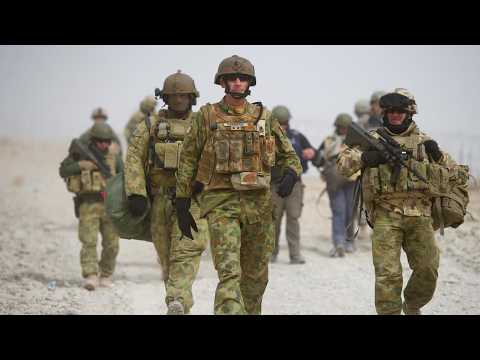
By 2010, Australia had around 1,550 soldiers serving in Afghanistan—the biggest commitment the country had made to a war since Vietnam. The center of that effort was Uruzgan province, a stretch of mountains and dry valleys in the south where the Taliban had been fighting coalition forces since 2001, and where Australia’s Special Air Service Regiment had been running sustained operations since 2005. Five years on this ground. Five years of learning which roads were watched, which ridgelines had been used before, which compounds kept lights burning through the night for no clear reason. The SASR knew this province the way a man knows a room he had slept in for years. Every shadow in its right place. Every wrong shadow noticed.
The Taliban had been learning, too. In 2006, fighters in the Mirabad Valley would hit patrols from 500 meters and pull back the moment the return fire got organized. By 2008, they were holding under 300 meters and staying through the initial response. By 2010, they were closing to 180 meters, holding under direct fire, and only breaking contact when a prearranged signal told them to. Not when the pressure told them to. Someone had taught them patience. Someone had taught them to hold through the part that was supposed to make them run.
The kill ground for this particular morning had taken three weeks to build. A command-detonated charge buried in the road surface at the narrowest point of the valley approach, set beneath a stretch of track the patrol had used twice in recent weeks. RPG teams on the northern high ground, their shot angles worked out in advance for a vehicle sitting still at 180 meters. A PKM machine gun on the southeast ridge to cover the full length of the channel below. A blocking force watching the most likely withdrawal route to the rear. Twelve to fifteen fighters in total, each with one assigned task, each task timed to follow the one before it.
The Taliban commander who had built this was not careless. He had run six ambushes in Uruzgan in the two years before this morning. Four of them had put coalition soldiers in hospital or in the ground. He had never targeted the SASR before. He trusted what he knew.
The patrol that rolled out of Camp Russell that morning was small and fast. Two long-range patrol vehicles, each carrying a vehicle-mounted MAG 58 machine gun and a .50 caliber heavy weapon, six operators between them with communications capable of putting an air asset on target inside four minutes. Their job was a pre-dawn movement to a target compound further up the valley. The route was the direct one, the quick one, the route that put them at the compound before the sky got light.
Before they left, the patrol commander, Sergeant M, had gone through the intelligence brief with his men. Elevated activity in the Mirabad Valley, nothing confirmed. No threat with a name attached to it—just a pattern the analysts had noticed and flagged. One of his men asked whether they should use the longer route. Sergeant M looked at the map. The alternative added forty minutes and put them at the compound after sunrise. He weighed unconfirmed intelligence against a mission with a hard timing requirement, chose the risk he could measure, and gave the order to mount up.
The patrol moved out under a sky that had not yet decided to become morning. In the lead vehicle, Trooper W watched the road. He had been awake since 02:30—the same start time as every pre-dawn patrol in this province—and his body had learned to function in that before-light window the way it had learned most things out here. Not through choice, but through repetition. The ditch line at the bend ahead was wrong. Nothing he could name, nothing concrete enough to put into a report. Just the wrongness of ground that has been touched by someone who did not want the touching noticed. His hand rested on the weapon. He kept his eyes on the bend and said nothing.
Three weeks before the ambush, Captain R sat in the operations center at Camp Russell in Tarin Kowt and read through six months of contact reports. It was late, the operations center was quiet, and he had a cold cup of tea he had forgotten about sitting next to the stack. He was not looking for individual engagements. He was looking for a line—a progression, the kind of slow change that does not show up in any single report but becomes obvious when you lay them all out and read them in order.
He found it in the first hour. In early 2006, Taliban fighters in Uruzgan had initiated contacts from 500 meters and broken contact within ninety seconds of return fire. By late 2008, the initiation range had dropped to under 300 meters, and the holding time had stretched to four minutes. The most recent reports described fighters closing to 180 meters, sustaining fire through the initial response, and withdrawing only when a commander’s signal released them. Not when the pressure became too much. When the plan told them to.
Captain R underlined the initiation ranges in three separate reports and set them side by side on the desk. The numbers told a story about a force that had stopped reacting and started planning. What he was reading had taken five years to build. The Taliban in Uruzgan had watched coalition forces long enough to understand exactly how a conventional patrol responded to an ambush. The lead vehicle would stop. The soldiers would dismount and push into cover. The section commander would radio for support. The patrol would hold its position and wait for either reinforcement or air cover before attempting to move. Every step in that sequence was predictable. Every step could be planned for.
Captain R set the final report on the desk and looked at the numbers for a long time. He knew what the Taliban had built. What troubled him was the gap in their research. They had never studied the SASR.
Eight months before the September patrol, a troop sergeant stood at the edge of a training ground at Campbell Barracks in Swanbourne, Western Australia, and watched a simulated ambush play out for the third time that morning. The exercise was straightforward. A vehicle patrol hits a scripted initiation point, takes simulated fire from two directions, and responds. Every other unit in the Australian Army trained to halt, dismount, find cover, and suppress. The troop sergeant watched his men do none of those things.
The vehicles accelerated—both of them—into the kill zone, weapons firing in all directions simultaneously, closing the distance to the simulated firing positions rather than opening it. The drill had its roots in SAS operations in Malaya and Borneo in the 1960s, where patrols had learned that a kill ground was only lethal for the side that stood still inside it. Movement destroyed the geometry the ambush had been built around. It pulled the target out of the arc the machine guns were covering and gave the initiative back to the patrol.
The troop sergeant ran the exercise again. He said nothing about the theory. He just ran it until the response was no longer a decision—until it lived in the hands and the feet and not in the part of the brain that needed to think first.
On the other side of the world, during that same preparation period, the Taliban commander walked the kill ground alone one night. He checked the IED burial point at the bend in the road, pressing the soil with his boot to confirm the surface had settled evenly. He walked the arc of fire from the southeast ridge, counting his paces from the PKM position to the nearest cover point. He stood at the northern RPG team’s position and looked down the slope at the road below, judging the angle, confirming the range. A vehicle sitting at the bend after the IED fired would be approximately 180 meters from this position. He had run this calculation four times. The number held.
He had been told that Australian special forces move differently from the regular coalition units. He had been given no further detail than that, and he had not pressed for it. He had run six ambushes in this province. He pressed the soil one last time with the toe of his boot, turned, and walked back into the valley. He trusted what he knew.
Back at Camp Russell, on the morning of the patrol, Sergeant M finished his briefing and looked at his men. He had covered the route, the timing, the vehicle spacing, the CAS asset that would be on station before the patrol reached the valley, and the intelligence flag about elevated activity in the Mirabad Valley. One of his men asked about an alternate route. Sergeant M looked at the map one more time. The alternate route added forty minutes. The compound needed to be reached before first light. He closed the map case and told his men to mount up.
The patrol moved out. The kill ground was waiting. Only one side knew what kind of men were coming for it.
The IED fired at 04:47. At the bend in the road, a command-detonated charge buried in the surface detonated with a pressure wave that Trooper W felt in his chest before he heard anything at all. The front of the lead vehicle lifted. Dust and rock and road surface came up in a column that blocked everything ahead for a full second. The radio cut out. His ears stopped working the way ears are supposed to work. The world became a high ringing tone and a cloud of brown dust and the feeling of a vehicle that has just had its front axle cracked by a buried explosive. For a single moment, there was just the dust and the ringing and the weight of the weapon still under his hand.
Then training took over.
The Taliban’s plan ran perfectly for the first thirty seconds. The IED had fired. The lead vehicle was stopped. Within four seconds of the blast, the RPG team on the northern ridge initiated. The PKM on the southeast ridge opened up. The kill zone was fully active—twelve to fifteen fighters on two ridgelines, 180 meters to the north and 220 meters to the southeast, pouring fire into a narrow valley channel at a vehicle sitting still in the exact position the Taliban commander had calculated it would sit. His preparation had produced a textbook result. The geometry was correct. The ranges were correct. The timing was correct.
Then the lead vehicle moved. Not backward. Forward.
The drill the troop sergeant had run at Swanbourne until it stopped being a decision and became a reflex was executing itself now in the dark of the Mirabad Valley. The vehicle had a cracked front axle and two blown front tires, and it was moving forward into the kill zone at speed, the MAG 58 on the pintle firing toward the northern ridge, the dust still hanging in the air from the blast.
The RPG team’s pre-calculated shot angle was already wrong because the target was no longer sitting at 180 meters. The first RPG round detonated behind the vehicle and to the left. The second vehicle was already moving to flank.
On the southeast ridge, a Taliban fighter who had lain on bare rock since 02:00 watched the dust column rise, began to press the trigger—and stared at the collapse of the one thing the whole ambush had been built on. The vehicle did not stop.
Eleven minutes after the IED fired, the Apache had silenced the northern ridge, Trooper W had closed the last distance to the PKM, and the SASR patrol held both ridgelines. The kill ground built across three weeks now belonged to the six men it had been designed to kill.
Trooper W sat on the hull, opened a ration, and ate it cold. Then he pulled out his notebook and began writing—range estimates, timing, the angle of the first RPG round as it detonated behind the vehicle.
He was thinking about the ditch line at the bend. That wrongness in the ground his hands had responded to before his brain had caught up.
What would you have done—driven forward into the fire, or stopped?
Report this article
Select a reason for reporting:






