Norfolk, Virginia. June 1943. The transport ship slid through the morning fog into a harbor so crowded with vessels it looked like a floating city—cargo ships, warships, tankers extending beyond where the eye could follow, all moving with choreographed precision that spoke to industrial organization on a scale the three German generals had never witnessed. General Lutie Hinrich von Reinhardt stood on deck, hands gripping the rail, watching America reveal itself through the mist. He had commanded Panzer divisions across North Africa, had studied American military capacity in intelligence briefings that promised industrial weakness and social collapse. What emerged from the fog would shatter every assumption those briefings had contained—not through words or propaganda, but through the undeniable evidence of a nation so powerful it could afford to be generous even to enemies who had underestimated it catastrophically.
Von Reinhardt had been a professional soldier for 23 years. He had served in the previous war as a young lieutenant, had remained in the diminished military during the interwar period, had risen through the ranks as the regime rebuilt German forces in violation of treaty obligations. He was not an ideologue—not a party member or true believer—but a career officer who had convinced himself that politics could be separated from military service, that professional competence absolved him from moral responsibility for the system he served.
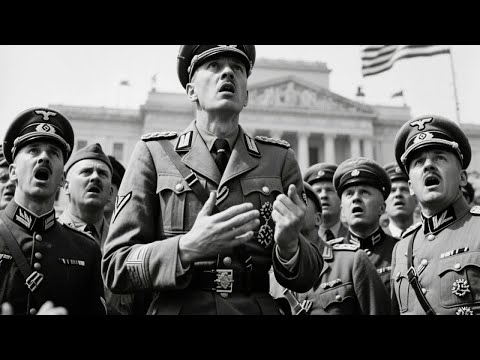
His capture in Tunisia had been almost inevitable. The Afrika Korps had been surrounded, supplies exhausted, reinforcement impossible. The British forces closing in had overwhelming advantages in equipment, air support, and logistics. Von Reinhardt had ordered his men to fight as long as ammunition lasted, then had surrendered with what remained of his division—maybe 3,000 soldiers from the 12,000 he had commanded three months earlier.
The British had processed them efficiently. Officers separated from enlisted men, generals given quarters that acknowledged rank even in captivity. Von Reinhardt had expected harsh treatment—victors had earned the right to humiliate the defeated—but the British had been correct rather than cruel, professional rather than vindictive. They followed Geneva Convention protocols with almost ritualistic precision, as if adhering to international law mattered more than satisfying any desire for revenge.
General Almagar Curt Steiner had been captured the same day, commanding a different sector of the collapsing German lines. He was younger than von Reinhardt—42 to von Reinhardt’s 48—and had been more enthusiastic about the regime’s ideological components. Not fanatical, but believing enough to repeat propaganda about German racial superiority and inevitable victory, even as evidence mounted that neither claim was remotely true. The third general, Generalmajor Otto Brandt, was oldest at 53. He had commanded artillery, had seen his batteries destroyed by Allied air superiority that German propaganda claimed didn’t exist. He was quiet, introspective, already beginning to question beliefs that captivity would systematically dismantle.
The British had held them for three weeks in a temporary facility near Tunis, questioning them about German strategy and disposition. The interrogations were professional—not torture, just persistent questioning by British officers who knew enough to ask intelligent questions but wanted confirmation of details. The generals had provided information they judged wouldn’t compromise ongoing operations, though the collapse was so complete that most military intelligence was obsolete before interrogators could act on it.
Then came transfer to American custody. The shift had been explained as logistical—America was building extensive POW facilities stateside while Britain needed its limited space for processing the massive influx of captured German and Italian forces. The generals and several thousand other high-ranking prisoners would be transported across the Atlantic to camps in the United States.
The voyage had taken two weeks. The ship was a converted cargo vessel—minimally comfortable but adequately provisioned. Von Reinhardt spent most of the crossing on deck when permitted, watching an ocean that seemed infinite, thinking about what awaited in America—a nation he had been trained to dismiss as militarily incompetent, industrially weak, socially fractured. The intelligence briefings had been specific. American forces were adequate in number but poorly trained and equipped. American industry was overextended and failing. American society was collapsing under the strain of supporting war on multiple fronts.
But the ship itself contradicted those claims. It was well-maintained, efficiently run, crewed by Americans who seemed neither desperate nor demoralized. The food was good—better than what von Reinhardt had eaten during the final months in North Africa. The medical care was available and competent. Everything functioned with a casual efficiency that suggested abundance rather than scarcity, strength rather than weakness.
Steiner had noticed it, too. He mentioned one evening, standing at the rail while sunset painted the Atlantic in shades of orange and gold, that the ship’s conditions seemed inconsistent with intelligence reports about American industrial decline. Von Reinhardt had agreed but hadn’t wanted to voice the logical conclusion: that the intelligence had been wrong, that the regime had lied, that Germany had challenged a power it couldn’t hope to defeat.
The morning they approached the American coast, von Reinhardt woke early and went on deck to watch landfall. Dawn was breaking over an ocean that was beginning to show signs of proximity to land—seabirds, occasional vessels, a subtle change in water color that meant shallows and shore. Then through the morning fog, America appeared.
The fog lifted gradually, revealing Norfolk Harbor in stages like a theatrical curtain opening on an elaborate set. First came the outer defenses—patrol boats and naval vessels maintaining a security perimeter. Then the harbor itself, so vast it made von Reinhardt’s breath catch. Ships—hundreds of ships, maybe thousands. Von Reinhardt couldn’t count them all, could barely categorize the variety. Liberty ships being loaded with supplies for overseas deployment. Warships of every class from destroyers to battleships. Tankers carrying fuel, cargo vessels, troop transports—all moving in coordinated patterns that suggested traffic control systems managing complexity at a level German logistics had never approached.
The scale was overwhelming. Von Reinhardt had studied intelligence estimates of American shipbuilding capacity—reports that claimed American yards were failing to meet production quotas, that ship construction was far below what propaganda claimed. But here was evidence that those reports were either badly outdated or deliberately false. This wasn’t struggling industry barely maintaining output. This was industrial capacity so vast it had transformed a harbor into a production facility that launched vessels faster than any enemy could destroy them.
Steiner stood beside him, silent, staring. His face showed the same realization that von Reinhardt was experiencing—that they had been lied to systematically and comprehensively about the enemy they were fighting. This harbor alone contained more functional vessels than the entire German Navy had possessed at the war’s beginning. And this was just one American port among dozens on two different coasts.
The ship docked at a facility that looked new—concrete piers and modern cranes suggesting recent construction to handle wartime expansion. American soldiers waited on the dock, MP armbands visible, weapons present but not prominently displayed. They looked competent, well equipped, neither hostile nor friendly—just professional troops performing routine security duty.
The Germans disembarked in groups, officers separated by rank. Von Reinhardt, Steiner, and Brandt were directed to a processing area where American officers photographed them, fingerprinted them, assigned them prisoner numbers, and explained through translators what would happen next. The process was efficient, almost bureaucratic—just administrative procedure applied to humans who happened to be captured enemy generals rather than any other category of person requiring official processing.
From the processing area, von Reinhardt could see the harbor continuing its operations. A Liberty ship was being launched from a nearby yard, the vessel sliding into the water while workers immediately began preparing the slip for the next ship under construction. The speed was remarkable. Von Reinhardt had read that American yards were producing ships in weeks rather than months, but reading statistics was different from watching the actual process.
An American colonel—older man, maybe fifty, with the weathered look of someone who had served long enough to have opinions about military bureaucracy—approached the German generals with a translator. He spoke in English that the translator rendered into German.
“Welcome to the United States. You are prisoners of war and will be treated according to Geneva Convention requirements. You will be transported to a facility where you will remain until the war concludes and repatriation becomes possible. You will be treated fairly. Any mistreatment should be reported to camp authorities. Cooperation will make your captivity more comfortable. Resistance will only make it more difficult. Understand?”
The generals nodded. The colonel studied them for a moment, then added through the translator: “You probably were told many things about America before you came here. You’re going to discover that most of those things were lies. The sooner you accept that, the easier your adjustment will be.”
He walked away before any of them could respond. Von Reinhardt watched him go, feeling the weight of that statement. Were told many things, most were lies. The casual certainty with which the colonel had delivered that assessment suggested it was an observation based on experience with other prisoners rather than propaganda aimed at breaking German morale.
They were loaded onto buses—actual buses, civilian-style vehicles converted for military transport. Nothing improvised or inadequate about them. The buses had windows, and as they pulled away from the harbor, von Reinhardt pressed his face to the glass to see everything he could of this American city he had been taught to dismiss as weak and failing.
Norfolk looked prosperous. Not wealthy exactly, but functional, maintained, showing no signs of the social collapse that intelligence reports had promised. Buildings were intact, unmarked by bombing or combat damage. Streets were paved and in good repair. Civilian vehicles moved in normal traffic patterns. People walked the sidewalks going about ordinary business—shopping, working, living lives that seemed entirely unaffected by the fact that their nation was fighting a global war on multiple continents simultaneously.
Steiner was staring too, his face showing confusion that mirrored what von Reinhardt felt. In Germany, cities showed war’s impact in rationing and restricted consumer goods, in infrastructure declining from lack of maintenance resources. Here, America looked like it was barely inconvenienced by wartime mobilization. How was that possible? How could a nation supposedly straining under war’s burden maintain such obvious normality?
The bus passed a department store with display windows showing goods for sale—clothing, household items, consumer products that had vanished from German markets years ago. It passed a restaurant with a line of people waiting for tables, suggesting food availability that made German rationing look catastrophic by comparison. It passed a school where children played in a yard, running and laughing with the carefree energy of youth untouched by aerial bombardment or food shortages. In Germany, children hid in bunkers. Here they played baseball.
The contrast was devastating—not because it was subtle, but because it was overwhelming in its obviousness. Von Reinhardt had commanded forces that fought on limited fuel and ammunition, that made do with inadequate equipment, that suffered from logistics chains stretched beyond breaking. And he had done this believing that American forces faced similar or worse constraints, that German material disadvantages were temporary situations that superior training and tactics could overcome.
But this city—this random American port city that probably wasn’t even among the nation’s largest or most important—showed industrial capacity and resource abundance that Germany had never possessed even before the war began. The math was simple and devastating. Germany couldn’t win. Had never been able to win. Had challenged a power so much stronger that defeat was inevitable from the moment the fighting started.
From Norfolk, they traveled by train—actual passenger rail, climate-controlled despite the summer heat, windows letting prisoners watch America scroll past. The rails were well-maintained, the trains ran on schedule. In Germany by 1943, rail transport was deteriorating—tracks bombed, equipment worn, delays constant. Here, the system functioned with capacity to spare.
The landscape was overwhelming in its scale. Farmland stretched to horizons, mechanized agriculture on a level Germany had never achieved—tractors and combines, healthy crops, no sign of the agricultural failure intelligence reports had promised. Steiner spoke quietly in German. “They told us American farming was failing, that cities were rioting for food. They told us many things that weren’t true.”
Brandt, mostly silent since capture, added his observation. “The question isn’t whether they lied. The question is whether anyone actually believed the truth but chose to lie—or whether the intelligence apparatus had become so corrupted by ideology that it could no longer distinguish truth from propaganda.”
Von Reinhardt suspected the latter. The regime selected for believers, promoted those who confirmed approved worldviews, punished those who questioned. Over time, the intelligence apparatus filled with people who reported what leadership wanted to hear. Strategic planning based on fantasy rather than reality.
The train passed a factory complex—acres of industrial buildings, smokestacks pumping out evidence of production. A sign identified it as producing artillery shells. This single complex was probably outproducing entire German regions, and it was just one of countless factories across a nation whose capacity Germany couldn’t hope to match.
Steiner stared and said quietly, “We never had a chance, did we?”
Von Reinhardt shook his head. “No, we never did.” The admission hung in the air, heavy with implications neither wanted to fully explore. They had commanded soldiers, sent men into combat, made decisions that resulted in deaths—all in service of a war that was unwinnable from the start.
Camp Crossville, Tennessee, sat in rolling hills that reminded von Reinhardt of southern Germany. The processing was familiar—photographs, questions, barracks assignment, rules explained. The camp commander, Colonel Patterson, addressed the new arrivals through a translator: “This is a prisoner of war camp, not a vacation resort. You will work. You will follow regulations. But you will also be treated fairly according to international law. Cooperation makes everyone’s lives easier.”
The mess hall served dinner that evening. Von Reinhardt stood in line, received a tray, moved down a serving line where American soldiers ladled generous portions—meat, vegetables, bread, fruit. Real food, properly prepared. He sat with Steiner and Brandt, eating slowly. In Germany, even officers had faced rationing by 1943. Here in an American prisoner camp, enemy officers ate better than German officers had eaten in Berlin.
Work assignments began the next day. Von Reinhardt was assigned to the camp library—sorting books, maintaining records, assisting with distribution. The library was well stocked: German books donated by American organizations, English texts, newspapers showing war progress that German propaganda had misrepresented.
One article described American ship production—Liberty ships launching faster than U-boats could sink them. Another detailed aircraft manufacturing, tens of thousands of planes annually. A third discussed agricultural output—America feeding itself, Britain, the Soviet Union, all while maintaining domestic consumption at levels Germans couldn’t imagine.
The math was devastating. In every category—ships, planes, tanks, trucks, artillery, ammunition, food, fuel—American production outpaced German by factors of two or three or five. Germany had challenged an enemy that could afford to waste resources in quantities representing Germany’s total output. The war had been lost before the first shot was fired.
Steiner worked in the camp administrative office and reported that the Americans kept meticulous documentation—every prisoner accounted for, every regulation documented, every decision recorded in systems ensuring accountability. The contrast with chaotic German administration was stark. Brandt helped with camp agriculture, working alongside enlisted prisoners, American guards supervising but not micromanaging, trusting that prisoners would complete assigned work if treated fairly.
Weeks passed. Von Reinhardt settled into routines—library work, meals, evenings reading or playing chess. Sundays attending services led by a chaplain who spoke German and offered comfort without requiring conversion or ideological conformity. The cognitive shift was gradual but profound. He stopped thinking of himself as a German officer temporarily detained and began thinking of himself as a prisoner confronting truth he had avoided during active service.
The regime had lied. Germany had lost. His professional career had been spent serving a system that had destroyed his nation through incompetence and ideological blindness. These weren’t comfortable realizations, but they were true—and von Reinhardt had been trained to value truth even when painful.
Fall brought cooler weather and news of continued Allied advances. American newspapers reported steady progress in Italy, growing presence in the Pacific, bombing campaigns systematically destroying German industrial capacity. Von Reinhardt read with detached professional interest—assessing tactics, recognizing competence in enemy operations he had been taught to dismiss as inferior.
The Americans organized educational programs—English classes, lectures on American history and government, even technical courses. Von Reinhardt attended lectures on American government delivered by a professor from a nearby college. The content was political education, yes, but delivered as factual information rather than propaganda. “Here is how this system works. Here are its principles. Make your own judgments about its merits.”
The contrast with German political education was absolute. The regime had demanded belief, punished questioning, insisted on a single approved worldview. America was teaching prisoners about an alternative system while explicitly acknowledging that Americans were free to criticize their own government—that dissent was protected, that diversity of opinion was valued rather than suppressed.
Steiner attended too, sitting beside von Reinhardt in lectures that systematically dismantled everything they had been taught about democracy being weak. The professor explained how the American system channeled disagreement into productive political competition, how federalism distributed power to prevent tyranny, how constitutional rights protected individuals against government overreach.
“Is this propaganda?” Steiner asked after one lecture.
Von Reinhardt considered. “If it is, it’s effective because it matches observable reality. Everything he describes—the elections, the rights, the distribution of power—seems consistent with how America actually functions. We were told democracy was chaotic and weak. What we’ve observed is a functioning system that manages to wage global war while maintaining civilian control and individual liberty. If that’s weakness, we badly misunderstood the meaning of strength.”
Winter brought holidays. The camp celebrated Christmas with services, special meals, even small gifts from Red Cross packages that arrived regularly despite the ongoing war. The gifts were modest—candy, cigarettes, playing cards—but they represented something larger. Even in captivity, even as enemies, prisoners were acknowledged as humans deserving of basic pleasures during traditional celebrations.
Von Reinhardt attended Christmas Eve service in the camp chapel. The chaplain read from Luke in German—the familiar story of angels and shepherds and peace on earth, goodwill toward men. Von Reinhardt had heard these words countless times but had never applied them to actual human relations across the divides of war and ideology. Now, sitting in an American prisoner camp while being treated with unexpected decency, the words took on meaning they had never possessed before.
Peace on earth, goodwill toward men—not conditional on agreement or alliance or shared ideology, but universal, applying to all humans regardless of which side of a conflict they fought on. The regime had taught otherwise, had claimed some people were worthy of consideration while others were expendable. America, imperfect though it was, seemed to operate on different principles—recognizing human worth regardless of nationality or political affiliation.
The realization was profound. Von Reinhardt had served a system that divided humanity into categories of worth, that valued some lives while dismissing others as obstacles to be eliminated. He had believed—or had convinced himself he believed—that such categorization was necessary for achieving important goals. But America showed an alternative approach: treating even enemies as humans, maintaining standards of decency even during total war, proving that ethics and effectiveness weren’t mutually exclusive.
Spring 1944 brought news of the impending invasion of Western Europe. American newspapers were surprisingly open about the preparations—discussing training, equipment, the buildup of forces in Britain. German prisoners read these reports and understood that the invasion would succeed, that German forces in France couldn’t hope to stop the weight of men and material America and Britain were preparing to deploy.
Von Reinhardt found himself hoping the invasion would succeed quickly, that German resistance would collapse rather than prolonging inevitable defeat through pointless defensive fighting. He recognized this as a borderline treasonous thought—wishing for his nation’s military defeat. But he also recognized it as a rational conclusion based on understanding that continuing the war only increased suffering without changing the outcome.
He discussed this with Brandt one evening. “Is it betrayal to hope for quick defeat? To want the war to end even if it means German surrender?”
Brandt considered carefully. “The real betrayal was starting this war. Leading our nation into unwinnable conflict based on lies and ideology. Prolonging it now serves no one except the leadership who want to delay their accountability. Wanting it to end quickly, wanting to minimize further suffering—that’s not betrayal. That’s facing reality that our superiors refused to acknowledge.”
The invasion came in June. News filtered through the camp—Allied forces landing in Normandy, establishing beachheads, beginning the liberation of Western Europe. Von Reinhardt tracked the progress on maps in the library, assessing the operation with professional detachment, recognizing competent planning and execution that had achieved strategic surprise despite German awareness that invasion was coming.
Germany was being defeated by enemies it had dismissed as inferior. The humiliation was comprehensive, but von Reinhardt had moved beyond shame to something like acceptance. This was the inevitable result of challenging superior power while believing propaganda about your own invincibility. Germany hadn’t been defeated by treachery or bad luck. It had been defeated by mathematics, by industrial capacity, by the systematic consequences of bad strategic decisions made by leadership that valued ideology over reality.
Hinrich von Reinhardt remained in American captivity until 1946, long after the war ended, while Allied authorities determined which German officers would face tribunals and which would simply be repatriated. His record was examined. He had fought in North Africa, not in the East where the worst actions had occurred, and nothing in his service suggested participation in systematic crimes beyond the general crime of serving the regime.
He returned to Germany in March 1946 to a nation he barely recognized. The cities were rubble. The population was starving. The infrastructure was destroyed beyond what he had imagined possible. But it was his nation, and he had a responsibility to help rebuild it—to help create something better from the ruins of what had been destroyed.
He used what he had learned in captivity about democracy, about rights, about systems that distributed power rather than concentrating it. He worked with occupation authorities, helped establish local government, became an advocate for building German democracy on American principles because those principles had proven themselves superior to what Germany had tried under the regime.
He spoke publicly when asked about his captivity—about the shock of seeing America for the first time, of watching a harbor full of ships and cities untouched by war, of recognizing that everything he had been told was lies. He described the fair treatment, the adequate conditions, the education programs that had shown an alternative to authoritarian governance.
Some Germans didn’t want to hear it. They preferred myths about betrayal or bad luck—explanations that let them avoid confronting the truth that Germany had lost because it had challenged superior power while believing obvious lies about enemy weakness. Von Reinhardt told the truth anyway, because Germany needed truth more than comfortable myths. Needed understanding of what had gone wrong so future generations could avoid repeating catastrophic mistakes.
He kept a journal from his captivity years, including entries from those first days, watching America reveal itself through Norfolk Harbor fog. Reading those entries decades later, he could still feel the shock of recognition—the moment when certainty crumbled and truth forced itself upon him through evidence too overwhelming to deny.
“The most important lesson,” he wrote in later reflection, “wasn’t military or strategic. It was simpler and more fundamental. That propaganda can make you believe lies if you let it. That ideology can blind you to reality. If you prioritize belief over evidence, at the worst, betrayal isn’t defeat in combat, but sending soldiers to fight in service of lies you should have recognized as false.”
America had won the war before it began—won through industrial capacity and organizational competence and social stability that Germany had never possessed. The shock of seeing America for the first time wasn’t just about recognizing the enemy’s strength; it was about understanding that everything the regime had taught was backwards. That the enemies Germany dismissed as weak were actually strong. That the superiority Germany claimed was actually inferiority masked by propaganda.
They—professional soldiers—had been too willing to believe. Von Reinhardt spent his remaining years teaching this lesson to anyone who would listen, to German youth who needed to understand how nations destroy themselves through believing comfortable lies rather than confronting uncomfortable truths. The first sight of America had shattered his worldview, had forced him to confront reality he had avoided during service. That shattering had been painful but necessary—the beginning of understanding that would shape his efforts to help build a better Germany from the ruins of the one that propaganda and ideology had destroyed.
And so the fog over Norfolk Harbor that June morning in 1943 became, in retrospect, the truest thing he had ever seen—a nation revealing itself not through words but through the undeniable evidence of its strength, its generosity, and its unshakable confidence in the truth. What would you have done, standing at that rail, watching your entire worldview dissolve into the mist?
Report this article
Select a reason for reporting:






