One helmet costs $42,000. The other, $312. Same war, same streets. In Iraq, the SAS carried half the weight, ran a fraction of the missions, and still made Delta Force question everything about how it fights.
In 2003, the US Joint Special Operations Command operated on more than $1.7 billion. The UK’s Special Forces Directorate managed with about £250 million. Per operator, the American investment was several times higher. That disparity was visible in every detail—from procurement orders to the weight of the kit carried into Iraq’s alleys.
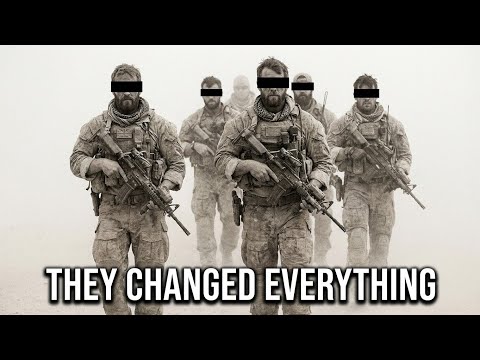
For Delta Force, the average combat load approached 23 kilograms: hard ballistic plates, a full suite of night vision optics, advanced communications gear, and enough ammunition for extended firefights. The British SAS moved through the same neighborhoods with packs weighing close to 12 kilograms.
The difference came from a philosophy as much as a budget line. The SAS relied on soft armor, minimal water, and mission-specific tools, stripping away anything not essential for speed and silence. Money set the parameters, but doctrine determined how far those resources could carry a unit before the weight became a burden.
Inside the perimeter at Balad Airbase, the American Intelligence Fusion Center operated around the clock. Nearly 300 analysts worked in shifts, passing satellite feeds, intercepted calls, drone imagery, and field reports. Their task: feed JSOC teams with the freshest possible intelligence, updating target packets by the minute.
In theory, this network gave Delta Force a decisive edge—rapid answers, real-time threat maps, and the ability to launch dozens of raids each night. But the sheer volume of information created its own friction. RAND’s assessment of high-volume fusion centers found that when operators were presented with more than 500 data points per minute, reaction time in simulated urban entry slowed by over a third. Decision latency increased from less than 2 seconds to nearly 3 seconds—a pause that could mean the difference between surprise and detection.
By contrast, the SAS cell in Iraq worked with just four planners. Their intelligence cycle was stripped to essentials: direct human sources, a cork board, colored string, and handwritten notes. Rather than racing to synthesize every possible input, they prioritized patience and clarity, focusing on a handful of high-value targets each month.
The difference in scale was stark. One side betting on massed data and computational speed, the other trusting a small team’s judgment honed by repetition and local knowledge. For the operators on the ground, the weight of information could be as real as the gear on their backs. When the flow of data became a flood, the cost was measured not in dollars or gigabytes, but in the moments lost when action demanded certainty.
Inside the command center, success was measured by jackpots. Mark Urban described a jackpot as a mission that hit its main target—capturing or neutralizing a high-value individual without civilian casualties or collateral damage. From September 2005 to March 2006, Delta Force and JSOC ran up to 90 raids a night, but their jackpot rate hovered around 48%. The SAS, operating at a much slower pace, reached 72%.
In Ramadi, the difference became clear. Delta’s assault sent 24 operators, four strikers, and a Predator drone into a maze of alleys. The raid lasted 47 minutes before turning into a 90-minute firefight. Two Americans were wounded, six non-combatants were killed, and the main target vanished.
Eleven days later, a four-man SAS patrol walked the same neighborhood. They moved quietly, stopping at 17 locations—including a butcher shop, market stalls, and rooftops—guided by their own intelligence. No shots were fired. Three weapons caches were found, the target was identified, and the team slipped away unnoticed by the network of shopkeepers and teenagers who watched the streets.
High-tempo raids brought speed, but also predictability. Each new operation taught the neighborhood how to hide, warn, or scatter. On the hills of Wales, SAS selection strips away everything but willpower and precision. Candidates march alone, weighed down by packs that grow heavier each week: 25 kg at the start, 35 kg by the end. There are no time checks, no encouragement—only the map, the compass, and the relentless landscape.
The Long Drag, a 64-km trek through the Brecon Beacons, must be finished in under 20 hours. Since the 1960s, at least five have died on these marches. Only a fraction make it to the end. Pass rates settle near 10%. Instructors say the process is not about finding the fittest, but the most self-reliant. Every decision, every correction, must come from the candidate—not a radio or GPS.
Inside JSOC, these stories circulated quietly. Dalton Fury, a Delta Force commander, described his first visit to the SAS planning room at MSS Fernandez. Instead of digital screens, he found a paper map covered in colored string and handwritten notes. Fury later wrote that this moment forced a reckoning: If the technology went dark, who could still find the target?
JSOC leadership responded. Within a year, new training cycles required operators to navigate without electronics, to plan missions with minimal digital support, and to rehearse low-signature patrols modeled on the SAS approach. The curriculum shifted toward patience, silence, and the discipline to wait for the right moment—skills that could not be issued or bought.
The quiet redesign did not erase the advantages of American resources, but it forced a new respect for the kind of capability that emerges only through hardship and time. And as Delta Force operators began to train in the dark, without their usual technological crutches, they discovered that the SAS had been fighting a different kind of war all along—one where the most powerful weapon was not what you carried, but what you could live without.
The first cycle of electronic-dark exercises exposed something deeper than a skills gap. Delta operators, stripped of their links and sensors, moved through mock compounds with the hesitation of men reading a foreign language. They had trained for years to trust the machine. Now the machine was gone, and the silence was unnerving.
An after-action report from one such exercise, later circulated within JSOC, noted that teams without digital support took an average of 40% longer to locate a target inside a simulated village. More telling, they second-guessed their own decisions—pausing at corners, re-checking maps, waiting for guidance that never came.
The SAS instructors who observed the drills said little. They simply pointed to the map and the compass and asked one question: “What do you see?”
It was a question that could not be answered with a data feed. It required the operator to read the ground, the people, the patterns—to trust his own eyes and judgment. For Delta, this was a radical shift. The unit had built its reputation on speed, precision, and overwhelming force, all enabled by the most advanced technology money could buy. Now it was being asked to slow down, to look, and to think.
In the months that followed, the changes rippled through the force. Procurement orders for new gadgets were quietly delayed. Training schedules were rewritten to include long foot patrols without radios, map-only navigation exercises, and planning cells that operated with nothing more than a whiteboard and a stack of human intelligence reports.
One Delta troop commander, speaking on condition of anonymity, later admitted that his men initially resented the shift. “We thought we were being punished,” he said. “We were the best-equipped force in the world, and suddenly we were being told to act like a bunch of hikers.”
But the results, when they came, were hard to argue with. In a series of low-profile missions in western Iraq, teams that had adopted the stripped-down approach began to report higher success rates—more targets identified, fewer civilian casualties, and a lower chance of detection. The neighborhoods they operated in started to treat them less like an invading force and more like a rumor.
The SAS, for their part, watched the American transformation with quiet satisfaction. They had not set out to teach anyone a lesson. They had simply done what they had always done: adapt, endure, and rely on the man beside them. But the sight of Delta operators sweating over a paper map, learning to read the land the hard way, was a validation of a philosophy that no budget could ever fully replicate.
What the SAS had learned in decades of low-profile work was not a set of techniques but a way of seeing. In the alleys of Iraq, that meant understanding which shopkeeper would talk, which rooftop offered a clean line of sight, and which hour of the night the streets belonged to the watchful and the wary. Delta Force could map a neighborhood with drones. The SAS could walk into it and become part of its rhythm.
That difference had a name inside JSOC’s after-action reviews: environmental literacy. It was the ability to read a place without instruments, to know when a crowd’s mood had shifted, and to sense that a mission’s success depended less on the plan than on the moment. Analysts noted that SAS patrols routinely gathered more usable intelligence on a single foot movement than American drone sweeps produced in a week—because the British teams talked to people, drank tea, and listened.
This was not sentimentality. It was tradecraft refined in Northern Ireland, Malaya, and Oman—places where the enemy wore no uniform and the battlefield was a street you had to walk every day until it became familiar. The SAS brought that inheritance to Iraq, and it showed in outcomes that no spreadsheet could capture.
By early 2006, the American adaptation had begun to take root. Delta troops started embedding with Iraqi interpreters for longer periods, staying in the same neighborhoods for weeks rather than hours. They learned names, faces, and grudges. They stopped treating every mission as a sprint and started treating some as investments.
“We stopped asking what we could add,” one planner recalled, “and started asking what we could take away.”
That question changed the shape of operations. Fewer vehicles, smaller footprints, more walking. Radios were used sparingly, and sometimes not at all. Commanders learned to tolerate silence on the net, trusting their men to make decisions that once would have required a call up the chain.
The results were incremental but unmistakable. Raid tempo dropped, but jackpot rates climbed. Civilian casualties fell. In one three-month window, a Delta squadron operating in Anbar reported that more than half of its high-value targets were located through human sources rather than technical collection—a figure that would have been unthinkable two years earlier.
The SAS officers who reviewed the reports offered no applause. They simply noted that the Americans had begun to do what the British had always done: fight the war in front of them, not the war their technology had prepared them for.
And yet, the mirror cut both ways. The SAS could not ignore what American resources delivered when applied with discipline. The fusion center at Balad, for all its noise, had shortened the distance between a whisper and a target. British planners began to ask whether their own austerity had become a habit rather than a choice—whether some of their patience was simply the absence of options.
The real lesson was not that one force was better. It was that each had drifted toward an extreme, and the war was now forcing both back toward the center. Delta was learning to walk. The SAS was learning to listen to the machines it had long distrusted.
Somewhere in that convergence, a new kind of operator was taking shape—one who could read a map and a data feed, who could move in silence and call for fire, who understood that the most valuable tool in the kit was judgment, and that judgment could be trained but never purchased.
The question that remained, unanswered in any after-action report, was how long that convergence could hold. Budgets, culture, and institutional pride all pulled in different directions. The Americans would keep buying. The British would keep stripping away. And the next war, whatever its shape, would test which philosophy bent first under pressure.
The answer came quietly, in the winter of 2006, when a joint Delta-SAS patrol moved through a village south of Ramadi. No drones overhead. No radio chatter. Just eight men, a paper map, and two days of patient observation. They found the target, a mid-level facilitator, asleep in a farmhouse. No shots fired. No civilians harmed. The jackpot was clean.
Afterward, a young Delta captain asked the SAS patrol leader how he’d known which house to watch. The Briton shrugged. “We asked the baker. He doesn’t like the man either.”
The captain wrote it down. Not in a system. On paper. He kept that note for the rest of his career.
So here’s the question that no budget line can answer: if the next war strips away every advantage you’ve bought, what will you still have left to fight with?
Report this article
Select a reason for reporting:






