When you picture a Latino, what do you see? For many, it’s a single, monolithic image—brown skin, dark hair, a blend of Indigenous and European features. But that image is not just incomplete; it’s a lie that has persisted for centuries. The truth is, Latin America is home to one of the most genetically diverse populations on Earth, a kaleidoscope of ancestries that defies any simple label. And the story of how that diversity came to be is a tale of conquest, resistance, and survival that most people have never heard.
In this exploration, we’ll uncover the real history behind Latino DNA—a history that begins with the collision of worlds in 1492 and continues to shape identities today. From the rigid caste system of colonial Spain to the surprising genetic contributions of Middle Eastern and Asian immigrants, the reality is far more complex and fascinating than the myth. So, let’s dive into the genetic melting pot that is Latin America and discover what they really found in Latino DNA—and why no one wanted to say it.
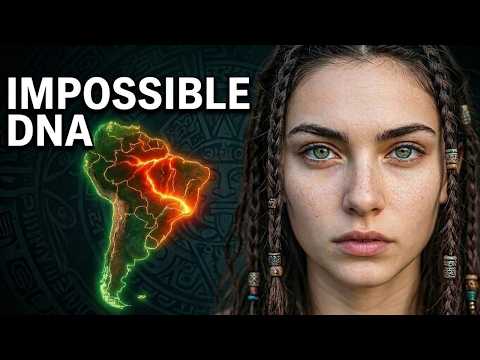
The average American might point south of the border and assume a uniform brown population, but that couldn’t be further from the truth. In fact, no single racial group makes up more than 40% of any Latin American country’s population. The region is a mosaic of Indigenous, European, African, and even Asian and Middle Eastern ancestries, all interwoven over centuries. This diversity is not a recent phenomenon; it’s the result of a long and often brutal history of colonization, migration, and mixing.
It all started with Columbus’s arrival, which set off a chain reaction of events that would permanently alter the demographic landscape of an entire hemisphere. Within generations, populations that had been isolated for thousands of years began mixing—sometimes voluntarily, often by force—with Europeans and later with enslaved Africans. This mixing created the raw material for the diverse genetic profiles we see today. It’s why a single family in Mexico or Brazil can have siblings who look like they belong to different racial categories. There was never one Latin American gene pool; there were dozens colliding at once.
But what does ‘Latin America’ even mean? Technically, it refers to the Spanish and Portuguese-speaking countries of the Americas—a linguistic and colonial grouping, not a racial one. Yet in everyday use, the term gets stretched to include everyone south of the US border, lumping together places with wildly different histories. This looseness is part of the problem. If the category itself is fuzzy, the assumptions about who belongs in it become even fuzzier.
Independence from Spain and Portugal in the 1800s didn’t erase the social hierarchy the colonizers left behind. The racial caste system—which determined who could own land, hold office, or marry whom—was absorbed into the new nations’ politics and social rules. It’s still doing quiet work today, generations later. Slavery is a prime example. Most Latin American countries abolished it earlier than the United States, but a large population of African descent remained, often at the bottom of the social ladder. The label ‘Latin America’ makes all of this sound like one story, but it’s actually dozens of overlapping stories.
To understand where mestizo identity comes from, we need to look at the specific system that ranked people: the casta system. This was Spain’s way of organizing a rapidly mixing colonial population, similar to the caste system of South Asia. It was hereditary, tied to family lineage, and determined your rights, rank, and entire trajectory in colonial society. At the bottom were people of African descent, placed there due to their association with slavery. Just above them were Native Americans, who had initially been the majority but became a minority in their own homeland. Mixed-race people occupied the space in between, with more rights than those below but still far from the top. The top was reserved for Europeans of Spanish descent—and even among them, those born in Spain outranked those born in the colonies. This obsession with bloodline and birthplace says a lot about the system’s priorities.
But why were the Spanish so fixated on racial rank? To understand that, we have to look back to the Iberian Peninsula and centuries of Moorish rule. For roughly 700 years, large parts of Spain and Portugal were under Muslim control, which meant generations of Christian Europeans grew up watching a non-European, non-Christian power control their land. The Reconquista—the centuries-long campaign to reclaim that territory—became a defining feature of Spanish identity. By the time it ended in the late 1400s, Spanishness had become deeply entangled with the idea of religious and racial purity. Being Christian, being European, being ‘untainted’ by foreign blood—these were the highest status markers. When Spain began colonizing the Americas almost immediately after, they brought that same worldview with them. The casta system wasn’t a colonial invention; it was a centuries-old anxiety about purity exported and reapplied to a new continent.
That meticulousness produced an entire vocabulary. Someone of mixed Native American and European descent was called mestizo, literally ‘mixed’ in Spanish. Someone of mestizo and European ancestry became castizo. Someone of mixed mestizo and Native American heritage was cholo. And there were dozens of other categories, each with its own name, rung on the ladder, and bundle of rights and restrictions. Casta paintings from the era illustrated these combinations side by side, like a visual taxonomy of blood. It was a deliberately engineered classification system built to track exactly how much European ancestry someone carried, because that fraction determined nearly everything about their legal and social standing. Mestizo, out of all these terms, became the demographic center of gravity for the region. Today, mestizos make up the largest single population group across Spanish-speaking Latin America, outnumbering those who identify as purely European, Indigenous, or African. But the term was never neutral. It was a colonial ranking system assigning worth based on proximity to European ancestry. And centuries later, people still use a version of that vocabulary to describe themselves, often without knowing where it came from.
That history is exactly why understanding what mestizo means in modern genetic terms matters so much—because the number behind the label tells a very different story than the neat 50/50 split the term implies. On paper, mestizo means half European, half Native American. In practice, that clean split almost never holds up, and it usually doesn’t tilt the direction people assume. Genetic studies out of Mexico have consistently found that mestizos carry more Indigenous than European ancestry on average, with several large-scale analyses putting the split closer to 55–60% Indigenous and 30–35% European, alongside a smaller African component. Individual results vary widely by region and family history, but the pattern holds across most studies. Mestizo identity leans more Indigenous genetically than the half-and-half version of the term suggests.
And it’s not random variation. Researchers have found a real correlation between socioeconomic status and ancestry proportions. Mestizos of lower economic standing tend to carry a higher percentage of Indigenous DNA, while wealthier mestizos tend to carry more European DNA. That’s not a coincidence—it’s the caste system’s centuries-old logic still quietly playing out in genetic data today. Generations after the legal hierarchy was dismantled, the label survived, and the ranking embedded inside it never fully left.
This is also where the term starts to reveal something important about identity versus biology. Mestizo isn’t really a precise genetic category; it’s a cultural and historical one that happens to correlate with certain ancestry patterns, not define them exactly. Someone can be genetically closer to majority European and still identify culturally and socially as mestizo, because the label was never about hitting an exact ratio. It was about occupying a specific social position that got passed down generation after generation along with the name.
That distinction between what a label implies and what DNA actually shows becomes even more important once you start looking at populations most people don’t even associate with Latin America at all—because the region’s genetic story includes far more than just European, Indigenous, and African ancestry.
Here’s a fact that surprises almost everyone: by several widely cited estimates, Latin America is home to one of the largest populations of people with Middle Eastern ancestry outside the Middle East itself. Countries like Brazil, Argentina, Chile, and Mexico host sizable communities of Palestinian, Lebanese, and Syrian descent—the product of waves of immigration going back over a century, largely driven by economic opportunity and at times by people fleeing conflict. These communities didn’t stay separate over generations; they intermarried into the broader population, which means Middle Eastern ancestry now shows up quietly in DNA results across the region, often in people who’d never think to expect it.
East Asian ancestry tells a similar story. Brazil has the largest population of ethnic Japanese descent outside of Japan—roughly 2 million people, larger than the Japanese-descended population in the United States. In Peru, various estimates suggest that around 10–15% of the population carries some degree of Chinese ancestry, often folded into the broader mestizo population after generations of intermarriage following 19th- and 20th-century labor migration. And then there’s African ancestry showing up in unexpected places. Mestizo populations in Mexico, Panama, Colombia, and Venezuela often carry a small but measurable percentage of African DNA—a genetic trace of the relatively smaller number of enslaved Africans brought to those regions compared to places like Brazil or the Caribbean. None of this fits the flattened brown continent image most outsiders carry around. It’s Spanish, Portuguese, Indigenous, African, Middle Eastern, and East Asian ancestry all folded into the same regional identity—sometimes all present in a single person’s genome at once.
And once you factor in populations that identify as fully European, the picture gets even messier, because it turns out the line between white and mestizo in Latin America is a lot blurrier than either label suggests.
That blurriness shows up the moment you ask who actually counts as white in Latin America, because the answer depends heavily on who’s answering. Studies suggest the average self-identified white Latin American carries roughly three-quarters or more European ancestry, with the rest made up of Indigenous, African, or Middle Eastern DNA. That’s a meaningful chunk of non-European ancestry sitting under a label the US would typically treat as exclusively European.
This overlap creates a strange effect: a huge number of people could reasonably identify as either white or mestizo, and where they land often comes down to family tradition, regional norms, or personal preference rather than any hard genetic line. That’s why estimates of Mexico’s white population swing wildly—anywhere from single digits to nearly half, depending on the source. The category itself simply doesn’t have firm edges.
There are, of course, largely unmixed European populations concentrated in the Southern Cone—Argentina, Uruguay, Chile, and parts of Brazil—which received massive waves of European immigration in the 19th and early 20th centuries. And groups like Middle Eastern immigrants, Ashkenazi and Sephardic Jews, and Romani communities complicate the picture further, since whether they identify as European depends entirely on context.
But once these populations immigrate to the United States, they run head-first into a completely different racial classification system—one with no real category for what they are. The US Census has never known what to do with mestizo identity. Faced with millions of Latin American immigrants who didn’t fit neatly into any existing racial box, the census took the simplest route: it created Hispanic or Latino as a catch-all ethnicity rather than a race. That decision produces genuinely strange outcomes—someone from Spain gets classified as Hispanic, while someone from Portugal, with an extremely similar background, typically isn’t.
And critically, there’s no mestizo box anywhere on the form, despite mestizo describing the majority ancestry pattern for Hispanics across their home countries. The census offers a ‘two or more races’ option, which sounds like it should solve the problem, but it doesn’t—because most Latin American mestizos don’t think of themselves as multiracial at all. They think of themselves as one race: mestizo. That’s why only a small single-digit share of Hispanics in the US select two or more races. Most instead pick ‘some other race’ or use terms like Moreno, because mestizo either doesn’t feel accurate to how they see themselves or they’ve simply never encountered the word in an American context.
That’s really the core of it. Mestizo isn’t a checkbox split between two other boxes. It’s its own thing. Look at modern Central Asia, where populations carry ancestry from East Asia, the Middle East, and Europe all at once—blended over so many centuries that nobody thinks of themselves as mixed race. They think of themselves as Central Asian, full stop. Mestizo identity works the same way. It’s not two races awkwardly sharing space in one person; it’s a distinct identity that emerged from centuries of mixing, stabilized into something coherent, and got passed down as its own category.
That’s also why the label ‘mixed race’ feels wrong to most people who actually carry it. It implies something unresolved, something still splitting between two poles—when in reality, it’s had 500 years to become its own thing entirely. The DNA underneath tells a real, traceable story: European colonizers, Indigenous nations, enslaved Africans, Middle Eastern and East Asian immigrants, all converging in one bloodline. But the identity built on top of that DNA is something new, something that doesn’t map cleanly onto any single ancestral group.
That’s the piece that gets lost every time someone uses ‘Mexican’ as shorthand for a race, or assumes ‘Hispanic’ describes a single genetic population. It flattens five centuries of colonization, migration, forced displacement, and cultural fusion into a word that was never built to hold that much history. The real picture—the one written in DNA, not vocabulary—is far messier, far richer, and honestly far more interesting than any single label could ever capture.
So no, Mexican isn’t a race. Neither is Hispanic, neither is Latino. What those words actually describe is one of the most genetically layered populations on the planet: Indigenous nations that thrived here for thousands of years, Spanish colonizers who built an entire hierarchy out of bloodline, enslaved Africans whose ancestry still shows up in DNA results across the region, and waves of Middle Eastern and East Asian immigrants nobody expects when they picture Latin America. Mestizo identity sits at the center of all of it—not a mixed-race split between two poles, but its own distinct identity five centuries in the making. That’s the part the shorthand always erases.
If there’s one thing worth carrying away from all this, it’s that a DNA test doesn’t just tell you where your ancestors came from. It tells you how flimsy these broad ethnic labels really are. Once you look underneath them, the real story is written in the genome, not in the vocabulary we’ve inherited to describe it.
So the next time someone tells you what a Latino ‘looks like,’ ask yourself: are they describing a people—or just repeating a label that was never built to hold them?
Report this article
Select a reason for reporting:






