The heart. Not the metaphorical kind—the literal, beating organ that had become the most expensive ‘toy’ in history. It was a relic, they said, but to him, it was an obsession.
He had spent years chasing it, sacrificing everything—his wealth, his family, his sanity. And now, as he held it in his trembling hands, he realized the cost was far greater than he ever imagined.
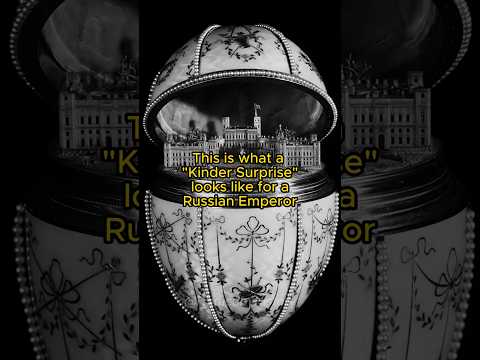
The heart was encased in a crystal dome, its arteries and veins traced with gold, its surface studded with diamonds. It was a masterpiece of craftsmanship, a symbol of power and vanity. But it was also a curse.
He remembered the first time he saw it—at an auction in Vienna, 1892. The bidding had started at a million francs, but within minutes, it had soared to ten million. “I must have it,” he whispered to himself, his eyes locked on the prize.
His wife had pleaded with him to stop, but he was deaf to her words. He had already mortgaged their estate, borrowed from every bank in Europe. “You’re buying a heart of stone,” she said, her voice cracking. “And it will turn yours to stone as well.”
He didn’t listen. He never did. The heart was his, and with it, he believed he would finally earn the respect he craved. But the heart had other plans.
Strange things began to happen. At night, he would hear a faint beating sound coming from the crystal dome. “It’s just my imagination,” he told himself. But the beating grew louder, more persistent.
His servants whispered of a curse, of a heart that demanded a sacrifice. He dismissed them as superstitious fools, but deep down, he felt a chill.
Then, one by one, his loved ones began to fall ill. His wife, his children, even his loyal dog—all struck by a mysterious ailment. The doctors were baffled. “There’s no explanation,” they said. But he knew. The heart was collecting its debt.
He tried to sell it, but no one would buy. The heart had a reputation now, a dark legend that preceded it. “It’s cursed,” they said. “It brings nothing but ruin.”
Desperate, he sought the help of a renowned occultist. The old man examined the heart and paled. “This is not just a toy,” he said. “It’s a vessel. And it’s hungry.”
He explained that the heart was once owned by a powerful sorcerer who had trapped the souls of his enemies inside it. “Every beat you hear is a soul crying out,” the occultist said. “And it will not stop until it has claimed yours.”
Panic set in. He ordered the heart to be destroyed, but the crystal dome was indestructible. He tried to bury it, but it always found its way back. “You cannot escape it,” the occultist warned. “You must find the sorcerer’s descendant and break the curse.”
And so, his quest began. A journey that would take him across continents, through ancient texts and forgotten ruins. But time was running out. The heart’s beating grew louder, and his own heart grew weaker.
Would he find the descendant in time? Or would he become the next soul trapped within the crystal dome?
The first clue came from a crumbling monastery in the Carpathians, where a blind monk traced the heart’s sigil on parchment with a shaking finger. “The sorcerer’s bloodline did not die out,” he rasped. “It thinned, scattered—but it survives.” He spoke of a woman in the salt marshes of the Adriatic, last of a line that had spent generations hiding from its own inheritance.
He traveled by night, the crystal dome wrapped in black velvet beside him on the carriage seat. The beating had changed. It was no longer steady—it stuttered, raced, fell silent for terrifying minutes before resuming with a violence that rattled the glass.
By the time he reached the marshes, his hands had begun to tremble without cease. His reflection in the stagnant water showed a man hollowed out, cheeks gray, eyes sunken. “You look like a corpse that forgot to lie down,” the ferryman muttered, and refused his coin.
Her name was Mira. She lived alone in a stone hut at the water’s edge, mending nets and selling eels at a market three villages away. When he unwrapped the dome on her table, she did not recoil. She did not gasp. She simply looked at it the way one looks at an old wound.
“So it’s found me,” she said quietly. “I hoped the sea would keep it away.”
She told him what the occultist had not. The sorcerer had not merely trapped his enemies—he had bound his own heart to the vessel as well, so that he might live forever. But immortality demanded fuel. Every soul the heart consumed kept the sorcerer’s spirit alive, and every century, the vessel chose a new keeper to feed it.
“My grandfather tried to break it,” she said, turning the dome slowly in her hands. “He failed. The heart took him instead. My father ran. It took him too, from a thousand miles away.” She set it down. “There is one way. The binding must be undone by the blood that made it—willingly given, not taken. But it will cost the giver everything.”
He stared at her, understanding dawning cold and slow. “You mean your life.”
Mira smiled, and it was the saddest thing he had ever seen. “I mean my heart,” she said. “In every sense of the word.”
That night, the beating from the dome grew so loud it shook dust from the rafters. He lay awake listening to it, and for the first time, he heard what the occultist had promised he would hear—voices. Hundreds of them. Whispering. Screaming. And beneath them all, one voice he knew.
His wife’s.
“You bought a heart of stone,” it said, soft as it had been on that Vienna evening. “And now it’s yours. All of it. Forever.”
He rose before dawn and found Mira already awake, already dressed, already holding a knife she had sharpened on the whetstone by the door. “You don’t have to do this,” he said, though the words tasted like ash.
“I know,” she said. “That’s why I’m doing it.”
She turned the blade toward her own chest, and the crystal dome began to glow from within—a sickly amber light, pulsing in time with the beating, faster and faster, as though the heart itself sensed its feast approaching.
Then a sound split the morning silence. Hooves. Many of them. And a voice he recognized—the occultist’s—shouting across the marsh.
“Stop! Both of you! The binding cannot be broken by sacrifice—that is the trap! It is how the sorcerer has fed for six hundred years!”
The occultist burst through the door, robes soaked to the knee from the marsh, his face pale with urgency. Behind him, three men he did not recognize crowded the threshold, lanterns swinging. “The willing heart,” the old man gasped, “is the sweetest meat of all. Every keeper who has ever tried to break the curse has offered himself up—and every one of them became the sorcerer’s feast.”
Mira’s knife wavered. “But my grandfather—”
“Your grandfather believed the same lie. As did his father, and his father before him. The sorcerer wrote the rules himself, child. He made sacrifice the only path because sacrifice is what he hungers for.”
The dome on the table flared brighter, the amber light now shot through with veins of red. The beating quickened—not the steady thrum of a heart, but the frantic rhythm of something panicking. It had heard the occultist’s words.
He stepped between Mira and the dome, his own pulse hammering in his throat. “Then what breaks it?” he demanded. “You said there was a way. You sent me here.”
The occultist drew a cracked leather book from his coat and laid it open on the table. The pages were covered in a script so old the ink had faded to brown. “The binding was forged with a word,” he said. “A single word of command, spoken by the sorcerer as he sealed his enemies inside. Speak that word, and the vessel empties. But it can only be spoken by the one who owns the heart—and it must be spoken freely, with no thought of gain.”
He stared at the page, at the word written there in a hand that seemed to writhe as he looked at it. “Then I’ll speak it. I own the heart. I’ll—”
“You don’t understand,” the occultist cut in. “The moment you speak it, every soul inside will be freed. Including the sorcerer’s. And he will not go quietly. He will take the nearest living heart as his new vessel.” His eyes flicked to Mira, then back. “Yours.”
The silence that followed was worse than the beating. Mira lowered the knife at last, her knuckles white around the handle. “So we trade one curse for another,” she said flatly. “There is no end to it.”
“There is one end,” the occultist said, and his voice dropped so low they had to lean in to hear. “The heart must be emptied while its keeper’s heart still beats—and then the keeper must die before the sorcerer can claim a new vessel. The binding dies with the bloodline that forged it. No keeper, no vessel. No vessel, no sorcerer.”
He looked at Mira. She looked back at him. And in that look, something passed between them that neither had words for—the terrible arithmetic of who would pay, and who would walk away.
“There’s more,” the occultist said, and now he would not meet either of their eyes. “The word must be spoken by the keeper, but the keeper cannot be the one who dies. The sacrifice must be made by another—someone who loves the keeper enough to give their life in his place.”
The dome went dark. The beating stopped. And in the sudden quiet, he heard his wife’s voice one last time, thin as a thread: “You never loved me enough to die for me. But someone might love you that much. Find out who.”
He turned to Mira. She was already shaking her head, tears cutting tracks through the salt on her cheeks. “Don’t,” she whispered. “Don’t you dare.”
He looked at the cracked leather book, then at Mira. The word waited on the page, patient as a serpent. “I didn’t come all this way to let it feed again,” he said, and his voice barely shook.
The occultist pressed a hand to his shoulder. “Then speak it, and I will do what must be done. I have lived too long already.” The old man’s eyes were calm, resolved. Mira opened her mouth to argue, but he raised a hand to silence her. “I have studied this curse for forty years. Let me end it.”
He lifted the dome. The word rose from his throat—ancient, jagged, tasting of ash and salt. The crystal shattered. Amber light poured upward, and hundreds of voices sighed free, rising like smoke into the morning.
Then the sorcerer’s spirit lunged. The occultist stepped into its path, arms wide. “Go,” he said, and the darkness swallowed him whole.
When the light faded, the old man was gone. The dome was dust. And on the table, a single gold vein lay cooling—all that remained of a heart that had taken everything.
Mira took his hand. “It’s over,” she said.
But was it? Or had the sorcerer merely found a new vessel in the old man’s willing heart—and somewhere, even now, was a new beating beginning?
Report this article
Select a reason for reporting:






