The Atlantic, 1943. A U-boat’s periscope cuts through the grey waves, its crew scanning the skies for the dreaded silhouette of an Allied bomber. They know that once spotted, they have mere seconds to dive before depth charges rain down. But what if the bomber doesn’t attack? What if it simply… leaves? That was the gambit—a calculated deception that turned the hunter into the hunted.
In the unforgiving arena of the Battle of the Atlantic, Allied aircrews faced a frustrating reality: if a U-boat submerged within 15 seconds, depth bombs were virtually useless. Operational data from 1943 showed that of 150 attacks on U-boats, none were sunk or damaged if the submarine had been submerged for more than 15 seconds. The solution? A tactic so cunning it seemed counterintuitive: fly away, wait, and hope the U-boat surfaces—then strike.
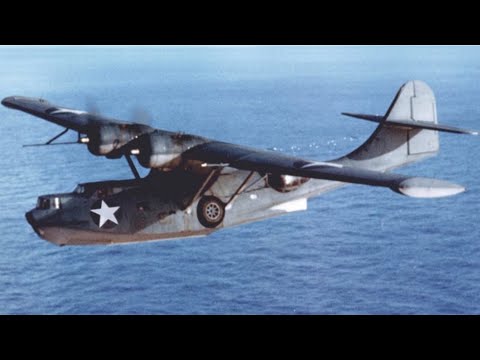
This was the Gambit, or baiting maneuver. “The plane will leave the area for a certain amount of time in orbit then return, hoping the submarine has surfaced,” explained a 1983 Air Force document. The logic was simple: a U-boat, believing the threat gone, would surface to recharge batteries and ventilate. That moment of vulnerability was the attacker’s window.
But executing the Gambit required precision. Without sonobuoys, pilots marked the dive point, withdrew 30 miles, and orbited for 30 to 60 minutes. They calculated the sub’s likely position using assumed underwater speeds—six knots for the first 10 minutes, then three knots. With sonobuoys, the approach was more sophisticated: a square pattern of buoys, each transmitting underwater sounds to the aircraft. The operator would listen for the telltale roar of diesel engines—the signal that the sub had surfaced.
Training was intense. Crews listened to recordings distinguishing the faint propeller beats of a submerged sub from the unmistakable rumble of a surfaced one. “You must be able to tell by listening when the sub is on the surface,” instructed a 1945 naval bulletin. The success of the Gambit hinged on this auditory skill—and on patience.
One case study from December 1942 illustrates the tactic’s potential. A PBY Catalina spotted a U-boat, dropped a smoke marker, and climbed through clouds. After 30 minutes, it returned to find the U-boat still on the surface. The PBY attacked, dropping depth bombs that straddled the sub. Photos captured the U-boat rising at a 45-degree angle, then sinking stern-first. The kill was confirmed—a testament to the Gambit’s deadly effectiveness.
But the Gambit was not without risk. U-boats could slip away, or the waiting aircraft could run low on fuel. Yet for Allied crews, it was a gamble worth taking—a dance of deception that turned the vast Atlantic into a chessboard where the next move could mean life or death.
The men who flew these patrols learned to read the sea the way a hunter reads a forest. A wake that lingered too long, a slick of oil that spread against the wind, a periscope feather that vanished beneath a cap of foam—each was a clue, and each demanded a decision within seconds. The Gambit gave them a way to slow the clock, to force the U-boat commander into a choice between staying blind underwater and surfacing into the open sky.
Yet the tactic demanded more than patience. It demanded discipline. Aircrews were instructed to assume an underwater speed of six knots for the first ten minutes and three knots thereafter, plotting the submarine’s drift on a plotting board while the aircraft droned in a wide, lonely orbit. Fuel gauges ticked down. Cloud shadows slid across the water. Every minute aloft was a minute closer to the point of no return, when the pilot would have to break off and head for base—or risk ditching in a cold and indifferent sea.
When sonobuoys entered the arsenal, the Gambit sharpened into something closer to science. The square pattern—a center buoy at the dive point, four more flung out in a four-by-four-mile box—turned the aircraft into a listening post. From 5,000 feet, a sonobuoy’s hydrophone could transmit underwater sound back to the aircraft across 30 to 40 miles, though the operator’s ears had to sort the signal from the hiss of the ocean itself.
And then came the sound every operator strained to hear: the deep, rhythmic throb of a diesel engine. It was unmistakable once learned—a mechanical heartbeat rising through the water, utterly different from the whine of electric motors or the faint swish of a propeller at depth. “There is usually a change in the character of the signal received,” the training bulletin noted dryly, as though the difference between a submerged submarine and a surfaced one were a matter of mere academic interest rather than the difference between a wasted patrol and a kill.
The case study from December 1942 remained the template. The PBY that spotted the U-boat at 2,000 feet, dropped its smoke marker, and climbed into the clouds had done everything by the book—and the book was still being written in those days, in after-action reports and intelligence summaries that circulated through anti-submarine commands like scripture. The photographs taken during that attack, showing the conning tower exposed and the deck awash, then the sub rising at 45 degrees before settling stern-first, became training material in their own right.
But not every Gambit ended in a confirmed kill. Some ended with an aircraft circling an empty patch of ocean, the sonobuoys silent, the fuel dangerously low. Others ended with a U-boat that surfaced just long enough to recharge, spotted the returning bomber, and dove again—vanishing into the deep with the patience of a creature that had learned to survive by never staying in one place too long.
For the crews, the lesson was clear: the Atlantic rewarded neither recklessness nor hesitation. It rewarded the crew that could wait, listen, and strike at precisely the right moment—and then do it all again the next day, and the day after that, until the grey sea finally gave up its secrets.
The evolution of the Gambit was driven as much by failure as by success. Early patrols that pressed home attacks against freshly dived U-boats often came away with nothing but scattered depth-charge patterns and empty fuel tanks. Each of those attacks was dissected by Bomber Command with a single question in mind: what would have worked? The answer, repeated across after-action reports, was almost always the same—wait. Give the submarine a reason to believe the sky was clear, and it would offer itself up.
That lesson was codified in the declassified January 1945 fleet instructions, which laid out the maneuver in almost procedural language. “If an attack was delivered, orbit the area for 15 minutes looking for signs of damaged or sunken boats prior to starting the Gambit tactics.” The instruction was a reminder that patience began before the withdrawal, not after—a crew that left too quickly might abandon a submarine already bleeding oil and air.
Weather, too, shaped the gamble. Cloud cover was a double-edged sword: it concealed the attacking aircraft on its run-in, but it also hid the returning U-boat from the very eyes that needed to find it. Pilots learned to use the moon path at night, approaching down its silver corridor so the submarine’s lookouts would be blinded by glare rather than alerted by shadow. Every element of the environment became a tool or a threat, depending on how the crew read it.
And always, beneath the tactics, ran the arithmetic of fuel and time. A Gambit orbit of 92 miles per leg—the distance dictated by a surfaced submarine’s visibility from 5,000 feet—could consume hours. The sonobuoy’s 40-mile transmission range forced crews to shrink that square, compressing the search area but sharpening the need for accurate drift calculations. A submarine that crept six knots for ten minutes and three knots thereafter could surface miles from where the plot predicted, and the aircraft would have nothing to show for its patience but a long flight home.
It was the sonobuoy operators who carried the heaviest burden of judgment. Seated in the aircraft’s dim cabin, headphones clamped tight, they listened through static and sea noise for a signal that might last only seconds. The squeak of hand-operated valves, the rush of ballast tanks blowing, the sudden switch from electric motors to diesels—each sound told a story, and each demanded an immediate decision about where to send the pilot.
Training aids helped, but they could not replicate the tension of a live hunt. The 1945 naval aviation bulletin’s recordings taught crews what to listen for, yet veterans of the patrols knew the recordings were too clean, too predictable. In combat, the sea itself was a broadcaster—waves, rain, distant ships, and the endless hiss of the deep—and the submarine’s heartbeat had to be plucked from that chorus.
By late 1943, the Gambit had matured into a doctrine rather than a trick. It appeared in convoy escort instructions alongside oil-slick interpretation and shark-fin warnings, one item in a growing catalogue of hard-won knowledge. The crews who flew the Atlantic night after night had become something their pre-war training never anticipated: listeners, trackers, and patient hunters of a hidden enemy.
But the U-boats were learning too. Commanders who survived a Gambit returned to port with their own lessons—dive deeper, surface farther from the marker, run silent on electric motors for longer. The chessboard shifted with every patrol, and the next move belonged to whoever had learned faster.
The Americans had a saying for it: “The U-boat is a rabbit, and the bomber is the hawk. But the hawk that chases a rabbit into its hole catches nothing.” The Gambit was the hawk’s patience—a wide, slow circle in the sky, waiting for the rabbit to poke its head out.
By 1944, the tactic had become standard across the Atlantic. New crews learned it the way they learned to read a fuel gauge—by rote, by repetition, and by the quiet terror of their first solo patrol. The sonobuoy operators, once an afterthought, were now the ears of the hunt, their headsets the most valuable equipment on the aircraft.
And the numbers told the story. U-boat kills rose steadily as Gambit patrols multiplied. The German crews, once confident that a quick dive meant safety, now faced a sky that refused to empty. A submarine that surfaced to recharge found a bomber already circling, already listening, already diving.
The Gambit was never perfect. Fuel ran out. Clouds rolled in. U-boats slipped away. But the principle held: the sea rewarded those who could wait, and the Atlantic was a patient teacher.
So the next time you hear the drone of a distant aircraft over grey water, remember—it might not be leaving. It might be waiting. And the question is: would you surface, or would you stay deep and silent, hoping the hawk gives up first?
Report this article
Select a reason for reporting:






