April 1941. The Libyan Desert. Field Marshal Erwin Rommel, the legendary ‘Desert Fox,’ stands on the brink of another triumph. His Afrika Korps, undefeated and relentless, has pushed the British and Commonwealth forces back across the desert. Now, only the fortified port town of Tobruk stands in his way. Inside, half-trained and half-equipped men of the newly formed Australian 9th Division wait. They are trapped hundreds of miles behind enemy lines, but their commander, Major General Leslie Morshead, has other plans.
“There will be no Dunkirk here,” Morshead told his men. “If we should have to get out, we shall fight our way out. There is to be no surrender and no retreat.” These words would become a rallying cry for what would go down in history as one of the most ingenious tactics of the war—a tactic that would inflict on the seemingly invincible German forces their first defeat of World War II.
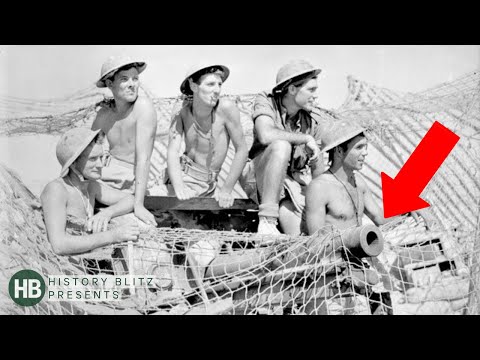
But why was Tobruk so vital? And why was it defended by such a ragtag garrison? The answer lies in the strategic importance of the deep-water port, the only one along the North African coast capable of supplying large military operations. Control of Tobruk meant control of the coastal road and the lifeline to Egypt and the Suez Canal. For the Allies, it was a linchpin. For Rommel, it was a prize that would open the door to the Middle East and its oil fields.
The Australians had captured Tobruk from the Italians in January 1941, but by April, the situation had drastically changed. Hitler, determined to prop up his faltering Italian allies, dispatched Rommel and his Afrika Korps. British intelligence believed Rommel’s forces would arrive piecemeal and remain on the defensive. They were wrong. Ignoring orders, Rommel went on the attack, sweeping the Allies back with his trademark blitzkrieg tactics.
Now, Rommel’s sights were set on Tobruk. His plan was simple: overwhelm the defenses with a lightning-fast armored thrust, break through the perimeter, and let the infantry pour through the gap to cause chaos behind enemy lines. It was a tactic that had never failed. But Morshead and his men were ready.
On the night of April 13th, the first major assault came. The Australians lay low, allowing the German tanks to pass through their lines. The tanks pushed on, confident. But as the German infantry followed, the Australians sprang their trap. They engaged the infantry with ferocious fire, ignoring the tanks and leaving them to advance without support. The tanks, now deep within the Australian defenses, found themselves exposed and under attack from three sides. Artillery, tanks, and aircraft pounded them. The QF 25-pounders, firing at point-blank range, were devastating. Suffering heavy losses, the Germans were forced to retreat.
This was Morshead’s genius: a defense in depth. Instead of trying to hold the front line, he let the enemy in, then struck from all sides. It was a tactic that caught Rommel completely by surprise. Over the next few days, Rommel launched several more attacks, but each time the Australians stood their ground. On one occasion, they even counterattacked and captured a large portion of the Italian Trento Division. Rommel had to accept defeat. Tobruk was a nut he could not crack.
For the next 242 days, the Axis forces laid siege to Tobruk, bombarding it daily from ground and air. The Germans mockingly called the defenders ‘rats,’ but the Australians embraced the name as a badge of honor. “We’re not here to take it, we’re here to give it,” Morshead declared. And give it they did. Aggressive patrols, snipers, and nighttime raids kept the enemy on edge. The Australians dominated no man’s land, and their relentless spirit became legendary.
Morshead’s strategic brilliance and the sheer grit of his men had brought Rommel’s offensive to a grinding halt. Originally ordered to hold out for eight weeks, the Australians held Tobruk for eight months, until they were finally relieved in October 1941. Their stand was the longest siege in British military history and the first major defeat of the German army in World War II.
But the story of Tobruk is more than just a military victory. It is a testament to the courage of ordinary men who refused to surrender. As the siege dragged on, the world watched, and the ‘Rats of Tobruk’ became symbols of defiance and hope. Yet, even as they celebrated their triumph, the desert war was far from over. Rommel, humiliated but not broken, would return. And the Australians, though relieved, would face new challenges in the brutal conflict that lay ahead.
Relief came at a cost. The British 6th Division that replaced the Australians was fresh but untested, and the men of the 9th Division who marched out of Tobruk were hollow-eyed, skeletal shadows of the soldiers who had marched in eight months earlier. They had endured searing heat, bitter cold nights, and hellish dust storms. They had lived in dugouts and caves, scavenged for water, and buried friends in shallow graves. More than 14,000 Australians had fought at Tobruk, and hundreds would never leave.
Yet the men who walked out did so with their heads high. They had done what no army had done before: they had stopped the blitzkrieg. Rommel’s aura of invincibility had been shattered, and the world had taken notice. In London, Churchill would later write that the defense of Tobruk was ‘a beacon of hope’ in the darkest days of the war. In Australia, the name ‘Rats of Tobruk’ became a source of national pride, a legend that would be passed down through generations.
But Rommel was not a man to dwell on defeat. As the Australians withdrew, he regrouped. His supply lines, though stretched, were slowly being reinforced. The lull in the desert war was deceptive—both sides knew it was only a matter of time before the fighting resumed. The Desert Fox had been bloodied, but he was far from beaten. And he had learned a valuable lesson from Morshead: the Australians were not like other soldiers. They would not break easily.
In the months that followed, the war in North Africa shifted like the desert sands. The British launched Operation Crusader in November 1941, a massive offensive intended to relieve Tobruk and destroy Rommel’s forces. The fighting was brutal, confused, and costly. Tanks clashed in swirling battles across the open desert, and both sides suffered heavy losses. Rommel, displaying his usual tactical brilliance, came within a hair’s breadth of victory, but the sheer weight of Allied numbers and the stubbornness of the defenders ultimately forced him to withdraw.
By the end of 1941, the Axis forces had been pushed back to El Agheila, and Tobruk was finally free from the siege. But the cost had been enormous. Thousands of men on both sides lay dead in the desert, their graves marked only by simple crosses or lost to the shifting sands. The town itself, once a thriving port, was a ruin of bombed-out buildings and cratered streets.
For the men of the 9th Division, however, their war was not over. Many were sent to Syria, then to Egypt, and eventually to the jungles of New Guinea, where they would face a very different kind of enemy. But wherever they went, they carried with them the name ‘Rats of Tobruk’—a name that had once been an insult and had become a badge of honor. They had proven that courage and ingenuity could overcome even the most fearsome war machine.
And as the war raged on, the lessons of Tobruk would echo across other battlefields. The defense in depth, the aggressive patrolling, the refusal to surrender—these were tactics that would be studied and emulated by commanders for generations. But more than that, Tobruk was a story of ordinary men who, when faced with impossible odds, chose to stand their ground. They were the Rats, and they had held the line.
But the desert war had a way of reversing fortunes with dizzying speed. By January 1942, Rommel had received fresh reinforcements—new tanks, fuel, and men—while the British, overextended and weary, had thinned their lines. The Desert Fox struck again, and this time there was no stopping him. The Allies fell back in disarray, and by June, the front had collapsed all the way to the Egyptian border.
The town the Australians had bled for was now in deadly peril once more. This time, however, the garrison was not the battle-hardened 9th Division but a mixed force of South African, British, and Indian troops. They fought bravely, but they were not the Rats. On June 21, 1942, Tobruk fell to the Afrika Korps. The defeat was catastrophic—more than 30,000 men taken prisoner, and a mountain of supplies lost.
For Rommel, it was a moment of supreme triumph. Hitler rewarded him with a field marshal’s baton, and the road to Egypt seemed open. Yet the victory at Tobruk would prove to be a poisoned chalice. The port’s facilities were wrecked, its harbor choked with sunken ships, and the supplies Rommel so desperately needed could not be unloaded quickly enough. The Desert Fox had won a prize he could not fully use.
Far away in Australia, the news of Tobruk’s fall hit like a physical blow. The men who had held the town for 242 days could scarcely believe it. Some wept. Others simply stared at the headlines in silence, remembering the mates they had left behind in the desert sand. The legend they had built now seemed tarnished, though no one who understood war blamed the new garrison for the disaster.
What happened next would test the Rats of Tobruk in ways they could never have imagined. The 9th Division, refitted and reinforced, was rushed back to Egypt to help stem the Axis tide. They took up positions at El Alamein, a dusty railway halt where the fate of North Africa would be decided. This time, there would be no siege, no dugouts, no caves. This time, the Australians would face Rommel in open battle.
Morshead was no longer their commander—he had been promoted and given other duties—but his spirit remained. The men who had survived Tobruk now trained the new recruits, passing on the hard-won lessons of the siege. They taught them to dig deep, to patrol aggressively, and above all, to never, ever surrender. The Rats were back, and they had a score to settle.
The fighting at El Alamein would be savage. Rommel threw his armor against the Allied lines again and again, but the defenses held. The Australians, holding a critical sector of the front, repelled wave after wave of German and Italian infantry. They fought in the dust and the heat, with shells falling like rain, and they did not break.
By early November, the tide had turned. The Allies launched a massive counteroffensive, and Rommel, his supplies exhausted and his tanks outnumbered, began his long retreat westward. The Desert Fox was finally on the run, and he would never again threaten Egypt. The men who had once been besieged in Tobruk now chased their old enemy across the desert, reclaiming the ground they had lost.
This time, the Australians were not defending a fortress but advancing across the open desert, and they did so with the same ferocity that had broken Rommel’s blitzkrieg. On November 13, 1942, British forces retook Tobruk—the port the Rats had held for 242 days was finally back in Allied hands. Some of the 9th Division veterans who entered the ruined town found the graves of mates they had buried months earlier, and they paused to pay their respects. The legend was not tarnished after all; it had simply come full circle.
Today, the Rats of Tobruk are remembered as symbols of defiance, and their story echoes wherever ordinary people face impossible odds. The plaque in that quiet Melbourne street reminds us that courage is not about never falling, but about never surrendering. They did not surrender, and they did not retreat.
What would you have done if you were one of those half-trained soldiers, trapped behind enemy lines with no hope of rescue?
Report this article
Select a reason for reporting:






