The air was thick with the smell of butter, coffee, and warm bread—scents that hadn’t graced the prison camp in years. Inside the barbed wire, German women prisoners stood hollow-eyed, their stomachs clenched with hunger. They had braced for punishment, for scraps, for the cruelty they’d been taught to expect from their American captors. Instead, they watched in stunned silence as soldiers in khaki uniforms carried crates—not rifles—toward the makeshift kitchen. Pots clanged, steam rose, and the impossible became real: the enemy was preparing a feast.
One woman reached for a slice of white bread, her hand trembling as if it might be snatched away. She pressed it to her face, inhaled the yeasty warmth, and took a bite. Tears welled in her eyes. “This is the best food I’ve ever had,” she whispered, and the words rippled through the camp like a shockwave. For the American soldiers, it was just another distribution of rations—spam, powdered eggs, cornbread they’d grown sick of. For the prisoners, it was salvation.
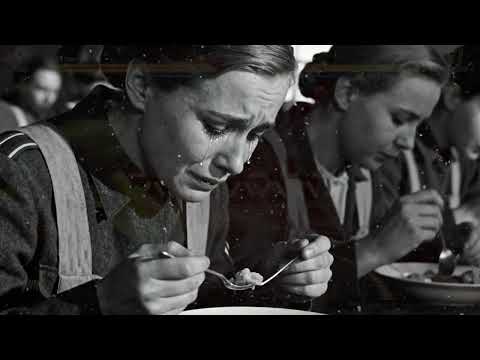
That April morning in 1945, the paradox was too sharp to ignore. The men who had defeated their nation were now filling their empty stomachs. The guards noticed. A sergeant scribbled in his diary: “They lick the plates clean. I’ve never seen people so grateful for spam.” Another GI from Iowa shook his head. “They treat it like caviar.” What soldiers dismissed as barely edible, the prisoners received as a banquet.
But this was only the first taste. Beneath the steam of tin cups and the hiss of butter melting on cornbread lay a reality of numbers—the arithmetic of war that determined who starved and who survived. For years, German civilians had endured rations that dwindled with every month of conflict. By 1945, the average German diet had sunk to around 1,000 calories a day, often less. Bread was stretched with sawdust. Meat disappeared. Coffee was a bitter substitute brewed from acorns. Mothers bartered heirlooms for potatoes. Children foraged weeds from ruined gardens.
By contrast, the United States Army was a machine of abundance. Its quartermaster corps churned out millions of ration packs designed to deliver 3,000 calories per soldier per day. In 1944 alone, America shipped more than 100 million individual rations across the Atlantic—a logistical miracle carried on Liberty ships. The irony was that many GIs grew sick of the sameness. Canned meat, processed cheese, powdered drinks. They longed for fresh eggs or fruit, while their enemies, now prisoners, regarded the same cans as treasures from another world.
One German woman later recalled: “I had not tasted real butter in three years. When I spread it on bread, I thought it was a dream. The soldiers laughed that it was only margarine. To me, it was heaven.” The wire between captor and captive became a line of contrast. On one side, American soldiers dumped uneaten cornbread onto trash heaps. On the other, women pressed crumbs from their palms to their lips, unwilling to waste a speck.
Yet these meals were not simply acts of mercy. Feeding prisoners served practical purposes. A well-fed camp was quieter, less likely to riot, less likely to spread disease. The US Army’s manuals stressed the importance of adequate rations to maintain order. But for the women on the receiving end, statistics and regulations mattered less than the first full stomach in months. At night they lay on straw mats, listening to the gurgle of their own bellies—no longer empty. The faint smell of coffee seemed to linger even after the pots were scrubbed. Hunger had defined them for so long that satiety itself felt like a kind of shock.
But this was only the first transformation. What began as numbers and calories would soon become ritual—a rhythm that reshaped suspicion into trust, and despair into survival. Morning in the compound began with sound. First the rattle of pots, then the heavy clang of a ladle against a kettle, followed by the sharp metallic ring of cups and cutlery. These noises, once ordinary in civilian kitchens, had become sacred within the wire. For the German women prisoners, food was not only sustenance. It was the heartbeat of the day.
Each sunrise brought the same ritual. Lines formed quickly—women clutching tin bowls, their breath hanging in the chill. The Americans behind the serving tables moved with practiced motions. Ladle coffee, scoop eggs, slide slices of bread. Steam lifted into the damp air, mixing with the sour smell of smoke drifting from the town’s ruins. Even the clatter of boots on gravel became part of the rhythm.
The paradox of these meals could not be missed. These were women who only weeks earlier had been taught to see Americans as brutes, enemies who would starve or mistreat them. Instead, they were being fed with a consistency they could hardly believe. One recalled later: “At first, I thought it was a trick. I waited for the food to stop, but every morning it was there—like clockwork.”
Numbers underscored the ritual. Each GI ration crate held enough to feed dozens. And in 1945, the US Army was distributing over 16 million rations daily across Europe. The sheer scale of this supply chain made possible what seemed miraculous to those behind the wire. The prisoners did not see the railcars and cargo ships that delivered these meals, but they tasted the result: regularity, abundance, reliability.
Slowly, the ritual began to shift moods inside the compound. The women who once stood stiff with suspicion now greeted one another with murmured jokes about who might get an extra slice of bread. Children of camp guards sometimes peered curiously at the lines, catching the aroma of cocoa or coffee and realizing even prisoners ate better than many civilians outside. Hunger was still a shadow, but it was no longer the master of every thought.
The Americans noticed changes too. One private wrote to his sister in Ohio: “They line up neat as churchgoers. Not a word until they eat. Then you hear a little laughter. The same girls who looked like ghosts now have color in their cheeks.” But the daily meal did more than fill stomachs. It wore away at the walls of fear and propaganda. Each clang of the ladle said something louder than words: the enemy had chosen to feed, not starve.
Suspicion still lingered—whispers of doubt, sideways glances at guards. Yet the rhythm of meals was steady, and with it came the slow return of trust. Still, another dissonance simmered beneath the surface. For years the women had been told the Allies wanted their destruction. Now they sipped coffee provided by those same hands. The propaganda was unraveling. What they saw next would shatter their certainty even further.
The war had been fought not only with bullets and bombs, but with stories. Nazi propaganda had hammered into every German ear that Americans were crude, greedy, and merciless. Posters showed GIs as leering brutes, enemies who would burn villages and starve women. Mothers were warned that capture meant degradation or death. Yet here on the banks of the Rhine, the women prisoners found themselves spooning butter onto bread handed to them by those very men. The paradox was unbearable. The people they had been told to fear were the ones who gave them life.
One young prisoner remembered: “We had expected cruelty. Instead, they gave us food. I did not know what to believe anymore.” The contrast was sharpened by memory. Inside Germany, rations had been slashed to the bone. In the winter of 1944–45, the Ministry of Food officially reduced civilian allowances to as little as 1,000 calories per day. By comparison, US Army supply logs reveal soldiers overseas receiving rations worth 3,300 calories daily—often with leftovers discarded. The gap between myth and reality was measured in thousands of calories and in the look of astonishment on hungry faces.
The Americans were equally struck. Sergeant William T., who later gave testimony to the Army’s oral history project, recalled: “We’d laugh about spam, call it the enemy. But when we passed it to them, they held it like gold. It made me realize how different our worlds were.” Propaganda had painted a simple picture—ruthless conquerors against innocent citizens. Reality was more complicated. Some women in the compound had worked in Nazi offices or factories. Some had lost brothers on the Eastern Front. They were not naive, yet the daily meals blurred old certainties. Was the enemy truly a monster if he gave you coffee every morning?
Even the senses rebelled against indoctrination. The hiss of coffee poured into a tin cup contradicted years of radio broadcasts warning of American barbarity. The sweet taste of canned peaches dismantled caricatures more effectively than any speech. Propaganda thrived on fear of the unknown. Abundance revealed the truth in every bite.
Still, doubt lingered. Some whispered that the generosity was temporary, a trick before punishment. Others clung to Nazi slogans even as they ate American bread. One German nurse scrawled in her diary: “I don’t understand. Why do they treat us kindly? What do they want from us?” The answer was both practical and profound. The US Army fed prisoners to maintain order and uphold the Geneva Convention. But in doing so, they also undermined the lies that had fueled the war. Each meal was unintentional propaganda in reverse—proof by taste, smell, and touch that reality was stronger than ideology.
And it did not stop with bread and coffee. Soon, small acts of personal generosity slipped into the daily routine. Chocolate bars pressed into hands. Cigarettes shared. Even spare clothing offered. These gestures would deepen the paradox further, bridging the wire in ways no broadcast ever could.
It began with small things. A square of chocolate slipped across the wire. A cigarette shared in the dusk. A slice of cornbread saved from a soldier’s own tray. What had started as regulation rations soon became something more human. Private James H., an infantryman from Iowa, described it in a letter home: “They treat spam like it’s caviar. One girl smiled at me like I’d given her a diamond just for handing over a candy bar. Makes me wonder what they’ve lived on all these years.”
His words echoed a broader truth. The Americans, weary of monotony, barely noticed the items that carried enormous meaning for the women. Chocolate was the most treasured. To an American soldier, a Hershey bar was part of a standard field ration—energy in a wrapper, quickly eaten. To a German prisoner, it was sweetness remembered from childhood, something absent for nearly a decade. A woman recalled: “When I tasted chocolate again, I felt like I was not in war anymore. For a moment, I was a girl before bombs and hunger.”
The paradox deepened. Soldiers joked about tossing away unwanted corned beef hash, while women carefully folded the wrappers of candy and tucked them into pockets as keepsakes. These small exchanges carried weight beyond calories. They were gestures of humanity—unrecorded in ledgers, but unforgettable to those who received them.
Numbers again tell the contrast. The US produced over 600,000 tons of rations in 1945 alone—enough to feed armies and still spill into occupied zones. By comparison, German agriculture had collapsed under bombing. In some cities, official surveys recorded residents surviving on 800 calories per day. The gifts soldiers handed over casually represented a gulf of industrial might as much as kindness.
Not all Americans approved. Some officers warned against fraternization, fearing that too much kindness would soften the authority of the occupier. Yet the line was hard to police. A soldier who watched a prisoner lick her bowl clean often could not resist sliding her an extra spoonful. Humanity seeped through the cracks of regulation.
At dusk, when guards smoked by the fence, laughter sometimes drifted from the compound—women comparing notes on the strange foreign tastes, the saltiness of spam, the sweetness of peaches, the strong bitterness of American coffee. These sounds carried across the wire, and GIs found themselves listening, realizing their enemy had voices, jokes, even moments of joy. The ritual of food was no longer just about survival. It became a fragile bridge. A loaf of bread was still a loaf of bread, but in the silence of a camp, it was also a message: the war might not erase every trace of mercy.
But these small acts raised a question that even the women themselves struggled to answer. If the enemy could be generous, then what had all the years of hatred and fear truly been for? That question would only sharpen as official reports and records confirmed what the senses had already learned—that the abundance was not an accident, but policy.
Behind the steaming pots lay a system. The Geneva Convention required prisoners receive the same standard as their captors’ troops, and the US Army obeyed—not from sentiment, but from discipline. Quartermaster logs recorded 3,200 calories per prisoner daily, while German civilians outside the wire scraped by on 800. “In some districts, POWs are better nourished than the local population,” one Red Cross delegate wrote, stunned.
On May 8th, 1945, the war ended. Church bells rang from cracked towers, and inside the compound the celebration was quiet—the same clang of ladles, the same hiss of steam. One prisoner wrote: “I thought today we would be punished. Instead, it was the same as yesterday. Food, warm and plentiful.” A corporal from Illinois confessed: “War is over, but I spent it handing out food to Germans. It felt more like peace than victory.”
When the wire came down, the women carried more than memories of butter and chocolate. “We had come to hate them as monsters,” one recalled. “But I tasted their food, and I saw they were men.” They had entered as captives and left as witnesses—to a mercy louder than any bomb.
What do you think—can a single meal ever truly undo the lies of a war?
Report this article
Select a reason for reporting:






