When we think of World War II, Australia may not be the first nation that comes to mind. But what if I told you that this small, far-off country punched well above its weight—not just once, but several times—and did something no other nation could do?
From holding off Rommel and the seemingly invincible German Army in North Africa to delivering the Allies’ first major land victory over Japan in the Pacific, Australia’s contributions were anything but minor. They were part of the main act.
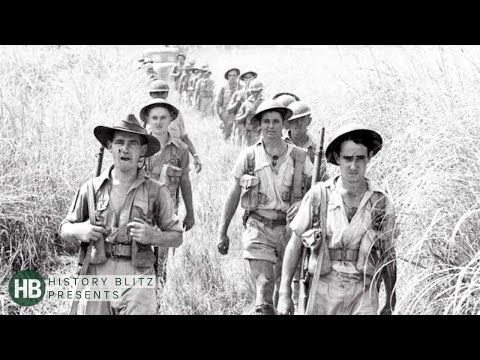
The war began in 1939, and Australia, as part of the British Empire, quickly joined the fight. Thousands of young Australians volunteered, eager to defend the Empire in distant lands they had never seen. They battled in the deserts of North Africa and stood against German forces in Greece.
But everything changed in December 1941. Japan attacked Pearl Harbor, and suddenly the war wasn’t just in Europe—it was in the Pacific, much closer to home.
The fall of Singapore left Australia exposed. The threat of invasion felt more real than ever. Prime Minister John Curtin made a tough choice: he pulled Australian troops back from Europe and North Africa. It was no longer about supporting Britain; Australia now had to defend itself.
Before the war reached Australian shores, let’s go back to the North African campaign, where Australians did something no other country could do: repel a German Blitzkrieg attack.
April 10, 1941. In the empty deserts of Libya, the port city of Tobruk became the center of a fierce battle. General Erwin Rommel, the famous Desert Fox, had his sights set on this crucial city. Controlling Tobruk would open the door to Egypt and the Suez Canal.
Standing in his way: the 9th Australian Division, led by Major General Leslie Morshead, along with British and Polish soldiers. Many were only half-trained and poorly equipped, yet they were given an almost impossible task: defend Tobruk no matter what.
The assault commenced with the familiar German blitzkrieg—concentrated air strikes, then Panzer tanks penetrating weak spots, followed by infantry. But the Australians were well prepared. Hiding underground in caves, they weathered the air strikes. As the Panzer columns rolled in, they allowed them to pass their perimeter without engaging.
The Germans believed their plan was unfolding as normal. Then the Australians sprang their trap. Surfacing from their caves, they engaged the infantry with everything they had. The Panzer units, now isolated without infantry support, found themselves engaged on three sides by Australian artillery, tanks, and air bombardment.
Rommel was completely surprised. Further attempts over the first few nights all failed, repelled by the Australian defenders. His tactics changed to a siege—surrounding Tobruk, cutting off supplies, and attacking with constant artillery and air raids.
The Australians held firm, living in dugouts and caves, surviving the scorching desert heat by day and freezing cold by night. The Germans mocked them, calling them the “Rats of Tobruk.” The Australians proudly adopted the name. It represented their strength, cleverness, and determination.
For 242 tough days, Tobruk’s defenders held off Rommel’s best troops, becoming a symbol of Allied endurance while Rommel’s unbeatable reputation fell apart in the desert heat. Eventually, the Australians were recalled back home to defend against the imminent danger of the advancing Japanese.
May 1942. Another crucial battle emerged that once again tested Australia’s resolve—this time in the Pacific. Japan, with its rapid growth unchecked, aimed to capture Port Moresby in New Guinea. Their goal: strengthen their defensive line and threaten Australia, hoping to cut off communication between Australia and its American allies.
Port Moresby was vital for both sides. For Japan, it offered a base to launch attacks on Australia. For the Allies, it was necessary for keeping supply routes open and staging attacks against Japan.
The Japanese plan involved the Port Moresby Invasion Group, including the small aircraft carrier Shoho, along with cruisers and support ships led by Admiral Takagi. Two larger carriers, Zuikaku and Shokaku, were also part of the carrier striking force.
The Allies, using decoded Japanese messages, anticipated the attack and prepared a counter-strike. Allied forces included Task Force 44 led by Rear Admiral Crace, with the Australian heavy cruiser HMAS Australia and light cruiser HMAS Hobart, and Task Force 17 led by Rear Admiral Fletcher, with the US carriers USS Lexington and USS Yorktown.
The battle began with great force on May 4, 1942, when the Allies made the first move in a brave attack, succeeding in sinking the Japanese carrier Shoho—an important win that briefly slowed Japan’s progress. But the danger wasn’t gone. The larger carriers Zuikaku and Shokaku were still out there, ready to strike.
As the days went on, the fighting became even more intense. On May 7, in the confusion of battle, US forces accidentally hit a group of Japanese oilers—a costly mistake. Then on May 8, the skies over the Pacific turned into a deadly battlefield as planes from both sides clashed, explosions filling the air as bombs and bullets flew.
By the end of the day, the powerful USS Lexington had sunk, and the damaged Shokaku was forced to pull back. After four days of heavy fighting, both sides pulled back, though both suffered heavy losses. The Japanese had to give up their plan to invade Port Moresby by sea. For the first time in the Pacific, Japan’s advance was stopped.
This battle meant a lot to Australia. If Japan had captured Port Moresby, the danger would have been real and close. At that moment, the country’s safety was on the line, and Australia stood strong.
But Japan wasn’t giving up. They decided to try a different approach—overland via the Kokoda Track.
Mid-1942. The Japanese sought to capture Port Moresby through a second route—overland via the Kokoda Track, a treacherous 96-kilometer trail through the dense jungles of the Australian-controlled territory of Papua. Controlling it would enable the Japanese to launch further attacks on Port Moresby and Australia itself.
The 39th Australian Battalion was tasked with defending the track. Later reinforced by the 7th Division and other units, the total number of Australian troops reached about 8,000. They faced the Japanese 17th Army, roughly 8,800 troops determined to capture Port Moresby.
In July 1942, the Japanese started their attack, moving quickly through the dense jungle. By August and September, the Australians, using guerrilla tactics, managed to hold them off at Brigade Hill and Isurava. They were outnumbered, but they fought hard.
In October, with more soldiers joining them, the Australians began to push the Japanese back, step by step. By November, after months of tough battles, the Japanese were retreating. They had failed again to reach their goal of capturing Port Moresby.
But whilst the Australians at Kokoda had fiercely defended the track, the Japanese withdrawal was ultimately due to another battle taking place on the island—the Battle of Milne Bay.
Milne Bay, a strategic harbor on the southeastern tip of Papua. The Japanese aimed to capture the air strips there to support their Kokoda offensive and launch further attacks on Port Moresby. In late August 1942, they launched an amphibious assault with around 2,000 special Naval Landing troops.
However, they had severely underestimated the Allied defenses. Over 9,000 Allied troops—primarily Australian forces under Major General Cyril Clowes—were stationed at Milne Bay, supported by two RAAF squadrons of P-40 Kittyhawks, American engineers, and anti-aircraft units.
On August 25, 1942, the Japanese landed 11 kilometers away from where they had planned and quickly started moving toward the air strips. Over the next couple of days, August 27 and 28, they had some early success, managing to reach Number Three Air Strip.
But the air strip was a perfect defensive position for the Australians—with the bay at one end and dense jungle at the other. Clowes set up his defenses well, with the Australian 61st and 25th Battalions along with the American engineers. Three times the Japanese tried to cross the air strip. Three times the Australians repelled the attackers.
As the Japanese withdrew, the Australians went on the counterattack. Five days of fierce jungle warfare ensued, with the Australians successfully coordinating air and artillery attacks, pushing the Japanese back and inevitably forcing their withdrawal off the island.
This was the first time Japanese land forces had been beaten—and the first time the Japanese advance had been stopped in World War II. The Australians enhanced their reputation as capable and reliable fighters.
With Japan’s rapid advances in Southeast Asia and the fall of Singapore, Australia found itself directly in the path of invasion. On February 19, 1942, the war finally arrived on Australian soil.
At 10:00 a.m., 188 Japanese aircraft launched a devastating attack on Darwin, bombing its harbor, airfields, and military installations. This marked the largest foreign assault ever on Australian land. Eight ships were sunk, over 20 aircraft destroyed, and at least 235 people lost their lives. A second wave of 54 bombers followed in the afternoon, causing even more damage.
This attack was just the beginning. Over the next 21 months, Darwin was bombed 64 times as Japan aimed to disrupt the vital supply lines and military operations that made the city a key Allied base in the Pacific.
The threat soon spread to Australia’s eastern shores. On May 31, 1942, three Japanese midget submarines infiltrated Sydney Harbor. One submarine was caught in defense nets, another destroyed before it could strike. The third managed to fire torpedoes—the USS Chicago was missed, but the HMAS Kuttabul barracks ship was hit and sunk, killing 21 sailors.
Just a week later, Japanese submarines shelled both Sydney and Newcastle, causing minor damage but leaving Australians anxious about further attacks. These assaults shocked the nation. Once feeling secure in its isolation, Australia now faced the harsh reality of war on its own soil.
The attacks on Darwin, Sydney, and Newcastle united the country in a fierce resolve to defend itself and its allies. The home front became just as crucial as the battlefields abroad as Australians prepared to stand firm against the looming threat.
Australia’s role in World War II was extremely important. Its key location, along with the brave efforts of its military, played a big part in the defeat of the Axis powers. Australians continued to play an important role as members of the Allied forces, pushing back the Japanese in the Pacific and fighting in Borneo right up to August 15, 1945, when Japan surrendered.
Fittingly, it was the 9th Australian Division—the Rats of Tobruk—that were the main force in Borneo when the fighting ended. By staying strong despite tough challenges, Australia helped secure important areas, defend crucial supply routes, and stop the progress of powerful enemies.
Its dedication to the Allied cause helped shape the world after the war and bring peace to the Pacific region. From the deserts of North Africa to the jungles of New Guinea, Australia’s story is one of courage and resilience—a small nation that stood tall when it mattered most.
What do you think was Australia’s most significant contribution to World War II? Share your thoughts in the comments below!
Report this article
Select a reason for reporting:






