Commandant Pat Quinlan had a bad feeling. The moment his boots hit the red dust of Jadotville, he sensed it—a hostility that hung in the air like the thick African humidity. His men, young Irish soldiers barely out of their teens, were supposed to be peacekeepers. But the locals weren’t welcoming them with open arms. They were watching, waiting. Quinlan didn’t know it yet, but his instincts were about to save every single one of their lives.
It was September 1961. The Congo was a powder keg, and Katanga was the fuse. The Irish 35th Infantry Battalion had been deployed as part of a UN peacekeeping mission, but the rules of engagement were a cruel joke: they couldn’t fire unless fired upon, and even then, only as a last resort. Quinlan’s A Company was sent to Jadotville, a sleepy mining town 80 miles northwest of Elisabethville, to protect the locals and secure the nearby uranium mines. But what they found was a town seething with rebellion, backed by Belgian and French mercenaries who wanted the Irish gone—or dead.
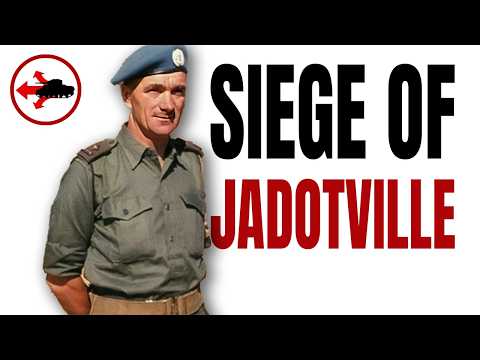
Quinlan didn’t wait for orders. He ordered his men to dig deep trenches, stockpile water, and carry their rifles at all times. “Dig in like you mean to stay,” he told them. The men grumbled, but they obeyed. They had no idea that over 3,000 Katangese fighters and mercenaries were massing just beyond the treeline, preparing to wipe them out.
On the morning of September 13, most of the company was attending Mass. The few on guard duty saw them first—a wave of attackers, over 600 strong, charging toward the compound. “Stand to! Stand to!” The cry went up. The Irish scrambled to their positions, rifles cracking, Bren guns chattering. The first wave broke against Quinlan’s defenses, leaving dozens of attackers dead in the dust. But the reprieve was brief. The enemy encircled the compound, and the real siege began.
For three days, the Irish held. Wave after wave of Katangese fighters threw themselves at the trenches, only to be cut down by disciplined fire. A Belgian fighter jet strafed the compound, but the men had dug deep—no one was killed. “They’re coming again!” The shout became a grim routine. Quinlan moved from trench to trench, his voice calm, his presence a steady anchor in the chaos. But ammunition was running low, and water was scarce. The men were exhausted, their faces caked with sweat and gunpowder.
Quinlan grabbed the radio. “We need reinforcements and supplies, now!” he barked. The reply was static, then silence. He tried again. Nothing. The relief column sent from Elisabethville had been ambushed at the Lufira River bridge, pinned down by enemy fire. A UN helicopter dropped water drums, but they were contaminated with petrol—undrinkable. “We’re on our own,” Quinlan muttered. The men exchanged glances. They knew what that meant.
By the third day, the situation was desperate. The Katangese, emboldened by their numbers, launched a massive assault. “Hold the line! Hold the line!” Quinlan roared. The Irish fought like demons, their rifles blazing, their trenches littered with empty casings. But the enemy kept coming. A mercenary commander, impressed by the Irish tenacity, called for a temporary ceasefire to collect their dead and wounded. Quinlan agreed, using the pause to redistribute the last of the ammunition. He knew it was only a matter of time.
On September 17, with no water, no ammunition, and no hope of rescue, Quinlan made the hardest decision of his life. “We can’t fight anymore,” he told his men. “We surrender.” A white flag went up. The men, battered but alive, were taken prisoner. They had held out for six days against impossible odds, inflicting over 300 casualties on the enemy while suffering only five wounded. Not a single Irish soldier was killed.
But the story was far from over. The men of A Company would return home to criticism and shame, their surrender misunderstood. Quinlan’s brilliant defense—now studied in military academies worldwide—was forgotten. And the siege of Jadotville would remain a footnote in history, until the truth finally emerged.
The prisoners were marched through the dusty streets of Jadotville, their hands raised, their faces streaked with sweat and grime. The Katangese fighters jeered and spat, but the Irish kept their heads high. “Keep your dignity, lads,” Quinlan muttered. “We did our job.” They were taken to a makeshift camp, where they were interrogated and paraded in front of cameras. The mercenaries, many of them veterans of other colonial wars, couldn’t hide their grudging respect. “You fought well,” one Belgian officer admitted. “Better than we expected.”
Back in Ireland, the news of the surrender hit like a thunderclap. Newspapers screamed of humiliation, and politicians demanded answers. The families of the soldiers were bombarded with questions, their neighbors whispering behind closed doors. “They surrendered without a fight,” the rumors said. But the men knew the truth. They had held out for six days against overwhelming odds, and they had survived.
In the camp, Quinlan kept his men together. He organized daily drills and kept their spirits up with stories of home. “We’ll be out of here soon,” he promised. “The UN is negotiating.” He was right. After a few weeks, the Irish were released as part of a diplomatic deal. They were flown to Elisabethville, where they were greeted by their comrades—not as cowards, but as survivors.
But the homecoming was bittersweet. When they finally set foot on Irish soil in December 1961, there were no parades, no medals. Instead, they were met with silence. The army, embarrassed by the surrender, downplayed their achievement. Some officers even suggested that Quinlan should have fought to the last man. “They don’t understand,” Quinlan said quietly. “We saved lives. That’s what matters.”
The men of A Company went back to their civilian lives, but they never forgot. They held reunions, shared stories, and waited for the truth to come out. It took decades, but eventually, historians and military experts began to take notice. Quinlan’s defense was studied as a masterpiece of perimeter defense. “He did more with less than any commander in modern warfare,” one analyst wrote. In 2016, a film about the siege brought their story to the world, and the men were finally hailed as heroes.
Quinlan himself never sought glory. He lived a quiet life, haunted by the memories of those six days. He died in 1997, but his legacy lives on. “He was a soldier’s soldier,” one of his men said. “He brought us home.” And that, in the end, was the greatest victory of all.
Yet the full weight of what Quinlan had accomplished didn’t sink in for years. In the immediate aftermath, the Irish Defence Forces launched an internal review—not to celebrate the defense, but to determine whether the surrender had been avoidable. Quinlan, still a relatively junior officer, sat through the hearings with a quiet dignity that infuriated his critics. “I will not apologize for bringing my men home alive,” he told the board, his voice steady. The review ultimately cleared him of any wrongdoing, but the damage to his reputation had already been done. Promotion stalled. Assignments dried up. The army, it seemed, preferred its heroes dead.
Meanwhile, the wider world was moving on. By 1963, the UN had shifted its posture in Katanga from peacekeeping to enforcement, and the breakaway province was finally crushed under Operation Grandslam. Moïse Tshombe fled, and Katanga was folded back into the Congo. The mercenaries who had besieged Jadotville scattered to the four winds—some to Angola, others to Rhodesia, where they would fight in yet another bush war. The uranium mines near Shinkolobwe, which had been the whole point of the exercise, quietly resumed production under Mobutu’s watchful eye.
Back in Ireland, the men of A Company drifted into ordinary lives. Some became farmers, others teachers or tradesmen. They rarely spoke of Jadotville to outsiders, but among themselves, the bond remained unbreakable. Every September, they gathered in a small pub in Athlone, raising glasses to absent friends and trading the same stories they’d told a hundred times before. “Remember the water drums?” someone would say, and the room would erupt in bitter laughter. “Petrol-flavored tea—the finest in the Congo.”
It was a young historian named Declan Power who finally cracked the silence. In the early 2000s, while researching Irish peacekeeping missions, he stumbled across a single line in an old UN report mentioning the siege. Intrigued, he began tracking down survivors. Most were reluctant at first—decades of being called cowards had taught them to keep their heads down. But one by one, they opened up. Power’s 2005 book, The Siege at Jadotville, changed everything. For the first time, the full story reached a wider audience: the six-day stand, the 300 enemy dead, the five Irish wounded, the impossible decision to surrender.
The military establishment was forced to take notice. In 2012, the Irish government officially acknowledged the men’s bravery, and in 2016—fifty-five years after the siege—they were finally awarded the Presidential Unit Citation. Quinlan’s widow, Carmel, accepted the honor on his behalf, her hands trembling as she held the medal. “He never doubted what he did was right,” she said. “He just wished his country had believed it too.”
But even as the world rediscovered Jadotville, darker shadows lingered at the edges of the story. The CIA’s role in Lumumba’s fall, the Belgian mining interests, the cold calculation that had left a company of Irish soldiers to die in the dust—all of it remained largely unexamined. And in the Congo itself, Mobutu’s reign was entering its final, bloodiest phase. The man the Americans had championed would soon be overthrown himself, plunging the region into a war that would dwarf anything seen in 1961.
For the men of A Company, though, the politics no longer mattered. They had done their duty, held their ground, and survived. “We weren’t heroes,” one veteran said at the 2016 ceremony. “We were just soldiers who didn’t run.” The crowd applauded anyway. Somewhere, perhaps, Pat Quinlan was smiling.
The years rolled on, and the last of the Jadotville veterans slowly faded from the public eye. Declan Power’s book and the 2016 film had given them their due, but time is a relentless tide. One by one, the men who had dug those trenches in the red African dust passed away, their funerals quiet affairs attended by dwindling ranks of old comrades.
In 2017, a memorial was unveiled in Athlone—a simple granite stone bearing the names of A Company. “They stood alone, and they stood together,” the inscription read. It was a far cry from the silence of 1961, but for the families who had endured decades of whispered shame, it felt like vindication at last.
Yet the deeper questions never truly found answers. The CIA’s machinations, the Belgian mining interests, the cold calculus that had abandoned a company of young men—these remained buried in classified files and forgotten archives. The Congo itself, meanwhile, staggered through wars and dictatorships, its people paying a price that the world rarely bothered to count.
What endures, though, is the example. In military academies from West Point to Sandhurst, Quinlan’s perimeter defense is still taught—a masterclass in doing more with less. And in Ireland, a new generation of soldiers learns his name alongside the heroes of history. “He showed us that survival is not surrender,” a young officer said at the 2017 ceremony. “And that bringing your people home is the first duty of any commander.”
So the story of Jadotville ends not with a bang, but with a quiet, hard-won peace. A company of Irishmen held a town against impossible odds, lost no one, and came home to scorn. They lived to see the truth prevail. And somewhere in the Irish Midlands, in a small pub where old soldiers once gathered, a glass is still raised each September—to the men who dug deep, held the line, and refused to break.
But as you close this story, ask yourself: how many other quiet heroes are still waiting for their country to believe in them?
Report this article
Select a reason for reporting:






