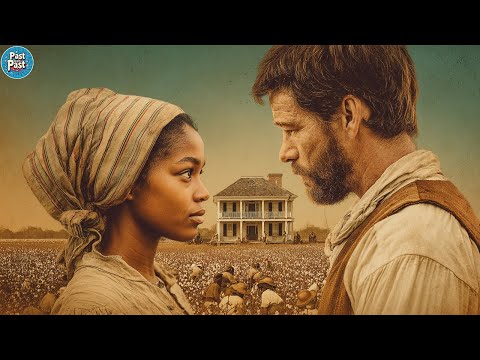
Imagine waking before dawn each day, knowing your fate was never your own. For millions of enslaved people across the American South, life under the shadow of the plantation was a relentless cycle of toil, deprivation, and fear—a world defined by brutality and the daily denial of humanity. But beneath the surface of this familiar horror lies an even darker truth: the existence of slavery breeding farms, where human beings were treated as livestock, forced to reproduce to fuel an insatiable economic machine. This is the story of America’s hidden shame, a tale of greed, suffering, and unbroken resistance.
The roots of this system stretch back to the earliest days of American colonization. In 1619, a ship docked at Point Comfort, Virginia, carrying around 20 enslaved Africans—a small event that planted the seeds for centuries of systematic cruelty. As the colonies grew, so did the demand for labor. Tobacco, cotton, and sugar promised unimaginable riches, and plantation owners turned to African slaves as a seemingly inexhaustible source of cheap labor. By the 1700s, slavery had transformed from isolated practices into a fully entrenched institution. Laws like Virginia’s 1705 statute codified chattel slavery, declaring that enslaved people and their children would be enslaved for life, cementing the brutal concept of human beings as property.
But the true horror of slavery breeding farms emerged as the cotton industry exploded. Eli Whitney’s invention of the cotton gin in 1793 made cotton processing dramatically faster, turning it into a highly profitable crop. Plantation owners rushed to plant cotton everywhere, driving the demand for enslaved labor to staggering new heights. States like South Carolina became the world’s center for raw cotton production, and the enslaved population soared. Enslaved people weren’t just workers—they were the backbone of the economy, listed on ledgers, used as collateral for loans, and passed down like family heirlooms. Their bodies, their futures, and their dignity were sacrificed on the altar of profit and greed.
On these breeding farms, the cruelty reached unspeakable depths. Enslaved women were forced into repeated pregnancies, their children sold off like livestock to maintain the labor supply. **One of the most haunting cruelties was the routine separation of families.** Children could be torn from their mother’s arms and sold to the highest bidder, their cries for comfort ignored. Parents were left in anguish, powerless to protect their loved ones. The average life expectancy for an enslaved person was just 21 years—a stark measure of the physical and psychological toll. Malnutrition, disease, and brutal punishments were everyday realities. In the cotton fields, hands were often raw and bleeding as workers were forced to meet impossible quotas, sometimes 200 pounds of cotton a day. Failure meant violent punishment, the crack of the whip, or public humiliation.
Yet, even in this darkness, the human spirit refused to be broken. **Whispers of resistance moved like a secret wind through the slave quarters.** Enslaved people staged work slowdowns, feigned illness, and deliberately broke tools. Songs became powerful tools of resistance, carrying secret messages and dreams of freedom. The Underground Railroad, led by courageous figures like Harriet Tubman, guided countless souls to liberty. Rebellions, from the Stono Rebellion to Nat Turner’s uprising, shook the foundations of the system, proving that the enslaved were never truly powerless. As Frederick Douglass wrote, **”The slave system was utterly hateful to me. I hated everything that reminded me of my condition.”** But in the shadows, enslaved people built beauty, meaning, and connection, keeping the dream of freedom alive.
The economic impact of slavery was immense. By 1860, enslaved people represented nearly 13% of the total US population, and their value as property was estimated at $3.5 billion—more than all the nation’s banks, railroads, and factories combined. Cotton alone accounted for over half of all US exports, fueling not only the southern economy but also the rise of the north and industries as far away as Britain. **Senator James Henry Hammond boldly proclaimed, “Cotton is king, and no power dares to make war upon it.”** This wealth came at a devastating cost, and the fight for freedom would span generations, testing the nation’s conscience and resolve.
As the 19th century wore on, the abolitionist movement gained momentum. Voices like William Lloyd Garrison’s demanded that America confront the true cost of its prosperity. **In 1831, Garrison put the nation on notice: “We are going to decide whether the slaveholding, soul-destroying system shall be continued.”** The country stood at a crossroads, forced to face its own contradictions. But the struggle was far from over, and the scars of slavery would take generations to heal. The stories of those who endured, resisted, and survived remind us of the resilience of the human spirit and the urgent need to confront the truths of our past.
The breeding farms were not scattered anomalies but a calculated extension of the plantation economy. In the Upper South, where soil exhaustion had made tobacco less profitable, planters discovered a new cash crop: human beings. **Virginia and Maryland became notorious for what historians later called the ‘Second Middle Passage’**—the forced migration of roughly one million enslaved people to the Deep South between 1790 and 1860. But the farms took this a step further. Rather than merely selling existing slaves, owners began systematically forcing enslaved women to bear children for sale.
**’I was born to be sold,’ recalled one formerly enslaved woman in a WPA interview.** ‘My mother told me that before I could walk, the master had already picked out a buyer.’ On farms like these, women were divided into ‘breeders’—those deemed strong enough to survive repeated pregnancies—and ‘field hands,’ who were worked until their bodies failed. The children were weaned as quickly as possible, then sold at auction, often before their fifth birthday.
The economics were chillingly simple. A healthy infant could fetch $200 to $300 by the 1850s—a fraction of an adult’s price, but pure profit for the owner. Enslaved women who resisted pregnancy were punished with beatings, solitary confinement, or the sale of their existing children. **’They told me I had to have children,’ said another survivor. ‘If I didn’t, they would sell me down the river.’**
The conditions on these farms defied belief. Pregnant women were forced to work in the fields until their bodies gave out, then returned within days of giving birth. **Infant mortality was staggering—nearly half of all enslaved children died before their first birthday.** Those who survived were often malnourished, their growth stunted, their spirits scarred by the knowledge that their mothers’ bodies were not their own.
Medical care was nonexistent, replaced by brutal experimentation. **Dr. J. Marion Sims, now infamous, performed surgeries on enslaved women without anesthesia**, convinced that Black people felt less pain. His ‘research’ on vesicovaginal fistulas was built on the suffering of women like Anarcha, Betsy, and Lucy—women whose names history nearly erased.
Yet resistance persisted even here. Enslaved women used herbal knowledge to induce abortions or prevent conception, a quiet rebellion against a system that sought to control their wombs. **’My grandmother told me about the cotton root,’ recalled a descendant. ‘It was the only power they had.’**
As the Civil War approached, the breeding farms became a desperate symbol of slavery’s moral bankruptcy. Abolitionists like Harriet Beecher Stowe exposed these practices in ‘Uncle Tom’s Cabin,’ shocking Northern readers. **’The law of God cannot be repealed by any human enactment,’ Stowe wrote**, and the truth of the breeding farms proved her point.
But the full story of these farms cannot be told without confronting the legal machinery that made them possible. **The 1808 federal ban on the international slave trade did not end the buying and selling of human beings—it simply made them more valuable.** With no new captives arriving from Africa, planters in the Upper South realized they could profit not just from crops, but from the forced reproduction of their enslaved workforce. The domestic slave trade exploded, turning cities like Richmond and Alexandria into bustling hubs where auction blocks stood in the shadow of churches.
**’The slave pen was a two-story brick building with barred windows,’ recalled a traveler passing through Alexandria in the 1840s.** ‘Inside, men and women were chained in rows, waiting to be sold.’ These pens, often run by men who called themselves ‘Negro traders,’ were the visible face of the breeding system. Enslaved people were inspected like cattle—their teeth checked, their muscles prodded, their backs examined for scars that might suggest a tendency to run away.
The scale was staggering. Between 1790 and 1860, roughly one million enslaved people were forcibly moved from the Upper South to the Deep South. **’I saw a mother with four children sold separately,’ wrote abolitionist Theodore Weld.** ‘She begged the trader to keep them together, but he said they would fetch a better price apart.’ The destruction of families was not a side effect of the system—it was the system.
Resistance took many forms, some barely visible to the overseers. **Enslaved midwives and healers passed down knowledge of herbs that could prevent pregnancy or end one early**, a quiet defiance that slaveholders could never fully control. Others fled, following the North Star toward freedom or disappearing into swamps and forests. Some fought back with their bare hands. **’I would rather die than be bred like an animal,’ one woman reportedly told her owner**, a statement that cost her dearly but echoed through the quarters as a rallying cry.
The abolitionist movement seized on these stories. **Harriet Beecher Stowe’s ‘Uncle Tom’s Cabin’ sold 300,000 copies in its first year**, and its depiction of enslaved mothers separated from their children galvanized Northern readers. But even Stowe softened the truth—her fictionalized accounts could not capture the full brutality of the breeding farms, where women were sometimes forced to bear children by different men to maximize the ‘stock.’
As the 1850s wore on, the political battle over slavery’s expansion grew more violent. **The Fugitive Slave Act of 1850 forced Northerners to participate in the capture of runaways**, turning cities like Boston and Philadelphia into battlegrounds. **’I will not obey this law,’ declared abolitionist William Lloyd Garrison**, and thousands agreed, forming vigilance committees that helped enslaved people escape to Canada.
When Abraham Lincoln won the presidency in 1860, the South seceded, and the Civil War began. **But even as the war raged, the breeding farms continued their grim work.** It was not until the Emancipation Proclamation of 1863 and the eventual passage of the 13th Amendment that the system was finally outlawed. Yet the scars remained—in the broken families, in the stories passed down through generations, and in the economic inequalities that still shape America today.
**’The story of the African in the Americas begins with a river of tears and a trail of blood,’ wrote scholar Abena Busia.** That river did not dry up when the law changed. It flowed into the Jim Crow era, into mass incarceration, into the ongoing struggle for justice. The breeding farms are gone, but their legacy is not. To understand America is to confront this hidden shame—and to honor the unbroken spirits of those who survived it.
**The breeding farms vanished from the landscape, but they never vanished from memory.** In the decades after emancipation, formerly enslaved women carried the truth in whispered testimonies—stories of stolen children, of wombs treated as factories, of names that history tried to erase. Their descendants inherited both the trauma and the resilience.
**’My great-grandmother was a breeder,’ one woman told a Works Progress Administration interviewer in the 1930s.** ‘She never spoke of it, but she kept a small pouch of cotton root in her apron till the day she died.’ That pouch was a relic of quiet rebellion—a reminder that even in the darkest corners, enslaved women fought for control over their own bodies.
Today, historians are finally unearthing these hidden stories. Scholars like Rebecca Hall have shown that enslaved women led some of the most daring shipboard revolts, and new research into breeding farms reveals how deeply the domestic slave trade shaped the modern American economy. **The $3.5 billion in enslaved property in 1860 wasn’t just an investment in labor—it was an investment in forced reproduction.**
Yet the resistance never died. From the cotton root to the Underground Railroad, from Nat Turner’s rebellion to the quiet dignity of naming one’s own child, the enslaved insisted on their humanity. **As Frederick Douglass wrote, ‘The slave system was utterly hateful to me. I hated everything that reminded me of my condition.’** But in the quarters, in the brush arbors, in the songs that carried double meanings, they built a world the overseers could never fully control.
The breeding farms are gone, but their legacy lingers in the racial wealth gap, in the disproportionate number of Black children in foster care, in the ongoing fight for reproductive justice. To confront this history is not to dwell in the past—it is to understand the roots of the present. **’The story of the African in the Americas begins with a river of tears and a trail of blood,’ wrote Abena Busia.** That river still flows, but so does the unbroken spirit of those who survived.
What will you do with this hidden history—will you share it, question it, or let it challenge the way you see America’s past?
Report this article
Select a reason for reporting:






