Alone at the edge of a universe humming a tune, Louis Battenberg seemed to be dreaming of snow—a fleeting illusion of purity in a world that had turned against him. The weight of a thousand apologies hung in the air, like a goddess promising endless paradise, but only she could make it right. And she was nowhere to be found.
In the opulent halls of Kensington Palace, Louis stood before a mirror, his reflection a ghost of the man he once was. The year was 1917, and the Great War raged across Europe, its tendrils reaching even into the heart of the British monarchy. Born a prince of Hesse, Louis had risen to become First Sea Lord of the Royal Navy, a position of immense power and trust. But now, his German heritage had made him a target of suspicion and hatred.
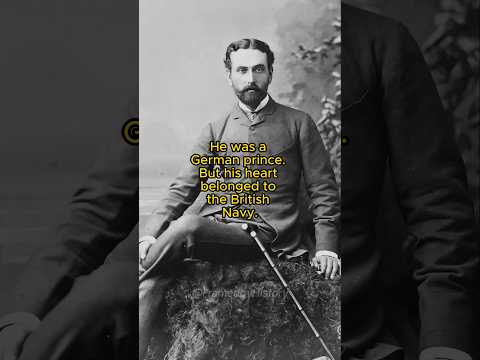
The anti-German sentiment sweeping Britain was relentless. Newspapers clamored for his resignation, questioning his loyalty. “Every German must be removed from positions of influence,” they cried. Louis, a man of honor and duty, felt the sting of betrayal. He had served Britain faithfully for decades, yet now he was branded an enemy.
As he stared into the mirror, he thought of his family—his wife, Princess Victoria, and their children. They too bore the brunt of the public’s wrath. His son, Dickie, had been taunted at school. “Your father is a German spy!” the boys would shout. Louis’s heart ached with the injustice of it all.
That evening, a letter arrived from the King himself. George V, Louis’s cousin, had been forced to act. The letter was brief and cold: Louis was to resign immediately. The King could no longer protect him. Louis read the words again and again, his hands trembling. “It is with deep regret…” The phrase echoed in his mind. Deep regret—a hollow consolation for a lifetime of service.
He walked to the window and gazed out at the London skyline, the city he had come to love. The rain streaked down the glass like tears. He thought of the goddess of apologies, of paradise lost. There was no one to make it right. The universe hummed its indifferent tune, and Louis Battenberg stood alone, on the edge of everything he had known.
But this was only the beginning of his tragedy. The decisions he would make in the coming days would change his family’s destiny forever—and leave a legacy that would echo through generations, down to his grandson, Prince Philip.
The resignation was not enough. Within weeks, a new storm broke over the family’s head. The King, bowing to the pressure of Parliament and the press, issued a proclamation that would strip Louis of more than his office. The royal family would renounce all German titles and styles. “Henceforth, we shall be known as the House of Windsor,” the King declared, and in the same breath, Louis’s world collapsed anew.
He was summoned to a private audience at Buckingham Palace. The corridors he had walked a thousand times now felt alien, the portraits on the walls watching him with cold, painted eyes. George V received him not as a cousin, but as a sovereign dispensing justice. “Louis, you understand the necessity,” the King said, his voice flat. “The nation demands it. I demand it.”
Louis bowed his head. He had always been a man of duty, and duty now meant surrender. The title of Prince of Battenberg would be surrendered. The German styles, the ancestral honors, the name his father had carried—all of it would be cast into the fire of public opinion.
That night, he gathered his family in the drawing room of their London home. Victoria sat beside him, her hand clasped tightly in his. Their children—George, Louise, and young Dickie—watched him with wide, frightened eyes. Louis cleared his throat. “We must become something else,” he said softly. “We must take a new name.”
He had spent the afternoon searching his mind for something that would sound English, thoroughly English, yet carry a trace of the dignity he refused to abandon. He thought of the family seat at Heiligenberg, of the rolling hills and the quiet streams. And then the word came to him, as if whispered by some ancestral ghost.
“Mountbatten,” he said. “We shall be the Mountbattens.”
Victoria’s eyes glistened, but she nodded. The children repeated the name, tasting its unfamiliar syllables. Dickie, barely seventeen, squared his shoulders and said, “Then I shall be Dickie Mountbatten.” There was defiance in his voice, a spark that Louis recognized—and feared.
The transition was brutal. The newspapers mocked the new name as a transparent disguise. “A German wolf in English clothing,” one editorial sneered. Louis’s portrait was removed from the walls of the Admiralty. His friends, once plentiful, grew scarce. Even the servants seemed to look at him differently.
Yet in the midst of the humiliation, Louis found a strange clarity. He had lost his title, his position, his very identity—but he had not lost his family. He watched Dickie grow harder, more determined. The boy had inherited his father’s sense of duty, but with a sharper edge, a hunger to prove himself worthy of the name he now bore.
One evening, Louis found Dickie in the study, poring over naval charts. “You still wish to serve?” Louis asked. Dickie looked up, his jaw set. “More than ever, Father. They will not erase us. We will make the Mountbatten name mean something.”
Louis felt a chill, though he could not say why. Perhaps it was the intensity in his son’s eyes—the same intensity that would one day carry Dickie to the heights of power, and into the heart of a royal dynasty. The universe hummed its indifferent tune, but the Battenbergs—no, the Mountbattens—were not finished yet.
Outside, the rain had stopped. A pale moon hung over London, and somewhere in the distance, a train whistle sounded, long and mournful. Louis turned from the window and looked at his son. “Then we begin again,” he said quietly. “From nothing.”
The years that followed were a slow, deliberate reconstruction. Louis, stripped of his admiralty, threw himself into the quiet work of a country gentleman—estate matters, charitable boards, the endless small duties that keep a family’s dignity intact. He wrote his memoirs, though the publishers were cautious. He tended his garden. He aged.
But Dickie did not age into quietness. He burned. He entered the Royal Navy with a ferocity that startled his instructors, rising through the ranks with a speed that owed nothing to his father’s ruined name and everything to his own relentless will. “I will not be a footnote,” he wrote to his father from a destroyer in the North Sea. “I will be a chapter.”
Louis read the letter by lamplight and felt that same chill he had felt years before in the study. Pride, yes—but something else too. A premonition. The boy had inherited the family’s hunger for redemption, and hunger, he knew, could devour a man from within.
Victoria, ever the diplomat, smoothed the family’s path through the drawing rooms of London. She cultivated the right acquaintances, arranged the right marriages. Louise married well. George took the name and made it respectable in the City. And Dickie—Dickie caught the eye of a young woman named Edwina Ashley, an heiress of dazzling wealth and restless spirit.
Their courtship was a storm. Edwina was not a woman to be managed; she was a woman to be matched, and Dickie, for the first time in his life, met someone whose fire equaled his own. They married in 1922 in a blaze of publicity that thrust the Mountbatten name back into the national consciousness—this time not as a punchline, but as a spectacle.
Louis watched the wedding from the front row, Victoria’s hand in his. He thought of the mirror in Kensington Palace, of the cold letter from the King, of the night he had gathered his frightened children and told them they must become something else. They had become something else. And now they were becoming something more.
But the world was not done with the Mountbattens, nor they with the world. In the years to come, Dickie would sail into war again, would stand at the side of kings, would guide a young princess named Elizabeth through the strange and gilded corridors of power. The name that had been born of humiliation would be spoken in palaces.
And yet, on that wedding day, as the confetti fell and the cameras flashed, Louis caught his son’s eye across the crowd. Dickie smiled—that sharp, hungry smile—and Louis felt the universe hum its indifferent tune once more. The goddess of apologies had never come. No paradise had been promised. There was only the work, and the name, and the long climb out of nothing.
That evening, alone in his study, Louis took out a pen and wrote a single line in his journal: “The Mountbattens have arrived. God help us all.”
He closed the book, extinguished the lamp, and sat for a long while in the dark, listening to the rain begin again against the glass.
Louis died in 1921, before the name he had salvaged could be tested by history. Victoria followed him within a year. The quiet country gentleman and his diplomat wife were gone, and what remained was the flame they had kindled—Dickie, burning brighter than either of them had dared.
He rose through the navy, survived the sinking of the Kelly, and stood at the side of a young princess who would one day be queen. The name born of humiliation was whispered in palaces. “Mountbatten,” they said—no longer a disguise, but a dynasty.
Yet Louis’s final journal line haunted the family like a prophecy. “The Mountbattens have arrived. God help us all.” Dickie’s hunger carried him to the heights, but hunger has no floor, and the same fire that built the name would one day threaten to consume it.
In the end, the goddess of apologies never came. No paradise was promised. There was only the work, the name, and the long climb out of nothing—passed from father to son, and son to grandson, down to a prince named Philip.
And still the universe hums its indifferent tune. So tell me: was Louis’s sacrifice the beginning of a legacy—or the first crack in a foundation that would never truly hold?
Report this article
Select a reason for reporting:






