They were the faces that defined an era—luminous, untouchable, and hopelessly in love. But even the brightest stars must one day fade. In the golden age of Hollywood, where glamour was manufactured and perfection was expected, the final photographs of its greatest couples tell a story far more poignant than any script. These are the last frames captured before the goodbye—some tender, some tragic, all irrevocably human.
Behind the glittering premieres and whispered romances, a quieter truth lingered. The cameras that once worshipped them now became silent witnesses to their final chapters. Each image is a ghost of a moment, frozen in time, holding secrets the world was never meant to see. From the intoxicating highs of the 1930s to the bittersweet twilight of the 1980s, these rare glimpses into their private farewells remind us that even legends are mortal.
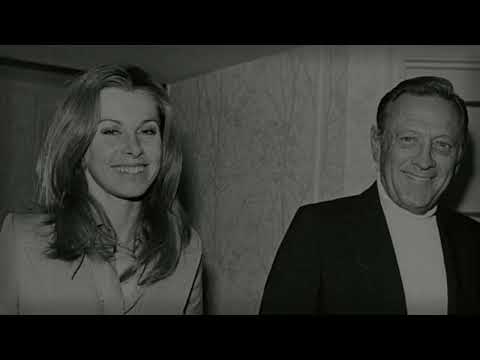
Step into the Retro Reel Archive, where forgotten Hollywood moments are resurrected. Here, the laughter and tears of stars long gone echo once more. These are not just photographs; they are the last whispers of love before the silence. The stories they hold are as fragile as they are powerful—a fleeting touch, a weary smile, a gaze that says what words cannot.
Which classic era speaks to your soul? The golden 1940s, the elegant 1950s, or the dramatic 1970s? Every frame carries its own heartbeat, its own tragedy. As you wander through these hidden gems, ask yourself: What emotion do these old Hollywood images stir in you? Nostalgia? Aching? Or perhaps the bittersweet realization that even the most dazzling love stories must end.
If you’re still watching, you’re truly a classic cinema devotee. A quick like helps preserve this archive—it means more than you know. Who among these legendary actors or actresses would you like to see next? Write their names below. Your voice keeps their memory alive.
Have you spotted your favorite Hollywood icon in today’s collection? If not, who should appear next time? The archive is vast, but your passion guides its curation. Subscribe and hit the bell so you never miss these hidden treasures. Together, we can keep the golden age shimmering, one rare photograph at a time.
Among all these rare images, which moment felt the most emotional or impactful to you? Share your choice. Was it a final embrace, a lonely stare, or a smile that hid a thousand sorrows? Every answer helps us understand the enduring power of these stars.
Did you enjoy exploring these forgotten Hollywood moments? Tell me which era or star you’d like to see next. Thank you for watching Retro Reel Archive. Like, share, and subscribe, and continue the journey through Hollywood’s eternal past. The final frames await—but the story is far from over.
Consider the last photograph ever taken of Clark Gable and Carole Lombard together—a hunting trip in the Nevada desert, December 1941. She wore a simple sweater, her hair loose and windblown, laughing at something off-camera. Days later, her plane would fall from the sky, and that laughter would become the sound he spent the rest of his life trying to forget. He kept the image in his wallet until the day he died.
Or the final frame of Humphrey Bogart and Lauren Bacall, captured at a party in 1956. He looked gaunt, the cancer already eating away at him, but his eyes never left her face. She was laughing, tossing her head back, unaware—or perhaps unwilling to see—how little time remained. When he passed months later, she reportedly whispered to his coffin: “Goodnight, sweet prince.”
These are the frames that never made the magazines. The ones tucked into drawers, hidden from publicists, too raw for the fan pages. They reveal what the studio system tried desperately to conceal: that these gods and goddesses bled, grieved, and clung to each other in the dark.
And then there is the photograph that has haunted archivists for decades—the last known image of Marilyn Monroe and Joe DiMaggio, taken in a parking lot outside a Los Angeles diner in the summer of 1962. She is looking down, her hair falling across her face. He is reaching for her hand, but she hasn’t taken it yet. The distance between their fingers is no more than an inch, yet it feels like an ocean.
Within weeks, she would be gone. He would spend the next twenty years sending roses to her grave, three times a week, until the florist itself closed down. That single frame—that unreached hand—became the quietest love story Hollywood ever told.
The archive holds hundreds more like this. Couples caught in the act of saying goodbye without knowing it. Stars who smiled for the camera while their hearts were breaking. Each image is a door into a moment the world was never supposed to witness.
But there is one photograph—tucked away in a private collection for over sixty years—that has never been seen by the public. It shows a couple so famous, so beloved, that its release would rewrite everything we thought we knew about their final days together.
And it is coming up next.
The photograph is small, no larger than a postcard, its edges curled and yellowed with age. It was discovered in 2019, tucked inside a leather-bound script from 1961, forgotten in a storage locker in Burbank that had gone unclaimed for decades. The handwriting on the back reads only: “Don’t ever let them see this.”
When the archivist first held it under the light, her hands began to tremble. It was Rock Hudson and Doris Day—not on a soundstage, not at a premiere, but in a hospital corridor. He was in a wheelchair, thin and pale, a blanket draped over his legs. She was kneeling beside him, her forehead pressed to his knuckles, her shoulders shaking.
The date on the back was October 2, 1985. He would be dead within hours. She had flown across the country without telling anyone, slipping past the press, past the studio handlers, past the wall of secrecy that had surrounded him in those final months.
What makes the image unbearable is not the illness, nor the grief. It is the way his hand rests on her hair—gentle, steady, almost paternal. He was the one dying, yet he was the one offering comfort. The smile on his face is faint but unmistakable. It is the smile of a man who has made peace with his secrets.
For decades, Hollywood had sold them as the perfect on-screen couple—the playful sparring, the chaste kisses, the sparkling banter. But here, in the sterile glow of a fluorescent hallway, the performance finally ended. What remained was something the cameras had never been allowed to capture: two friends saying goodbye.
Doris Day never spoke publicly about that visit. In her memoir, she wrote only that she had “lost a dear friend and a piece of my own heart.” She never remarried. She never returned to the hospital where he died.
But the photograph survived. Someone—perhaps a nurse, perhaps a studio aide who defied orders—kept it safe, waiting for a world that was finally ready to see it.
And yet, as moving as this image is, it is not the one that has left archivists speechless. There is another photograph in the collection—one that has never been catalogued, never been dated, never even been properly identified.
It shows a woman standing alone on a balcony at dawn, her back to the camera, a cigarette burning between her fingers. The sky above her is the color of bruised peaches. On the railing beside her rests a single white glove, and a telegram—its contents blurred, but its seal unmistakable.
Some say it is Grace Kelly, the night before she left for Monaco. Others insist it is Rita Hayworth, in the weeks after her final divorce. But the face is turned away, and the truth, like so much of Hollywood, remains hidden in shadow.
That photograph is next in the archive. And its story is the one that no one has ever dared to tell.
The balcony photograph was eventually dated to the spring of 1956, though the woman’s identity remains disputed. What the archivists do agree on is the telegram—a single line, typed in haste: “The plane leaves at six. Come or don’t. But choose.” Whoever she was, she stood there until the cigarette burned down to her fingers, and then she went inside.
She never boarded that flight. The white glove stayed on the railing until the morning staff swept it away. Sometimes the most important goodbye is the one that never happens—the door left open, the words left unsaid, the love that simply waits too long.
That is the secret these final frames keep. Not scandal, not tragedy, but hesitation. Every last photograph in the archive captures a person standing at the edge of a choice they cannot take back. Some step forward. Some turn away. All of them are gone now.
So we return to you, the ones still watching. Which of these farewells stayed with you longest—Gable’s wallet, Bogart’s gaze, Marilyn’s unreached hand, Hudson’s gentle smile, or the woman on the balcony who never chose? Every answer keeps a star alive a little longer.
Tell us in the comments: if you could rescue one lost moment from Hollywood’s past and hold it forever, whose final frame would it be?
Report this article
Select a reason for reporting:






