May 1969. The dense jungle of the A Shau Valley, near the Laotian border, hid a nightmare. For ten days, American and South Vietnamese forces would claw their way up Hill 937, a steep, forest-covered ridge that the North Vietnamese Army had turned into a fortress. Soldiers would later call it “Hamburger Hill”—because they were being ground up like meat. The battle would become one of the most brutal and controversial of the Vietnam War, a fight that seemed to achieve nothing but death.
When the first American troops reached the base of the hill on May 10, they expected light resistance. Instead, they walked into a killing field. Hidden bunkers, spider holes, and machine-gun nests waited in the shadows. The North Vietnamese 29th Regiment, known as “Pride of Ho Chi Minh,” had fortified the hill into an underground labyrinth. They were ready to die there.
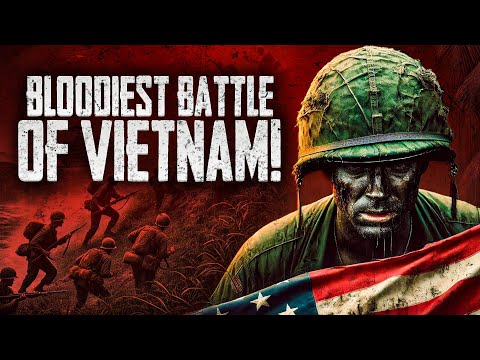
The plan was simple: search and destroy. Small patrols would find the enemy, then massive firepower—airstrikes, artillery, helicopter gunships—would finish the job. But on Hamburger Hill, the jungle was so thick that soldiers could barely see their own feet. The terrain was steep, rocky, and covered in vines. Every step was a struggle, every advance a deadly gamble. The weather was suffocating—hot, humid, and rainy—turning the ground into mud that clogged weapons and exhausted men.
By May 13, the first major assault began. The 3rd Battalion, 187th Infantry, led by Lt. Col. Weldon Honeycutt, pushed up the slope. They were met by a wall of machine-gun fire, mortar rounds, and sniper bullets. The enemy was invisible, hidden in bunkers and tunnels. Airstrikes and artillery pounded the hill, but the North Vietnamese simply burrowed deeper. The forest swallowed the explosions, and the defenders fought on.
Within days, American units suffered devastating losses. Some companies lost half their men in a single day. Helicopters couldn’t land on the steep slopes, making resupply and medical evacuation nearly impossible. The wounded lay in the mud, waiting for help that often never came. Morale plummeted. Soldiers felt like they were being fed into a meat grinder, ordered to take the same ground day after day with no progress.
Colonel Honeycutt, known for his ferocity, refused to stop the attacks. He believed that relentless pressure would eventually break the enemy. But his men began to question his leadership. Some whispered that he cared more about his career than their lives. The jungle was so dense that units became disorganized, and friendly fire incidents became common. In one tragic moment, American aircraft accidentally bombed their own troops, killing and wounding dozens.
By May 17, the battle had become a slow, grinding slaughter. The North Vietnamese were not defending the hill—they were willing to die on it. Every American advance was met with a hail of bullets from unseen enemies. The hill was a fortress, and the Americans were paying for every inch with blood. The question on everyone’s mind was: why? Why was this hill so important? The answer was unclear, even to the commanders.
Back home, news of the battle was just beginning to leak out. The high casualties and the seeming futility of the assault would soon ignite a firestorm of controversy. But on the hill, there was no time for politics. There was only survival, and the next attack. The final, desperate push was yet to come—and with it, the moment that would define the battle and change the course of the war.
Inside the American command, frustration was boiling over. General Melvin Zais, the divisional commander, pressed his officers for results. He wanted the hill taken, no matter the cost. Reports of the stalemate reached the press, and the first whispers of “Hamburger Hill” began to circulate among the troops. The name stuck like a curse.
On the morning of May 18, after a night of torrential rain, the Americans launched another assault. The 1st Battalion, 506th Infantry, attacked from the south, climbing through a ravine choked with vines and fallen trees. North Vietnamese soldiers waited until the Americans were within thirty feet before opening fire. The lead platoon was nearly wiped out in seconds. Survivors dove into the mud, pinned down for hours.
Honeycutt ordered another attack. And another. His battalion commanders pleaded for time to reorganize, to evacuate the wounded, to bring in fresh troops. He refused. “We take that hill today,” he reportedly snapped. Some officers quietly began to disobey, delaying their advances to save their men. The chain of command was fraying.
What no one on the American side fully understood was that the North Vietnamese had already decided the hill was worth dying for. For them, Hill 937 was not just terrain—it was a symbol. Holding it proved they could stand and fight the Americans anywhere. Every day they held out was a propaganda victory, a message to their troops and to the world.
Their commander, a veteran of years of jungle warfare, had positioned his men in a network of bunkers so well concealed that American airstrikes often missed entirely. Some bunkers had roofs of three layers of logs and earth, strong enough to withstand direct artillery hits. Machine guns were sighted to sweep the approaches in deadly crossfires. Snipers hid in trees, tied to branches with ropes so they could fire down on the Americans climbing below.
The Americans, by contrast, were fighting blind. Maps were inaccurate. Radios failed in the dense jungle. Units became separated, and men died calling for help that couldn’t reach them. The wounded screamed in the mud, and medics were shot trying to reach them. It was a vision of hell that no training could have prepared them for.
By the evening of May 19, the hill was still in enemy hands. American casualties had climbed past three hundred. Soldiers on the line were exhausted, dehydrated, and running low on ammunition. Some had not slept in days. Others had watched their closest friends die beside them. And still, the orders came: attack again.
That night, a young lieutenant wrote in his journal: “We are not fighting for a hill. We are fighting for the pride of men who cannot admit they were wrong.” The words would prove prophetic. The final push was coming, and with it, a victory that would feel more like a wound than a triumph.
At dawn on May 20, the Americans made their last attempt. The order came down from General Zais himself: take the summit, no matter the cost. Four battalions would attack simultaneously, from four directions, in a coordinated assault that left no room for retreat. Before the infantry moved, the hill was subjected to a bombardment unlike anything the men had seen—waves of fighter-bombers, napalm canisters, and artillery that shook the earth for hours.
When the shelling finally lifted, the jungle was gone. The dense canopy that had hidden the North Vietnamese for ten days had been burned away, revealing the blackened skeleton of the hill. Bunkers that had survived the earlier strikes now stood exposed. For the first time in the battle, the Americans could see what they were attacking.
The troops moved up the slope in a line, firing as they climbed. North Vietnamese soldiers emerged from their tunnels to fight at point-blank range, throwing grenades and swinging rifle butts. The fighting became a series of savage, close-quarters struggles around each bunker entrance. Men cleared the holes one by one, tossing grenades inside and firing into the smoke.
By mid-morning, the lead companies reached the crest. The flag went up over Hill 937 shortly after noon. The North Vietnamese, their positions overrun, slipped away into the jungle to the west, carrying their wounded and leaving their dead behind. The hill was finally American—ten days, hundreds of casualties, and a landscape reduced to ash and cratered earth.
But the men who stood on the summit felt no triumph. They looked down at the shattered trees and the bodies of friends and enemies alike, and many of them wept. One sergeant later said it felt like standing on a grave. The victory photograph, taken that afternoon, shows exhausted soldiers with hollow eyes, their uniforms torn and filthy, their faces blank.
Within hours, the first reports reached Saigon and then Washington. The casualty figures were worse than anyone had feared: 56 Americans dead, more than 370 wounded. The North Vietnamese had lost an estimated 630 killed, though the true number was never known. The hill had been taken, but the cost was staggering.
What happened next would turn the battle from a military story into a national scandal. Less than three weeks later, the order came to abandon Hill 937. The 101st Airborne was being pulled back as part of a broader shift in strategy. The hill, so dearly bought, was handed back to the jungle without a single shot fired.
The soldiers who had fought there could not believe it. Men who had watched their friends die on that slope learned that their sacrifice had bought nothing at all. The anger spread quickly through the ranks and then, through letters and interviews, back to America. The name “Hamburger Hill” became a byword for everything wrong with the war.
The media seized on the story. Life magazine published a spread of 242 American soldiers killed in a single week, and though only a few died on Hamburger Hill, the public connected the two. The images of young men, barely out of high school, made the war personal and tragic for families at home. Senator Edward Kennedy took to the Senate floor, calling the battle “senseless and irresponsible.” He demanded answers from the military. Other politicians, including George McGovern, joined the chorus. The question echoed across the country: Why did so many die for a hill that was abandoned?
General John M. Wright, who replaced Zais, tried to defend the decision: “This is not a war of hills. That hill had no military value at all.” But his words only fueled the fire. If the hill had no value, why were so many lives lost? The contradiction was too glaring to ignore. The battle became a symbol of a war that seemed to have no purpose, no end, and no clear strategy.
For the soldiers who fought there, the abandonment was a betrayal. Some had to be physically restrained from attacking their own officers. A bounty of $10,000 was reportedly placed on Colonel Honeycutt’s head, and there were attempts on his life. He survived, but the hatred of his men never faded. One veteran later said, “We fought like hell for that hill, and in the end, it meant nothing. We lost good men for nothing.” Another called it simply a slaughter, a meaningless waste of lives.
The aftermath changed the war. General Creighton Abrams, commander of U.S. forces in Vietnam, ordered a shift in strategy. No longer would American troops launch large-scale attacks to seize terrain. Instead, they would focus on protecting their own forces and minimizing casualties. The policy became known as “protective reaction.” At the same time, President Nixon announced the first major troop withdrawals, beginning the process of “Vietnamization”—handing the fighting over to South Vietnamese forces.
Hamburger Hill was not the only reason for these changes, but it accelerated them. It showed that even elite units like the 101st Airborne could be bled white in a battle with no clear strategic gain. The hill was a microcosm of the war: brave soldiers, flawed leadership, and a goal that slipped away as soon as it was achieved.
Today, Hamburger Hill stands as one of the most controversial battles of the Vietnam War. It is remembered not for the victory, but for the questions it raised about the cost of war. When is a battle worth fighting? What price is too high? For the men who were there, the hill will always be a place of ghosts. The jungle has reclaimed it, but the scars remain—in the earth and in the memories of those who survived.
What do you think? Was Hamburger Hill a necessary battle or a tragic mistake? Share your thoughts in the comments below.
Report this article
Select a reason for reporting:






