Major General Theodore R. Callaway had never lost an argument with a subordinate. He had never been openly contradicted by an enlisted man. And in twenty-seven years of military service, he had never—not once—walked past an American soldier who failed to salute him.
That record was about to end eight thousand miles from Washington, in the red dust and brutal heat of northern Queensland, where the Australian Imperial Force was preparing for war. Not the parade-ground version. The real kind.
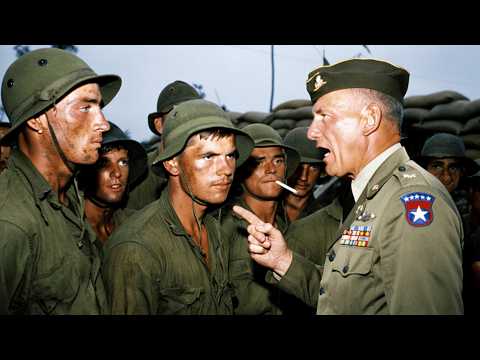
Two military cultures. Two armies fighting on the same side. Two completely different ideas about what a soldier owed his commanding officer. One of them was about to collide with the other, and neither side was going to back down.
The Australians had a word for men like Callaway. They called them ring knockers—West Point graduates, the men who tapped their class rings on the table when they wanted something done. The men who measured combat readiness by the straightness of a formation, who believed with absolute conviction that military discipline began and ended with the salute.
Callaway believed it the way a priest believes in communion. The salute was not a gesture; it was the architecture of command. Without it, the chain dissolved. Without it, men forgot who was in charge. Without it, armies became mobs.
He was not wrong about American armies. He was catastrophically wrong about Australian ones.
The Australian Imperial Force did not do salutes—not the way Americans understood them. An AIF private would salute a superior officer if he felt like it. If the officer had earned it. If the moment called for it. And if none of those conditions applied, the private would nod, say “G’day, sir,” and keep walking.
This was not indiscipline. This was doctrine. The AIF had been built on a principle no other Allied army shared: a man’s rank did not make him better. It made him responsible. And responsibility was earned in the field, not conferred by a shoulder board.
They had proven this at Gallipoli. They had proven it at Tobruk. They had proven it in the jungles of New Guinea, where officers who could not keep up with their men were replaced overnight, and nobody filed paperwork about it.
Callaway did not understand this. He was about to.
The orders came through in April. General MacArthur’s headquarters in Melbourne had reorganized the command structure to integrate American and Australian units for the coming campaigns. Callaway was assigned as deputy liaison to the First Australian Corps—coordination, logistics, signal integration.
But Callaway did not think in logistics. He thought in standards. And the first standard he intended to enforce was the salute.
He arrived at the corps staging area outside Townsville on the 14th of April. The heat hit him like a wall. Queensland in autumn was hotter than Georgia in July. The dust was red, the flies relentless, and the camp stretched across a flat expanse of scrubland dotted with canvas tents and improvised vehicle shelters.
There were no paved roads. No painted curbs. No whitewashed rocks marking the paths between barracks.
Callaway’s aide-de-camp, Captain Lewis Emery, noted the general’s expression as they drove through the gate. It was the expression of a man who had just walked into a restaurant and found no tablecloths.
“Sir,” Emery said carefully, “the Australians operate on a different—”
“I can see how they operate, Captain.”
That was the end of that conversation.
The first Australian Callaway encountered on foot was a corporal named Teddy McClean, 9th Division, Tobruk veteran, twenty-three years old, sunburned to the color of brick, shirt unbuttoned to the sternum, slouch hat tilted at an angle that would have caused a heart attack at Fort Benning.
McClean was carrying a crate of ammunition across the compound when the general’s vehicle pulled up. Callaway stepped out. Two stars on his collar, pressed uniform, polished boots—every inch the senior officer.
McClean glanced at him. “Good day,” he said, and kept walking.
Callaway stood very still. Emery held his breath. The corporal disappeared around the corner of a supply tent without looking back.
Callaway turned to his aide. His voice was quiet, controlled—the voice of a man who had not yet decided whether to be furious or astonished.
“Did that man just walk past a major general without saluting?”
“Yes, sir.”
“Is he aware that I am a major general?”
“He may not have noticed the rank, sir.”
“He was looking directly at me, Captain.”
Emery had no answer for that.
Callaway had one. “Find his commanding officer. Now.”
The commanding officer in question was Lieutenant Colonel Patrick Dwyer, 9th Division, 20th Brigade. A solicitor from Adelaide in civilian life, a veteran of El Alamein in military life, thirty-eight years old, thin as a fence post, calm as still water. Dwyer had commanded men in conditions that would have broken half the officers in any army, and he had done it without ever raising his voice above conversation volume.
He arrived at Callaway’s temporary headquarters—a requisitioned schoolroom with a ceiling fan that didn’t work—within the hour. He was not wearing a tie. His sleeves were rolled up. His slouch hat was under his arm.
Callaway noted all of this. “Colonel Dwyer,” the general began, “one of your men, a corporal, walked past me this morning without rendering a salute.”
Dwyer nodded. “That sounds about right.”
Callaway waited for the rest of the sentence. There was no rest of the sentence.
“You don’t seem concerned,” Callaway said.
“Should I be? A corporal failed to salute a general officer. He probably said g’day, though.”
“That is not a salute, Colonel.”
“It is in the AIF, General.”
The temperature in the room dropped about fifteen degrees. Not literally—literally, it was still forty-one degrees Celsius and climbing—but the temperature between the two men, the American career officer and the Australian citizen soldier, went absolutely arctic.
Callaway leaned forward. “I’m going to be direct with you, Colonel. I’ve been assigned to this corps as a liaison officer with full authority to address matters of discipline and operational readiness, and I am telling you that the standard of military courtesy in this camp is unacceptable.”
Dwyer didn’t blink. “With respect, General, your authority extends to coordination and logistics. Discipline within Australian formations falls under Australian command.”
“I am aware of the formal structure. I am also aware that we are fighting the same war.”
“We are.”
“Then your men should salute Allied general officers.”
Dwyer was quiet for a moment. He looked at the ceiling fan. It still wasn’t working.
“General Callaway,” he said, “I fought at Tobruk for 241 days. You know what kept my men alive? It wasn’t saluting. It was trust. They trusted me because I never asked them for anything I wouldn’t do myself. I carried a rifle. I dug my own trench. I ate what they ate. I didn’t ask for salutes and they didn’t offer them. And when I told them to hold the line against Rommel’s armor, they held it.” He paused. “They held it because they respected me, not because they were afraid of me.”
Callaway stared at him. “This is not Tobruk, Colonel.”
“No, it’s Queensland, but the men are the same.”
The meeting ended without resolution. Two military philosophies, two unshakable convictions. The duel had begun, and neither man was going to yield.
Callaway returned to his quarters and wrote a memorandum. Subject: Military Courtesy Standards, Allied Personnel, First Australian Corps Staging Area.
The memorandum was three pages long. It specified that all Allied personnel, regardless of national origin, would render appropriate salutes to officers of equivalent or superior rank. It cited regulations. It cited Allied command protocols. It cited General MacArthur’s standing orders on inter-force cooperation.
It did not cite common sense, because common sense would have told Callaway that the memo was a grenade and he had just pulled the pin.
The memo arrived at Australian brigade headquarters the following morning. Lieutenant Colonel Dwyer read it. He read it again. Then he passed it to his adjutant, a captain named Reg Sullivan, who had been a wheat farmer in Western Australia before the war and had the social graces of a tractor.
Sullivan read it. “He’s joking.”
“He’s not.”
“He wants the boys to salute every American officer they see?”
“Every Allied officer. Including himself.”
Sullivan looked at Dwyer. “Pat, the boys won’t do it.”
“I know.”
“They’ll take the piss out of him something fierce.”
“I know that, too.”
Dwyer folded the memo and put it in his pocket. “Pass the word. Tell the boys to behave themselves.”
Sullivan stared at him. “Are you telling them to salute?”
“No, I’m telling them to behave themselves. Those are different things.”
The word went through the brigade like fire through dry grass. An American general wanted salutes—a ring knocker from West Point, stars on his collar and starch in his shorts. He wanted Australians, men who had held Tobruk, men who had buried their mates in shallow graves under artillery fire, to snap to attention and throw their hand up every time an officer walked past.
The reaction was exactly what you would expect. The men of the 9th Division did not refuse to salute. That would have been mutiny. That would have been a formal act of insubordination.
The Australians were not fools. They were something far more dangerous. They were comedians.
The first incident occurred on the 16th of April. Callaway was walking from his quarters to the signals tent. A group of five Australian privates saw him approaching. They stopped. They turned. They formed a line. They saluted in perfect unison—slow, exaggerated, theatrical. One man held his salute for a full twelve seconds. Another saluted with his left hand. A third saluted with both hands.
Callaway returned the salute stiffly. The privates dissolved into laughter the moment he passed. He heard it. Every word.
The second incident occurred an hour later. An Australian sergeant named Mick Gallagher—a shearer from Longreach who had personally captured an Italian officer at Bardia by walking up to him and saying, “Come on, mate. It’s over”—saw Callaway approaching from sixty meters away.
Gallagher stopped. He placed his right hand on his chest. He bowed from the waist like a courtier greeting a king in a picture show.
“Your majesty,” he said, loudly enough for every man in earshot to hear.
Callaway kept walking. His jaw was tight.
By noon on the 16th, the entire Australian camp had turned saluting into a competitive sport. Privates saluted with exaggerated precision. Corporals saluted from improbable distances. One man saluted from over a hundred meters away, standing on the roof of a latrine block. A lance corporal saluted Callaway while lying in a hammock. An entire section saluted him simultaneously while singing Waltzing Matilda in three-part harmony.
The Americans in the camp did not know what to do with any of this. Callaway’s aide, Captain Emery, tried to explain. “Sir, I think the Australians are—”
“I know what they’re doing, Captain.”
“Yes, sir.”
“They think this is funny.”
“Yes, sir.”
“It is not funny.”
Emery did not disagree out loud, but he noted in his personal diary that evening: “The general has underestimated the Australians. They are not resisting his order. They are drowning it in compliance. It is the most effective act of defiance I have ever witnessed, and technically not one of them has broken a single regulation.”
That was the genius of it. They were saluting. They were saluting so hard it was meaningless.
Callaway escalated. On the 17th, he requested a meeting with Brigadier Niall Brennan, commanding the 20th Brigade. Brennan was a different animal from Dwyer. Where Dwyer was calm and measured, Brennan was blunt as a hammer—a grazier from the Darling Downs, six foot three, hands like shovels. He had been at Gallipoli as a seventeen-year-old private, lied about his age, and had carried that experience through every rank he had held since.
Brennan did not stand when Callaway entered the room. He was eating a sandwich. “General,” he said with his mouth full, “take a seat.”
Callaway sat. He placed his memorandum on the table. “Brigadier, your men are turning my directive into a circus.”
Brennan looked at the memo. He didn’t pick it up. “Your directive regarding saluting protocol.”
“Right.”
Brennan took another bite, chewed, swallowed. “General, I’ve been soldiering for twenty-seven years. You know what I’ve learned?”
“Enlighten me.”
“A salute doesn’t make a soldier. Fighting makes a soldier. Dying makes a soldier. Standing in a trench with water up to your thighs and shells coming in every thirty seconds and not running—that makes a soldier. A salute is just a thing you do with your hand.”
Callaway’s expression did not change. “It is a symbol of the chain of command.”
“So is not getting your men killed for no reason. And my lads have a pretty good record on that score.”
“Brigadier, I am trying to maintain discipline.”
Brennan put his sandwich down. He looked at Callaway properly for the first time. His eyes were pale blue, very direct, very steady.
“General Callaway, let me tell you something about discipline. I was at Lone Pine. Do you know what happened at Lone Pine?”
“I’m familiar with the battle.”
“Then you know that Australian soldiers charged into Turkish trenches covered with logs and dirt and fought hand-to-hand in the dark for four days. They fought with bayonets and shovels and their bare hands. Seven Victoria Crosses were awarded in a space the size of a tennis court. Those men had discipline. They had the kind of discipline you cannot order into existence, the kind you cannot salute into being.”
He paused. “My boys are the sons of those men. They will fight. They will bleed. They will die if they have to. But they will not perform for a visiting American because he thinks a wave of the hand means something it doesn’t.”
The meeting ended. Nothing was resolved. The duel was intensifying.
Callaway was not a stupid man. He was rigid. He was doctrinaire. But he was not stupid. He recognized that a direct confrontation with Australian brigade command was not going to produce the result he wanted.
So he changed tactics. He went over their heads.
On the 19th of April, Callaway sent a formal complaint to General MacArthur’s headquarters in Melbourne. The complaint cited Article 14 of the Allied Forces Cooperation Agreement. It cited specific incidents of disrespect toward Allied general officers by Australian enlisted personnel. It requested that MacArthur issue a directive requiring Australian compliance with American standards of military courtesy.
It was a perfectly crafted bureaucratic weapon. It landed on the desk of Lieutenant General Sir Thomas Blamey.
Blamey read the complaint twice, then laughed out loud in his Melbourne office. He dictated a reply addressed to MacArthur’s chief of staff: Australian custom permits informality between ranks, and that informality is the foundation of the trust that has produced the finest combat performance of this war. “I respectfully suggest General Callaway direct his energy toward the coordination duties for which he was assigned, and leave the management of Australian soldiers to Australian officers.”
MacArthur read it, weighed his need for the Australians against one colonel’s wounded pride, and sent back a single note: “Ted, focus on signals integration. Leave the saluting question alone.” Seven words. The salute war was over.
Callaway was quietly reassigned to Brisbane, where every salute was crisp and the war happened to other people. He never spoke of Queensland again. Teddy McClean went home to a cane farm and never mentioned it either—an American who didn’t understand, an Australian who didn’t care.
But the story outlived them both, retold in every mess tent for the rest of the campaign. Because it was never really about saluting. It was about what an army is for—and whether a man follows you because he must, or because he trusts you.
So tell us: in your experience, does respect come from rank—or does it have to be earned?
Report this article
Select a reason for reporting:






