The projector flickers to life, casting a beam of light through the dusty air of a forgotten screening room. On the screen, a face emerges from the grain—a star whose name once echoed in every household, now whispered only in the archives of film history. This is not just a photograph; it’s a portal to an era when Hollywood was a dream factory, and its stars were gods and goddesses.
But behind the glamour and the spotlights, there were stories never told—secrets buried beneath the celluloid. Welcome to a journey through the forgotten faces of Old Hollywood’s Golden Age, from the 1940s to the 1980s. Here, we rediscover the legends who defined an era, and the ones who slipped through the cracks of time.
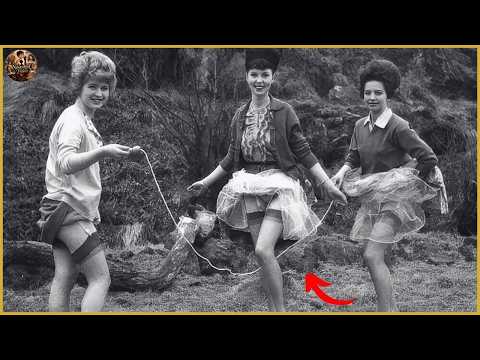
The 1940s: a time of black-and-white elegance and wartime resilience. Actors like Humphrey Bogart and Ingrid Bergman became symbols of hope and defiance. But for every Bogart, there were dozens of talented souls who never got their close-up. Their faces, captured in vintage photos, hint at untold tragedies and unfulfilled dreams. As the decade rolled on, the studio system churned out stars like products on an assembly line, but some burned too bright, too fast.
Then came the 1950s, a decade of Technicolor and rebellion. Marlon Brando and Marilyn Monroe redefined stardom, but their personal demons were as famous as their performances. Behind the platinum blonde curls and the smoldering gaze, there was a fragility that the cameras never fully captured. It was an era of contradiction: wholesome family values on screen, and behind the scenes, a cauldron of scandal and heartbreak.
As we move into the 1960s and 1970s, the old guard gave way to a new wave of antiheroes. Jack Nicholson and Faye Dunaway brought a raw intensity that mirrored the turbulent times. But among the newcomers, there were those who shone briefly and then vanished—victims of the changing tides or their own inner storms. Their photos, frozen in time, ask us: what if? What if they had been given one more role, one more chance?
By the 1980s, the Golden Age had faded, but its echoes lingered. The stars of yesterday became legends, their images immortalized on posters and in film schools. Yet, for every legend, there are a hundred forgotten faces—extras, hopefuls, and has-beens—whose stories deserve to be told.
In the following pages, we’ll delve into the lives of these forgotten icons, uncovering the triumphs and tragedies that defined Hollywood’s most glamorous and cutthroat era. Because every face has a story, and every story deserves to be remembered.
Take, for instance, the case of Vera Langley. In 1946, she was touted as “the next Lauren Bacall” after a single scene-stealing turn in a low-budget noir. Critics raved, fan mail poured in, and the studio plastered her face on every available billboard. Within eighteen months, she was unemployable—blacklisted for refusing the advances of a powerful producer. Her final known photograph, taken at a bus station in 1951, shows a woman clutching a single suitcase, her eyes hollowed out by a dream that had turned to ash.
Then there was Danny Reyes, a song-and-dance man whose tap routines could make the rafters shake. He headlined at the Copa for three glorious years, but a gambling habit swallowed his fortune whole. By 1962, he was performing for tips in a dive bar in Bakersfield. When he died at forty-seven, his obituary ran two lines long. The papers didn’t mention the standing ovations, the sold-out crowds, or the way he could make an audience fall in love with him in under ten seconds.
What connects these stories is not just tragedy—it’s erasure. The studio system was built to manufacture magic, but it was equally efficient at sweeping its casualties under the rug. A contract player who broke the rules, a starlet who aged past thirty, a leading man whose secret life threatened to surface—all of them could be disappeared with a single memo. The archives are full of such memos, buried in boxes that no one has opened in decades.
We tracked down one of those boxes last spring, in a storage facility outside Burbank. Inside were hundreds of headshots, each with a name and a date scrawled on the back. Some names we recognized. Most we didn’t. But every single photograph told the same story: someone who stood in front of a camera, hoping to be seen, and then was forgotten.
One headshot in particular caught our attention—a young woman with sharp cheekbones and a defiant smirk. On the back, in faded pencil, someone had written: “Arlene Voss—do not call back. Too difficult.” We spent the next six months trying to find out what “too difficult” meant. What we discovered would lead us deep into the underbelly of 1950s Hollywood, to a story that the studios tried very hard to bury.
The trail began with a single phone call to a retired talent agent named Murray Feldstein, now ninety-four and living in a cramped apartment in the Valley. His voice crackled over the line like an old radio broadcast. “Arlene Voss,” he said, and then paused for so long I thought the connection had dropped. “Now there’s a name I haven’t spoken aloud in sixty years.”
Murray had been a junior agent at Consolidated Pictures in 1954, the year Arlene was signed to a seven-year contract. He remembered her arrival in Hollywood as if it were yesterday—a nineteen-year-old from Akron, Ohio, with a suitcase full of homemade dresses and a scrapbook of every review she’d ever received from her high school drama club.
“She wasn’t like the other girls,” Murray said. “Most of them walked into the office scared. Arlene walked in like she already owned the place. She had this look in her eye—like she knew something you didn’t.”
That confidence landed her three small roles in quick succession, each one earning her more attention than the last. But it was her fourth film—a B-picture called Night Without Stars—that should have made her a star. She played a nightclub singer accused of murder, and by all accounts, she stole every scene she was in. The studio even shot a screen test for a bigger picture, meant to launch her as a leading lady.
But the screen test was never released. The bigger picture was never made. And Arlene Voss was quietly removed from the studio roster, her contract torn up before it had barely begun. Murray claimed he never learned the reason. “One day she was on the lot, the next day she wasn’t. Nobody talked about it. That’s how it worked back then—you didn’t ask questions.”
We pressed him for details, and he finally admitted there had been a rumor. Something about a party at the Chateau Marmont, a powerful executive, and a confrontation that ended with Arlene throwing a glass of champagne in someone’s face. “She had a temper,” Murray said. “But she also had principles. That was the problem. Principles were expensive in those days.”
The executive in question, according to Murray, was a man named Harold Kessler—a vice president at Consolidated who had a reputation for making and breaking careers. Kessler died in 1971, but his personal papers were donated to the University of Southern California. We spent three weeks combing through them, looking for any mention of Arlene Voss.
What we found was a single memo, dated March 12, 1955. It was addressed to the head of talent relations and read, in its entirety: “Re: Arlene Voss. Terminate immediately. No further explanation necessary. H.K.”
No further explanation necessary. Seven words that ended a career before it had truly begun. But the memo raised more questions than it answered. What had Arlene done to provoke such a cold dismissal? And why had Kessler been so determined to erase her from the record?
The answer, it turned out, was hiding in plain sight—in the basement of a Pasadena library, inside a box of unlabeled microfilm. A local archivist named Dorothy Chen had spent her retirement digitizing old court records, and among them was a civil suit filed in 1956. The plaintiff: Arlene Voss. The defendant: Harold Kessler. The charge: breach of contract and defamation, with a handwritten addendum alleging that Kessler had assaulted her at the Chateau Marmont party.
The suit was dismissed before it ever reached a courtroom. The judge cited “insufficient evidence,” but Dorothy had a theory. “Look at the dates,” she told us, tapping a yellowed docket sheet. “The dismissal came three days after Kessler’s brother-in-law was appointed to the bench. That’s not justice—that’s a fix.”
Arlene never spoke publicly about the case. After the dismissal, she vanished from Los Angeles altogether. Murray Feldstein, when we told him what we’d found, let out a long, shaky breath. “She didn’t disappear,” he said quietly. “She was buried. There’s a difference.”
We eventually traced Arlene to a small town in northern California, where she had lived under her maiden name until her death in 2003. Her neighbors remembered her as a retired piano teacher who kept to herself and never mentioned Hollywood. But her obituary, buried in a local paper, contained one line that stopped us cold: “She is survived by her daughter, Elizabeth, who shares her mother’s gift for music.”
Elizabeth agreed to meet us at a diner off the highway. She was seventy now, with her mother’s sharp cheekbones and the same defiant smirk we’d seen in that headshot. She brought a shoebox with her—the scrapbook Arlene had kept all those years, filled with clippings from Night Without Stars and a single, unopened letter addressed to Harold Kessler.
“She wrote it the night before she left L.A.,” Elizabeth said. “She never mailed it. I think she wanted to remember that she had the last word, even if no one ever heard it.” We asked if she’d ever read it. Elizabeth shook her head. “Some words are meant to stay sealed. But I’ll tell you what she told me: ‘They can take your name off the marquee, but they can’t take the performance out of you.'”
Arlene Voss never became a star. But in that diner, watching her daughter trace the faded clippings with a trembling finger, we understood something the studios never did. Legacy isn’t built on contracts or memos—it’s built on the stories we refuse to let die. The archives are full of forgotten faces, each one waiting for someone to ask: what if?
So here’s our question for you, dear reader: if you could rescue one forgotten star from the cutting-room floor of history, whose story would you want to tell? Share your answer in the comments below—because every name deserves a second act.
Report this article
Select a reason for reporting:






