The explosion shattered the quiet Mississippi morning, jolting neighbors from their beds. Flames devoured Lula Young’s home as panic spread through Horn Lake. But this was no accident—it was a calculated betrayal, and the mastermind was the one person Lula trusted most: her best friend.
Lula had survived breast cancer, rebuilt her life after divorce, and found strength in her friendship with Linda Ledum. They were inseparable, sharing secrets, struggles, and dreams. But behind Linda’s supportive smile lurked a greed so cold it would turn a friendship into a deadly conspiracy.
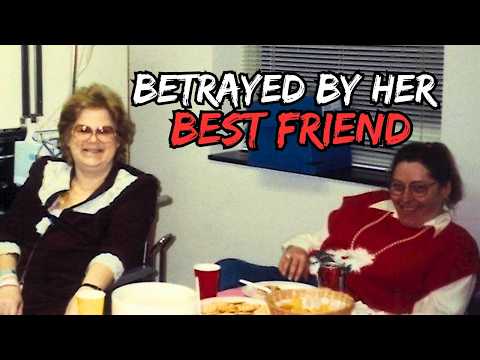
On December 19, 1994, firefighters found Lula’s body beside her bed. The autopsy revealed carbon monoxide poisoning and sleeping pills—she’d been drugged before the fire. Investigators discovered a propane cylinder with a cracked valve near an electric heater, a setup too deliberate to be accidental. “You never know who’s listening,” one investigator murmured, hinting at the secrets they were guarding.
Then came the call that cracked the case open. Insurance agent Brenda Driver reported seeing Lula alive two weeks after the fire—at a Walmart. But the woman she identified wasn’t Lula; it was Linda, who had impersonated her friend to secure a $700,000 life insurance policy.
Linda had forged Lula’s signature, faked medical exams, and even claimed to be Lula’s sister. “She was my best friend,” Linda sobbed at the scene, but her tears masked a chilling truth. Lula’s family knew nothing of the policy, and Linda had already pocketed $275,000, buying rental properties while Lula’s children received nothing.
As investigators dug deeper, they found Linda had also plotted to kill Robert Stovall for another $650,000. She’d hired handyman Charles Wayne Dunn to set the fire, promising $5,000 for a “mercy killing”—a twisted lie to cover murder.
But Linda’s alibi seemed solid, and evidence was thin. Detectives played a waiting game, publicly announcing the fire was caused by faulty wiring to lull her into complacency. Two years passed before a breakthrough: an acquaintance revealed Linda had asked him to kill Lula, and when he refused, she asked how to burn a house down without getting caught.
Still, they needed more. Then David Vincent, a prison informant, named Charles Dunn as the killer. Dunn, a handyman who’d worked for Linda, confessed to drugging Lula with sleeping pills and igniting the fire. He admitted Linda paid him $1,000 upfront, with $4,000 more to follow.
On March 11, 1997, Linda was arrested. In her home, officers found multiple life insurance policies on Lula and Robert Stovall, a fake ID with Dunn’s photo, and a power of attorney document. Linda’s defense crumbled as insurance agents testified she’d posed as Lula and listed herself as the beneficiary.
In 1999, Linda Ledum was convicted of capital murder and sentenced to life without parole. Dunn received life with the possibility of parole. Justice was served, but Lula’s family still mourns a woman whose kindness was repaid with treachery.
Lula Young’s story is a haunting reminder that greed can lurk behind the warmest smiles. As investigators closed the case, one question lingered: how many other friendships hide a deadly secret?
But the trial revealed even more disturbing details. Linda’s daughter, unaware of her mother’s crimes, testified through tears that she had believed Linda was helping Lula. “She told me Lula wanted the insurance for her children,” the daughter said. “I never imagined…” Her voice trailed off, leaving the courtroom in heavy silence.
Prosecutors painted Linda as a master manipulator who had spent years weaving a web of deceit. She had not only forged Lula’s signature but had also practiced Lula’s handwriting until it was nearly identical. “She was meticulous,” one investigator noted. “Every detail was planned.”
Charles Dunn, the handyman, testified against Linda in exchange for a reduced sentence. He described the night of the murder with chilling calmness. “She told me to make it look like an accident,” he said. “I didn’t want to do it, but she said Lula was suffering. I believed her.” His testimony was damning, but Linda’s defense team tried to paint him as a liar seeking revenge.
Despite the evidence, Linda maintained her innocence. “I loved Lula like a sister,” she declared during her sentencing. “I would never hurt her.” But the jury didn’t believe her. The judge, visibly moved by the case, called her actions “a betrayal of the highest order.”
Lula’s children, now adults, sat in the front row, holding hands. They had lost their mother twice—once to cancer’s shadow, and again to a friend’s greed. “She was our rock,” her son said afterward. “We trusted Linda. We thought she was family.”
The insurance companies, defrauded of hundreds of thousands, eventually recovered some of the money through the sale of Linda’s rental properties. But for Lula’s family, no amount of money could fill the void. “We don’t care about the money,” her daughter said. “We just want her to admit what she did.” Linda never did.
As Linda was led away in handcuffs, she glanced back at the courtroom. Her expression was unreadable—perhaps regret, perhaps defiance. But one thing was certain: the woman who had once been Lula’s rock was now her destroyer.
Lula’s friends and neighbors struggled to reconcile the Linda they knew with the monster revealed in court. “She was always so helpful,” one neighbor recalled. “She organized meal trains, babysat, lent a hand. How could she…?” The question hung in the air, unanswered.
In the years that followed, Linda’s name became a cautionary tale in Horn Lake. People whispered about the friend who seemed too good to be true, the one who smiled too brightly and offered too much. “Trust your instincts,” Lula’s sister warned. “If something feels off, it probably is.”
But for those who knew Lula, the focus remained on her life, not her death. They remembered her laugh, her generosity, her unwavering spirit. “She would have given Linda the shirt off her back,” her brother said. “And Linda took everything.”
The case also raised questions about the insurance industry’s safeguards. How could someone impersonate another person so easily? Why weren’t medical exams more rigorous? “We’ve implemented new verification procedures,” an insurance spokesperson said. “But fraud is always evolving.”
For Lula’s family, the fight for justice wasn’t over. They filed a wrongful death lawsuit against Linda, seeking damages for the pain and suffering she had caused. “This isn’t about money,” their attorney explained. “It’s about accountability.” The lawsuit was eventually settled, but the family declined to disclose the terms.
Meanwhile, Charles Dunn, the man who had lit the match, expressed remorse in a letter to Lula’s family. “I was weak,” he wrote. “I let greed and fear control me. I’m sorry.” His apology rang hollow to those who had loved Lula. “Sorry doesn’t bring her back,” her son replied.
As the years passed, the story of Lula Young faded from headlines, but it never faded from memory. It became a somber reminder of how fragile trust can be, and how easily it can be shattered by those we hold closest.
In 2010, Linda Ledum’s appeal for a new trial was denied. She remains in prison, a ghost of the woman she once was. Lula’s family has moved on as best they can, finding solace in their memories and in the knowledge that justice was served.
But the scars remain. “We’ll never be the same,” Lula’s daughter admitted. “But we’ve learned to live with the pain.” They honor their mother’s legacy by advocating for victims of fraud and violence, speaking at events and sharing her story.
And so, the tale of Lula Young serves as a stark warning: sometimes the greatest danger lies not in the shadows, but in the warm embrace of a trusted friend.
The courtroom had barely emptied when a new name surfaced in the investigation files—Robert Stovall. His story was a chilling echo of Lula’s, a near-miss that could have been another tragedy. Stovall, a gentle man in his sixties, had been living quietly in Tennessee, unaware that his name was attached to a $650,000 life insurance policy. The beneficiary? Linda Ledum.
Investigators discovered that Linda had taken out multiple policies on Stovall’s life, including one that covered accidental death. She had even obtained a fake ID in his name, bearing a photograph of Charles Dunn. “She was planning to kill him,” one detective said. “She just hadn’t gotten around to it yet.”
Stovall’s caretaker was none other than Linda’s own mother, who knew nothing of the policies. When questioned, she broke down. “I trusted her,” she whispered. “She was my daughter.” The revelation shattered what was left of Linda’s family. Her husband, Gary, who had been listed as a beneficiary on several policies, denied any knowledge of the schemes. “I thought she was helping people,” he said, his voice hollow. “I didn’t know.”
But prosecutors weren’t convinced. They pointed to the power of attorney document Lula had signed—likely forged—and the fact that Linda had used her own home address on the fake IDs. “She wasn’t just a beneficiary,” the prosecutor argued. “She was the architect.”
As the trial progressed, more witnesses came forward. A former coworker of Linda’s testified that she had once bragged about her “side business” of buying and selling rental properties. “She said she had a knack for finding deals,” the coworker recalled. “But she never mentioned where the money came from.” Those deals, investigators later confirmed, were funded by Lula’s life insurance payout—$275,000 that should have gone to Lula’s children.
Lula’s daughter, now in her thirties, took the stand. She described the moment she learned of the policies. “I felt sick,” she said. “My mother would never have kept secrets from us. Linda stole more than money—she stole our peace of mind.” Her brother sat beside her, clutching a photograph of Lula. He didn’t speak, but his eyes told the story of a family forever fractured.
Charles Dunn, the handyman, was brought back to testify about the second fire—the one at Linda’s daughter’s house. “She told me it was for the insurance,” he said. “But I backed out. I couldn’t do it again.” His words painted a picture of a woman who viewed lives as nothing more than dollar signs.
Linda’s defense team tried to shift the blame, arguing that Dunn was the mastermind and that Linda was simply a grieving friend caught in his web. But the evidence was overwhelming. The fake IDs, the forged signatures, the impersonations—each detail built a case that was impossible to refute.
When the verdict came in—guilty on all counts—Linda showed no emotion. She stared straight ahead as the judge sentenced her to life without parole. “You preyed on the vulnerable,” the judge said. “You turned friendship into a weapon. There is no punishment that can undo the harm you’ve caused.”
Outside the courthouse, Lula’s family held a press conference. “We want to thank everyone who helped bring Linda to justice,” her son said. “But we also want to warn others. If someone offers you a deal that seems too good to be true, run. Don’t let what happened to our mother happen to you.”
The case sparked a statewide review of insurance fraud cases, leading to new regulations requiring stricter verification for large policies. “Lula’s death wasn’t in vain,” a state senator said. “Her story will protect others.”
But for those who loved Lula, the scars remained. Her best friend had become her killer, and the betrayal cut deeper than any fire could. “I still have nightmares,” her daughter admitted. “I see my mom’s face, and then I see Linda’s. I don’t know which one is real.”
As the years passed, Lula’s family found ways to heal. They started a scholarship in her name for nursing students—a tribute to the career Linda had encouraged her to pursue. “She would have loved that,” her sister said. “She always wanted to help people.”
And in Horn Lake, a small memorial garden was planted in Lula’s honor. Neighbors tend to it, pulling weeds and watering the flowers. “It’s the least we can do,” one said. “She was one of us.”
But the question lingered: how many other Linda Ledums were out there, hiding behind friendly smiles and helpful gestures? The investigation had exposed one, but the darkness of greed knows no bounds.
Years later, a young detective reviewing cold cases stumbled upon Lula’s file. Something gnawed at him—the ease with which Linda had moved on, the rental properties, the forged documents. He requested the original evidence box, long since archived.
Inside, he found a single overlooked item: a birthday card from Linda to Lula, dated just weeks before the fire. “To my dearest friend, who deserves the world,” it read. But beneath the printed message, a faint indent revealed a second note, erased but still legible under UV light.
“She suspects nothing. It’s almost too easy.”
The detective closed the file, a chill running down his spine. Linda had been planning the murder for months, perhaps years—smiling, helping, waiting. He looked out the window at the quiet street and wondered: how many other “best friends” were counting down the days?
What would you do if you discovered a trusted friend’s darkest secret—would you speak up, or stay silent?
Report this article
Select a reason for reporting:






