July 1944. The marquee of the Rialto Theater blazed against the Texas dusk, bulbs spelling out Casablanca with a brilliance that seemed almost obscene to the twelve women standing on the sidewalk. They wore borrowed civilian dresses—blue cotton, white collars, pressed but dated—and stared at the entrance where Americans laughed and bought tickets and lived lives untouched by bombing. Greta Hoffman felt the heat rise off the pavement and wondered if she was dreaming.
She was a surgical nurse from Hamburg, conscripted into military service, captured in North Africa, shipped across an ocean to a prison camp in the flat, oven-like countryside of Hearn, Texas. For three months she had obeyed every rule, treated every patient, kept her head down. And now an American sergeant was pressing a movie ticket into her hand and saying words that made no sense: “You’re allowed to go in. You’re allowed to sit with regular people and pretend for two hours that you’re not prisoners at all.”
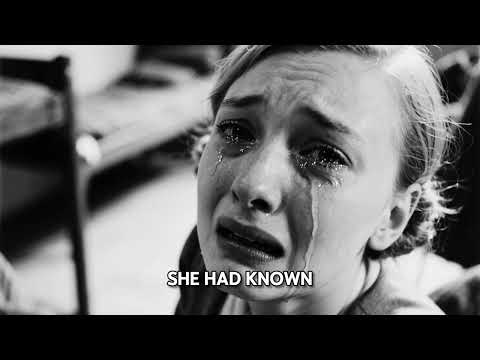
The other women—Ilse, Margarete, Anna—clustered together, whispering in German. Margarete’s eyes were wet. “We shouldn’t enjoy this,” she said. “Not while our people suffer.” No one answered. The guilt was a physical weight, but so was the impossible gift of this moment.
They climbed into the back of an Army truck, sitting on bench seats, feeling absurd in their dresses. Sergeant Miller—young, open-faced, with grandparents from the old country—explained the rules in accented German. Stay with the group. Don’t discuss politics. Sit where directed. Simple enough. The truck rumbled three miles into town, past a hardware store and a church, and stopped a block from the Rialto.
As they walked toward the theater, a man outside the hardware store spat on the sidewalk. A mother pulled her children close. But others nodded, and one woman smiled. “You look very nice,” Miller said, and Greta realized he meant it.
Inside, the lobby smelled of popcorn and candy—corn and sugar and butter, luxuries that had vanished from German markets years ago. Miller bought a bucket of popcorn to share, paying with regular American money, as if they were ordinary patrons. The theater itself was beautiful: velvet seats, art deco fixtures, a heavy red curtain. The women were seated in the back row, guards at the aisles, visible but not intrusive.
The lights dimmed. The newsreel began. American factories, American ships, American soldiers training. Then footage from Europe—Allied advances, German positions overrun, prisoners in numbers that made Greta’s breath catch. This was the truth the regime had hidden. She felt tears on her face and couldn’t stop them. Ilse took her hand and squeezed it. They were crying for Germany, for the lies, for everything.
Then the feature began. Casablanca. Bogart and Bergman, refugees and resistance, moral choices made in wartime. The irony was devastating. Greta watched Rick Blaine sacrifice personal happiness for a cause larger than himself, and she understood that the film’s portrayal of German oppression was not propaganda—it was accurate. The audience applauded at the end. The lights came up.
Outside, an elderly woman stopped them. Miller translated: “She hopes you enjoyed the movie. She’s glad the authorities are treating you decently.” Greta managed a broken thank-you. The woman smiled and walked on. It was a small thing, but it felt enormous.
Back at camp, the other prisoners crowded around, hungry for details. “Why do they do this?” Margarete asked. “What do they gain?” Anna answered quietly: “They gain our understanding that the propaganda was lies. Every time they treat us fairly, they prove their system is better than ours.” The silence that followed was heavy with recognition.
The movie nights became a routine. Every two weeks, a new group was escorted to the Rialto. Comedies, musicals, westerns. Each outing reinforced the same lessons: American abundance, American normalcy, American decency. By September, the novelty had worn off enough that Greta could put on her borrowed dress without her hands shaking.
But the cognitive dissonance remained. She was a prisoner watching movies while Germany collapsed.
She wrote letters home through layers of censorship, telling her family she was well treated, that American captivity was nothing like the propaganda had predicted. The replies, when they came months later, were guarded—Hamburg had been bombed heavily, their building damaged, but they were surviving. No mention of the regime. Years of training had made even private criticism dangerous.
Christmas brought new privileges. The women were permitted to attend a church service in town, supervised but otherwise free to worship beside American civilians. Then came a special showing of It’s a Wonderful Life—a film about small-town American life and the worth of a single human being. Greta watched James Stewart discover his importance to his community and felt tears she couldn’t explain. This was propaganda too, showing American society as fundamentally good—but it was also genuinely beautiful, a vision of what communities could be when people chose cooperation over domination.
By spring 1945, the war in Europe was ending. News filtered through the camp: forces collapsing on every front, American and Soviet troops meeting in the middle of what had been Germany. The women received it with mixed emotions—relief that the killing had stopped, grief for what their nation had become, fear for their families in occupied territory.
In June, the Rialto showed newsreels from Germany. Footage of liberated areas, of destruction on a scale Greta could scarcely absorb, of civilians emerging from rubble. Then came the camps—the systematic crimes that had been hidden from most Germans, now documented in terrible detail. She watched German civilians being forced to confront what had been done in their name, their shocked faces, their denials. And she understood that every German would face this reckoning. Ignorance would not be accepted as excuse.
The comedy that followed the newsreel, she couldn’t focus on. She sat in the velvet seat while Americans around her laughed at the screen, and she thought about what awaited her at home. Not just material rebuilding, but moral reckoning—confronting what her nation had done, accepting responsibility for having served, even in limited medical capacity.
Afterward, walking to the truck, an elderly American man stopped their group. He spoke directly to Greta in heavily accented German. “I was born in Germany, left in 1890, came to Texas and made a good life. I hope you young women can do the same. Learn from what happened. Help rebuild something better.” She thanked him, though the words felt inadequate. He wasn’t offering forgiveness exactly—but acknowledgment that individuals could change, that Germany could be rebuilt on better foundations.
Summer brought news of repatriation. The women would return to Germany in September, processed through displacement camps, then make their way to whatever remained of their hometowns. The prospect was both longed for and frightening. They wanted to go home, but home no longer existed as they remembered it.
The final movie night came in August. The film was The Best Years of Our Lives—American soldiers returning from war, struggling to reintegrate, dealing with wounds both visible and invisible. Greta watched and saw her own future in it. Not the American version exactly, but the universal struggle of trying to build a peaceful life after war’s disruptions. The message was hopeful without being naive—healing would take time, but healing was possible.
Walking out of the Rialto for the last time, she looked at the marquee, at the ordinary Texas town going about its ordinary business. She tried to memorize the moment—not because it had been particularly happy, but because it represented something important. The movies had been propaganda, yes. But they had also been genuine art, genuine windows into a society that functioned differently from everything she had known. And the fact that American authorities had allowed German prisoners to experience this—to be treated as humans worthy of small pleasures—said more than any explicit propaganda ever could.
That night, back in the barracks, Greta sat on her bunk and turned the worn ticket stub over in her fingers. Admission to Casablanca, July 1944. She would keep it, she decided. Not as a souvenir of captivity, but as evidence of something she was only beginning to understand—that mercy was not weakness, and that even in war’s darkest hours, people could choose to see their enemies as human.
The truck came for them at dawn on a Tuesday in September. Greta climbed into the back with her small bag and looked back at Camp Hearn one last time—the wire fences, the guard towers, the wooden barracks that had been her home for more than a year. She felt no hatred for the place.
She felt only a strange, complicated gratitude. For the food that had kept her alive. For the work that had given her days structure. For the movies that had given her back a piece of herself she hadn’t known she’d lost.
Hamburg was a city of rubble. Her family had survived—her mother thinner, her brother quieter, their apartment a hollowed shell where the roof had once been. They lived in a displaced persons camp, sharing a room with strangers, standing in lines for bread. Her father was dead, not from combat but from the chaos of the collapse. Greta found work within a week. Nurses were desperately needed.
She treated civilians, helped with public health, used her skills for healing rather than for war. The work was hard, the conditions brutal, but it was honest. And at night, when people asked about her captivity, she told them the truth. “They gave us movies,” she would say, and watch their faces twist with disbelief. Some called her a liar. Some called her a traitor for speaking well of the enemy. But others—the ones who had seen enough of the regime’s lies—understood.
She kept the ticket stub in a small tin box. Faded paper, barely legible. Casablanca, July 1944. Sometimes she took it out and remembered the velvet seat, the smell of popcorn, the impossible gift of two hours of normalcy while her world collapsed.
In 1952 she married an American medic stationed in Hamburg. They immigrated to Texas the following year. She told her children about the war, about captivity, about the strange kindness of being taken to the movies while a prisoner. “Mercy isn’t weakness,” she told them. “Treating your enemies fairly is strength. That’s what separates good societies from failed ones.”
In 1985 she visited the Rialto one last time. It had been restored, showing classic films for nostalgic audiences. She bought a ticket with her own American money—not as a prisoner, but as a citizen—and watched Casablanca again. She cried at the ending, just as she had the first time. But the tears meant something different now. Not grief for Germany’s defeat, but gratitude for the mercy shown by enemies who had become friends.
The credits rolled. The audience applauded. Greta sat in the velvet seat and remembered a summer when German nurses had been given the impossible gift of normalcy. When prisoners had been allowed to pretend they were free. When enemies had chosen to see captured women as humans worthy of small pleasures, even during war’s darkest days.
The movie tickets had been propaganda, yes. But they had also been grace—unexpected, unearned proof that humanity could persist if people chose to maintain it.
So here is the question she carried home across an ocean and half a century: when you have every right to hate, and the power to withhold kindness—what do you choose?
Report this article
Select a reason for reporting:






