my uncle threw me out of my father’s ranch at eighteen, never knowing the old iron key he left me would reveal a hidden attic and destroy his thirteen-year betrayal
my uncle threw me out of my father’s ranch at eighteen, never knowing the old iron key he left me would reveal a hidden attic and destroy his thirteen-year betrayal
Part 1
The morning Harlon Whitlock threw his eighteen-year-old niece off her father’s ranch, he stood at the front gate with his hands folded and a look of practiced sorrow on his face.
Behind him stood the house where Mabel Whitlock had been born.
Beyond the house were the horse barns, the cattle pastures, the silver claims in the northern hills, and the long stretch of mountain country her father had spent almost thirty years building into something worth owning.
Her father had been dead less than two weeks.
Mabel stood in the road with one worn traveling bag, her mother’s wool coat, and a pair of work shoes with a hole beginning to open through the left sole.
She had thirty-seven cents in her pocket.
And something else.
A heavy iron key wrapped in a little square of faded blue velvet.
Harlon looked at her bag, then at her face.
“You understand I’m doing what’s necessary,” he said.
Mabel said nothing.
“Your father left things in a terrible condition.
I tried to spare you the details.
One day you’ll appreciate that.”
She looked past him toward the white farmhouse.
A curtain moved in the kitchen window.
Mrs.
Peterman, the cook who had worked for the family since Mabel was little, was watching.
Two ranch hands stood outside the equipment shed.
Neither moved.
They had families.
They had wages to protect.
Harlon had made certain everyone understood who controlled those wages now.
Mabel turned back to her uncle.
“You’re standing on land my father bought with money he earned working underground,” she said. “You ought to remember that.”
Harlon’s expression tightened.
“Be careful what you say, young lady.”
She looked at him for another moment.
Then she shifted the bag higher on her shoulder and walked away.
She did not cry.
Not while he could see her.
Not while the men at the barn could see her.
But when she reached the bend where the cottonwoods hid the house, she stopped, leaned against a fence post, and pressed her fist against her mouth.
The sound that came out of her barely resembled a human voice.
It was the sound of a child who had lost her father, her home, and nearly everyone she trusted, and had been given no time to understand any of it.
For a long while she stood there shaking.
Then she reached into her pocket and closed her fingers around the iron key.
She remembered her father’s voice.
If they ever take everything from you, Mabel, go where I learned to survive before I had a dollar.
She had never understood those words.
Now they were all she had.
Silas Whitlock had come to Colorado with seventy-three cents, a borrowed blanket, and a mule that was older than some of the men who laughed at him.
That was in the days when the mountain valleys were full of people trying to pull fortunes out of stone.
Most never found one.
Silas found something better first.
Work.
He hauled ore, repaired wagon wheels, built fences, dug irrigation ditches, and spent two winters sleeping in a cabin so cold that he sometimes woke to find ice inside his water bucket.
Then he discovered a narrow vein of silver above the eastern fork of a mountain creek.
He registered the claim, worked it carefully, and saved enough to buy pastureland below the ridge.
Over the years, one pasture became three.
A small cattle herd became a substantial operation.
The old cabin gave way to a white farmhouse with a deep porch, a proper kitchen, and bedrooms overlooking the south meadow.
He married a schoolteacher named Rose.
They had one child.
Mabel.
Rose died when Mabel was nine, during a bitter February when snow blocked the roads for eleven days and a doctor couldn’t reach the ranch until it was too late.
After the funeral, Mabel remembered finding her father sitting alone at the kitchen table.
He had two coffee mugs in front of him.
One was his.
The other was Rose’s, with a blue flower painted near the handle.
He stared at the second mug for so long that Mabel finally asked why he had put it there.
Silas looked up.
“Force of habit, sweetheart.”
“Are you going to put it away?”
He thought about that.
“Not today.”
He never remarried.
He raised Mabel himself, with help from Mrs.
Peterman, and taught her everything he believed might someday matter.
He taught her to ride before she could properly reach the stirrups.
He taught her how to mend a broken fence without wasting wire, how to recognize a sick calf by the way it held its ears, and how to find dry kindling after three days of rain.
Most importantly, he taught her to understand numbers.
Every winter evening, when the chores were done, she sat across from him in his study while he worked through ledgers.
At twelve, she could calculate feed costs faster than his foreman.
At fifteen, she caught a mistake in a supplier’s invoice that saved the ranch more than a hundred dollars.
Silas had laughed that night.
“You’re going to make a dangerous rancher someday.”
“Why dangerous?”
“Because men who think they’re smarter than you won’t realize their mistake until you’ve already beaten them.”
Mabel remembered smiling.
She also remembered how her uncle reacted whenever her father praised her.
Harlon Whitlock was Silas’s younger brother by eight years.
He had never built much of anything himself.
He was not lazy.
That would have been easier to understand.
Harlon worked hard at appearing important.
He wore good coats, kept his boots polished, and knew which county officials preferred whiskey and which preferred invitations to expensive dinners.
He handled business introductions for Silas and occasionally arranged transportation for silver shipments.
But he never owned the ranch.
That distinction had eaten at him for years.
Sometimes he made little remarks when Silas was out of hearing.
“Your father spoils you with all those books.”
Or, “A girl ought to spend more time thinking about marriage than land titles.”
Once, when Mabel was sixteen, he watched her loading feed sacks into a wagon and remarked that a husband would have a difficult time finding enough room in a house for a girl built like her.
Mabel had inherited her mother’s round face, broad figure, and thick dark hair.
In Cedar Falls, people noticed.
She had heard whispers outside church, seen women exchange looks when she entered a dressmaker’s shop, and watched young men laugh behind their hands.
She had learned to endure it.
That day at the wagon, however, her father had heard.
Silas walked out of the barn, wiped his hands on a rag, and looked at his brother.
“Mabel’s strong enough to do the work of two men around here,” he said. “And wise enough not to marry a fool.”
Harlon laughed as though it were a joke.
Silas didn’t.
It was one of the few times Mabel had seen her uncle look genuinely humiliated.
Years later, standing beside her father’s coffin, she remembered that look.
Silas died on a mountain road in October 1887.
Two ranch hands found him below a sharp turn above the north pasture.
His horse was standing several hundred yards away, trembling but uninjured.
The men said the horse must have lost its footing.
Harlon said the same.
“Those roads are treacherous this time of year,” he told Mabel. “Your father knew the risks.”
But Mabel had ridden that road with Silas more times than she could count.
She knew where the rock was loose.
She knew which turns were dangerous.
And she knew his horse, a steady bay gelding named Justice, had carried him through rain, snow, and spring floods without once throwing him.
When Harlon came onto the porch to tell her what had happened, Mabel asked one question.
“Who found him first?”
Harlon hesitated.
“Burl and Orville.”
“Who told them where to look?”
“Nobody.
They were checking the fence.”
She watched his face.
“That fence was repaired Tuesday.”
Harlon’s eyes narrowed.
“Your father has just died, Mabel.
This isn’t the time for interrogations.”
He put his hand on her shoulder.
She stepped away.
At the funeral, nearly everyone in Cedar Falls came.
They filled the little Baptist church, sang familiar hymns, and spoke warmly about Silas’s generosity.
Nobody mentioned the unpaid wages he had personally covered when a neighboring ranch failed.
Nobody mentioned the widows he quietly helped through hard winters.
And nobody mentioned that he had spent his entire adult life refusing to become the kind of man who measured human worth by money.
Mabel sat in the front pew with her hands folded.
Her father’s hat rested beside her.
For the first time in her life, she understood that a building full of people could feel lonelier than an empty house.
Four days after the funeral, Burl approached her behind the horse barn.
He was sixty-two, gray-bearded, and had worked for her father eleven years.
“Miss Mabel,” he said quietly, “there’s something you ought to know.”
She set down her grain bucket.
“What is it?”
“Two strangers were out along the north pasture yesterday morning.
Had measuring chains.
Surveying instruments.”
“With whose permission?”
Burl looked toward the house.
“Your uncle was with them.”
That afternoon Mabel went into Silas’s study.
She was searching for the north pasture deed when Harlon opened the door.
He entered carrying a black ledger.
“What are you doing?”
“Looking for Father’s land records.”
“You should have asked me.”
“Why?”
“Because the estate is under my supervision.”
She looked up.
“Since when?”
He shut the door.
“Sit down, Mabel.”
She remained standing.
His voice sharpened.
“I said sit down.”
There was something in his expression she had never seen so plainly before.
Not anger.
Authority.
The eager satisfaction of a man who had spent years waiting to speak without being contradicted.
He placed the ledger on the desk.
“Your father left considerable debts.”
Mabel stared at him.
“What debts?”
“Bank obligations.
Loans against the northern claims.
Outstanding notes secured by the land.”
“That’s impossible.”
“I’m afraid it isn’t.”
He opened the ledger and pushed it toward her.
She read three pages.
Then a fourth.
The figures were enormous.
They showed obligations greater than the property’s estimated value.
But the longer she examined them, the more certain she became.
“These aren’t Father’s accounts.”
Harlon folded his arms.
“Don’t be difficult.”
“My father wrote his sevens with a cross through the middle.”
“What?”
She pointed to the figures.
“Every seven.
Ever since he was young.
He taught me to write mine the same way.”
Harlon looked at the page.
“These sevens aren’t his.”
“Professional accountants don’t have to copy a man’s handwriting.”
“Then show me the original notes.
The bank letters.
The signatures.”
His mouth hardened.
“You’re eighteen years old.
You have no understanding of the obligations involved.”
“I understand forged numbers.”
He leaned across the desk.
“Watch yourself.”
For one frightened moment, Mabel realized just how alone she was.
The house was full of people, but none of them would hear what happened behind that door.
Harlon straightened.
“I have petitioned to oversee the estate until the debts are settled.
The county recorder recognizes the claims.
If you want to dispute them, hire a lawyer.”
He paused deliberately.
“With what money?”
She didn’t answer.
“You will leave the house within the week.
I’ll give you time to gather your personal belongings.”
Mabel stared at the ledger.
Then she looked at her uncle.
“Did my father know what you were doing?”
Harlon’s face went still.
“I don’t know what you’re suggesting.”
“Yes,” she said. “You do.”
That night, Mabel packed by lamplight.
She took three dresses, spare stockings, her mother’s wool coat, dried beef, biscuits, a small tin of matches, and her father’s hunting knife.
She considered taking the family Bible but left it.
It belonged on the shelf where her mother had kept it.
She did take a small notebook filled with figures from the years she had helped Silas keep accounts.
Then she opened the drawer beneath her winter clothes.
Inside was a faded blue velvet pouch.
Her father had given it to her on her fourteenth birthday.
She remembered opening it and finding an iron key unlike any she had seen.
“What does it open?” she had asked.
Silas smiled.
“Something you won’t need until you need it badly.”
“That doesn’t tell me anything.”
“It tells you enough for now.”
She had laughed and tucked it away.
Now, standing alone in her bedroom, she held it beneath the lamplight.
The metal was dark with age, but the complicated teeth had been carefully filed.
There was no rust on the working edge.
Silas had maintained it.
Recently.
Mabel closed her fingers around it.
And remembered a second conversation.
She had been fifteen, riding beside him along the southern fence.
“What would you do if somebody took everything you owned?” she had asked.
He considered that question for a long time.
“Go back to the place where I learned what a man can survive without.”
“Where’s that?”
He pointed toward the pine-covered mountains.
“Up there.
Long before this ranch was worth a nickel.”
She remembered an old logging trail and a half-forgotten cabin.
In the morning, she left.
At the crossroads, a stranger waited beside a saddled horse.
He was perhaps twenty-five, lean and weathered, wearing a dark coat and a battered hat.
He watched her approach.
“Morning, miss.”
“I’m not lost,” Mabel said.
He raised an eyebrow.
“Didn’t say you were.”
“You were thinking it.”
His mouth twitched.
“I’m looking for the Whitlock Ranch.”
She stopped.
“Who’s asking?”
“Callum Reed.
Independent surveyor.”
He pulled a folded letter from his coat.
“Silas Whitlock hired me to make a fresh survey of the north pasture and eastern mining claims.
Said there might be trouble with the county records.”
Mabel felt a coldness move through her.
“When did he hire you?”
“September.”
She examined the letter.
It was her father’s handwriting.
Even the sevens in the claim numbers carried their familiar crossstrokes.
“My father is dead,” she said.
“I heard.
I’m sorry.”
“Don’t go to the ranch.”
Callum studied her.
“Why not?”
“Because his brother is there.
And whatever you’re carrying, he’ll either steal it or try to make you swear it means something it doesn’t.”
Callum glanced at her traveling bag.
“Are you leaving?”
“I’ve already left.”
“Where are you going?”
Mabel looked toward the mountains.
“Somewhere my father wanted me to find.”
She folded the letter and returned it.
“Can you wait a few days before going into Cedar Falls?”
“Depends what I’m waiting for.”
She met his eyes.
“The truth.”
Callum studied her for another moment.
Then he nodded.
“There’s a sheltered hollow beyond the eastern ridge.
I’ll be there.”
Mabel resumed walking.
She had no reason to trust him.
But for the first time since her father’s death, she had encountered someone carrying evidence that Silas had known trouble was coming.
That small fact changed the way the mountain road looked ahead of her.
It was no longer merely a place to hide.
It might be the beginning of an answer.
Part 2
By the time Mabel reached the old logging trail, the wind had turned sharp enough to sting her cheeks.
The route climbed through dense stands of pine, crossed a stony creek, and disappeared beneath fallen needles where the old wagon ruts had long since vanished.
She remembered visiting the mountains with her father when she was nine.
Back then, every mile had seemed like an adventure.
He had shown her how to recognize deer tracks, where wild onions grew in spring, and how to tell which side of a ridge offered shelter from a storm.
Now the mountain felt enormous.
The straps of her bag cut into her shoulder.
The hole in her left shoe let in cold water whenever she stepped into wet ground.
By midday her feet ached so badly that she sat on a fallen log and removed her shoe.
The skin beneath her stocking was rubbed raw.
She stared at the blood.
Then she looked back down the trail.
For one desperate moment, she imagined returning to the ranch.
She imagined standing on the porch and asking Harlon if she might stay as a servant.
Perhaps he would allow her to work in the kitchen.
Perhaps she could sleep in one of the old bunkhouse rooms.
She could be near her father’s grave.
Near her mother’s room.
Near the place where she belonged.
The thought sickened her more than the pain in her feet.
She took a strip of cloth from the hem of an old underskirt, wrapped the wounded skin, and pulled on the shoe again.
“No,” she whispered.
She stood.
And kept walking.
Her father had once told her that the wilderness didn’t care how frightened a person felt.
It cared whether that person made the next sensible decision.
So she watched her footing.
She drank from the creek.
She conserved the dried food in her bag.
And as the afternoon grew colder, she followed the old trail deeper into the timber.
She found the cabin an hour before sunset.
It stood beneath three enormous pines on a shelf above the creek.
The roof sagged at one corner.
The porch steps leaned outward, and moss covered the north wall.
One shutter hung crooked.
The place looked abandoned.
Mabel stood there breathing hard.
“Father,” she said quietly, “you had better have meant this place.”
She climbed the porch carefully.
The door appeared swollen shut.
Then she noticed a small iron fitting hidden along the edge of the frame.
She took out the key.
Its teeth slid into the concealed lock as though they had been waiting for her.
She turned it.
Something clicked inside the door.
Mabel pushed.
The hinges moved slowly.
Cold air breathed out of the dark room.
Then she stepped inside.
At first she saw only shadows.
She struck a match, lifted a dusty lantern from a shelf, and found oil already inside.
When the flame caught, she raised the light.
And stared.
The cabin wasn’t abandoned.
Someone had prepared it.
A long wooden shelf held jars of dried beans, rice, flour, salt, and preserved fruit.
Beside the iron stove lay neatly stacked firewood.
A tin box contained matches, candle stubs, needles, thread, and small medical supplies.
There were blankets wrapped in oilcloth.
A sharp axe.
A whetstone.
A coils of rope.
Tools hung in orderly rows above a workbench.
Near the stove stood two pairs of sturdy boots, one large and one smaller.
Mabel lowered the lantern.
For several moments, she couldn’t move.
Her father had stocked the cabin.
Not for himself.
The smaller boots were close to her size.
He had known.
He had known enough to prepare a place for her when there was nowhere else to go.
She sat on the edge of a narrow cot.
Her hands began to tremble.
She had held her grief together through the funeral, the forged ledger, and the humiliation at the ranch gate.
But this little room nearly undid her.
Her father had been afraid of something.
And while she had been living an ordinary life, complaining about chores and laughing at his old stories, he had been quietly carrying a danger he never told her about.
She pressed both hands over her face.
“Why didn’t you tell me?”
Only the wind answered.
The first night was miserable.
The cabin had shelter, but shelter was not the same as warmth.
The stove smoked until Mabel cleared an old nest from the chimney passage.
The firewood was dry, but the cold had settled deep into the walls.
She stuffed scraps of cloth around the worst window gaps and hung one blanket across the drafty door.
She ate cold biscuits because she was too tired to cook.
Afterward she sat beside the stove with her father’s knife across her lap.
Every creak of the timbers sounded like footsteps.
Every gust against the shutter made her reach for the knife.
Sometime after midnight, she began to cry.
Not loudly.
She was too exhausted for that.
The tears simply came.
She remembered Silas carrying her on his shoulders through the south meadow.
She remembered him teaching her to write her name.
She remembered her mother’s blue-flowered coffee mug.
Then she thought of her father alone on the mountain road.
Had he been frightened?
Had he known he was about to die?
Had he called for help?
She pressed her face into the blanket and cried until sleep finally took her.
At dawn she woke cold, stiff, and furious with herself for wasting the last of the fire.
She rose and began to work.
There was water in a creek fifty yards below the cabin.
She carried it uphill in two iron pails, stopping twice to rest when her arms began to shake.
She scrubbed the table with lye soap.
She swept out mouse droppings and old pine needles.
She cleaned the stove and laid fresh kindling.
On the second day she repaired a loose porch board with timber stored beneath a lean-to.
Her father had left nails and a carpenter’s hammer.
She found a strip of leather among the supplies and cut it into a rough patch for her damaged shoe.
On the third day, rain came before sunrise.
Water dripped through the sagging section of the roof.
Mabel climbed into the loft space beneath the rafters, examined the weakened support, and discovered that the roof hadn’t rotted entirely.
One brace had slipped from its notch.
She couldn’t replace the whole beam, but she could prop it.
She cut a short length of stored timber, carried it inside, and wedged it beneath the damaged section.
It took six attempts.
Twice the timber fell.
Once she struck her thumb with the hammer.
By the time the brace held, her arms ached and her hands were blistered.
But the dripping slowed.
She stood beneath the repaired roof, looking up.
A fierce little satisfaction moved through her.
Harlon had told her she was helpless.
Yet here she was, keeping a roof over her head with tools her father had left behind.
That evening she cooked beans with salt and a little dried beef.
She ate at the table beneath the window, listening to the wind in the pines.
For the first time, the cabin felt almost like a home.
Then she opened her notebook.
She began writing everything she remembered about her father’s business.
The north pasture acreage.
The silver claims.
The eastern water rights.
The cattle inventory from September.
The loans he had extended to neighboring ranchers.
She wrote down the figures Harlon had shown her and compared them with numbers she remembered from the study.
Even allowing for missing information, the differences were enormous.
Silas had been careful.
He kept proper records.
And he had never made a habit of borrowing recklessly.
So where were his true accounts?
Mabel looked around the cabin.
If he had hidden money here, he might have hidden papers.
She searched every shelf.
Every drawer.
Every loose board.
Behind the stove she found an old tin containing letters from her mother, written before they married.
She read one by the lantern.
Silas, I know you think a proper home means something large and fine, but I would be content with a warm stove and you coming through the door every evening.
Mabel held that letter against her chest.
Then she placed it carefully inside her notebook.
She found no deeds.
No original ledgers.
No explanation.
Outside, darkness settled through the trees.
And then she heard horses.
Mabel put out the lantern.
She moved to the narrow back window and listened.
Two riders approached along the trail, their horses picking cautiously through the wet ground.
One man dismounted.
The second held a lantern low beside his knee.
“Whitlock said the old man used this place,” the first man muttered.
“Then why didn’t he tell us exactly where it was?”
“Because he didn’t know.”
“What’s he think we’re going to find?”
“Papers.
Maybe a strongbox.
Anything with the north pasture deed.”
Mabel felt her pulse thudding in her throat.
The man continued.
“He says the girl might have come up here.”
“And if she has?”
“Bring her back.”
“Won’t she fight?”
A pause.
“Then we tie her hands.”
Mabel backed away from the window.
The little cabin suddenly felt smaller than a coffin.
She listened as they crossed the porch.
One tried the door.
The lock held.
He rattled it again.
“Stubborn thing.”
“Leave it.
Check the windows.”
Mabel crouched behind the stove.
Their boots scraped along the outer wall.
A horse snorted.
One man stepped onto the newly repaired porch board.
“Somebody’s been working here.”
Silence.
Then the other said, “We come back at daylight with the others.”
Their horses turned.
The hoofbeats slowly disappeared.
Mabel remained crouched until her legs began to cramp.
Then she stood.
She had perhaps five hours before sunrise.
Her father had hidden something here.
Those men knew it.
Harlon knew it.
And she had been looking in the wrong places.
She searched again.
This time she moved systematically.
She checked the fireplace stones for loose mortar.
She examined the underside of the table.
She tested the floorboards.
Nothing.
At last she stood in the middle of the cabin with the lantern raised.
Her father had always insisted that the safest hiding place wasn’t necessarily the hardest one to reach.
It was the place people never thought to examine.
She turned slowly.
Then she looked up.
The ceiling was unusually low.
She had noticed it when she first arrived, but had assumed it was simply old construction.
Now she studied the boards.
There was a narrow seam, nearly invisible beneath years of darkened varnish.
And near the third board from the north wall, a small round mark interrupted the grain.
Mabel climbed onto the table.
She raised the lantern.
The mark wasn’t a knot.
It was a keyhole.
Her breath stopped.
She reached into her pocket.
The iron key fitted perfectly.
She turned it.
A concealed latch released.
Four ceiling boards lowered together on hidden hinges.
Cool, dry air drifted down from the darkness above.
Mabel stared at the opening.
Then she brought the lantern close.
A narrow attic stretched beneath the roof.
Inside were three wooden chests.
A row of sealed packages.
Six silver bars.
And a small iron safe bolted to a stout shelf.
For several seconds, she could only stare.
Then she climbed into the attic.
The space was barely high enough to crawl through.
Dust coated the rafters, but the chests were clean and the packages carefully wrapped.
One chest held land deeds and certified copies of mining claims.
Another contained financial accounts.
The third was marked evidence.
Beside the safe rested an envelope.
Her name was written across the front.
Mabel Rose Whitlock.
The sight of her father’s handwriting made her hands shake.
She broke the seal.
The letter was dated September 12, 1887.
My dearest Mabel,
If you are reading this, then something has happened to me, and your uncle has done what I feared he would do.
I am sorry I could not stop it before it reached you.
Mabel covered her mouth.
She read on.
Her father explained that he had discovered forged land registrations several years earlier.
Someone had used his name to create false ownership claims against parts of the eastern pasture.
Money had been withdrawn through unauthorized banking arrangements.
Documents had been altered.
Harlon had been involved.
Silas had suspected him long before Mabel understood there was anything wrong.
But confronting him without proof would only have driven the fraud deeper underground.
So he had begun collecting evidence.
He had arranged independent surveys, secured bank correspondence, and kept original documents outside the county offices where Harlon had friends.
He had also placed money and securities in an account that his brother couldn’t reach.
Mabel stopped reading when she reached the final page.
I know you will be frightened, sweetheart.
You may be angry with me for keeping this from you.
I did not keep it secret because I doubted your strength.
I kept it secret because I knew your courage.
If you had known, you would have marched straight into your uncle’s office and demanded an explanation.
Despite everything, Mabel almost smiled.
He was right.
There is enough here to protect what belongs to you.
But the evidence matters more than the money.
Take it first.
Find Ephraim Calder in Ridgerest.
I have known him since before you were born.
He will help you reach Arthur Goss in Denver.
The combination to the iron safe is your mother’s birthday.
I love you.
I am proud of you.
And if there is one thing I pray you remember, it is this: never let another person decide how small you must become.
Your father.
Mabel sat very still.
The lantern flame fluttered beside her.
She had wanted her father to tell her what to do.
And somehow he had.
Not from beyond the grave by any miracle, but through the ordinary, patient work of a man who had spent years preparing for what he feared might come.
She opened the evidence chest.
Inside were bundles of documents wrapped in waxed cloth.
Original signatures.
County filings.
Bank notices.
Letters bearing official seals.
There was even a sworn statement from a Denver notary who had refused to authenticate one of the forged signatures.
Mabel worked quickly.
She tied the most important bundles together and placed them inside her traveling bag.
The safe opened after two attempts.
Inside were gold certificates, silver securities, and a Denver bank letter confirming an account substantial enough to support the ranch for years.
Her uncle’s story of ruin had been a lie.
Silas Whitlock had not left his daughter penniless.
He had left her an inheritance.
And the evidence to defend it.
She was examining the remaining papers when she heard the first horse.
Then another.
Then several more.
They were coming before dawn.
Mabel closed the safe and gathered her bundle.
From the front of the cabin came a shout.
“Break it!”
Wood cracked.
The door slammed inward.
She extinguished the lantern.
A man’s voice echoed through the room below.
“Search every inch of it.”
Mabel crouched motionless in the attic.
Dust settled around her.
She could hear boots scraping across the floor.
A chair overturned.
Someone cursed near the stove.
For one terrible moment she thought they might look up.
Then a man called from outside.
“There’s a trail by the creek!”
Mabel remembered one final line in her father’s letter.
A second exit is concealed behind the lower shelf along the south wall.
She moved.
She lowered herself through the attic opening, pulled the hatch back into place, and slipped into the shadows behind the stacked firewood.
The men were searching the other side of the cabin.
She found the shelf.
Pressed the concealed wooden catch.
A narrow wall panel swung outward.
Cold air struck her face.
She crawled into the pines.
Behind her, one man shouted that he had found fresh ashes in the stove.
Another yelled to check the woods.
Mabel ran.
Branches whipped her face.
Her patched shoe slipped on wet stones.
Twice she nearly fell into the creek.
But she kept the bundle beneath her coat and followed the water downhill.
When the shouting faded, she stopped behind a fallen pine and knelt in the mud.
She could barely breathe.
Her heart hammered against the papers pressed to her chest.
Then she heard her father’s voice in memory.
Don’t watch the drop, Mabel.
Watch where you’re putting your feet.
She rose.
And continued toward Ridgerest.
For the first time since the funeral, she wasn’t running merely to survive.
She was carrying the truth about a man who had spent thirteen years trying to steal everything her father built.
And she intended to make someone listen.
Part 3
Mabel found Callum Reed’s camp shortly after the sun climbed above the eastern ridge.
She smelled woodsmoke before she saw him.
He had chosen a sheltered hollow between two rocky rises, far enough from the main trail that a passing rider would never notice the small fire.
Callum was cleaning a cooking pot when she stepped out of the trees.
He reached for his rifle.
Then he recognized her.
“Miss Whitlock?”
Mabel took three more steps before her knees gave way.
She sat heavily on a flat stone.
Callum put down the rifle.
“What happened?”
“My uncle sent men after me.”
He looked at her torn coat, the blood on her hand, and the mud covering her shoes.
“Are they following?”
“I don’t think so.”
“How many?”
“Five, maybe six.”
Callum looked toward the trees.
“Did they hurt you?”
Mabel shook her head.
“No.
But they would have.”
He crouched beside the fire and poured coffee into a tin cup.
She accepted it with both hands.
The coffee was bitter and hot enough to burn her tongue.
She drank anyway.
Callum waited until she had finished half the cup.
“Did you find what you were looking for?”
Mabel placed her bag between them.
“I found what my father was hiding.”
She opened the flap.
Callum stared at the thick bundles of waxed papers.
“Good Lord.”
“That’s not the half of it.”
She took out the survey report from the evidence chest.
“Your name is on this.”
Callum leaned forward.
It was his original survey, completed in August and filed under his professional seal.
“Your father insisted I lodge a second copy with the district land office in Telluride,” he said.
“Why?”
“He was afraid someone would alter the local records.
He wanted an independent copy beyond their reach.”
Mabel looked at him.
“Did he tell you who he suspected?”
Callum hesitated.
“He mentioned his brother.”
“And you didn’t tell me that at the crossroads?”
“I had no way of knowing how much you knew.
Or whose side you were on.”
She considered that.
It was a fair answer.
Then Callum added, “He also asked me something else.”
“What?”
“If anything happened to him, he wanted me to make certain his daughter wasn’t left completely alone.”
Mabel looked into her coffee.
Something painful tightened beneath her ribs.
“He should have told me himself.”
“Maybe he was trying to.”
“Maybe.”
Callum did not offer the usual comforting words.
He did not tell her that everything would be all right.
Instead he took a clean cloth from his saddlebag and pointed toward her injured hand.
“That needs washing.”
She looked down.
A deep scrape crossed the back of her knuckles.
“It’s nothing.”
“It’ll be something if it gets infected.”
She almost told him she could handle it herself.
Then she recognized the foolishness of refusing help simply to prove she didn’t need any.
She held out her hand.
He washed the wound, wrapped it carefully, and handed her a piece of bread.
“Eat.”
“I already had breakfast.”
“Yesterday?”
She looked at him.
He looked back.
Finally she took the bread.
They reached Ridgerest that afternoon.
Callum lent her his spare horse and guided her along a narrow back trail that avoided the Cedar Falls road.
Ridgerest was a small mountain settlement with a general store, a blacksmith, a telegraph office, and a courthouse annex that served several surrounding districts.
At the far end of the main street stood a weathered building with old lettering on the window.
Ephraim Calder, Records and Claims.
Callum knocked.
A voice answered from inside.
“Closed.”
“It’s Callum Reed.”
“Still closed.”
“I’ve got Silas Whitlock’s daughter.”
There was a pause.
The door opened.
Ephraim Calder was a thin, stooped man of seventy with white hair, a sharp nose, and the suspicious expression of someone who had spent fifty years reading contracts written by dishonest men.
He examined Mabel for several seconds.
Then he looked at the bag in her arms.
“Come inside.”
The office smelled of old paper, leather bindings, and coffee burned on a stove.
Maps covered the walls.
Document boxes stood stacked beneath the windows.
Ephraim cleared a chair.
“Sit down, child.”
Mabel remained standing.
“My father told me to find you.”
Ephraim’s expression changed.
“Did he?”
She placed the letter on his desk.
The old man recognized the handwriting immediately.
He read it slowly.
When he finished, he removed his spectacles.
“Silas always was a stubborn fool.”
Mabel stiffened.
“He was not a fool.”
Ephraim looked up.
“No.
He wasn’t.”
His voice softened.
“But sometimes he believed that if he worked hard enough, he could protect everyone he loved without ever asking anybody to help him.”
Mabel thought about the cabin.
The provisions.
The hidden attic.
The money.
The letters.
“He tried,” she whispered.
Ephraim looked at her for a long moment.
Then he pushed the chair closer.
“Sit down, Miss Whitlock.
Let’s see what he left you.”
For the next three hours, they examined the documents.
Ephraim read every deed, each banking notice, and the comparison sheets showing fraudulent signatures.
He made notes on yellowed legal paper.
Callum checked the land boundaries against his original survey.
Mabel supplied details from memory.
At one point Ephraim stopped reading and looked at her.
“How do you know the payment to Mercer Brothers was already settled?”
“Because I entered it in Father’s summer accounts.
Four hundred and eighty-two dollars, paid July eighteenth.
The receipt was filed under supplies.”
“And you’re certain?”
“Yes.”
“Why?”
“Because Father complained they had charged six dollars too much for carriage.
We spent an entire supper arguing about whether the mistake was worth pursuing.”
Callum smiled faintly.
“Did he pursue it?”
“Of course.”
Ephraim shook his head.
“That’s Silas.”
They discovered nineteen substantial discrepancies between the false ledger Harlon had presented and the authenticated documents from the cabin.
There were also unauthorized registrations against the eastern pasture.
One signature was so carefully copied that Ephraim nearly accepted it.
Then Mabel pointed at the date.
“The seven,” she said.
Ephraim looked closer.
He lifted his spectacles.
“Well, I’ll be damned.”
For the first time, he looked at Mabel not as a frightened young woman seeking protection, but as someone who might help him win a complicated legal fight.
“What do you intend to do?” he asked.
Mabel stood over the desk.
“I want my home back.”
“That will require more than these papers.”
“I know.”
“Harlon has influence.
County Recorder Potts has accepted his filings.
And a forged account doesn’t become invalid merely because you tell the clerk it is forged.”
“Then we go beyond the county.”
Ephraim looked at her.
“To whom?”
“My father’s letter mentioned Arthur Goss in Denver.”
The old man’s eyebrows rose.
“He contacted Goss himself.”
“Then we should contact him again.”
“And ask for what?”
“An independent examination of the estate.
A hold on any transfer until the records can be compared.
And an investigation into who filed the false claims.”
Ephraim was quiet.
Then he leaned back.
“Your father would have liked that answer.”
Mabel looked down at the papers.
“I learned it from him.”
The telegraph went out before evening.
Ephraim drafted the message, but Mabel reviewed it line by line.
She insisted that it include the independent survey, the forged bank accounts, and the fact that Harlon had already forced her from the property.
The young telegraph operator tapped out the message while she stood beside him.
When it was finished, she asked him to read the transmitted text back.
He looked mildly offended.
“I know my work, miss.”
“So did my father,” Mabel said. “And he checked everything twice.”
The young man read it back.
One claim number contained a transposed digit.
He corrected it without another word.
That night, Mabel slept on a narrow cot in Ephraim’s back office.
At least, she tried.
Every time she closed her eyes, she heard the cabin door breaking inward.
She saw her uncle standing in the study.
She remembered her father’s face beneath the gray cloth on the wagon.
Near midnight, she rose and went to the front room.
Callum sat beside the window with his rifle across his knees.
“Can’t sleep?” he asked.
“No.”
He glanced toward the street.
“Three riders passed here twice.”
“Do you recognize them?”
“No.
But they’re watching this building.”
Mabel stood beside him.
Outside, the town was quiet.
The moon laid a pale strip across the empty road.
“He’s afraid,” she said.
“Your uncle?”
“Yes.”
Callum looked at her.
“What makes you think so?”
“He never hurried before.
Everything he did was planned.
Now he’s sending men into the mountains, watching roads, and threatening an eighteen-year-old girl.”
She folded her arms.
“He knows I found something.”
Callum nodded.
“Then we’d better make certain he can’t take it back.”
At four in the morning, Mabel woke Ephraim.
The old man appeared in the doorway wearing a wool robe and an expression of profound displeasure.
“What?”
“We need to separate the evidence.”
He blinked.
“At this hour?”
“If men break into your office, they can take everything in one place.
We shouldn’t give them that chance.”
Ephraim stared at her.
Then he disappeared into his room.
A moment later, he returned carrying his coat.
“Well,” he said, “let’s get to work.”
They divided the documents.
Ephraim retained the original title deeds and signature comparisons.
Mabel kept the financial records.
Callum made certified copies of his independent survey and prepared registered correspondence for Denver.
Each package was sealed and recorded.
They finished as the first gray light appeared over the rooftops.
For the first time in days, Mabel felt they were doing more than reacting to Harlon’s actions.
They were getting ahead of him.
Then Callum returned from the post office carrying a printed notice.
His face told her something was wrong.
“Read this.”
It was issued by County Recorder Potts.
The Whitlock estate, it declared, was under emergency administrative control because of unresolved debts and disputed property ownership.
Anyone possessing estate papers was ordered to surrender them to county authorities.
Mabel read it twice.
“He wants the documents.”
“He wants to control who sees them,” Ephraim said.
“Can Potts do this?”
“He can issue a notice.
Whether it survives proper examination is another matter.”
“Then we need witnesses.”
Ephraim looked up.
“Witnesses to what?”
“To Harlon’s actions.
The men measuring the pasture.
The letters arriving.
The locks he put on the equipment barn.
The way he pushed me out.”
“Those things don’t prove forgery by themselves.”
“No,” Mabel said. “But together they show what was happening.”
She turned to Callum.
“Burl knows.
So do the other hands.”
Callum considered her.
“If I go back to Cedar Falls, Harlon’s men may recognize me.”
“I know.”
“And if I bring workers away from the ranch, he may try to stop us.”
“I know that too.”
She took a breath.
“I’m not asking you to risk your life because my father knew you.”
Callum put on his hat.
“Good.
Because that isn’t why I’m going.”
The hours that followed were the longest Mabel could remember.
She worked at Ephraim’s desk, organizing documents, writing dates, and preparing questions for the men she hoped would come.
By noon, she had rewritten the entire chronology of the fraud twice.
By two, her hands were sore from holding the pen.
Ephraim brought her stew from the boardinghouse kitchen.
She barely touched it.
“You can’t do a day’s work on worry,” he said.
“I’m not hungry.”
“That’s not the same as not needing food.”
He set the plate directly on her notes.
She looked at him.
He looked back.
Finally she ate.
Late that afternoon, a messenger arrived with a telegram from Denver.
Arthur Goss had received their evidence summary.
An examiner would be dispatched.
His office had also requested that no disputed transfer of the Whitlock property be completed before the evidence was reviewed.
At the bottom was a short personal message.
Silas Whitlock contacted this office before his death.
We have preserved his earlier correspondence.
His daughter is not beginning this matter without support.
Mabel stared at those words.
Her father had reached beyond the cabin.
Beyond Ephraim.
Beyond everything she had found.
He had left a trail of truth in places Harlon had not thought to search.
She folded the paper carefully.
Then she sat down.
Ephraim watched her.
“You all right?”
She nodded.
But her eyes filled.
“He must have been so frightened.”
Ephraim said nothing.
“He knew somebody was stealing from him.
He knew they might come after me.
And he never told me.”
The old man pulled out the chair beside her.
“Silas was frightened for you, I expect.
But he trusted you more than you realize.”
Mabel wiped her eyes with her sleeve.
“I wish he’d trusted me enough to tell me.”
Ephraim considered that.
“Maybe he made a mistake there.”
She looked at him.
“Good men do,” he said quietly. “Loving somebody doesn’t make a man perfect.”
Mabel sat with those words for a long time.
Her father had tried to protect her.
She could honor that without pretending his silence hadn’t hurt.
It was the first time since his death that she allowed herself to feel both things.
Love.
And anger.
Neither canceled the other.
At dusk, horses stopped outside the office.
Mabel rose so quickly her chair scraped the floor.
Callum entered first.
Behind him came Burl.
Then Orville Crane and four other ranch workers.
Last of all came Mrs.
Peterman, still wearing her kitchen apron beneath her coat.
The older woman took one look at Mabel.
“Oh, child.”
Mabel tried to speak.
Mrs.
Peterman crossed the room and pulled her into an embrace.
Mabel held on.
The familiar smell of flour, soap, and woodsmoke nearly broke her.
For a moment, she was a little girl again, standing in the kitchen after her mother’s funeral, being held by the same woman.
“I’m sorry,” Mrs.
Peterman whispered. “I should have said something at the gate.”
Mabel shook her head against her shoulder.
“You’re here now.”
Burl stepped forward, turning his hat in his hands.
“Miss Mabel, we’ve seen enough.”
He told her Harlon had searched Silas’s study and broken into a small wall safe.
He had removed cash, gold, and letters.
Then he burned several papers in the yard.
“He thought he’d found what your father was hiding,” Burl said.
Mabel glanced at the evidence bundles spread across Ephraim’s desk.
“He hasn’t.”
Mrs.
Peterman reached into her apron pocket.
“There’s something else.”
She produced a folded slip of paper.
“Your father gave me this three weeks before he died.
Told me to put it into your hands only when you were safe.”
Mabel unfolded it.
A name was written at the top.
Jonas Whitlock.
Below it was a Denver address.
And beneath that, in Silas’s handwriting:
My uncle.
He tried to warn me about Harlon long before I was willing to listen.
He knows how this began.
Mabel looked up.
“There’s another witness.”
Ephraim read the note.
“Jonas Whitlock,” he murmured. “I haven’t heard that name in years.”
“Do you know him?”
“By reputation.
He worked in land law before retiring.”
Mabel folded the paper.
Then she looked around the room.
At Burl.
At Mrs.
Peterman.
At the exhausted ranch hands.
At Callum standing near the door.
These people had left their work, their safety, and their ordinary lives to help her.
For the first time since her father’s death, she was no longer alone.
But Harlon still controlled the ranch.
And if the county accepted his false claims before the independent examination, he might sell what belonged to her before anyone could stop him.
She looked at Ephraim.
“We need everybody’s statement tonight.”
The old man reached for his pen.
“Then we’d better begin.”
Part 4
Burl was the first to give his account.
Ephraim had once served as a justice of the peace, and after checking the status of his authority, he arranged for the sworn statements to be taken and witnessed properly.
The office grew hot and crowded.
Coats hung from chair backs.
Mrs.
Peterman made coffee on the little stove.
The ranch hands spoke one at a time while Mabel sat beside Ephraim, writing down dates and names.
Burl described strangers measuring the north pasture shortly after Silas’s death.
He recalled seeing Harlon riding with an unfamiliar surveyor several weeks earlier.
He also remembered overhearing a conversation near the horse barn.
“Harlon said something about the girl’s claim being settled by winter,” Burl told them.
Mabel looked up.
“He said that before Father died?”
“Yes, ma’am.”
“How long before?”
“Maybe six months.”
The room fell quiet.
Orville Crane spoke next.
He was younger than Burl, with thick shoulders and hands scarred from years of working wire fences.
“Mr.
Silas asked me to witness his signature on a paper,” he said.
“When?”
“September.”
Mabel sat straighter.
“September of this year?”
“Yes.”
“Do you know what he signed?”
Orville shook his head.
“Not exactly.
He folded the top of it over.
Said it was important that I see him sign with my own eyes.”
“Did anyone else witness it?”
“He told me he was taking it to Pueblo to have it properly sealed.”
Ephraim laid down his pen.
“Pueblo?”
“That’s what he said.”
Mabel looked toward Callum.
Pueblo was far beyond the reach of the Cedar Falls recorder’s office.
Her father had traveled there for a reason.
“What was the paper like?” she asked.
“Several pages.
Tied with a little ribbon before he opened it.”
“What color?”
Orville considered.
“Blue, I think.”
Mabel’s breath caught.
Her mother had kept blue ribbons in her sewing box.
Silas sometimes used them to tie letters and receipts.
“Did he say anything else?”
Orville nodded.
“He told me that if something happened to him, I was to remember he’d been clearheaded when he signed.”
The office went still.
Mabel looked down at her notebook.
The attic.
Three chests.
The land records.
The evidence.
And the financial accounts chest she had not fully searched because Harlon’s men arrived.
She closed the notebook.
“I have to go back.”
Callum turned immediately.
“No.”
Mabel looked at him.
“There’s another chest in the attic.”
“We don’t know whether Harlon’s men are still watching the place.”
“Which means they may find it before we do.”
Ephraim frowned.
“Mabel, you’ve already brought enough evidence to establish serious wrongdoing.”
“Enough to begin an investigation,” she said. “But Father signed something in September.
He took it to Pueblo.
He wanted Orville to remember that he was of sound mind.”
She looked at each man in turn.
“He was preparing testimony.”
Nobody answered.
Finally Burl rose.
“I know a back way up that mountain.”
Callum reached for his coat.
“Then we’re going together.”
The three of them left Ridgerest after dark.
Clouds covered the moon.
A light snow had begun falling in the higher timber, thin flakes that disappeared when they touched wet stone but gathered along the shaded edges of the trail.
Burl led them on foot through a ravine where horses couldn’t easily follow.
Mabel carried the iron key on a cord beneath her dress.
She had packed carefully.
A small lantern.
A cloth-wrapped candle.
Her father’s knife.
A length of rope.
Extra stockings.
And a piece of bread Mrs.
Peterman had insisted she take.
The climb was punishing.
Her legs were still sore from the first escape.
The patched shoe rubbed her heel.
Twice Burl stopped so she could catch her breath.
Each time Mabel apologized.
Each time he ignored the apology.
Finally he said, “Your daddy never apologized to a mountain for getting tired.
Neither should you.”
She almost laughed.
They reached the ridge near midnight.
From beneath the pines, they could see a faint lantern glow outside the cabin.
Someone was there.
One man sat on the porch with his collar turned up against the cold.
A horse stood tethered beneath the lean-to.
Callum studied the clearing.
“He’s watching the front.”
Burl pointed toward the creek.
“The south side stays hidden from here.”
Mabel nodded.
“There’s a concealed passage.”
Callum looked at her.
“Of course there is.”
For the first time that night, she smiled.
“My father believed in having another way out.”
They made a plan.
Callum would circle toward the front trail and create a small distraction if necessary.
Burl would wait near the creek passage.
Mabel would enter the cabin and retrieve whatever remained inside the accounts chest.
They agreed on a signal.
Three soft taps on the wall meant she needed help.
One long whistle meant leave immediately.
Callum caught her arm before she moved.
“Mabel.”
She turned.
“If something goes wrong, don’t stay for the papers.”
She looked at him.
“The papers are why we’re here.”
“You’re why we’re here,” he said.
For a moment neither spoke.
Then Mabel nodded.
“I’ll be careful.”
She slipped into the darkness.
The creek-side panel opened beneath her hand.
Inside, the cabin smelled of cold ashes and damp wood.
The men had overturned the table, emptied the shelves, and scattered her carefully stacked supplies across the floor.
Flour lay spilled beside the stove.
One blanket had been slashed.
The sight made her unexpectedly angry.
This place had been her father’s shelter before he owned anything.
Now Harlon’s men had treated it like a trash heap.
She wanted to set it right.
There was no time.
She pushed the table beneath the concealed ceiling opening.
Then she climbed onto it, inserted the iron key, and opened the hatch.
A moment later she was inside the attic.
The three chests remained untouched.
So did the safe.
Harlon’s men had searched the walls and floor but never thought to look above their heads.
Mabel opened the accounts chest.
Inside were several thick bundles of ledgers and bank letters.
On top lay a packet tied with faded blue ribbon.
Her mother’s ribbon.
She loosened the knot.
The first page bore an official notary’s seal.
September 19, 1887.
It was a sworn statement signed by Silas Whitlock and witnessed by Orville Crane.
Mabel brought the candle closer.
Her father had described the fraud in detail.
He named the altered accounts.
He identified unauthorized withdrawals.
He explained how Harlon had obtained access to old signature samples and used them to prepare false land documents.
He named County Recorder Potts as a man whose office had accepted questionable filings despite repeated objections.
And he described negotiations between Harlon and outside investors interested in acquiring the silver claims.
Then Mabel reached the final page.
Her father had written that he believed his life might be in danger.
He had reason to suspect that an attempt could be made to prevent him from exposing the fraud.
He had sworn to the statement while in sound mind, before an independent notary, to preserve an account of what he had witnessed.
Mabel read the final paragraph twice.
Her father had known someone might try to kill him.
The thought struck harder than anything else she had discovered.
She saw him riding out the ranch gate on the morning of his death.
She remembered calling after him because he had forgotten his gloves.
He had turned in the saddle and smiled.
“Keep that coffee warm, sweetheart.”
She had laughed.
“Then don’t stay gone all day.”
Those had been the last words she ever spoke to him.
Now she sat in the darkness with proof that he had feared danger long before his final ride.
Mabel pressed the paper against her chest.
For a moment she wanted nothing more than to lie down on the attic floor and stop moving.
The struggle had become too large.
She was eighteen.
Her father was dead.
Her uncle had stolen her home.
And every answer brought another reason to grieve.
Then a board creaked below.
She froze.
A man’s footsteps entered the cabin.
“Anybody there?”
Mabel covered the candle flame with her hand until it died.
The man moved slowly across the floor.
He stopped beneath the attic.
She could hear his breathing.
Something scraped.
He had moved the overturned chair.
Then, from outside, a sharp crack sounded among the trees.
The man cursed.
“Who’s there?”
He hurried through the front door.
Callum’s distraction had worked.
Mabel tied the affidavit inside her coat, gathered the original accounts, and lowered herself through the hatch.
She closed it.
Moved the table.
Crossed to the south wall.
And slipped outside.
Burl caught her elbow in the darkness.
“Got it?”
She nodded.
“Let’s go.”
They were halfway down the creek trail when a whistle rose behind them.
One long note.
Callum.
Burl grabbed Mabel’s arm.
“Move.”
They ran through the trees.
A distant shout followed them.
Then another.
But Callum knew the ridge and joined them beyond the ravine.
For the next hour they walked without speaking, pushing through the snow and following Burl down a steep trail that would have broken a horse’s leg.
Mabel fell once.
Her knee struck stone.
Callum helped her up.
She clenched her teeth against the pain and continued.
Near dawn, they reached the outskirts of Ridgerest.
When Ephraim opened the office door, Mabel placed the affidavit on his desk.
“Father testified,” she said.
The old man put on his glasses.
He read.
By the final page his hands were trembling.
“Lord have mercy.”
He looked up at her.
“This doesn’t establish who caused his death.
But it proves he knew about the fraud, and it gives us sworn evidence of exactly what he feared.”
“Will it hold?”
“It can be challenged.
Any document can.
But the notary’s seal, Orville’s testimony, and the independent records make it difficult to dismiss.”
Mabel sat down.
“Then use it.”
Harlon struck back that morning.
A lawyer named Greer arrived from Cedar Falls wearing a fine black coat and carrying a leather folder.
He was polite.
That made Mabel distrust him immediately.
“My client regrets the distress this matter has caused,” he began.
Ephraim sat across from him.
Mabel remained beside the desk.
“What does he want?” she asked.
Greer opened the folder.
“Harlon Whitlock is prepared to offer a private settlement.”
He proposed a monthly allowance, a small house on the outskirts of Cedar Falls, and a payment large enough to provide Mabel with what he called a respectable beginning.
In exchange, she would surrender her claims against the estate and withdraw all allegations of fraud.
Mabel looked at the document.
Then at Greer.
“Does my uncle think I’m hungry enough to sell my father’s name?”
The lawyer shifted.
“I would encourage you to consider the practical advantages.”
“The practical advantage for him is that I stop talking.”
“Miss Whitlock—”
“What happens to the ranch after I sign?”
“The estate’s administrator would settle outstanding obligations.”
“Which means Harlon sells the silver claims.”
“That is one possible outcome.”
“And the north pasture?”
“That would be determined by the estate.”
“And the men who work there?”
Greer hesitated.
“Labor arrangements are not relevant to this settlement.”
Mabel closed the folder.
“They’re relevant to me.”
She pushed it back.
“No.”
Greer watched her.
“You may regret refusing a generous opportunity.”
Mabel stood.
“My uncle had years to make things right.
Tell him I won’t help him bury the evidence.”
The lawyer’s face hardened.
“Mr.
Whitlock won’t take this well.”
“He hasn’t taken the truth well yet,” she said. “I don’t expect him to start now.”
Greer left without another word.
As the door closed, Ephraim let out a slow breath.
“He’ll go to the county judge.”
“Then we go to Goss.”
Mabel reached for a blank telegraph form.
“And there’s someone else I want to contact.”
She wrote to Jonas Whitlock in Denver.
She gave her father’s name, the existence of the sworn affidavit, and the date of the coming examination.
Then she asked him to provide whatever testimony he possessed.
The message ended with a simple sentence.
My father trusted you enough to leave me your name.
I hope you will help me finish what he began.
Frederick Holt arrived from Denver the following afternoon.
He was a serious man in his thirties, wearing a travel-stained coat and carrying a heavy leather document case.
Arthur Goss had sent him to conduct the independent examination and prepare the evidence for immediate court action.
Holt listened while Ephraim explained the forged accounts, the unauthorized land filings, and the county recorder’s attempted administrative seizure.
Then he examined the original affidavit.
He spent nearly an hour reviewing it.
At last he looked at Mabel.
“Your father took considerable precautions.”
“He believed he might be killed.”
Holt folded his hands.
“That suspicion deserves investigation.
But we must distinguish evidence of fraud from evidence of murder.”
Mabel nodded reluctantly.
“I understand.”
“Do you?”
She met his eyes.
“I understand that wanting something to be true isn’t the same as proving it.
My father taught me that.”
Holt regarded her for a moment.
“Good.”
He turned back to the documents.
“There is enough here to seek immediate protection of the disputed property.
I will put the evidence before the judge and have Harlon Whitlock formally notified.”
Mabel felt a small measure of relief.
But not victory.
Not yet.
Holt arranged for the sworn witnesses to remain available and ordered the documents copied and secured.
An emergency hearing would be followed by a formal evidentiary review.
Harlon would be given the opportunity to answer the allegations.
His attorney would be permitted to challenge the documents.
Nothing was finished.
That evening, Mabel received a telegram from Pueblo.
It was from Jonas Whitlock.
She unfolded it beneath Ephraim’s lamp.
I received your message while traveling.
I have carried evidence of Harlon’s intentions for thirteen years.
I tried to warn Silas.
He loved his brother too much to believe what I had found.
I am coming.
Mabel stood motionless.
Thirteen years.
She had been a little girl when Harlon began preparing to take the ranch.
She remembered sitting on his knee at Christmas.
She remembered him bringing her peppermint candy and telling her she would make a fine wife someday.
She remembered him asking what records her father kept in the study and whether she ever helped with the silver accounts.
Even then, he had been thinking about how to remove her.
That night she slept little.
But for a different reason.
She no longer feared merely losing the ranch.
She feared what else the truth might reveal about the family she thought she knew.
Jonas arrived the following morning.
He stepped down from the stagecoach leaning heavily on a cane.
He was an elderly man with a lined face, white hair, and a carefully maintained dark suit that had grown shiny at the elbows.
Mabel knew him from the resemblance around his eyes.
He looked like her father after a long winter.
“Miss Whitlock?” he asked.
She nodded.
He removed his hat.
“I’m Jonas.”
For a moment, neither spoke.
Then Jonas reached into his coat and produced a small photograph.
It showed Silas as a young man standing beside a mule in front of a rough mountain cabin.
Mabel stared at it.
“Where did you get this?”
“Your father sent it to me last spring.”
She touched the photograph.
“He wrote to you?”
Jonas nodded.
“He was beginning to understand what I’d tried to tell him years ago.”
Mabel swallowed.
“Why didn’t you come sooner?”
The old man lowered his eyes.
“Because I was ashamed.
Because I told myself he would ask when he was ready.
Because I mistook silence for patience when it was really cowardice.”
He looked up.
“I cannot give you back the years I wasted.”
Mabel studied his trembling hand.
Then she stepped forward.
“You came now.”
Jonas’s eyes filled.
“Yes,” he whispered. “I did.”
He opened his document case.
Inside were letters written by Harlon Whitlock to a Denver land speculator named Aldis Price.
The earliest dated back to 1874.
In them, Harlon described his brother’s property, its possible future value, and ways to acquire control through partnership arrangements, debt obligations, and disputed titles.
Some letters contained calculations.
Others contained instructions.
One discussed Mabel herself.
She was then only a small child.
Harlon had written that Silas’s daughter might someday be an obstacle to gaining complete control.
The easiest solution, he suggested, would be to arrange a suitable marriage that placed her interests under a man’s management.
Mabel sat very still as Jonas read that passage aloud.
Her uncle had not merely underestimated her.
He had planned for years to make her powerless.
Jonas closed the letter.
“I’m sorry.”
She looked at him.
“Did my father know about that one?”
“Not when I first tried to warn him.”
“And later?”
“I don’t know how much he learned before he died.”
Mabel turned toward the window.
Outside, the morning sun touched the rooftops of Ridgerest.
For the first time, her anger toward Harlon felt different.
It was no longer the sharp hurt of a young woman rejected by family.
It was the terrible clarity of understanding that the betrayal had begun long before she could defend herself.
She turned back.
“Then the court needs to hear every word.”
Part 5
The hearing began at eleven o’clock in the Ridgerest courthouse annex.
By ten-thirty, the room was full.
Ranch hands sat shoulder to shoulder on the wooden benches.
Mrs.
Peterman wore her best dark dress and held a small Bible in her lap.
Ephraim sat beside the table containing the original documents.
Callum stood near the side wall, his hat in his hands.
Jonas Whitlock occupied a chair near the front, his cane resting against his knee.
Mabel sat between Ephraim and Callum.
She had borrowed a clean dress from Mrs.
Peterman.
Her dark hair was pinned back.
The work shoes with the patched sole were hidden beneath her skirt.
In her pocket lay the old iron key.
When the clock struck ten minutes before eleven, Harlon Whitlock entered.
Greer walked beside him.
Two well-dressed men followed.
Harlon looked across the room with the same calm expression he had worn at Silas’s funeral.
Then he saw Mabel.
His gaze moved to Ephraim.
To Callum.
To Burl.
To Mrs.
Peterman.
Finally it reached Jonas.
Harlon stopped.
For one brief instant, the practiced composure vanished.
His face became tight and pale.
Jonas looked back at him without speaking.
Greer touched Harlon’s elbow.
The two men took their seats.
Frederick Holt stood at the front of the room.
He explained that this was an evidentiary examination concerning the disputed Whitlock estate, conducted under state authority and presented for the court’s consideration.
The purpose was to determine whether Harlon’s claims had a legitimate basis and whether the estate required protection pending further proceedings.
It was not a criminal trial.
No one would be convicted of murder or fraud that morning.
But property could be protected.
False claims could be suspended.
And the official record could finally contain testimony Harlon had spent years trying to prevent.
Holt began with the land documents.
He presented Silas’s original deeds.
Then the secondary registrations bearing questionable signatures.
He compared dates, claim numbers, and recorded acreage.
Callum was called forward.
He testified about the independent survey, the boundaries he had personally measured, and the duplicate report filed in Telluride before Silas died.
Greer stood.
“Mr.
Reed, is it not true that you have developed a personal association with Miss Whitlock?”
Callum looked at him.
“I’ve come to know her, yes.”
“And you wish to assist her?”
“I do.”
“So your testimony may be influenced by that association.”
Callum remained calm.
“The survey was completed before Silas Whitlock died.
A dated copy was filed independently.
The measurements don’t change because I know his daughter.”
Several people in the room shifted.
Greer sat down.
Next came the ranch workers.
Burl described Harlon’s unauthorized surveyors.
Orville testified to witnessing Silas sign the September statement.
Other workers described new locks, unexplained paperwork, and Harlon’s threats against anyone who spoke on Mabel’s behalf.
Mrs.
Peterman testified that Silas had entrusted her with Jonas’s name and instructed her to give it directly to Mabel if trouble came.
She also described the morning Mabel left the ranch.
Greer asked whether Harlon had physically forced Mabel through the gate.
“No,” Mrs.
Peterman said.
“Then she left voluntarily.”
The older woman looked at him.
“Sir, when a grown man tells an eighteen-year-old girl that her father has left her nothing, that she has no home, and that he controls the roof over her head, you don’t need to put a rope around her to drive her away.”
The courtroom became very quiet.
Greer looked down at his notes.
Mrs.
Peterman continued.
“I watched her leave with one bag.
I’ve known that child since she was born.
She would have stayed in a barn with the horses if someone had told her she was allowed.
But her uncle made certain she understood she was not wanted.”
Mabel lowered her eyes.
Mrs.
Peterman sat down.
For several moments Mabel could not trust herself to look at anyone.
She had remembered the gate every night since she left.
Now, for the first time, someone else had put into words what happened there.
She hadn’t abandoned her home.
She had been driven from it.
The financial accounts came next.
Holt laid Harlon’s ledger beside the authenticated records from the cabin.
He reviewed the discrepancies one by one.
Some were simple alterations.
Others involved entirely invented obligations.
A large note supposedly owed to a Denver investor had no corresponding disbursement record.
Several alleged withdrawals conflicted with bank statements.
Payments already settled appeared again as unpaid debt.
And the signatures on crucial documents failed to match verified examples of Silas’s handwriting.
Greer argued that bookkeepers sometimes made mistakes.
Holt agreed.
“Of course they do.”
He turned a page.
“But nineteen material discrepancies, all favoring the same administrator, require a more substantial explanation.”
Harlon shifted in his chair.
Greer then argued that Silas had become confused in the months before his death.
The statement struck Mabel like a slap.
Her father had been many things.
Stubborn.
Private.
Too trusting of blood relatives.
But never confused about his accounts.
Greer continued.
“The deceased may have been suffering a decline in judgment.
His private notes could reflect suspicions rather than fact.”
Mabel stood.
“May I answer that?”
Holt regarded her.
“Briefly, Miss Whitlock.”
She faced the examiner.
“My father reviewed his accounts with me three nights before he died.
He knew which cattle had been sold, which supply bills had been settled, and how much ore was scheduled for shipment before the snow.”
She looked toward the forged ledger.
“He corrected a thirteen-dollar error in a feed invoice because he remembered the original delivery weight.”
Greer stood.
“A daughter’s opinion of her father’s abilities cannot substitute for professional evidence.”
“No,” Mabel said. “But the notary who witnessed his sworn statement can speak to his condition.
So can the man who saw him sign it.”
She looked toward Orville.
“My father traveled to Pueblo and placed his statement before an official outside my uncle’s influence.
He identified the fraudulent transactions with dates, figures, and names.”
Her voice grew steadier.
“He wasn’t confused.
He was frightened.”
Then she added, “There is a difference.”
Holt nodded.
“Your statement is noted.”
Mabel sat down.
Callum leaned slightly toward her.
“Well said.”
She shook her head.
“Not finished.”
“No,” he whispered. “Not yet.”
The original affidavit was introduced.
Holt read its central allegations aloud, carefully distinguishing Silas’s direct observations from the suspicions he had not been able to prove.
Harlon kept his eyes lowered.
When Holt reached the paragraph in which Silas expressed fear that his death might be arranged, a murmur moved through the room.
Mabel watched her uncle.
His jaw tightened.
But he did not look surprised.
She noticed that.
So did Holt.
Still, the examiner made no finding concerning Silas’s death.
That matter, he explained, would require a separate investigation.
Mabel wanted to demand more.
She wanted someone to ask Harlon where he had been when Justice returned riderless.
She wanted to know who had sent Burl and Orville up the north road.
She wanted every missing hour accounted for.
But she remembered her father’s insistence on proof.
Suspicion was not evidence.
She could not demand that the court become dishonest simply because her uncle had been.
Holt then announced the final witness.
Jonas Whitlock rose slowly, leaning on his cane.
Harlon looked up.
“No,” he said under his breath.
Jonas walked to the witness chair.
He gave his name, former occupation, and relationship to the Whitlock family.
Then he opened his leather case.
The letters were entered into the record.
Jonas explained that he had once worked for Aldis Price, the Denver land speculator with whom Harlon had corresponded.
He had retained copies of certain letters he personally handled because he believed they documented improper attempts to acquire land through deceptive arrangements.
Years earlier, he had approached Silas.
But Silas had been unwilling to believe that his younger brother intended such harm.
Jonas paused.
“He heard me,” the old man said. “I know he did.
But hearing something and accepting it are different matters when a man’s own blood is involved.”
Holt asked what happened afterward.
“I withdrew.
I told myself it was a private family matter.”
His voice tightened.
“That was the mistake I made.”
He looked toward Mabel.
“I allowed my fear of interfering to become an excuse for doing nothing.”
Greer attempted to challenge the letters’ origins.
Jonas provided dates, names, and the circumstances under which he had received and copied them.
Holt examined the paper, ink, and supporting correspondence.
Then he read from the earliest letter.
Harlon had referred to his brother’s growing wealth as an opportunity that needed careful management.
Another letter described methods of acquiring control over the claims.
The final one concerned Silas’s daughter.
Mabel sat motionless as Holt read it.
Harlon had intended to arrange her future marriage in a way that would make her inheritance easier to control.
She had been a little girl when those words were written.
Greer rose.
“These statements are historical speculation.
They do not establish that my client committed the acts alleged in the present estate.”
“No,” Holt replied. “But they are relevant to intent and the history of his dealings with the property.”
Harlon abruptly stood.
“This man has no business here.”
Jonas turned toward him.
“Harlon.”
“You stay out of this family.”
The old man straightened as much as his back allowed.
“I should have stepped into this family’s trouble thirteen years ago.”
Harlon’s face reddened.
“You’ve always thought yourself better than us.”
“No,” Jonas answered. “I thought I could avoid a difficult responsibility by leaving it to someone else.”
He paused.
“I was wrong.”
Harlon looked at Mabel.
For a second, she saw something beyond his anger.
Fear.
And beneath it, the bitterness of a man who had spent his life comparing himself to his older brother.
He spoke more quietly.
“Silas had everything.
Everybody admired him.
Every piece of land he bought made people think he was some kind of saint.”
Mabel stared at him.
Harlon continued.
“I worked for that ranch too.”
“Yes,” she said.
Her voice carried clearly across the room.
“You did.”
For a moment he seemed surprised.
She stood.
“And Father paid you.
He trusted you.
He gave you a place in our home.”
Harlon’s mouth worked.
“You don’t understand what it was like living in his shadow.”
Mabel felt her anger rise.
But when she spoke, her voice stayed level.
“Maybe I don’t.
But I understand what you did to get out of it.”
Harlon looked away.
She continued.
“You could have built something of your own.
You could have asked him for help.
You could have walked away.”
She thought of the destroyed cabin.
The patched shoe.
The nights spent listening for men in the woods.
“And you chose to steal from him.
Then, when he died, you tried to take everything from me.”
Harlon opened his mouth.
Nothing came.
Mabel sat down.
Holt called for order.
The examination continued.
At half past one, Frederick Holt completed his preliminary findings.
He spoke without anger.
That made the words more powerful.
The evidence demonstrated serious irregularities in Harlon Whitlock’s submitted accounts.
The independent surveys contradicted the disputed county registrations.
The original bank records undermined the alleged debts.
Silas Whitlock’s sworn statement provided a detailed contemporaneous account of suspected fraud.
And Jonas Whitlock’s correspondence established that Harlon had contemplated acquiring his brother’s property through questionable means many years before Silas died.
The emergency protection of the estate would remain in place.
The disputed filings were to be suspended pending formal review.
The county recorder’s conduct would be investigated.
Harlon Whitlock was ordered to relinquish his claimed administrative control and account for estate property he had taken or transferred.
The court recognized Mabel Rose Whitlock as her father’s lawful heir and authorized the restoration of estate administration under supervision until the remaining claims were resolved.
A separate inquiry would examine the circumstances surrounding Silas’s death.
There would be further hearings.
More documents.
More questions.
Possible criminal charges.
But the ranch would not be sold out from under its rightful heir.
For several seconds, Mabel didn’t move.
She heard Holt’s words.
She understood them.
Yet they seemed to belong to someone else’s life.
Mabel Rose Whitlock.
Lawful heir.
The ranch.
Her home.
She looked at Ephraim.
The old man removed his glasses and rubbed his eyes.
Then she looked at Callum.
He smiled.
Not broadly.
Just enough.
“It held,” he said.
Mabel nodded.
“It held.”
Across the room, Harlon gathered his papers.
For the first time since Silas’s death, he seemed smaller.
Not physically.
He was the same narrow-shouldered, neatly dressed man.
But the authority he had worn so confidently was gone.
He had entered expecting everyone to listen to him.
Now no one seemed particularly interested in what he might say.
He crossed toward the door.
For a moment, he stopped beside Mabel.
She looked up.
His eyes were tired.
“I never thought it would come to this,” he said.
Mabel considered him.
“Father didn’t either.”
Harlon lowered his gaze.
Then he left.
She watched him go.
She felt no pleasure in seeing him humiliated.
What she felt was exhaustion.
And beneath that, a relief so deep it almost hurt.
The man who had stolen her home could no longer decide whether she belonged there.
Outside the courthouse, the afternoon sunlight lay warm across the wooden steps.
Burl came to stand beside her.
He held his hat in both hands.
“Miss Mabel?”
“Yes?”
“What happens to the ranch?”
She looked toward the mountains.
“We go home.”
Burl swallowed.
“And the hands?”
“Anyone who wants to stay will stay.
The wages Father agreed to will be honored.
We’ll reopen the silver operation after the records are straightened out.”
The old man’s face changed.
He had worked that land for eleven years.
For all his quiet strength, he had spent the last ten days wondering whether he would still have a livelihood when the trouble ended.
Mabel understood that now.
“Nobody loses their home because they stood up for me,” she said.
Burl looked down.
“Your daddy would be proud.”
Her throat tightened.
“I hope so.”
“He would.”
Mrs.
Peterman stepped forward.
“Now, before anybody goes anywhere, you are going to eat a proper meal.”
Mabel laughed.
It surprised her.
The sound came out rusty and uncertain, but it was laughter.
“Yes, ma’am.”
“Good.
You’ve had enough excitement on an empty stomach.”
The others began moving toward the boardinghouse.
Mabel remained on the courthouse steps.
Jonas came slowly to stand beside her.
For a while they watched the street in silence.
Then he spoke.
“There’s one more thing I need to tell you.”
Mabel turned.
“What is it?”
“Your father wrote to me last spring.”
She nodded.
“You mentioned that.”
Jonas reached into his coat.
“I brought part of his letter.”
He handed her a folded sheet.
Mabel opened it.
She recognized Silas’s handwriting immediately.
Jonas pointed to a paragraph near the bottom.
“Read that.”
She did.
Her father’s words were simple.
My daughter Mabel is becoming a remarkable young woman.
She has more sense about land and accounts than most men twice her age, though I fear she does not know it yet.
Mabel’s eyes filled.
She continued reading.
People underestimate her because she doesn’t look or behave the way they expect a young lady to behave.
I’ve watched them do it all her life.
But she has her mother’s kindness, my stubbornness, and a mind that sees things clearly.
Whatever happens to me, I believe she will find her way.
I have done what I can to protect her.
The rest I trust to her.
Mabel stopped.
The paper blurred.
Jonas rested one trembling hand over hers.
“He wasn’t certain he could stop Harlon,” the old man said. “But he was certain about you.”
Mabel pressed the letter against her chest.
For ten days she had imagined her father frightened and desperate, hiding money and preparing secret documents because he believed his daughter couldn’t survive without them.
Now she understood something different.
He had prepared those things because he believed she would know how to use them.
He had given her tools.
Not a rescue.
A chance.
And he had trusted her to do the rest.
Mabel covered her face.
For the first time since the funeral, she allowed herself to cry without fighting it.
Jonas stood beside her.
He did not tell her to be strong.
He did not ask her to stop.
He waited.
When she finally lowered her hands, she wiped her cheeks and looked at him.
“Would you come to the ranch?”
Jonas blinked.
“Me?”
“You’re family.”
The old man’s face crumpled.
He looked down at the cane in his hand.
“I wasn’t much family when your father needed me.”
“No,” Mabel said gently. “But you’re here now.”
Jonas nodded.
“I’d like that.”
Mabel returned to Cedar Falls two days later.
The journey home felt longer than the journey away.
She rode beside Burl in the ranch wagon while Mrs.
Peterman followed with supplies.
Callum rode ahead, checking the road.
Jonas traveled in a smaller buggy, wrapped in a heavy blanket against the autumn chill.
As they approached the valley, the familiar hills appeared through the thinning clouds.
Mabel knew each bend in the road.
The creek crossing.
The split-rail fence.
The grove of cottonwoods where her father had once taught her to recognize the changing seasons by the color of the leaves.
Then the farmhouse appeared.
White walls.
Dark roof.
A deep porch facing the morning sun.
Mabel stopped the wagon.
For a moment she couldn’t move.
She remembered walking away with one bag.
Remembered Harlon’s smile.
Remembered the faces of people watching from the barn.
Now she was coming back.
But the house was not exactly as she remembered.
Her father’s absence had changed it.
The windows looked darker.
The porch seemed too still.
The world could restore her property.
It could not restore the man who had made it home.
Burl waited quietly.
Finally Mabel picked up the reins.
“Let’s go.”
They entered through the main gate.
Mrs.
Peterman climbed down before the wagon had fully stopped.
She went directly toward the kitchen.
“I want every window opened,” she announced. “This house smells like men have been making decisions in it.”
Burl laughed.
Callum dismounted and began unloading the supplies.
Mabel stood in the yard.
The late afternoon sun warmed her face.
She walked toward the house slowly.
Each step carried a memory.
Her mother calling from the kitchen.
Her father returning from the north pasture.
The sound of horses in the barn.
The creak of the porch board he always said he would repair and never quite found time for.
At the front door, Mabel hesitated.
Then she opened it.
The entrance hall smelled of old wood and furniture polish.
Her mother’s framed photograph still hung beside the stairs.
Mabel touched the frame.
“I’m home,” she whispered.
She went into the study.
Harlon’s men had left it in terrible condition.
Drawers stood open.
Papers littered the floor.
The painting that once concealed the wall safe leaned against a chair.
Mabel stood there for a long moment.
Then she bent and began picking up the scattered documents.
Callum appeared in the doorway.
“You don’t have to do all this today.”
She looked at him.
“I know.”
He stepped inside.
“Want help?”
She handed him a stack of papers.
“Put these on the desk.
Keep the pages in order.”
He smiled.
“Yes, ma’am.”
They worked until the room was clean enough to recognize.
At sunset, Mabel found her father’s old account book beneath a cabinet.
It had escaped Harlon’s search because it contained only ordinary household expenses.
She opened it.
Near the back, beside an entry for fencing supplies, her father had written a small note.
Ask Mabel about winter feed.
She was right last year.
Mabel stared at those words.
She laughed softly.
Then she cried again.
Callum did not pretend not to notice.
He simply set down the papers and stood beside her until she was ready to continue.
The following weeks brought more work than Mabel had imagined.
There were damaged fences to repair.
Cattle inventories to check.
Labor contracts to restore.
The silver operation needed independent accounting before new shipments could begin.
Holt’s investigation continued.
County Recorder Potts was questioned.
Bank officials were required to explain the irregular transactions.
Harlon’s records were examined, and the money removed from Silas’s study was traced.
The inquiry into Silas’s death remained open.
Mabel learned to live with that uncertainty.
She wanted answers.
But she would not invent them.
If evidence eventually proved her uncle had arranged her father’s death, she wanted the truth established properly.
Her father deserved that.
So did she.
Harlon never returned to the ranch.
His influence in Cedar Falls collapsed as the fraudulent dealings became known.
Some people who had once greeted him warmly crossed the street rather than speak to him.
Mabel watched all of this with mixed feelings.
She had imagined revenge during the coldest nights in the cabin.
But now that she had her home back, revenge seemed like poor use of the life her father had worked to give her.
She wanted to build.
That would be answer enough.
She raised wages for the ranch hands whose families had struggled through the uncertainty.
She established a reserve fund for the winter months.
She brought the estate accounts under independent review.
And she insisted that no worker lose a position merely for having been too frightened to speak against Harlon.
Burl questioned that last decision.
“Two of the boys stayed behind when we came for you.”
“I know.”
“They were scared of losing their jobs.”
“They had children,” Mabel said.
Burl looked at her.
“I reckon they did.”
“Father always said courage costs different amounts depending on what a person has to lose.”
The old man nodded slowly.
“Sounds like him.”
Mabel looked out across the south pasture.
“I won’t build a ranch where a man’s family goes hungry because he was afraid.”
Burl put his hat back on.
“Then you’re going to run this place just fine.”
Near the end of November, before the first heavy snow, Mabel rode back to the mountain cabin.
Callum accompanied her.
They carried lumber, nails, fresh oilcloth, and enough supplies to restore what Harlon’s men had destroyed.
The mountain trail was frozen in places.
Wind moved through the pines.
Mabel wore new boots.
Her feet no longer hurt.
But she remembered every painful mile of that first climb.
When they reached the cabin, she stood on the porch and looked at the damaged door.
“I thought this place was all Father had left me,” she said.
Callum glanced around.
“It turned out to be a great deal more.”
They worked through the afternoon.
Callum repaired the door frame while Mabel replaced the broken shutter.
Together they strengthened the roof brace and fitted new glass into the small window.
Mabel cleaned the stove and restacked the remaining firewood.
At sunset, they sat beside the fire with coffee warming in the pot.
The cabin smelled of pine, fresh lumber, and woodsmoke.
For a while neither spoke.
Then Callum asked, “What are you going to do with this place?”
“Keep it.”
“Even after everything that happened?”
“Especially after everything that happened.”
She looked toward the ceiling.
“I want to repair the attic properly.
Keep Father’s letters safe.
Maybe someday another Whitlock will need somewhere to go when the world turns against them.”
Callum nodded.
“Seems worth preserving.”
Mabel turned the iron key in her fingers.
It had become smooth where she carried it in her pocket.
For four years she had owned it without understanding its purpose.
Then, in the worst days of her life, it had opened the door to her father’s last act of protection.
“Father used to say a person should always know how to begin again,” she said.
Callum leaned back in his chair.
“He was right.”
“I thought he meant knowing how to build a shelter.
How to make a fire.
How to survive without money.”
“And now?”
Mabel looked toward the window.
The last light was fading through the trees.
“Now I think he meant knowing who you are when everything else is taken away.”
Callum considered her.
“That’s a harder lesson.”
“It is.”
She slipped the key back into its velvet pouch.
Then she looked at him.
“Are you going back to Telluride for winter?”
“Hadn’t decided.”
“Why not?”
He smiled slightly.
“There’s a ranch in Cedar Falls that still needs surveying.”
Mabel raised an eyebrow.
“Does there?”
“Badly.
Its owner is particular about details.”
“She sounds difficult.”
“Extremely.”
Mabel laughed.
Callum looked at her with quiet affection.
Neither spoke for a moment.
Then he said, “I’ve never met anyone quite like you, Mabel Whitlock.”
She looked down at the key.
“Neither has Cedar Falls.”
He laughed.
Outside, snow began to fall.
Small white flakes drifted past the new glass.
Mabel watched them settle against the porch rail.
She remembered another winter years ago, when she was little and her father had lifted her into his lap beside the farmhouse stove.
She had asked him what made a person rich.
He had thought about the question, then pointed toward the kitchen where Rose was singing while she baked bread.
“That,” he said.
Mabel had frowned.
“Mama?”
“Your mama.
A warm house.
People you can trust.
Work that matters.
Enough food to share when somebody else runs short.”
She had considered that.
“What about money?”
“Money is useful,” he told her. “But don’t ever mistake useful for precious.”
Now, sitting beside the fire in the cabin where her father had once survived with almost nothing, Mabel finally understood.
The land mattered.
The money mattered.
The documents had saved her inheritance.
But none of those things was the greatest gift Silas Whitlock left behind.
He had left her his knowledge.
His stubborn faith in honest work.
His belief that a person should never be judged by appearance, wealth, or the opinion of powerful men.
He had left her people who would stand beside her once they found the courage.
And he had left her the confidence to stand alone when she had to.
Mabel rose and walked to the window.
Below the mountain, somewhere beyond the dark pines, lay the ranch.
Her home.
The place where her mother was buried.
The place where her father had spent his life building something that could endure beyond him.
She could almost picture him standing at the farmhouse gate, hat tilted back, waiting to see what she would do next.
For the first time, imagining him there did not break her heart.
It made her smile.
“I’ll take care of it, Father,” she whispered.
Behind her, Callum added another log to the fire.
The stove settled with a soft iron click.
Snow gathered along the window frame.
Mabel stood in the warmth of the cabin with her father’s key in her pocket and her future waiting beyond the mountain.
Ten days earlier, her uncle had driven her out with one torn bag and told her she had nothing.
He had been wrong.
She had the truth.
She had her father’s love.
She had the strength to begin again.
And at eighteen years old, Mabel Rose Whitlock finally understood that the greatest inheritance a parent can leave is not land that can be stolen, money that can disappear, or a house that can be taken away.
View moreThe restorers enlarged this portrait — what they found in the slave child’s hands shocked them08/10/2026(1905, Mississippi) The Most Deranged Bayou Family History Ever Covered Up08/10/2026The Deep-Sea Diver Who Refused to Ever Enter the Water Again After 193108/10/2026
It is the knowledge that, even when the whole world turns its back, you still have the right to stand tall, speak the truth, and find your way home.
Recommended Stories
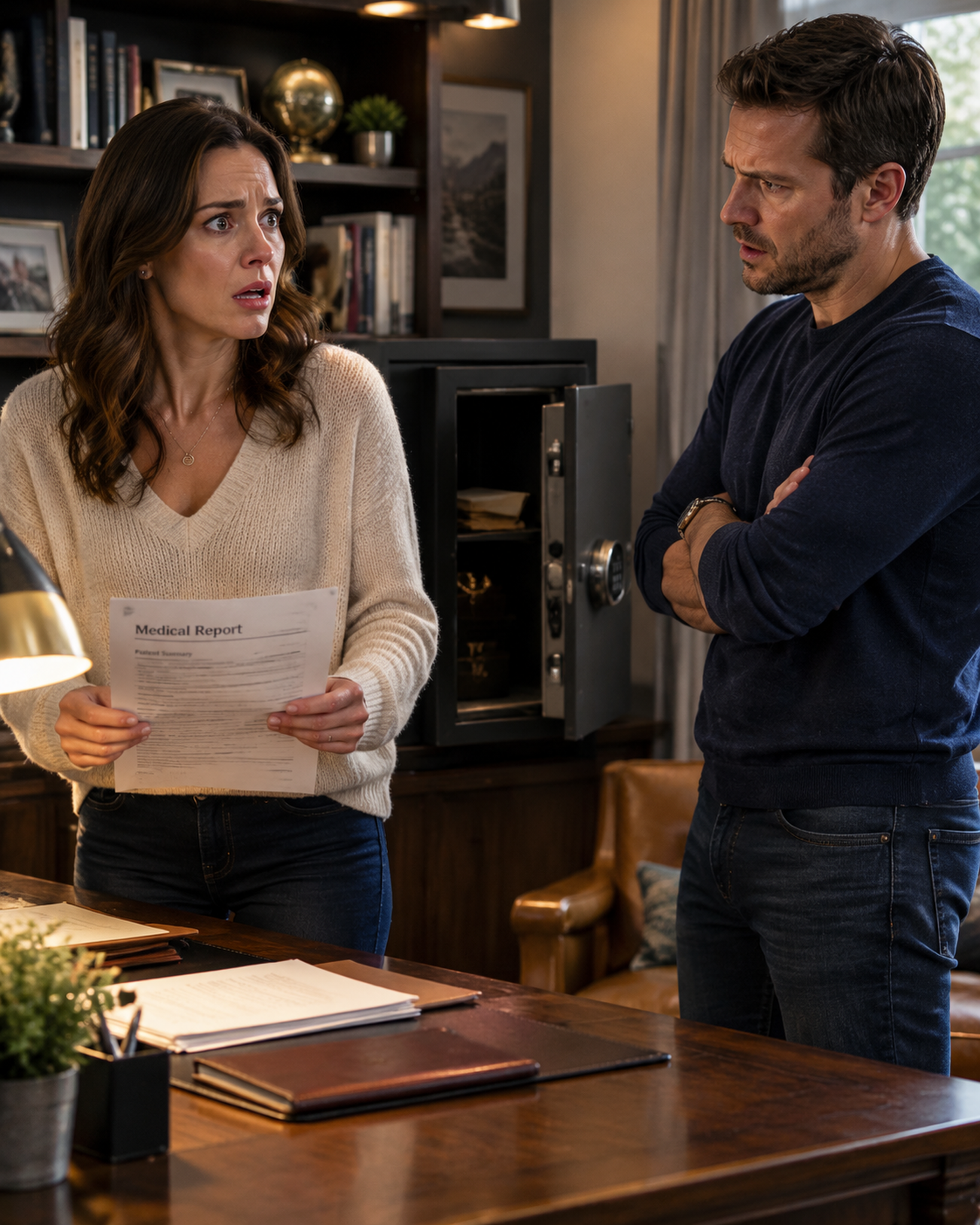
Ultrasound results made my doctor tell me to run from the Mafia Boss without explanation!
The Ultrasound Made My Doctor Whisper, “Run From Your Mafia Boss Husband—Tonight.” PART ONE — THE HEARTBEAT THAT BECAME A...
My Sister Was Left Outside Our Parents’ House With Her Twin Babies—Then I Heard What Our Father Said.
Part 1: Hello, I’m Aaron Blake, 36 years old, a civil engineer living in Portland, Oregon. If you’ve ever been...

The Marquis Mocked His Bride for Her Fortune — By Dawn, She Had Vanished With a Sealed Letter
Part 1 The first thing Lady Rosalind Howard heard was laughter. Not the pleasant laughter of people enjoying an evening...