“Please Stop…” Everyone Ignored the Beaten Nurse—Until a Mafia Boss Stopped His Convoy
Everyone Drove Past the Beaten Nurse—Until a Mafia Boss Stopped, Then Her Hospital Badge Exposed Why She’d Been Chosen
I had spent five years telling terrified emergency-room patients that they were safe with me—then one cold Chicago night, I stood bleeding beneath a pharmacy sign while car after car looked at me and kept driving.
The only people who finally stopped were riding in six black SUVs, and the man who stepped into the rain was someone strangers were supposed to fear.
When he asked, “Who did this to you?” I thought the answer was my boyfriend.
By sunrise, I would discover Ethan had only been the first door into something far darker—and my own hospital badge was already part of it.
PART 1 — THE MAN WHO STOPPED
“Please.”
My voice barely survived the rain.
I stood beneath the flickering sign of a closed pharmacy on West Addison, one hand pressed against my ribs and the other raised toward traffic.
Headlights approached.
Headlights passed.
Nobody stopped.
My white scrub top was torn near the shoulder.
Mud streaked both knees.
Blood from my split lip tasted metallic every time I swallowed.
Three blocks behind me were my phone, my purse, and Ethan.
Six months earlier, he had been the man who brought coffee to St.
Catherine’s during my twelve-hour shifts.
Then apologies became explanations.
Explanations became accusations.
Accusations became bruises I learned to hide under long sleeves.
That night, I had finally said, “I’m leaving.”
Ethan laughed.
Then his hand closed around my wrist.
I had treated enough abused women in emergency rooms to recognize the exact second danger stopped being theoretical.
So I ran.
No coat.
No purse.
Only thin hospital sneakers filling with rainwater.
A sedan slowed.
Hope struck so hard it hurt.
I stepped toward the curb.
“Please.”
The driver looked directly at my face.
Then locked his doors.
And drove away.
Something inside me cracked.
That was when the black SUVs appeared.
First three.
Then five.
Then six moving together through the rain with such perfect spacing that traffic instinctively made room.
Not police.
Not a funeral.
Something else.
I stepped into the street.
Stupid.
Desperate.
“Please stop!”
The first SUV passed.
Then the second.
Of course.
Why would powerful strangers be kinder than everyone else?
Then the third vehicle stopped.
So did every SUV behind it.
A rear door opened.
A tall man stepped into the rain wearing a black suit and no umbrella.
Two other men moved with him.
He lifted one hand.
They froze.
His gaze found me.
My mouth.
My bruised wrist.
My hand protecting my ribs.
Something changed in his expression.
Not pity.
Something colder.
He stopped three feet away.
“Who did this to you?”
The name lodged in my throat.
Ethan.
Two syllables.
I couldn’t make myself say them.
“I’m fine.”
The stranger looked at my shaking hands.
“No.”
One quiet word.
Most people asked if you were okay because they wanted permission to walk away.
This man sounded like he had no intention of accepting the convenient answer.
“I just need a phone.”
He took one from his pocket and offered it.
“Call whoever you trust.”
I stared at him.
“You’ll let me leave?”
“I stopped because you asked someone to stop.”
Rain ran from his hair along his jaw.
“Not because I intend to become another man you have to run from.”
Something inside my chest went painfully still.
I reached for the phone.
Then headlights turned onto the block.
Silver sedan.
Too fast.
Too familiar.
My entire body locked.
The stranger followed my stare.
“Is that him?”
Ethan’s car slowed twenty yards away.
He saw me.
Wrapped in another man’s coat.
Standing beside six black SUVs.
For once, Ethan did not look angry.
He looked uncertain.
The stranger stepped in front of me.
Small movement.
Instantly, every man along the convoy repositioned.
Doors opened.
Bodies shifted.
The street became a wall.
Ethan climbed from his car.
“Claire!”
I flinched.
The man in front of me noticed.
Ethan pointed.
“Get in the car.”
Silence.
Then the stranger said:
“She said no.”
Ethan stared at him.
“This is between me and my girlfriend.”
“Ex-girlfriend,” I whispered.
Ethan’s head snapped toward me.
“What?”
Fear reached for my throat.
I forced the words out again.
“Ex-girlfriend.”
The stranger did not touch me.
Did not answer for me.
He only asked:
“Is this the man who hurt you?”
I looked at Ethan.
At the man who had apologized three times and hit me four.
At the man who had taught me to doubt the evidence of my own skin.
Then I looked at the stranger who had stopped when everyone else drove past.
“Yes.”
The man beside me became completely still.
And for the first time that night, the fear on the street did not belong to me.
PART 2 — THE LIFE ETHAN HAD HIDDEN INSIDE MINE
Ethan laughed.
Not because anything was funny.
Because laughter had always been one of his tools.
A way to make my fear look ridiculous before anyone else could decide it mattered.
“Claire, come on.”
He held both hands away from his sides as though he were the reasonable person in the scene.
“You’re upset.”
The stranger said nothing.
Ethan looked past him toward the SUVs.
“What is this? Private security?”
Still nothing.
“I said get in the car.”
My hand tightened around the stranger’s coat.
Ethan saw.
His face changed.
“You’re embarrassing yourself.”
There it was.
The voice he used in restaurants.
At parties.
In hospital parking lots.
The one designed to make other people think I was unstable before I spoke.
The stranger finally said:
“She said no.”
Ethan’s jaw hardened.
“You don’t know what she’s like.”
My stomach dropped.
“She gets dramatic.
She lies.
Half the time she doesn’t even remember what happened.”
I felt heat move into my face.
Those sentences were not new.
He had planted them slowly.
With friends.
With coworkers.
With me.
You misunderstood.
You were tired.
That never happened.
The stranger turned slightly.
Not toward Ethan.
Toward me.
“Claire.”
It was the first time he used my name.
He had heard Ethan shout it.
Nothing supernatural.
Still, the way he said it steadied me.
“Do you want to go with him?”
“No.”
Faster now.
“Did you leave willingly?”
“Yes.”
“Do you want him near you?”
My throat tightened.
“No.”
The stranger nodded.
Then looked at Ethan.
“There’s your answer.”
Ethan scoffed.
“You think because you have a few cars and some hired idiots you can interfere in my life?”
One of the men near the SUVs looked personally insulted.
The stranger did not.
Ethan pointed at me.
“She belongs with me.”
Something dark entered the stranger’s eyes.
“People don’t belong to people.”
The sentence struck harder than it should have.
Ethan stepped forward.
“She’ll come back.
She always does.”
That one hurt because it was true.
Three times I had left.
Three times I returned.
Flowers.
Tears.
Promises.
Then another mark hidden beneath hospital scrubs.
“Not tonight,” the stranger said.
Ethan shoved him.
Everything around us changed.
Men moved.
Hands disappeared beneath jackets.
I gasped.
The stranger lifted one hand.
“Enough.”
Everyone stopped.
He adjusted his suit as though Ethan had brushed lint from it.
Then reached into his pocket.
For one terrible second, I thought he was reaching for a gun.
He pulled out a business card.
Held it toward Ethan.
Ethan read the name.
His face drained.
Not metaphorically.
He actually went pale.
“You’re…”
The stranger slid the card away.
“I’m the man asking once.”
Ethan backed toward his car.
Nobody chased him.
Nobody needed to.
He got inside.
The sedan disappeared into the rain.
Only then did my knees give out.
The stranger caught my elbow.
Carefully.
Not gripping.
Just preventing me from hitting pavement.
“Easy.”
I looked up.
“Who are you?”
He hesitated.
“Adrian Moretti.”
The name meant nothing to me.
Not yet.
Behind him, the broad man from the convoy—Marco—looked away as if even hearing it carried weight.
Adrian opened the rear SUV door.
“You need a doctor.”
“I can take a cab.”
“At two in the morning?”
“I’ve done it.”
“While bleeding?”
“I’m a nurse.”
“That was not my question.”
I hated how quickly he saw around my evasions.
“Take me to St.
Catherine’s.”
Adrian’s eyes narrowed.
“No.”
Anger cut through fear.
“You don’t decide that.”
Every man nearby went still.
Apparently nobody spoke to Adrian Moretti that way.
I almost apologized.
Then he did something stranger.
He smiled.
Barely.
“You’re right.”
I blinked.
“St.
Catherine’s?”
“Yes.”
He looked toward Marco.
“St.
Catherine’s.”
No punishment.
No sulking.
No icy silence.
I climbed into the SUV.
Adrian sat across from me.
The door shut out the rain.
Inside smelled like leather, cedar, and money.
He handed me water.
For several minutes, I watched Chicago slide past tinted glass.
Then I asked:
“Why was Ethan afraid of your name?”
Marco’s eyes met Adrian’s in the mirror.
Adrian ignored him.
“People tell stories.”
“What kind?”
“The kind that improve with repetition.”
“That is not an answer.”
“No.”
I turned.
“Are you dangerous?”
His gaze met mine.
He could have lied.
“Yes.”
My fingers tightened around the bottle.
He noticed.
“But not to you.”
Those four words should have frightened me.
Instead, my shoulders loosened.
That frightened me more.
At St.
Catherine’s, the emergency entrance was quiet.
The moment we stopped, I reached for the door.
Adrian said my name.
I paused.
“If you walk inside alone, what are you going to say happened?”
“That I fell.”
Automatic.
His jaw tightened.
“Don’t.”
“I cannot explain all of this.”
“You don’t have to explain everything.”
His voice softened.
“Just don’t protect the man who hurt you.”
That was how I entered my own emergency department as a patient.
Jenna, one of our senior nurses, looked up.
“Claire?”
Her expression changed.
“Oh my God.”
“I’m fine.”
Then Adrian stepped through the doors behind me.
Jenna stopped moving.
Her eyes went to him.
Then the men remaining outside.
She knew.
Everyone seemed to know except me.
Within minutes, I sat on exam paper while Jenna documented a sprained wrist, bruised ribs, split lip, and the marks around my forearm.
“Police?” she asked quietly.
Fear rose.
I almost said no.
Then I remembered Ethan ordering me into the car.
I remembered Adrian saying people did not belong to people.
“Yes.”
My voice shook.
“Yes.
Call them.”
Jenna squeezed my hand.
When she left, I saw Adrian through the narrow door window.
Waiting.
Not demanding updates.
Not calling people into the room.
Just there.
An older hospital security guard hurried past.
Saw him.
Stopped.
“Mr.
Moretti.”
Adrian gave a slight nod.
“Sir.”
The guard lowered his voice.
That was when I reached for the tablet beside the bed.
Typed:
Adrian Moretti Chicago.
The first headline appeared.
Then the second.
Moretti family.
Organized crime.
Federal investigations.
Construction.
Ports.
Political connections.
Photographs of black cars and courthouse steps.
My blood went cold.
Adrian turned.
Our eyes met through the glass.
He entered only after Jenna nodded from the hallway.
“You looked me up.”
“Yes.”
“I assumed you would.”
“You’re mafia.”
He glanced toward the door.
“That word attracts attention.”
“So yes.”
His mouth almost moved.
“Apparently your research was efficient.”
“How can you joke?”
“I’m not.”
All humor disappeared.
“I stopped because you were injured.
Everything else you read does not change that.”
“It changes how safe I am with you.”
“Maybe.”
He did not insult me with certainty.
“You should be afraid of me.”
The fluorescent lights hummed.
“But?”
“No but.”
That was somehow worse.
The police arrived.
Adrian left the room without being asked.
My statement took almost an hour.
I told them about Ethan.
Not just tonight.
The wall he punched beside my head.
The shove in the parking lot.
The wrist bruises.
The repeated apologies.
The threat when I said I was leaving.
Saying it aloud made it real in a way hiding it never had.
When the officers finished, one said:
“We’ll try to locate Mr.
Mercer.”
Try.
Fear returned instantly.
“What if he comes here?”
“We’ll alert security.”
Before I could answer, sharp voices rose outside.
Then stopped.
The kind of silence power creates.
I opened the door.
Marco stood near the elevators.
Adrian faced the windows.
“What happened?”
He turned.
“Ethan isn’t at his apartment.”
My blood cooled.
“How do you know?”
Adrian did not pretend.
“I sent someone to watch it.”
“You had no right.”
“No.”
Again.
Immediate acknowledgment.
No explanation disguised as apology.
Marco handed him a phone.
Adrian read something.
His expression changed.
“What?”
“Your apartment building.”
My knees weakened.
“He was seen going inside.”
I gripped the wall.
“He still has a key.”
“You never changed the lock?”
Shame rose.
Adrian heard his own tone and stopped.
“Sorry.”
“I was going to tomorrow.”
Tomorrow.
The word abused people use when danger feels survivable enough to postpone.
“I’m going home.”
“No.”
I looked at him.
“You said I decide.”
“You do.”
“Then I’m going.”
“You’re injured.”
“It is my apartment.”
“And the man who hurt you is inside.”
My voice rose.
“Which is why I cannot stand here while strangers search my life.”
That stopped him.
Long pause.
Then:
“Fine.”
I blinked.
“You go.”
He looked directly at me.
“Not alone.”
Twenty minutes later, I was back inside the SUV.
This time I wore anger better than his coat.
Two Moretti vehicles had already reached my block.
The building’s front door hung open.
I ran.
“Claire.”
Pain ripped through my ribs.
I kept going.
Mrs.
Kaplan, my seventy-three-year-old neighbor, opened her door.
“Claire!”
Her eyes went to Adrian behind me.
She quietly lowered her voice.
“That boyfriend of yours was here.”
“Is he still?”
“I don’t know.”
We reached the third floor.
My apartment door had been forced.
Inside, everything was torn apart.
Drawers emptied.
Cushions ripped.
Books scattered.
The framed photograph of my parents shattered across the kitchen floor.
I dropped beside it.
The crack in the glass ran across my mother’s face.
She had died two years after I entered nursing school.
Adrian crouched several feet away.
Did not touch me.
“He did this.”
I nodded.
Then looked toward the bedroom.
The destruction was not random.
Closet searched.
Nightstand emptied.
Mattress lifted.
He had been looking for something.
“What?” Adrian asked.
“I don’t know.”
Then memory surfaced.
Three weeks earlier.
Ethan entering after midnight with a black messenger bag.
Going into my bedroom.
Leaving ten minutes later without it.
I had assumed I simply missed him carrying it out another day.
I pushed past hanging scrubs.
At the back of my closet sat an old nursing-school suitcase.
I dragged it forward.
Too heavy.
“It wasn’t heavy before.”
Adrian moved.
“Don’t open it.”
But I already had.
Documents.
Photographs.
Account ledgers.
A flash drive.
Black notebook.
Marco picked up one photograph.
His face lost color.
“Boss.”
Adrian took it.
Three men outside a warehouse.
Ethan.
A stranger.
And a man Marco recognized.
His brother, Luca.
“What does this mean?”
Adrian’s eyes stayed on Ethan’s face.
“It means your boyfriend was hiding more than bruises.”
Marco looked at the photograph.
“Luca disappeared six months ago.”
The room went silent.
I looked at him.
“Disappeared?”
“His car was found three days later.”
“And Luca?”
Marco’s jaw tightened.
“Never found.”
Adrian opened the black notebook.
Dates.
Initials.
Warehouse numbers.
Payments.
Some entries in Ethan’s handwriting.
I knew it from grocery lists.
Birthday cards.
Apology notes placed beside flowers.
My skin crawled.
“He hid this here because nobody would search the nurse’s apartment.”
Adrian nodded.
I laughed once.
Broken sound.
“For six months, I thought the worst thing about Ethan was that he lost control.”
Adrian’s eyes hardened.
“He didn’t.”
The words hurt.
“He chose.”
Choice.
Not snapped.
Not overwhelmed.
Not because I made him angry.
Choice.
And for the first time, I stopped searching my own behavior for the reason Ethan had hurt me.
Marco’s phone rang.
He listened.
“Mercer’s car was found near South Harbor.”
Adrian turned pages.
Stopped.
“Warehouse Fourteen.”
Marco moved closer.
“Luca was investigating that site.”
My pulse quickened.
“And Ethan?”
“Photographed outside it ten minutes ago.”
Marco showed the image.
Ethan stood beside another man.
I knew him.
My body went cold.
“No.”
Adrian looked at me.
“You know him?”
“Dr.
Holloway.”
James Holloway.
Chief trauma surgeon.
My supervisor.
The man who hired me.
Covered my shift when my mother died.
Signed every performance evaluation I had received for three years.
“He’s my boss.”
Adrian became frighteningly still.
And suddenly Ethan was no longer the most dangerous person in my life.
A knock hit the apartment door.
Everyone moved.
“Chicago police.”
Two officers entered.
One held an evidence sleeve.
Inside was my St.
Catherine’s identification badge.
Except it wasn’t mine.
“This was found in Mercer’s car.”
“I lost my old badge months ago.”
“This was issued yesterday.”
My mouth went dry.
“I didn’t request one.”
“I know.”
On the back were four handwritten words.
SHE WAS ALWAYS THE KEY.
Adrian looked from the badge to the notebook.
“What does that mean?”
I whispered.
He did not answer immediately.
Then:
“It means this started before tonight.”
The officer’s radio crackled.
He stepped into the hallway.
Returned.
“St.
Catherine’s has a security incident.”
My heartbeat stumbled.
“What?”
“Controlled medication storage was accessed twenty-three minutes ago.”
“With what?”
He looked at the badge.
“Your credentials.”
“No.”
“I was here.”
“We know.”
“What was taken?”
“Enough that hospital administrators called police.”
I closed my eyes.
“They’re framing me.”
Adrian shook his head.
“No.”
I stared at him.
“This is bigger than framing.”
“What could be bigger?”
“Making everyone look at you while they do something else.”
Marco understood.
“Diversion.”
Adrian nodded.
“Where is Holloway?”
The officer frowned.
“Not located.”
My phone came out before I thought.
I called the trauma desk.
No answer.
Jenna.
Nothing.
Again.
Nothing.
“She always answers.”
A fire alarm message came through the police radio.
East wing evacuation.
My chest tightened.
“That’s trauma.”
I moved.
Adrian followed.
“I’m going back.”
“There may be an active threat.”
“There are patients.”
His first instinct was written across his face:
No.
Then he looked at my wrist.
At the bruises left by a man who had called control love.
His jaw tightened.
“Fine.”
I stopped.
“You’re not stopping me?”
“I tried deciding for you once tonight.”
A pause.
“I won’t become another man who decides where you are allowed to go.”
Something inside me shifted.
Not trust yet.
But the space where trust might someday live.
The convoy reached St.
Catherine’s in seven minutes.
Smoke moved from the east entrance.
Alarms screamed.
Patients stood under blankets while staff pushed beds through emergency doors.
Fire crews entered.
I jumped out.
Across the street, under a black umbrella, James Holloway stood watching.
Not helping.
Watching.
Our eyes met.
He smiled.
Then disappeared into the crowd.
My phone rang.
Unknown number.
“Hello?”
Breathing.
Then:
“Claire.”
Ethan.
Weak.
Terrified.
My blood froze.
“Where are you?”
“Don’t trust Holloway.”
A crash behind him.
“Ethan—”
“The hospital isn’t the target.”
The line died.
I looked at Adrian.
“What did he say?”
“The hospital isn’t the target.”
Adrian went still.
His eyes moved from the smoke—
to the duplicate badge—
to me.
And suddenly I understood.
The fire alarm was not designed to get something out of St.
Catherine’s.
It was designed to bring me back in.
The evacuation route took me exactly where Holloway wanted me.
The realization came one second before Jenna appeared through the emergency doors.
“Claire!”
I ran toward her.
She looked terrified but unhurt.
“What happened?”
“Small fire in a supply room.
Sprinklers contained most of it.”
“Where is Holloway?”
Her expression shifted.
“He told everyone he was at a trauma-network meeting.”
“He’s here.”
“What?”
“I saw him.”
Jenna stared.
Then somebody called her name.
A paramedic needed help with an oxygen tank.
She turned instinctively.
Nurse first.
Always.
I caught her arm.
“Has anyone asked about me?”
She looked back.
“Yes.”
My skin prickled.
“Who?”
“One of the hospital security supervisors.”
“What did he say?”
“He said if you appeared, you were supposed to report to the old staff locker corridor for an identification interview.”
I had worked at St.
Catherine’s five years.
Police never conducted interviews in the old locker corridor.
It had no cameras since renovation began.
I looked at Adrian.
He saw it too.
“That’s where they want me.”
“No,” Jenna whispered.
Adrian spoke to Marco.
“Get the police officer from Claire’s apartment on the phone.
Tell him exactly what she just said.”
Marco moved away.
Adrian looked back at me.
“We do this their way now.”
“Police?”
“Yes.”
That answer surprised me.
“You’re agreeing awfully fast.”
“My way involves less paperwork and more funerals.”
Jenna went pale.
Adrian glanced at her.
“I am improving.”
Despite everything, I almost laughed.
Police established a controlled perimeter.
No Moretti men storming hospital corridors.
No Adrian turning the place into a private battlefield.
That mattered.
He hated it.
I could tell.
But he stayed beside me.
An officer asked whether I would identify the security supervisor who gave Jenna the instruction.
I could not.
Jenna could.
“He’s new,” she said. “Started last month.”
They found his locker empty.
Uniform gone.
No home address that survived verification.
Another false identity.
Holloway’s work went back further than anyone knew.
The hospital’s administrator arrived, white-faced.
She confirmed something worse.
Someone with Holloway’s executive authorization had requested the duplicate Claire Bennett badge.
The request listed replacement after damage.
He had created it legitimately enough to fool the system.
Then used it to create a criminal trail with my name.
“What was taken from pharmacy storage?” I asked.
She looked toward the officers.
“Fentanyl and other controlled medications.”
My stomach twisted.
I had administered those drugs to dying patients.
Trauma victims.
Children after surgery.
People in unbearable pain.
To Holloway they were inventory.
The notebook from my apartment suddenly made more sense.
Warehouses.
Payments.
Dates.
Ethan had not merely been hiding financial fraud.
He had been part of a diversion network using legitimate medical supply and transport channels as camouflage.
One that overlapped with unauthorized use of Rossi-controlled freight companies.
Luca found the money discrepancy.
Then disappeared.
“What did Ethan actually do?” I asked Adrian later in a private consultation room.
Rain tapped the narrow window.
“From what we can see?”
Adrian leaned against the wall.
“He coordinated handoffs.”
“Drugs?”
“Sometimes.”
My throat tightened.
“And the money?”
“Moved through subcontractors attached to transportation invoices.”
“Your companies?”
“One company we partially own.”
His expression darkened.
“Without authorization.”
“So Holloway stole medication, Ethan moved it, and Luca discovered the laundering.”
“Likely.”
“Why use me?”
“Because you gave Ethan access to a nurse’s apartment, hospital routines, staff schedules.”
“I never told him confidential patient information.”
“I know.”
“But he watched me.”
“Yes.”
A memory hit.
Ethan asking what time Holloway finished.
Whether Jenna worked weekends.
Which hospital entrances locked after eleven.
Questions I had mistaken for jealous curiosity.
My stomach turned.
“He dated me because of the hospital?”
Adrian’s silence hurt.
“We don’t know.”
I looked away.
“How much of us was real?”
“That is a question only Ethan can answer.”
“I don’t want his answer.”
The door opened.
Marco entered.
His face told us immediately.
“They found Mercer.”
“Alive?” I asked.
“Yes.”
Relief came before shame.
Even after everything.
A part of my body still reacted to Ethan as someone I once loved.
“Where?”
“Warehouse Fourteen.”
Adrian straightened.
Marco continued.
“Police found him in a locked office after a tip came in from the number he used to call Claire.”
“Holloway?”
“Gone.”
“What condition is Ethan in?”
“Badly beaten.
Not life-threatening.”
My ribs hurt when I breathed.
“He warned me.”
Marco nodded.
“He also asked to speak to investigators.”
Adrian’s face changed.
“You are not going near him.”
Anger rose instantly.
He heard himself.
Closed his eyes.
Then corrected.
“Sorry.”
I stared.
“That physically hurt you, didn’t it?”
“Yes.”
Marco looked away, possibly to hide amusement.
Adrian continued.
“I think seeing him may be harmful.”
“That is different.”
“Good.”
“And I’m not seeing him.”
His gaze lifted.
“I want my police statement to speak before his apology does.”
Something in Adrian’s face softened.
Over the next forty-eight hours, the case widened.
Not dramatically.
Paper by paper.
Hospital audits showed controlled medication discrepancies stretching back almost eighteen months.
Most were small enough to disappear inside the chaos of a trauma center.
Damaged vials.
Canceled procedures.
Inventory corrections.
Holloway had influence over multiple departments and knew exactly which anomalies looked ordinary.
Ethan’s notebook matched several suspicious dates.
Warehouse records matched more.
Luca’s photographs filled gaps.
Then came the discovery Marco had been afraid to hope for.
Not Luca alive.
Something less miraculous and more final.
Investigators found Luca’s watch and personal effects in a sealed storage locker tied to one of Holloway’s intermediaries.
Later forensic work located his remains outside the city.
Marco received the news in Adrian’s car.
He did not cry in front of us.
He simply sat with both hands resting flat on his knees.
“Six months,” he said.
No one answered.
“We kept saying maybe.”
Adrian put one hand on his shoulder.
Marco closed his eyes.
That was all.
Grief did not always need dialogue.
Ethan eventually admitted enough to make the structure clear.
He had met Holloway through a medical logistics company.
The original arrangement was money.
Then controlled medication.
Then intimidation when people noticed.
He started dating me after discovering I worked directly beneath Holloway.
At first, access mattered.
So yes.
Our beginning had been a lie.
According to Ethan, some part of the relationship later became real.
I did not ask how much.
I did not need a percentage.
He also admitted hiding evidence in my apartment after Luca disappeared because nobody connected me to the network.
When I tried to leave, panic intensified his violence.
Not love.
Not trauma.
Not jealousy.
Fear that I might expose him.
That truth hurt.
It also freed me from years of explanations that had never belonged to me.
Holloway was arrested six days later after attempting to cross into Canada using another identity.
The case involved federal drug charges, conspiracy, financial crimes, and Luca’s death.
I did not attend every hearing.
I did not read every article.
The justice system became a process I cooperated with, not a theater I built my healing around.
Ethan pleaded guilty to several offenses and separately faced the domestic-violence case.
His cooperation reduced some charges.
It did not erase them.
I gave a victim statement months later.
Not to explain our love.
To explain what coercive control had done to my judgment.
I said:
“He did not become violent because I failed to leave correctly.
He used violence because it made leaving harder.”
Then I sat down.
Adrian was not in the courtroom.
That had been my request.
I wanted one room where my courage did not depend on a frightening man standing behind me.
He understood.
That might have been the first moment I truly trusted him.
When the immediate danger ended, Adrian offered three choices.
A hotel.
A secured apartment arranged through an advocate.
Or a Moretti guest property with independent locks and no men stationed inside.
“Which do you prefer?” he asked.
We stood outside St.
Catherine’s under cold morning sunlight.
I studied him.
“You actually prepared options.”
“It was humiliating.”
“I’m proud.”
“Don’t be.”
I chose the apartment arranged through the victim advocate.
Not his property.
Not his control.
Adrian nodded.
No wounded pride.
No reminder that his place was safer.
That mattered more than flowers could have.
Before leaving, he handed me the coat I had worn in the rain.
Cleaned.
Folded.
“You can keep it.”
“It probably costs more than my car.”
“You don’t have a car.”
“Then more than my imaginary car.”
His mouth moved.
I looked at the coat.
“Thank you.”
“For what?”
“Stopping.”
Adrian’s expression changed.
“Anyone should have.”
“They didn’t.”
We stood silently.
Then I walked away first.
I thought that was where Adrian Moretti would leave my story.
Three nights later, somebody knocked on my new apartment door—and for the first time in months, the sound did not make me afraid.
PART 3 — THE MAN WHO LEARNED NOT TO RESCUE ME
I checked the camera before opening the door.
Trauma changes ordinary movements.
Locks.
Footsteps.
Unknown numbers.
It teaches your body to perform risk calculations before your mind gets involved.
Adrian stood in the hallway.
Alone.
No Marco.
No convoy.
One paper bag in his hand.
I opened the door three inches.
“You know surprise visits are a terrible idea for me now.”
“Yes.”
“You did one anyway.”
“Yes.”
I waited.
He lifted the bag.
“Soup.”
I stared.
“What?”
“Chicken noodle.”
Rain returned to me instantly.
My torn scrubs.
The pharmacy.
The coat.
Then I remembered I had told Marco I had spent that night making nothing.
No.
That was another story.
I frowned.
“How did you know?”
“Jenna.”
I narrowed my eyes.
Adrian sighed.
“I asked her what people bring nurses when they want to say thank you without creating romantic complications.”
“And she said soup?”
“She said food.”
“So you picked soup.”
“It seemed safe.”
I opened the door wider.
“Your threat assessment is questionable.”
He stepped inside only after I moved away.
That became our first unofficial date.
Although neither of us called it one.
We ate soup at my tiny borrowed dining table.
Adrian looked absurd in the apartment.
Too large.
Too expensive.
Too controlled.
The chair squeaked beneath him.
I tried not to laugh.
“What?”
“Nothing.”
“Claire.”
“The chair is afraid.”
He looked down.
“You own four identical chairs.”
“Three now emotionally.”
He actually laughed.
A short sound.
Real.
I had heard rumors describe Adrian Moretti as cold.
Ruthless.
Unreachable.
Nobody mentioned that his laugh made him look younger.
That annoyed me.
I did not need attractive complications.
“How is Marco?”
The humor left.
“Some days better.”
“Funeral?”
“Private.”
“I’m sorry.”
“He appreciated that you gave Luca’s photograph to police instead of me.”
I understood.
Adrian’s world had its own methods of justice.
I had refused them.
The suitcase evidence went to law enforcement.
All of it.
Unedited.
Adrian had been furious for exactly seven minutes.
Then he helped catalogue the chain of custody.
“Why did you agree?” I asked.
He looked at his soup.
“You said if I took the evidence, I would become another man deciding what happened to your life.”
“I was dramatic.”
“You were correct.”
Another pause.
“And Marco wanted his brother found.”
“Not avenged?”
“Both.”
Adrian looked at me.
“Finding him mattered first.”
That became the line between us.
Adrian did not pretend to be legal.
He did not rewrite his life to look clean for me.
I did not romanticize what he was.
But the case forced something new into his world.
Limits he did not set himself.
Evidence he could not bury.
A woman he could not simply protect by moving her wherever he decided.
And strangely, he kept coming back.
Not every night.
Never uninvited again.
Sometimes coffee before my shift.
Sometimes dinner after.
Once, a new lock for my door—but he left the box unopened on the table.
“You bought me a lock?”
“You complained the deadbolt sticks.”
“You are learning.”
“I hate this.”
I hired my own locksmith.
Adrian paid nothing.
He looked offended for almost five minutes.
Then admitted it was probably healthy.
I returned to work after three weeks.
The first morning back, my hands shook outside St.
Catherine’s.
The hospital had changed access policies.
Independent investigators were still interviewing staff.
Holloway’s office remained sealed.
Jenna stood beside the employee entrance.
“You don’t have to go in today.”
“I know.”
“Want me to walk with you?”
“Yes.”
That answer mattered.
Old Claire would have said no automatically.
Need was not the same as weakness.
I learned that slowly.
The first trauma alert almost broke me.
Sirens.
Doors.
Men shouting.
My body returned to the night of the pharmacy before my mind understood the patient was a teenage cyclist.
I stepped into the supply room.
Counted breaths.
Cold metal shelf beneath my palm.
Then went back.
The boy needed a nurse.
I could still be one.
A month after returning, Adrian appeared in the cafeteria.
Every conversation softened.
He carried two coffees.
“You cannot keep walking into my workplace and terrifying administration.”
“I signed in.”
“That makes it worse.”
“I have visitor identification.”
He displayed it.
Properly issued.
The irony nearly killed me.
“What do you want?”
“To ask you to dinner.”
“Like a normal person?”
“I researched the process.”
“Terrifying.”
“No convoy.”
“Good.”
“No private dining room.”
“Better.”
“No men sitting visibly nearby.”
“Visibly?”
He paused.
“Claire.”
I laughed.
“Yes.”
“To dinner?”
“Yes.”
The restaurant was small.
Italian.
Not owned by him.
I checked.
He noticed.
“You researched me.”
“I learned from experience.”
Fair.
We spoke for two hours.
Not about Ethan.
Not Holloway.
Not mafia.
My mother.
His father.
Why I became a nurse.
Why Adrian took control of the Moretti organization at thirty-two.
His answer was not glamorous.
His father had a stroke.
Several older men began dividing territory and businesses like the family was already dead.
Adrian stepped in.
“Did you want it?”
“No.”
“Then why stay?”
“Because once everyone depends on you, leaving feels like murder.”
The sentence stayed with me.
It sounded uncomfortably familiar.
Abusive relationships create their own version of indispensability.
He needs me.
He’ll fall apart.
Nobody else understands him.
I said:
“Being needed can become a cage.”
Adrian looked at me for a long moment.
“Yes.”
That was the first date.
The second involved a museum because I told him I wanted somewhere nobody could easily flip a table.
He did not find that funny.
I did.
The third ended early because a business emergency called him away.
He stood outside my building.
“I’m sorry.”
“You have work.”
“I said tonight was yours.”
“I do not own a night.”
His expression changed.
Ethan had trained me to make myself easy.
That sentence could come from old conditioning or genuine generosity.
I needed to learn the difference.
“Call tomorrow,” I said.
“I will.”
He did.
At .
Not .
Not .
Exactly when he promised.
I smiled at my phone like an idiot.
The relationship scared me.
Not because Adrian threatened me.
Because sometimes safety with a powerful man can look like dependency before you notice.
So I created rules.
My apartment remained mine.
My salary remained mine.
I did not accept cars, jewelry, cash, or property.
He could buy dinner.
Within reason.
My therapist called that an interestingly detailed boundary.
I called it survival.
Adrian accepted most rules easily.
The one he struggled with was security.
Three months after Holloway’s arrest, Ethan’s cousin sent me an angry message.
Nothing criminal.
Ugly.
Adrian found out because I told him.
The next day, a black sedan appeared across from my building.
I walked straight to it.
Tapped the window.
Marco lowered it.
His expression suggested he wanted to evaporate.
“Hi.”
“Claire.”
“Did Adrian send you?”
Silence.
“Marco.”
“He expressed concern.”
I went directly to Adrian’s office.
His receptionist looked alarmed by my face.
Adrian stood as I entered.
“You put surveillance outside my home.”
“Temporary security.”
“Without asking.”
“There was a threat.”
“There was an insulting text.”
“You don’t know that was the end.”
“And you do?”
His jaw tightened.
“I am not gambling with your safety.”
“Then give me the information and let me participate.”
“I know where this road goes.”
“So do I.”
The words came sharper.
“I know exactly what it feels like when a man decides his fear gives him ownership of my movement.”
The room went silent.
Pain crossed Adrian’s face.
“I am not Ethan.”
“No.”
I swallowed.
“That is why I am telling you before I leave.”
He looked toward the window.
For a long time.
Then pressed the intercom.
“Tell Marco to stand down.”
He released it.
“Done.”
I was still angry.
He continued.
“I’m sorry.”
No but.
No you made me worry.
No if you understood my world.
Just:
“I’m sorry.”
I sat.
“Tell me what scared you.”
He looked surprised.
Then told me.
Holloway’s network had not been completely dismantled.
One man remained unaccounted for.
The message might have been nothing.
Might not.
“Why didn’t you tell me?”
“Because I wanted you to sleep.”
“And did the secrecy help me sleep?”
“No.”
“Exactly.”
We built a different plan.
My choice.
Extra camera.
Workplace security informed.
Police report if the messages escalated.
Marco only if I requested.
Nothing happened.
The missing man was arrested in another state weeks later.
Adrian could have said:
See? I was right.
He didn’t.
He said:
“I still should have asked.”
That was when I realized he could change.
Not because love magically softened him.
Because he was willing to be corrected without making correction an insult.
Marco noticed too.
“You’ve ruined him,” he told me one afternoon.
“How?”
“He asks questions now.”
“Devastating.”
“Meetings are forty percent longer.”
“You’re welcome.”
Marco smiled.
His grief over Luca had changed.
Not vanished.
Changed.
Luca’s funeral had given his family somewhere to put six months of uncertainty.
Marco wore his brother’s watch afterward.
Scratched metal.
Ordinary.
He once caught me looking.
“He bought it with his first decent paycheck.”
“It suits you.”
“No.”
Marco touched it.
“It suits him.”
We stood quietly.
Then he changed the subject.
That was how grief worked in Adrian’s world.
It appeared.
Then put its coat back on.
Months passed.
Ethan was sentenced.
Holloway’s case took longer.
The hospital settled several civil claims brought by families affected by diverted medication records.
St.
Catherine’s hired an outside compliance officer.
People I respected admitted they had ignored small inconsistencies because Holloway was brilliant.
Prestigious.
Generous.
Useful.
That lesson stayed with me.
Danger does not always arrive looking dangerous.
Sometimes danger remembers your coffee order.
Sometimes it writes excellent evaluations.
Sometimes it donates to charity.
I started volunteering with the hospital’s domestic-violence response program.
Not as a spokesperson.
Not as a survivor displayed for inspiration.
As a nurse.
When frightened patients said:
“I fell,”
I stopped asking questions that sounded like accusations.
I said:
“You don’t have to decide everything tonight.”
Then:
“If someone hurt you, you deserve care whether you leave today or not.”
Those were words I had needed months earlier.
Adrian donated to the program once.
I found out.
Got angry.
Then discovered he had donated through the public fundraising portal in the same amount as dozens of other supporters.
No strings.
No naming rights.
No phone call.
When I asked why, he said:
“I’m learning subtlety.”
“It’s terrifying.”
“I prefer monuments.”
“I know.”
One year after the pharmacy night, Adrian took me back to the same block.
Not as a surprise.
He asked first.
The pharmacy had reopened under a new owner.
The sign no longer flickered.
Cars moved through dry autumn streets.
I stood where I had once raised my hand.
My body remembered rain anyway.
Adrian stood three feet away.
Same distance as the first night.
“You okay?”
“Yes.”
“Actually?”
“No.”
He nodded.
No solution.
No order.
No coat.
Just presence.
“That driver who looked at me,” I said.
“The sedan?”
“No.
Before you.”
I watched traffic.
“He saw me.
Locked his doors.”
Adrian’s face hardened.
“I hated him for months.”
“And now?”
“I don’t know his life.”
A pause.
“But I know what it did to me.”
I looked toward Adrian.
“You stopped.”
“Yes.”
“Why?”
He answered differently than he had the first night.
“Because my mother once stood in a parking lot with a broken wrist and nobody asked her how it happened.”
I stared.
“You never told me.”
“No.”
“What happened?”
“My father.”
The world shifted slightly.
Adrian looked toward the road.
“He never struck her again after I was old enough to stop him.”
“How old?”
“Seventeen.”
That explained something.
Not everything.
Enough.
“You think protection is love because you learned it before you understood either.”
His eyes moved to mine.
“Yes.”
“And control?”
He was quiet.
“Sometimes I confuse them.”
“I know.”
He almost smiled.
“You notice.”
“I’m a nurse.”
“You are extremely annoying.”
“I’ve been told.”
By our second year together, the Moretti world had become less mysterious and more complicated.
There were legitimate businesses.
Construction.
Restaurants.
Warehousing.
Real estate.
There were also relationships and methods I did not pretend to approve of.
Adrian never asked me to participate in violence.
I never asked him to pretend he had spent his life untouched by it.
That honesty created fights.
Real ones.
Once I learned one Rossi-owned collection company used intimidation tactics I considered indefensible.
I told him:
“If you want me in your life, I cannot pretend this is morally neutral.”
His face closed.
“This keeps worse lenders out.”
“That doesn’t make coercion good.”
“You don’t understand the neighborhood.”
“Then explain it without asking me to surrender my standards.”
We argued for two nights.
On the third, Adrian brought me records.
Not because I had power over his businesses.
Because he wanted me to understand the structure.
I still disagreed.
Then he did something I did not expect.
He changed the collection policy.
Slowly.
Legal contracts.
Caps on fees.
Independent dispute process.
Profit dropped.
Some lieutenants complained.
Adrian told them:
“We adapt.”
I asked later:
“Did you do that for me?”
“No.”
I raised an eyebrow.
He sighed.
“You made me look at something I had stopped examining.”
Better answer.
I kissed him.
He looked pleased.
“Do not become arrogant.”
“Too late.”
We did not move in together quickly.
Two years after we met, Adrian asked.
Not announced.
Asked.
“Would you consider living with me?”
“Which property?”
His mouth tightened.
“Why does that matter?”
“If you say the fortress penthouse, no.”
“It has excellent security.”
“No.”
“The brownstone?”
“Maybe.”
“My mother’s old townhouse?”
“Too haunted.”
He almost smiled.
“What do you want?”
“A place neither of us already owns emotionally.”
So we chose an apartment together.
Not the most expensive he could buy.
Not the smallest I could pay half of.
We created a joint household account proportional to income.
Adrian thought my financial spreadsheet was insulting.
I called it romance.
He eventually agreed.
The first night, we ate takeout on the floor because furniture had not arrived.
Adrian looked around.
“We own five chairs in storage.”
“They are your chairs.”
“They become our chairs when delivered.”
“Interesting legal theory.”
He smiled.
There were no guards inside.
Security stayed outside the building.
By agreement.
The difference mattered.
Marriage came later.
Three years after the rain.
Adrian did not surprise me with a ring.
He took me to dinner and said:
“I want to discuss something that will probably involve lawyers.”
I stared.
“That is the least romantic proposal introduction in history.”
“I’m not proposing.”
“Oh.”
His expression shifted.
“Disappointed?”
“No.”
“Yes.”
“Maybe.”
He smiled.
“I want to discuss marriage.”
We talked for four months.
Not because we doubted love.
Because I no longer believed love was improved by avoiding practical truth.
Separate property.
My career.
His businesses.
Security.
Children.
What would happen if Adrian died.
What would happen if I left.
He hated that clause.
I insisted.
“If leaving is financially impossible, staying is not consent.”
He went completely silent.
Then:
“Put it in.”
That sentence was more romantic than diamonds.
We used separate attorneys.
I read every page.
He encouraged me to change clauses his lawyer drafted.
No pressure.
No countdown.
No gala.
Eventually, we chose a ring together.
Thin platinum.
Small sapphire.
Blue like the hospital scrubs I wore the night we first met.
Adrian wanted a larger stone.
I said no.
He asked why.
“I use my hands for work.”
He accepted that.
We married in a courtyard behind one of the legitimate Moretti restaurants.
Sixty people.
My father.
Sarah.
Jenna.
Marco.
Adrian’s mother, Sofia, wearing dark green and crying before anyone else.
No journalists.
No politicians.
No men invited simply because excluding them might be dangerous.
My vows were short.
“I promise I will tell you when I am afraid instead of making fear prove I need no one.”
Adrian’s were shorter.
“I promise I will not turn love into permission.”
Marco looked down after that sentence.
So did I.
We married.
Nothing exploded.
No enemy arrived.
No gunfire.
The absence of catastrophe felt almost luxurious.
Marriage did not end conflict.
It gave conflict an address.
One year in, Adrian arranged extra security after I became pregnant without telling me.
I discovered two men outside my clinic appointment.
I called him from the parking lot.
“You did it again.”
Silence.
“I did.”
“Why?”
“You’re carrying our child.”
“That does not make my body your security project.”
“I know.”
“Apparently not.”
He apologized.
Then we revised the plan together.
Again.
Growth is irritatingly repetitive.
Our daughter, Lucia Claire Moretti, was born on a snowy February morning.
Adrian cried so hard Jenna—who had transferred to maternity education by then—pretended to inspect a monitor to give him dignity.
When the nurse placed Lucia against his chest, he held her like she was made of paper.
“She’s breathing?”
“Yes.”
“Are you sure?”
“She is screaming.”
“That could mean—”
“Adrian.”
He looked at me.
Fear.
Pure.
I reached across.
“You can ask for reassurance.”
His jaw tightened.
Then relaxed.
“Is she okay?”
The nurse smiled.
“She is excellent.”
He kissed Lucia’s head.
Then mine.
Fatherhood magnified everything he had spent years trying to unlearn.
Control.
Fear.
Protection.
At three months, he wanted a doctor for every cough.
At eight months, he wanted padding installed around coffee tables.
At one year, he wanted a security consultant for daycare.
I refused the consultant.
He survived.
Lucia survived.
The daycare survived.
When she was three, she learned the word no.
Adrian discovered the universe had a sense of humor.
“Shoes.”
“No.”
“Bath.”
“No.”
“Bed.”
“No.”
One evening, Lucia put both hands on her hips and told him:
“You don’t decide my body.”
I laughed so hard I had to sit down.
Adrian stared at me.
“You taught her that.”
“Absolutely.”
“She uses it against socks.”
“Consent culture starts somewhere.”
He closed his eyes.
Marco, visiting for dinner, quietly said:
“Karma.”
Adrian threatened his employment.
Marco had been threatened with termination roughly forty times by then.
He remained.
Five years after the night under the pharmacy sign, St.
Catherine’s opened a new survivor-support unit.
Private exam rooms.
Legal advocacy.
Emergency housing referrals.
Trauma counseling.
The hospital asked whether I wanted to speak at the opening.
I almost said no.
I had spent years resisting becoming a symbol.
Then I agreed on one condition.
No photographs of injuries.
No sensational biography.
No mention of Adrian’s criminal reputation.
My story would not be marketed as:
Woman rescued by mafia boss.
Because that was not the truth I wanted other women to hear.
On opening morning, I stood before nurses, social workers, police liaisons, and community advocates.
Adrian sat in the final row.
No entourage visible.
I said:
“The most important thing that happened to me was not that a powerful man stopped.”
The room became quiet.
“It was that after he stopped, I learned I was still allowed to choose.”
Adrian’s eyes lowered.
“I chose to make a police report.”
“I chose where I stayed.”
“I chose what evidence went to law enforcement.”
“I chose whether Adrian remained in my life.”
I paused.
“And I learned that help is not help if it requires surrendering your voice.”
Jenna was crying near the aisle.
I continued:
“Someone stopping can save your life.”
“But what happens after the stopping matters too.”
No applause immediately.
Good.
They were thinking.
Then it came.
Afterward, a young woman approached me.
Long sleeves in July.
Eyes that never stopped checking the door.
“I’m not ready to leave.”
I knew that sentence.
I said:
“You don’t have to make every decision today.”
She started crying.
I did not tell her to be brave.
I helped her find an advocate.
That night, Adrian and I drove past the old pharmacy.
Not intentionally.
Traffic rerouted us.
The sign was different now.
Bright.
Steady.
I watched the curb.
Adrian noticed.
“Want me to keep going?”
“No.”
He pulled over because I asked.
Not because he decided.
We sat in silence.
Lucia slept in the back seat after exhausting herself at the support-unit reception.
“Do you remember what you said?” I asked.
“When?”
“The first night.”
“I said many things.”
“You asked who hurt me.”
“Yes.”
“I thought the answer was Ethan.”
Adrian looked toward me.
“It was.”
“Partly.”
I watched rain begin as a fine mist across the windshield.
“But Holloway used me.
Ethan used me.
The hospital failed to notice.
I used myself too.”
His expression sharpened.
“No.”
“I’m not blaming myself.”
I touched his hand.
“I mean I kept treating my own fear like inconvenient information.”
He understood.
“And now?”
“Now I listen sooner.”
He nodded.
Rain thickened.
Cars moved past.
One slowed near the curb.
Then continued.
My body did not collapse into the old memory.
Not completely.
Healing was not forgetting.
It was remembering without being returned entirely to the place.
Lucia stirred in the back.
“Daddy?”
Adrian turned.
“I’m here.”
“Home?”
“Going now.”
She closed her eyes again.
Adrian looked at me.
“Ready?”
I thought about that word.
Ready.
I had not been ready when I left Ethan.
I had run anyway.
I had not been ready to report him.
I did anyway.
I had not been ready to trust Adrian.
I did slowly.
Nobody becomes ready for an entire life in advance.
You choose the next honest thing.
“Yes.”
Adrian started the car.
Then stopped.
“What?”
He looked at me.
“You know I would still stop.”
I smiled.
“I know.”
“Even knowing everything after?”
“Would you still get out in the rain?”
“Yes.”
“Would you still put your coat around me?”
“Yes.”
“Would you still terrify Ethan?”
A pause.
“Possibly more efficiently.”
I laughed.
“There he is.”
His expression softened.
“But I would ask before taking you anywhere.”
That mattered.
It always would.
“Good.”
“And if you said no?”
He exhaled.
“I would hate it.”
I waited.
“And respect it.”
I squeezed his hand.
“That’s better.”
We drove home.
Not to a fortress.
Not to a safe house.
To the apartment we had chosen together.
Lucia’s drawings covered one refrigerator door.
My hospital schedule covered another.
Adrian’s shoes would be in the hallway where I had asked him not to leave them fifty times.
Ordinary evidence of ordinary life.
At home, he carried Lucia upstairs.
I hung my coat.
Not his old black one.
Mine.
That coat from the first night still existed.
Cleaned.
Folded inside a cedar box.
I kept it not because I believed Adrian had rescued me into a better life.
I kept it because it reminded me of a moment when somebody finally saw what everyone else had chosen not to see.
Years earlier, I had stood in the rain raising one hand toward strangers.
Please stop.
I used to think the miracle was that one man did.
I knew better now.
The real miracle came afterward.
He learned to stop when I said stop.
He learned that protection without choice could become another cage.
And I learned that accepting help did not mean giving away the right to direct my own life.
Upstairs, Lucia laughed.
Adrian said something in Italian.
She shouted:
“No!”
I smiled.
Somewhere, Marco would have called that progress.
I turned off the kitchen light and headed toward them.
The first night Adrian Moretti entered my life, six black SUVs had stopped in the middle of a Chicago street because he raised one hand.
For years, I thought that was power.
It wasn’t.
Power was learning when to lower the hand.
When to ask.
When to listen.
When to let the person you love decide where she stands.
And this time, when I opened the door to our bedroom and found Adrian waiting for me, I was not there because someone had rescued me.
View moreI rented a room to a quiet college girl and expected nothing more than a simple landlord-and-tenant arrangement.
But on her very first night, she showed up at my bedroom door and knocked softly.
When I opened it, what she said caught me completely off guard….08/10/2026By the time I helped my drunk best friend onto his own porch, I already knew the night had gone far beyond a simple ride home.
Jake had barely spoken during the drive, and the closer we got to his house, the more he looked like a man preparing to walk into something he feared.
Then his wife opened the door—and within seconds, I realized I hadn’t been called to clean up a bad night at a bar.
I had been pulled straight into the middle of a marriage that was already coming apart.08/10/2026Ninety days sounded harmless when the desperate woman standing in front of me asked for a marriage that would exist only on paper.
She promised there would be rules, an expiration date, and absolutely no reason for either of us to get emotionally involved.
I agreed because I thought three months of pretending would be easy—but by the time the ninety days were almost over, walking away from her was the one thing I no longer knew how to do….08/10/2026
I was there because I had chosen to come home.
Recommended Stories
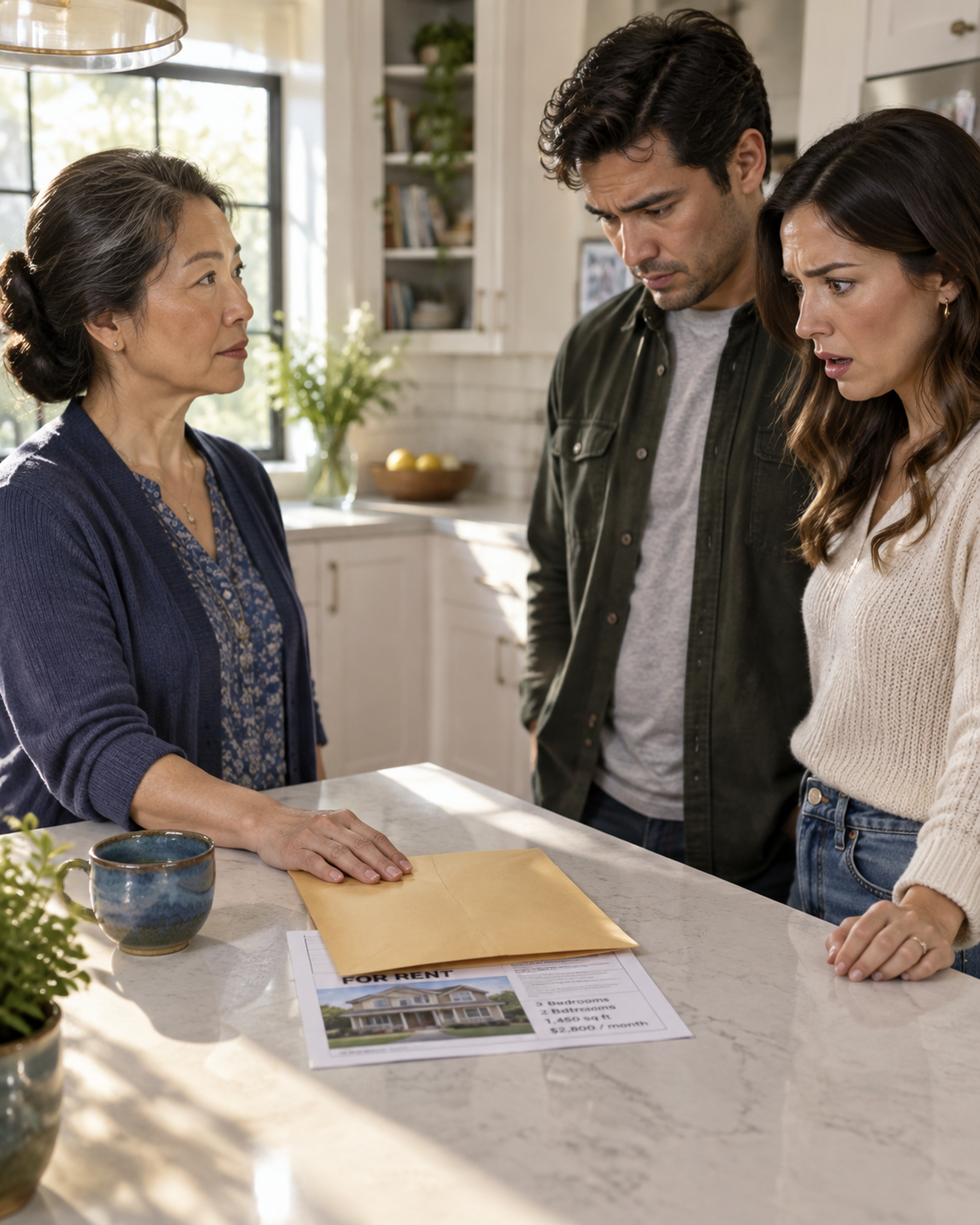
My daughter-in-law called my home “perfect for the nursery” and left a rental listing on my kitchen counter—as if I had already agreed to move out…
The Home They Wanted for Their Baby—And the Documents That Changed Their Plans My daughter-in-law called my home “perfect for...
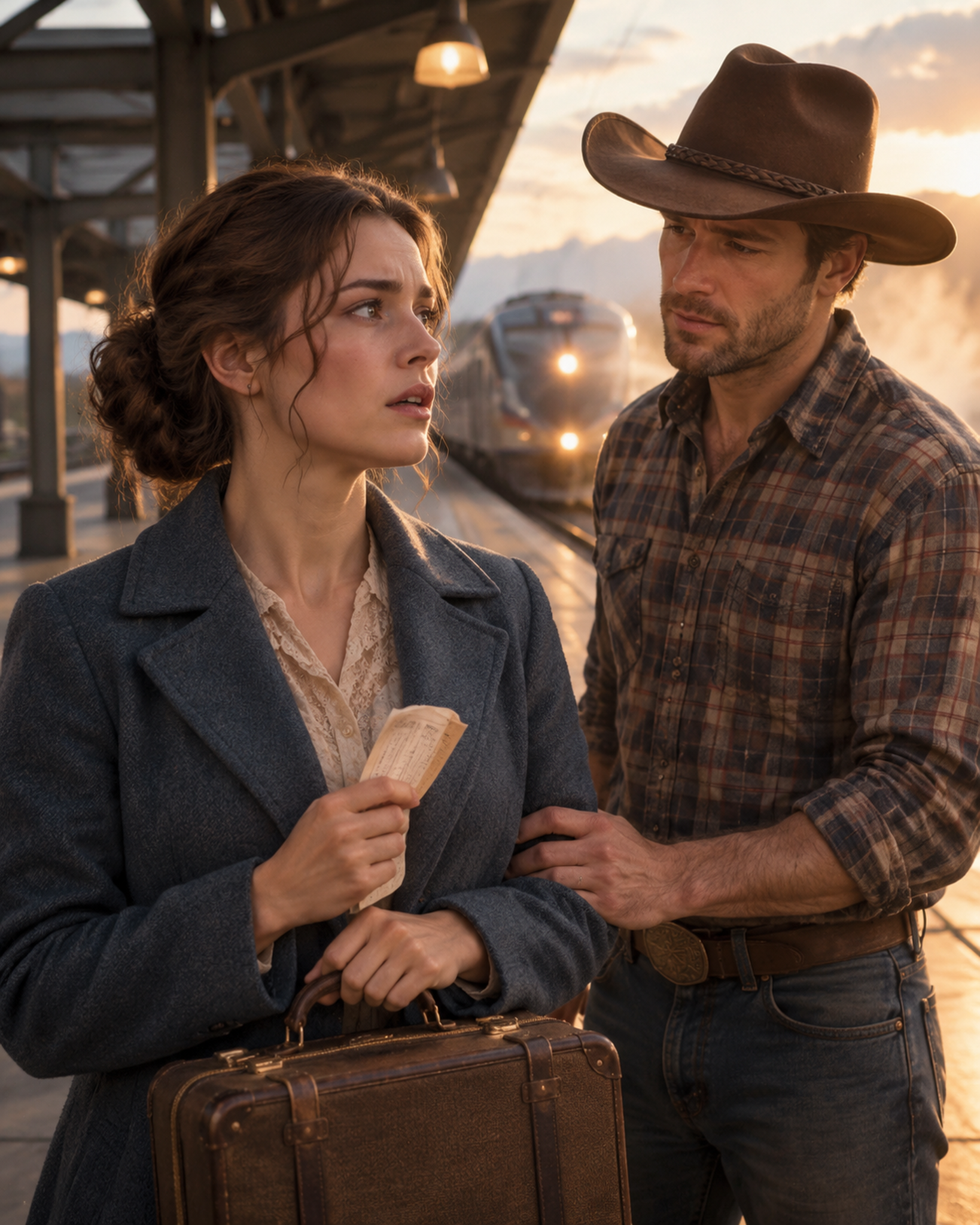
For Three Years, a Widowed Kansas Rancher Bought a Train Ticket Every Friday and Waited on the Same Bench—Until a Lonely Station Clerk Sat Beside Him in the Rain, Asked Whom He Was Waiting For, and Discovered Why He Could Never Stop Coming Back
Wilson’s fingers remained on the worn ticket as Mara looked down at it. The edges were nearly transparent where they...
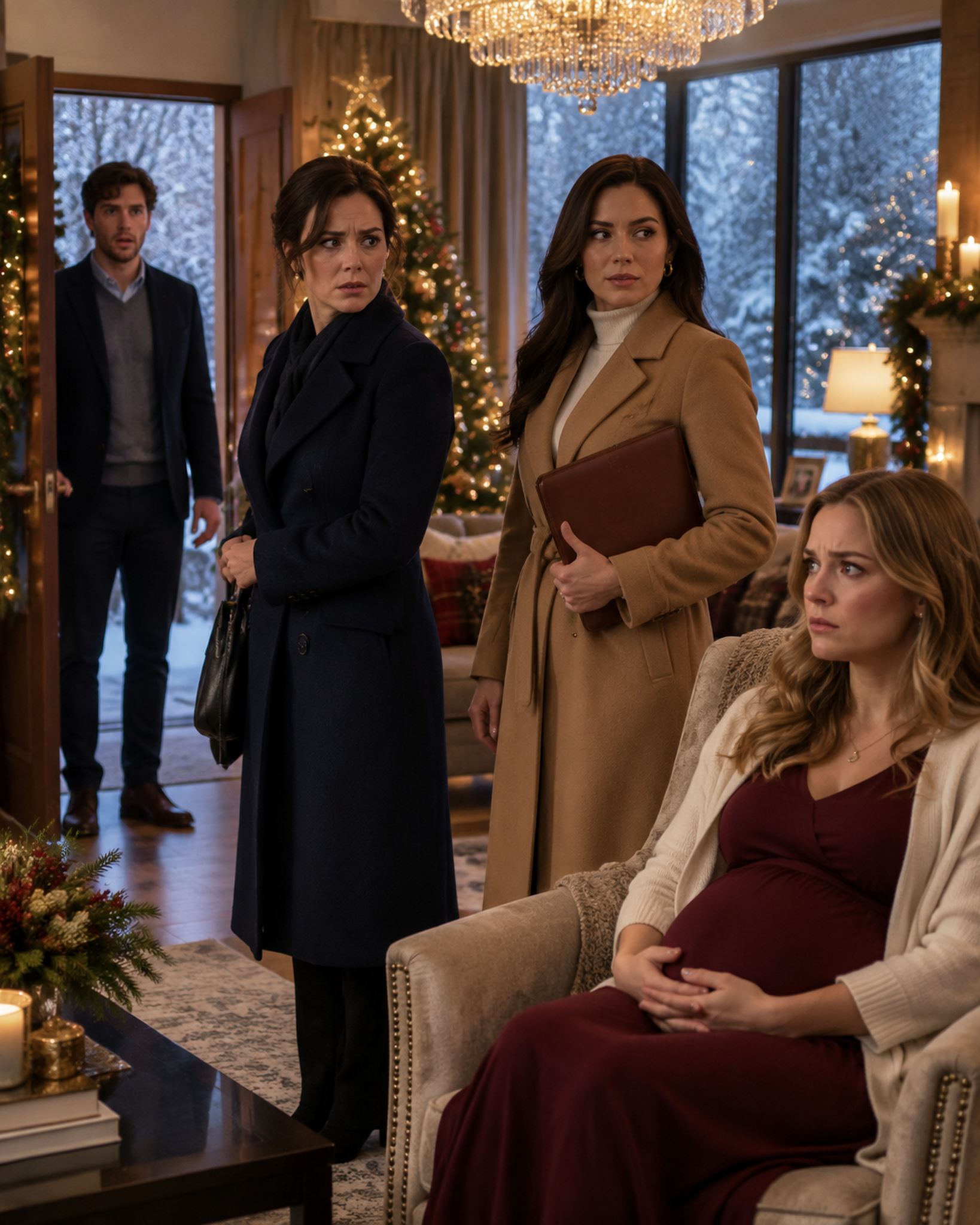
Thirty-two weeks pregnant, I watched my husband walk into his family’s Christmas party with another woman wearing the diamond necklace he had secretly purchased during a hotel stay. Sixty guests were watching when I finally told him, “Since you brought someone, I brought someone too”—but Matthias had no idea that his infidelity was no longer the most dangerous secret I had uncovered.
PART 2 The man standing in the doorway was not a stranger to Matthias. Neither was the woman beside him....