The Marquis Mocked His Bride for Her Fortune — By Dawn, She Had Vanished With a Sealed Letter
Part 1
The first thing Lady Rosalind Howard heard was laughter.
Not the pleasant laughter of people enjoying an evening among friends, but the low, careless laughter of men who believed themselves safely beyond the reach of consequences.
She stood behind a folding screen in the west gallery of Bellmere House, one hand resting against the carved wooden frame.
Beyond it, her future husband was entertaining his companions with an account of the marriage they were expected to celebrate within a fortnight.
“An excellent arrangement,” Lord George Campbell declared. “Howard supplies the money, I supply the title, and everyone goes home convinced that love has triumphed.”
Someone laughed.
“And the bride?” another gentleman asked.
George’s answer came without hesitation.
“She will be installed at Ashcroft Lodge before the London season begins.
It is a tolerably comfortable property, sufficiently remote to discourage visitors and sufficiently dull to suit her disposition.
She may spend the rest of her days talking to flowers while I make proper use of her fortune.”
More laughter followed.
Rosalind did not move.
Across the gallery, a chandelier scattered candlelight over painted ceilings and gilded mirrors.
Music drifted upward from the ballroom below.
The palace was crowded with people who had come to admire the approaching union of two distinguished families.
For three months, Rosalind had endured their congratulations.
She had thanked elderly countesses for their advice, accepted jeweled gifts she did not particularly want, and listened while her father spoke proudly of the future Marchioness of Bellmere.
She had even persuaded herself that George’s occasional impatience was an unfortunate habit rather than a revelation of character.
Now, behind a screen scarcely six feet from him, she heard the truth.
A woman’s voice entered the conversation.
“Surely you mean to allow the poor creature an occasional visit to town?”
Lady Amanda Stanhope.
Rosalind recognized the languid sweetness immediately.
George laughed.
“My dear Amanda, London will survive the deprivation.
Besides, Lady Rosalind has never demonstrated the slightest aptitude for society.
She can identify a hundred varieties of moss but cannot distinguish a compliment from an insult.”
“An accomplishment that may prove useful in marriage,” Amanda replied.
The gentlemen roared.
Rosalind glanced down at her left hand.
The diamond George had presented to her lay against the pale silk of her glove.
It was a magnificent stone, cold and flawless, purchased on credit, as she would later discover.
She turned the ring once.
Then she listened more carefully.
One of George’s companions lowered his voice.
“And Howard has agreed to release the entire settlement?”
“Upon solemnization of the marriage.”
“Even the capital?”
“The portion placed under trusteeship is a tiresome complication.
But I have been assured it can be managed.”
George spoke with the confidence of a man who had never considered that someone else might examine the promises he made.
“The important thing,” he continued, “is that the old gentleman believes me devoted to his daughter.
He has always mistaken good manners for good intentions.”
Rosalind felt something change inside her.
There was no sudden collapse, no dramatic pain.
Instead, a cold certainty settled into place.
George did not merely lack affection for her.
He had constructed an entire future around her disappearance.
He meant to take her wealth, send her away, and live as though she had ceased to exist.
Rosalind lowered her hand.
She had spent twenty-six years learning the difference between a healthy plant and a diseased one.
Her mother had taught her that disease often appeared first beneath the surface, while the leaves remained green and beautiful.
She had failed to apply the lesson to people.
But she would not fail twice.
She stepped away from the screen and crossed the gallery without attracting attention.
At the head of the staircase, she encountered Mrs.
Finch, the elderly housekeeper who had served the Howard family since Rosalind’s childhood.
“My lady? Is something wrong?”
“No,” Rosalind answered.
Then she corrected herself.
“Something has become perfectly clear.”
She walked upstairs.
Her rooms occupied the south wing of Bellmere House.
The adjoining chamber had already been prepared for her wedding morning.
On a dressmaker’s stand stood an ivory silk gown embroidered with tiny silver flowers, its long train spread over a carpet the color of winter roses.
Rosalind looked at it for a moment.
She remembered the fitting, her father’s satisfaction, George’s bored inspection of the sleeves.
She remembered being told how fortunate she was.
Then she rang for her maid.
Martha arrived carrying a folded shawl.
“My lady?”
“Fetch my traveling trunk.
The smaller one.”
Martha blinked.
“Are we going somewhere?”
“Yes.”
“When?”
“Tonight.”
The shawl slipped slightly in Martha’s hands.
“But the wedding preparations—”
“Will no longer be necessary.”
Rosalind removed her engagement ring and placed it on the dressing table.
Martha stared at it.
“Has Lord George offended you?”
“He has explained himself more thoroughly than he intended.”
Rosalind opened the writing desk.
Inside lay a narrow black leather notebook, three bundles of botanical correspondence, the miniature portrait of her mother, and a small packet of legal papers concerning the estate left to her by her maternal grandmother.
Those papers mattered more than anything else in the room.
Rosalind’s grandmother, Lady Eleanor Whitcombe, had been an unusually determined woman.
Widowed young, she had managed her own land, disputed an unscrupulous steward’s accounts, and maintained a botanical collection celebrated among a small circle of serious naturalists.
When she died, she left Rosalind an independent fortune administered by trustees until her marriage or her thirtieth birthday.
The trust was supposed to protect her.
Rosalind now understood why George had shown such unusual enthusiasm for the wedding settlement.
She unlocked the bottom drawer and removed the trust documents.
A folded sheet slipped from between them.
It was a letter from her grandmother, written a few weeks before her death.
Rosalind had read it many times.
My darling girl, never surrender the judgment God has given you merely because someone more powerful demands your obedience.
Money can restore a damaged house.
It cannot restore a life willingly abandoned.
Rosalind touched the faded signature.
Then she placed the letter in her traveling case.
“Only my own possessions,” she instructed Martha. “Nothing belonging to Lord George, and nothing purchased for the wedding.”
“And where shall I tell the coachman to take us?”
“Cumberland.”
Martha hesitated.
“To Stonehaven?”
Rosalind nodded.
The name belonged to Nicholas Vale, Duke of Stonehaven, a distant acquaintance of her grandmother’s.
Years earlier, he had written to Rosalind concerning a rare alpine plant.
The correspondence had continued, irregularly but respectfully, after Lady Eleanor’s death.
Nicholas had never offered the kind of polished attention George showered upon women at parties.
His letters concerned drainage, horticultural experiments, improvements to tenant cottages, and the difficulty of preserving fragile plants against the northern winters.
There had been no flattery.
Rosalind had appreciated that.
Her grandmother had once described him as a man who valued truth so highly that he occasionally forgot what society preferred in its place.
It seemed a useful quality in the present circumstances.
Rosalind sat at her desk and wrote two letters.
The first was addressed to her father.
She explained that she could not marry George Campbell, that she had discovered his intentions, and that she would communicate further when she had secured independent legal advice.
She did not apologize.
The second letter was shorter.
Lord Bellmere,
I have heard your plans for my married life.
You will therefore understand why I have decided not to participate in them.
The engagement is ended.
My solicitors will address any question concerning the settlements.
You may keep your title.
I intend to keep my judgment.
Rosalind Howard.
She sealed the letter with dark red wax.
Beside it she placed the diamond ring.
At half past two in the morning, while the last guests were still drinking below, Rosalind descended the servants’ staircase in a plain traveling dress.
Mrs.
Finch stood beside the rear entrance.
A hired carriage waited beyond the gate.
The housekeeper’s eyes filled with tears when she saw the luggage.
“Your mother would have understood,” she whispered.
For the first time that evening, Rosalind nearly lost her composure.
“Do you think so?”
“I knew her, my lady.
Better than most.”
Mrs.
Finch pressed a small parcel into her hands.
“Something to eat.
The northern roads are long.”
Rosalind embraced her.
Then she stepped into the carriage.
The wheels began turning before the clock struck three.
By sunrise, Bellmere House was still full of flowers, musicians’ bills, wedding presents, and distinguished guests.
But its intended bride was gone.
George discovered the absence shortly after nine.
He entered the breakfast room complaining of a headache and demanding coffee.
Amanda Stanhope sat near the window, examining a newspaper.
“Where is Rosalind?” George asked.
“Perhaps she is sulking over something.”
“She does not sulk.”
“How fortunate for you.”
Mrs.
Finch entered with a silver tray.
Upon it lay the sealed letter and the engagement ring.
George recognized the handwriting.
He opened the letter.
His expression changed.
Amanda watched him closely.
“What is it?”
George read the note again.
Then he crushed it in his fist.
“She has left.”
Amanda set down her newspaper.
“Left where?”
“How the devil should I know?”
He strode toward the door.
“Find Howard.
Find the servants.
Find anyone who saw her leave.”
Amanda rose.
“George, what exactly did she hear?”
He stopped.
For one terrible instant, he remembered the gallery, the sherry, and the laughter.
“Nothing of consequence.”
Amanda’s face tightened.
“Men rarely recognize the consequence of things they say when drunk.”
Before George could answer, a footman appeared.
“My lord, three gentlemen have arrived from the City.
They say they must speak with you urgently.”
George went still.
“Tell them to return tomorrow.”
“They insist the matter concerns the notes falling due next week.”
Amanda understood.
She had known about the debts, though not their full extent.
George had mortgaged the income from two estates, lost heavily at cards, and borrowed against an anticipated inheritance that had never materialized.
His marriage to Rosalind was meant to settle everything.
Without her fortune, he would have to account for obligations he could not honor.
One of the creditors entered without waiting for permission.
Mr.
Samuel Pritchard was a thin man with iron-gray hair and an expression untouched by sympathy.
“My lord, we have been advised that the wedding may not proceed.”
“A misunderstanding.”
“Then perhaps you will confirm the date upon which the settlement funds are to be released.”
George’s mouth tightened.
“The arrangement remains in force.”
“Does it?”
Pritchard removed a folded document from his case.
“Because I understand Lady Howard has withdrawn her consent.”
George seized upon the only defense he could imagine.
“She has been influenced.
Someone has persuaded her to behave irresponsibly.”
“Who?”
George did not know.
But he intended to find out.
By noon he had learned that a hired carriage had departed toward the Great North Road.
By evening, one of his agents reported a change of horses outside Peterborough.
George studied the map in his library.
There were only a handful of reasons Rosalind might travel north.
He found the answer when he remembered the correspondence he had once mocked.
“Stonehaven.”
He spoke the name with disgust.
The duke was wealthy, independent, and notoriously unwilling to oblige men whom he despised.
Worse, George believed, Nicholas Vale might prove susceptible to the appeal of a woman in distress.
George ordered his horse saddled.
He would bring Rosalind back.
And if the duke refused to cooperate, George would make certain that all London heard how a nobleman had sheltered another man’s promised bride.
Three days later, beneath a bitter sky, Rosalind reached Stonehaven.
The castle stood above a gray valley, its walls dark with rain and its western towers overlooking the distant sea.
It had none of Bellmere’s ornamented extravagance.
The gatehouse was plain.
The courtyard was crowded with working carts.
Beyond the stables, men were repairing a collapsed boundary wall.
Rosalind found the sight strangely reassuring.
Here was a house occupied with something beyond its own appearance.
A servant led her through a stone passage into a library warmed by an enormous fire.
A tall man stood beside a table covered with estate plans.
He turned as she entered.
Nicholas Vale was thirty-seven, broad-shouldered, dark-haired, and possessed of an expression that could discourage unwelcome conversation without the assistance of words.
For a moment, he simply looked at her.
Then he bowed.
“Lady Rosalind.”
“Your Grace.”
“I received no notice that you were traveling.”
“I know.”
“Are you in danger?”
Rosalind had prepared explanations for her conduct, apologies for arriving unexpectedly, and assurances that she would not inconvenience his household.
The directness of his question made them all seem unnecessary.
“Possibly.”
Nicholas motioned toward a chair.
“Then sit beside the fire.”
She remained standing.
“I have ended my engagement to Lord Bellmere.”
“So I understand.”
Rosalind stared.
“How?”
“A messenger brought news from London yesterday.
Rumors travel remarkably well when their owners are embarrassed.”
“I did not come to embarrass anyone.”
“That is often how one manages to embarrass the right people.”
Despite herself, Rosalind almost smiled.
Nicholas studied her travel-stained dress and exhausted face.
“Have you eaten?”
“At the last coaching inn.”
“Which was?”
She considered.
“Yesterday afternoon.”
He rang the bell.
“Then food comes before explanations.”
Rosalind felt the unexpected sting of tears.
She had crossed half England prepared to defend her decision.
She had rehearsed every argument by which a woman might justify leaving a powerful man.
Yet Nicholas asked only whether she was safe and whether she had eaten.
When a servant brought tea and bread, he moved the papers aside to make room.
“I have come to request temporary hospitality,” Rosalind said. “And, if possible, assistance in finding a solicitor who is not dependent upon my father or Lord Bellmere.”
“You shall have both.”
“Your Grace, you have not heard my account.”
“I shall hear it when you wish to tell me.”
“You may be accused of interfering in another family’s affairs.”
“I have been accused of worse.”
He sat opposite her.
“But I must ask you something plainly, Lady Rosalind.”
She raised her eyes.
“Did you come here of your own free will?”
“Entirely.”
“Do you wish to remain?”
“For the present.”
“Then you are welcome.”
The answer was so simple that Rosalind could scarcely believe it.
Nicholas reached for a sheet of paper.
“I shall write to my solicitor in Carlisle.
He can begin by examining the marriage settlement and your grandmother’s trust.”
He paused.
“There is one matter you should understand.
Stonehaven is not a secluded place.
I have tenants, employees, visitors, and responsibilities that are quite public.
If you remain, some may question your presence.”
“I am aware.”
“I will not conceal you as though you have committed a crime.”
“Nor would I consent to it.”
For the first time, Nicholas smiled.
It was a small, reluctant expression, but it transformed his face.
“Then perhaps we shall manage.”
That night Rosalind slept for twelve uninterrupted hours.
When she woke, a gray morning pressed against the windows.
Her room overlooked a walled garden and a large glasshouse stretching along the eastern slope.
She stood at the window longer than necessary.
Several panes were clouded with condensation.
A section of the roof appeared to be patched with boards.
The plants inside looked badly neglected.
At breakfast, she asked about them.
Nicholas glanced up from his correspondence.
“The conservatory belonged to my mother.”
“Does no one tend it?”
“The head gardener maintains what he can.
Much of the collection has deteriorated.”
Rosalind hesitated.
“Would you permit me to examine it?”
Nicholas lowered his pen.
“You have crossed the country to escape a marriage.
I would not expect you to spend your first morning working.”
“Work is precisely what I should like.”
He considered her for a moment.
“Then I shall show you.”
The conservatory smelled of damp soil and decaying leaves.
Rosalind recognized the familiar distress of plants struggling against unsuitable conditions.
A camellia drooped beside a leaking pipe.
Several ferns had been left in standing water.
Along the northern wall, rare specimens stood beneath cracked glass exposed to the winter air.
She moved among them with increasing concentration.
Nicholas followed, listening as she explained what could be saved.
At the far end of the glasshouse, she stopped before an old wooden cabinet.
Its brass label bore a name she recognized.
ELEANOR WHITCOMBE — 1809
Rosalind stared.
“My grandmother?”
Nicholas approached.
“My mother and Lady Eleanor exchanged botanical specimens for years.”
“She never told me her collection was here.”
“Their correspondence continued until my mother’s death.”
Rosalind knelt and opened the cabinet.
Inside lay seed packets, pressed flowers, and a weathered notebook wrapped in linen.
The first pages contained descriptions written in her grandmother’s unmistakable hand.
Rosalind turned them carefully.
A folded letter fell onto the stone floor.
Nicholas bent to retrieve it.
The envelope was addressed to his late mother.
Across its lower corner, in Lady Eleanor’s handwriting, were five words:
Concerning the Howard trusteeship.
Private.
Rosalind looked up.
“My grandmother’s fortune?”
Nicholas examined the seal.
It had never been broken.
And beneath it, faintly visible through the yellowed paper, was the outline of a second document.
Rosalind held out her hand.
“Your Grace, I believe we have found something that should have reached my family many years ago.”
Outside the conservatory, a bell began ringing at the gatehouse.
A servant came hurrying across the courtyard.
“My lord,” he called. “Lord Bellmere has arrived.”
Nicholas looked toward the windows.
Then back at Rosalind.
“Shall I turn him away?”
Rosalind folded the unopened letter between her hands.
“No,” she said.
Her voice was steady.
“Let him discover that I am no longer afraid to answer for myself.”
Part 2
George Campbell arrived at Stonehaven expecting resistance.
What he had not expected was indifference.
The duke received him in a plain morning room overlooking the courtyard.
There were no elaborate refreshments, no anxious servants rushing to satisfy him, and no visible concern regarding the marquis’s displeasure.
Nicholas stood beside the fireplace.
George remained near the door, muddy from the road.
“I have come for Lady Rosalind,” he announced.
Nicholas gave no immediate reply.
“Have you?”
“Her family has entrusted her to my care.”
“She is not married to you.”
“She is contracted to become my wife.”
“An engagement is not a deed of ownership.”
George flushed.
“I did not travel two hundred miles to exchange philosophical observations.”
“Then you have had an unfortunate journey.”
George advanced a step.
“I demand to see her.”
“You may request an interview.
Whether she grants it is her decision.”
“She has been misled.”
A voice answered from the doorway.
“No, George.
For the first time, I have been properly informed.”
Rosalind entered wearing a dark blue wool dress.
There were no jewels at her throat, only a small black onyx cameo that had belonged to her mother.
George turned sharply.
“Rosalind.”
She inclined her head.
“Lord Bellmere.”
The formality unsettled him.
“Come home.”
“I have no home in your house.”
“Do not be absurd.
Whatever misunderstanding has occurred can be resolved privately.”
“Then explain it.”
George glanced at Nicholas.
“This is hardly an appropriate conversation before strangers.”
“The duke is my host, not a stranger.”
George lowered his voice.
“Rosalind, you have embarrassed both our families.
If you return now, I am prepared to overlook the matter.”
She looked at him for a long moment.
“How generous.”
His face hardened.
“Do not provoke me.”
There it was.
The familiar warning concealed beneath the polished manners.
Rosalind felt an old instinct urging her to soften her words, apologize for the inconvenience, and preserve the appearance of harmony.
She let the instinct pass.
“You intend to use my grandmother’s fortune to pay your creditors,” she said. “Then you intend to send me to Ashcroft Lodge while you remain in London.”
George’s expression changed.
“You heard a private conversation.”
“Yes.”
“It was a jest.”
“Which part?”
He hesitated.
“The exaggeration concerning Ashcroft.”
“And the debts?”
George glanced toward Nicholas.
“These are matters you cannot understand.”
“Then perhaps you should explain them carefully.
I have time.”
Nicholas remained silent.
George’s impatience grew.
“Your father has already agreed to the settlement.”
“My father cannot manufacture my consent.”
“Your name is attached to the preliminary agreement.”
“A preliminary agreement is not a wedding.”
George’s mouth tightened.
“Do you realize what people will say?”
Rosalind looked at him without blinking.
“Yes.
I have spent three days considering it.”
“And?”
“I have discovered that gossip is less frightening than a lifetime beside a man who despises me.”
George stared at her.
For the first time, he seemed to recognize that the woman standing before him was not the obedient creature he remembered.
He turned to Nicholas.
“Your Grace, I hold you responsible for encouraging this disgrace.”
Nicholas walked to the door.
“You are welcome to submit your complaint to my solicitor.”
“You cannot shield her forever.”
“I have made no such promise.”
George smiled unpleasantly.
“Then you admit there may come a time when she must answer for her conduct.”
Rosalind stepped forward.
“I am answering now.”
Silence followed.
George’s gaze shifted between them.
Then he bowed with deliberate contempt.
“This is not finished.”
“No,” Rosalind answered. “It is not.”
After he departed, she returned to the conservatory.
Her hands began trembling only when she was alone.
She stood beside the camellias, gripping the edge of a potting table until the shaking stopped.
She was angry with herself for it.
George had made threats.
She had resisted them.
Nicholas had supported her.
There was no reason to feel as though she had narrowly escaped a precipice.
Yet her body remembered the pressure of years spent accepting small humiliations as necessary sacrifices.
She heard footsteps.
Nicholas entered carrying the envelope from the cabinet.
“I thought you might want this.”
Rosalind looked away.
“Forgive me.
I am not fit for conversation.”
“Then we need not converse.”
He placed the envelope on the table and moved to the opposite side of the glasshouse.
For several minutes he inspected a broken window latch while she recovered herself.
Eventually, Rosalind spoke.
“Did you think me foolish?”
Nicholas turned.
“For leaving him?”
“For becoming engaged to him.”
He considered the question seriously.
“I think a dishonest man can be remarkably persuasive when people have reasons to believe him.”
“My father admired his title.”
“And you?”
Rosalind looked down.
“I admired the idea that my father’s happiness might be secured without requiring me to abandon everything I loved.”
Nicholas said nothing.
“My father has never understood why I study plants.
He thinks it a pastime I should surrender once I have children.
George appeared willing to tolerate it.”
“Tolerance can be a poor foundation for marriage.”
“I know that now.”
Nicholas approached the table.
“My father believed duty required me to marry a woman whose family owned the adjoining estates.”
Rosalind raised her eyes.
“What happened?”
“I refused.”
“Was she unsuitable?”
“Not at all.
She was intelligent, accomplished, and entirely devoted to a young naval officer.”
Rosalind blinked.
“Then why had the marriage been proposed?”
“Because our fathers considered their preferences more important than ours.”
“What became of her?”
“She married the officer.
They have four children, a house in Portsmouth, and occasionally send me dreadful drawings of ships.”
Rosalind laughed unexpectedly.
Nicholas’s expression softened.
“My father did not speak to me for nearly two years,” he added.
“Do you regret it?”
“I regret that he spent those years angry.
I do not regret the decision.”
The distinction mattered.
Rosalind looked at the envelope.
“Perhaps my grandmother understood such things better than most.”
“Shall we open it?”
The old wax broke beneath her fingers.
Inside were two folded documents.
The first was a letter from Lady Eleanor to the duchess.
The second was a memorandum signed by Eleanor and witnessed by two solicitors.
As Rosalind read, her face became increasingly still.
Her grandmother had discovered irregularities in the accounts of a charitable agricultural trust administered jointly by the Howard family and several neighboring landowners.
Small sums had been withdrawn repeatedly for improvements that had never taken place.
Some payments were recorded as loans secured against future trust income.
The memorandum identified the agent responsible for preparing the accounts.
His name was Edward Campbell.
George’s uncle.
Rosalind looked up sharply.
“Did your mother know this?”
Nicholas took the letter and read it.
“Apparently Lady Eleanor intended to confront the trustees.
She asked my mother to preserve copies in case the original records disappeared.”
“But why did she never do so?”
Nicholas turned the page.
“There was an illness.
Your grandmother died that winter.
My mother died the following summer.”
Rosalind felt a tightening in her chest.
“And the papers remained here.”
“Yes.”
She examined the memorandum again.
It described financial misconduct committed more than a decade earlier.
Not proof of George’s present wrongdoing.
But the connection disturbed her.
“Perhaps the Campbell family has been using other people’s fortunes for longer than we realize.”
Nicholas hesitated.
“Possibly.
But suspicion is not evidence.”
“I know.”
“Then we shall begin with evidence.”
He sent for Mr.
Thomas Ellery, his solicitor in Carlisle.
Ellery was a careful man with sandy hair and a habit of removing his spectacles whenever a case became interesting.
He examined the old memorandum, the proposed marriage settlement, and the trust deed Rosalind had brought from London.
Then he leaned back.
“Lady Rosalind, the first question is whether you have executed any document authorizing payment.”
“No.”
“Have you signed the final marriage settlement?”
“No.”
“Have you made any private undertaking to Lord Bellmere or his creditors?”
“None.”
“Excellent.”
Rosalind looked surprised.
“Then he cannot compel me to marry him?”
“No one can lawfully force you to stand at the altar.
He might threaten proceedings over a broken promise, though their success would depend upon the circumstances and the available evidence.”
“And my grandmother’s estate?”
“That is more complicated.”
Ellery spread the trust papers across the table.
“Your grandmother placed the capital under the control of three trustees.
Two are deceased.
The surviving trustee is your father.”
Rosalind nodded.
“However,” Ellery continued, “the deed provides for the appointment of a replacement trustee when the number falls below two.
I can find no valid appointment.”
“Does that invalidate the trust?”
“Not necessarily.
But it means we must examine the administration very carefully.”
Nicholas watched him.
“Why?”
Ellery tapped a page.
“Because several documents attached to the proposed marriage settlement refer to income that may not be available for immediate release.”
Rosalind frowned.
“George told my father the opposite.”
“Then either Lord Bellmere was mistaken, or someone has represented the trust’s assets in a manner they cannot support.”
The solicitor removed his spectacles.
“I should like to see the original ledgers.”
Rosalind thought of the papers George had once shown her father.
He had spoken vaguely of certain obligations that would be “resolved upon the union of our houses.”
Her father had been delighted by the confidence of the arrangement.
Now she wondered whether he had read any of it.
She wrote to him that evening.
The reply arrived four days later.
It was full of disappointment.
Her father accused her of exposing the family to ridicule, of behaving recklessly, and of trusting a northern duke whose interest in her circumstances was, he suggested, insufficiently explained.
He also revealed that he had pledged part of his personal estate as additional security for George’s creditors.
Rosalind read the letter twice.
Then she handed it to Nicholas.
He examined the page.
“Your father has borrowed money?”
“Apparently.”
“Did you know?”
“No.”
Nicholas looked troubled.
“Then this matter reaches further than your intended marriage.”
Rosalind went to the window.
Beyond the courtyard, mist drifted across the hills.
“My father spent years protecting the Howard name,” she said quietly. “I cannot believe he would risk everything without understanding what he had signed.”
“People can be persuaded to gamble when someone convinces them they are already winning.”
Rosalind turned.
“Then perhaps my father is another man George intends to ruin.”
Nicholas did not answer immediately.
He was thinking of the memorandum hidden in the conservatory.
Of Edward Campbell.
Of the documents that had survived two deaths and seventeen years.
And of a family that appeared once again at the center of someone else’s threatened fortune.
He summoned Ellery.
Within a week, the solicitor had obtained copies of several financial instruments through legitimate inquiries to the parties concerned.
Two bore George Campbell’s signature.
One purported to assign future income from Rosalind’s grandmother’s trust.
The second promised repayment from land in Northumberland.
But the Northumberland land had been sold years earlier.
Even more troubling was a letter George had sent to a London lender, describing Rosalind as already bound to the settlement and presenting her expected marriage as a certainty.
Ellery placed the papers before her.
“These representations may be actionable if they induced advances.
We must establish precisely who knew what, and when.”
Rosalind examined the signature.
“I recognize his handwriting.”
“Can you establish that he knew the land had been sold?”
“Not from this.”
“Then we must find more.”
During the following weeks, the search for evidence took place alongside a quieter transformation.
Rosalind restored the conservatory.
She organized the surviving botanical collections, worked beside the gardeners, and persuaded Nicholas to replace the failing hot-water pipes.
He asked her opinion on improvements to the estate.
She asked his on drainage and the management of the orchards.
They disagreed frequently.
Nicholas favored replacing an old stone wall that sheltered the southern garden.
Rosalind insisted it could be repaired and that its position protected several delicate shrubs.
He brought plans.
She brought measurements.
The wall was repaired.
A week later, Nicholas admitted that her solution had saved a considerable sum.
Rosalind smiled.
“I shall make a note of the occasion.”
“I fear you are already keeping a record.”
“An accurate one.”
He laughed.
It became a sound she listened for without intending to.
One evening a sudden storm broke over Stonehaven.
Wind battered the western windows, and rain drove through a gap in the conservatory roof.
Rosalind hurried outside when a servant reported the damage.
Nicholas found her in the glasshouse, helping two gardeners carry trays of seedlings away from the exposed wall.
“Those panes may fall,” he warned.
“Then help me move the last table.”
“Rosalind—”
She turned.
It was the first time he had used her name without a title.
For a moment they stared at each other.
Then a sharp crack echoed overhead.
Nicholas seized her arm and pulled her aside as a glass panel shattered against the stone floor.
Fragments scattered across the place where she had stood.
He released her immediately.
“Are you hurt?”
“No.”
“Certain?”
“Quite.”
His face was pale beneath the lamplight.
“You might have been killed.”
“So might the gardener standing behind me.”
Nicholas looked at her.
Then at the shattered glass.
Finally he let out a breath.
“That is true.”
He helped the servants move the remaining plants.
Only afterward, in the quiet library, did Rosalind notice blood on his cuff.
A shard had cut his hand.
She insisted on examining it.
“It is nothing,” he said.
“Your judgment in horticultural matters has already been found unreliable.
I see no reason to trust it in medicine.”
He submitted to the bandage.
As she wrapped the linen around his palm, she noticed an old scar running across his knuckles.
“How did you get this?”
“A fall from a horse.”
“An alarming horse.”
“A disagreeable one.”
She smiled.
Then she realized how close they stood.
Nicholas’s gaze fell to her face.
The silence changed.
Rosalind became acutely aware of his breathing, of the warmth of the fire, and of her hand still holding his.
She withdrew it carefully.
“That should do.”
“Thank you.”
Neither moved.
At last Nicholas spoke.
“You are not obliged to remain here because I have helped you.”
“I know.”
“Nor must you fear that accepting my friendship creates another debt.”
Rosalind lifted her eyes.
“Do you consider us friends?”
“I should like to.”
There was no practiced charm in his expression.
Only uncertainty.
Rosalind found it infinitely more affecting than George’s polished declarations.
“I should like that too.”
Outside, the storm continued.
Inside, something fragile and necessary had begun to take root.
The danger returned with a letter from London.
It came from Lady Amanda Stanhope.
Rosalind recognized the handwriting immediately.
The letter was written in a nervous, uneven hand, altogether unlike Amanda’s usual elegant correspondence.
My lady,
I have learned something concerning Lord Bellmere that I believe you should know.
I am not innocent in the matter, but neither am I willing to be destroyed for his benefit.
If you will meet me privately in London, I can show you documents he has concealed.
Do not inform Lord Bellmere.
Rosalind showed the letter to Nicholas.
He read it in silence.
“Do you trust her?”
“No.”
“Then why consider meeting?”
“Because she knows George’s business.”
“She may be setting a trap.”
“Yes.”
Nicholas studied her expression.
“You intend to go.”
“I intend to discover whether the evidence exists.”
He turned toward the fireplace.
After a moment he said, “Then you will not go alone.”
Rosalind opened her mouth.
Nicholas raised a hand.
“Not because I doubt your courage.
Because I would rather not make a gift of our advantage to George.”
She considered that.
“Then we shall travel together.”
They reached London beneath a cold February rain.
Amanda requested a meeting at a private house near St.
James’s Square.
Rosalind insisted that Ellery attend.
Nicholas accompanied her but remained in an adjoining room.
Amanda appeared twenty minutes late.
She wore a dark traveling cloak and looked as though she had not slept.
“You brought a solicitor,” she said.
“Of course.”
Amanda gave a bitter laugh.
“I suppose I deserve that.”
She removed a leather portfolio from beneath her cloak.
Inside lay letters, receipts, and a copy of a financial agreement.
“George borrowed against his anticipated marriage,” she said. “But that was not enough.”
Rosalind looked at the papers.
“He has done something else?”
Amanda nodded.
“He arranged for money to be advanced against a parcel of land that belonged to your grandmother’s charitable trust.”
Rosalind’s stomach tightened.
“That land cannot be pledged by him.”
“He claims the authority came through your father.”
“Did it?”
Amanda shook her head.
“I do not believe so.”
Ellery examined the agreement.
Then his expression changed.
The signature purporting to be Sir Henry Howard’s appeared at the bottom of the page.
But beside it was a witness’s signature.
Edward Campbell.
George’s uncle.
The same man named in the old memorandum.
Rosalind felt an icy recognition.
“The signature was obtained when?” Ellery asked.
“Last autumn.”
“And Edward Campbell witnessed it?”
“That is what the document states.”
Ellery looked up.
“Mr.
Campbell died seven years ago.”
The room fell silent.
Amanda pressed a hand against her mouth.
Rosalind examined the page again.
There could be no innocent explanation for a dead man’s signature appearing on a recent financial instrument.
“Who prepared this?” she asked.
Amanda hesitated.
“George had a clerk who could reproduce almost any handwriting.”
“His name?”
“Frederick Marsh.”
“Where is he?”
Amanda’s eyes filled with fear.
“That is why I asked you to come.”
She drew out another paper.
“He disappeared three nights ago.
Before leaving, he sent me this.”
It was a statement written by Marsh and signed before a witness.
He admitted preparing false documents at George’s direction.
But the final lines were worse.
Lord Bellmere has instructed that Lady Howard’s trust papers are to be destroyed before any inquiry can reach them.
He has also spoken of securing Sir Henry Howard’s cooperation by threatening to expose his debts.
Rosalind put the statement down.
Her father had not merely been deceived.
He had been trapped.
Nicholas entered when Amanda called for him.
Ellery explained the discovery.
The duke examined the documents without speaking.
Then he turned to Rosalind.
“We must bring this before the proper authorities.”
She nodded.
But Amanda had not finished.
“There is another matter.”
She looked at Rosalind with visible shame.
“George has been telling people that you and the duke were corresponding improperly before you fled.”
Rosalind felt her face grow cold.
“That is false.”
“I know.”
“He intends to use it to discredit me?”
“Yes.
And he has already prepared a statement from a servant who claims to have seen you enter His Grace’s rooms at night.”
Nicholas’s expression became dangerous.
“Which servant?”
“I do not know.”
Rosalind looked from Amanda to the solicitor.
Now she understood George’s plan.
He would not merely contest the broken engagement.
He would turn her independence into scandal, accuse Nicholas of improper conduct, and persuade the world that the documents exposing him had been invented by a compromised woman and her supposed lover.
If the scheme succeeded, her father might lose his estate, Nicholas his reputation, and Rosalind the right to be believed.
Ellery gathered the evidence.
“We have a difficult undertaking ahead.”
Nicholas looked at Rosalind.
“Would you prefer to withdraw from public involvement? We can proceed through counsel.”
She shook her head.
“No.”
“Rosalind, the accusations will be ugly.”
“They are ugly already.”
She laid her hand upon the false agreement.
“George has spent months deciding who may speak, who must remain silent, and whose reputation may be sacrificed to preserve his own.”
Her voice hardened.
“I will not let him make that decision again.”
The following morning, Ellery arranged for the evidence to be lodged with the appropriate legal authorities and for witnesses to be examined.
At the same time, a private inquiry into the disputed securities was requested, followed by proceedings that would compel George to account for the transactions.
But before the matter could advance, news reached them from Cumberland.
A fire had broken out in the old records building at Stonehaven.
Several rooms had been destroyed.
Among the papers stored there were copies of the trust correspondence and the original memorandum found in the conservatory.
Nicholas read the message with a face drained of color.
Rosalind stood beside him.
“Was anyone hurt?”
“No.
The night watchman escaped.”
“And the documents?”
Nicholas lowered the letter.
“Some may have survived.”
He did not need to say more.
The blaze had started in the room where their evidence was being assembled.
It might have been an accident.
But after everything they had discovered, neither believed in such convenient accidents.
Rosalind looked toward the windows, where the London rain had begun again.
George had lost his bride, his expected fortune, and the protection of his own lies.
Now he seemed willing to burn the truth itself.
And the most dangerous struggle was still ahead.
Part 3
The hearing began on a Monday morning in a crowded chamber off Westminster Hall.
George Campbell arrived dressed in immaculate dark blue, with his hair carefully powdered and his expression composed for the benefit of everyone watching.
He was accompanied by counsel and two gentlemen who had promised to attest to his honorable intentions.
Rosalind entered with Nicholas and Mr.
Ellery.
The contrast between the parties was plain.
George wore the confidence of a man accustomed to being believed.
Rosalind carried a portfolio of documents.
She had chosen a simple gray dress.
At her throat hung her mother’s onyx cameo.
She had considered wearing the diamonds her grandmother had left her, symbols of the fortune that had attracted George in the first place.
In the end, she left them behind.
She did not want to look wealthy.
She wanted to be heard.
The initial proceedings concerned disputed obligations, alleged misrepresentations to creditors, and the authenticity of documents used to obtain advances.
George’s solicitor began by portraying his client as a gentleman cruelly mistreated by a capricious fiancée.
The marquis, he argued, had entered the marriage arrangement honorably.
Lady Rosalind’s abrupt departure had caused financial damage and public humiliation.
Moreover, she had placed herself under the protection of an unmarried duke under circumstances that invited speculation.
Rosalind listened without moving.
Nicholas sat beside her.
When the solicitor finished, Ellery rose.
He did not begin with George’s character.
He began with dates.
A loan had been negotiated in September.
The document offered as security bore a signature supposedly witnessed by Edward Campbell in October.
Edward Campbell had died seven years earlier.
The relevant death record was produced.
A second document described land that had already been sold.
The register of conveyance was introduced.
A third agreement purported to assign income from a trust without the proper authorization of its trustees.
Ellery explained each discrepancy patiently.
The court’s attention shifted.
George leaned toward his counsel and whispered sharply.
The judge requested the original documents.
The witnesses confirmed their provenance.
Then Ellery introduced Frederick Marsh’s statement.
George’s face changed.
He had expected embarrassment.
He had not expected his former clerk’s confession to reach the court.
His counsel objected to relying upon an untested written admission.
The objection was taken seriously.
Ellery agreed that Marsh’s statement alone could not determine the disputed facts.
Then he announced that the clerk had been located.
Frederick Marsh entered the chamber under the protection of a court officer.
He was a narrow young man, perhaps thirty, with hollow cheeks and hands that shook as he took the oath.
Rosalind watched George.
The marquis had gone very still.
Marsh described his employment in George’s household.
He had copied letters, prepared accounts, and occasionally reproduced signatures at his employer’s request.
At first, the work had seemed harmless.
The letters were presented as duplicates.
The signatures, George had said, belonged to men who had already authorized the transactions.
Then the commissions became more complicated.
Marsh was asked to imitate the signature of Edward Campbell from old documents retained in the family archives.
He was also instructed to prepare a false confirmation of Sir Henry Howard’s authorization.
“Did Lord Bellmere know Mr.
Edward Campbell was dead?” Ellery asked.
“Yes, sir.”
“How can you be certain?”
“Because I reminded him.”
A murmur crossed the room.
“What did he say?”
Marsh looked down.
“He said the dead were useful witnesses because they could not contradict anyone.”
George sprang to his feet.
“Lies!”
The judge ordered him to sit.
Marsh continued.
He described how George had instructed him to prepare additional papers after Rosalind fled.
There was to be an assertion that she had already agreed to place part of her fortune at George’s disposal.
Another document would imply that Nicholas Vale had induced her to break the engagement for his own benefit.
Then came the matter of the fire.
Ellery asked whether Marsh knew of the destruction at Stonehaven.
The clerk hesitated.
“Lord Bellmere spoke of sending a man north.”
“Who?”
“A former groom named Harker.”
“For what purpose?”
“He said there were papers at Stonehaven that ought not to survive.”
George shook his head furiously.
Marsh swallowed.
“I did not know a fire would be set.
But I heard the order.”
The chamber was silent.
Rosalind felt Nicholas’s hand rest briefly upon the arm of her chair.
It was not a claim upon her.
It was an offer of steadiness.
She did not look at him.
She was watching the marquis.
For the first time since she had heard his laughter behind the screen, George appeared uncertain of his ability to control the story.
His counsel cross-examined Marsh vigorously.
The clerk admitted that he had accepted money for the false signatures.
He admitted that his own conduct was criminal.
But his evidence concerning dates and documents was supported by records that existed independently of his confession.
He had preserved copies of his instructions, including a note in George’s handwriting.
The signature was examined.
Then Lady Amanda Stanhope was called.
She entered wearing black.
No one who remembered her glittering presence at Bellmere House could fail to notice the change.
Her face was pale.
Her voice trembled at first.
But she answered each question.
She confirmed George’s debts, his plans for Rosalind’s fortune, and his intention to send his bride away after obtaining control of her settlement.
She also admitted that she had encouraged his cruelty.
“Why?” Ellery asked.
Amanda stared at the polished wood before her.
“Because I believed his attention to me was affection.
And because I was vain enough to enjoy his contempt for another woman.”
Rosalind felt no satisfaction.
Amanda’s confession was unpleasant and necessary.
“Did Lord Bellmere instruct you to conceal financial correspondence?”
“Yes.”
“Why did you later disclose it?”
Amanda lifted her head.
“Because I learned that he intended to accuse me if the transactions were discovered.”
George turned on her.
“You ungrateful—”
“Lord Bellmere,” the judge interrupted.
Amanda continued.
“I do not claim to have acted nobly.
I acted because I finally understood what sort of man I had helped.”
The hearing proceeded through the afternoon.
Additional evidence from the creditors showed that George had repeatedly represented the marriage as certain and used that representation to obtain advances.
The scope of the old charitable trust irregularities remained subject to further investigation.
The fire at Stonehaven was likewise not treated as proven against George merely because of Marsh’s testimony.
That allegation was referred for a separate criminal inquiry.
But the documentary falsehoods before the court were sufficiently serious to destroy George’s position.
His creditors demanded immediate accounting.
The disputed securities could no longer be relied upon.
His attempts to portray Rosalind’s departure as the cause of his ruin collapsed when the chronology of the loans emerged.
Most had been undertaken long before she left him.
At last, Ellery asked permission for Lady Rosalind to speak.
She rose.
Every movement seemed strangely clear.
The sound of her chair.
The distant footsteps in the corridor.
The faint scrape of a pen against paper.
She remembered standing behind the screen at Bellmere House, unable to reveal herself without becoming the center of a humiliating scene.
Now she stood where everyone could see her.
“Lady Rosalind,” Ellery began, “why did you leave Lord Bellmere’s house?”
“Because I heard him explain the purpose of our marriage.”
“What did you understand?”
“That he intended to acquire control over the fortune left to me by my grandmother, remove me from society, and use the money to settle obligations he had concealed.”
“Did you consent to those plans?”
“No.”
“Did you consent to the use of your name as security for his debts?”
“No.”
“Did His Grace the Duke of Stonehaven persuade you to abandon your engagement?”
“No.
I had ended it before I went to him.”
“Why did you choose Stonehaven?”
Rosalind looked toward Nicholas.
“Because I knew the duke had respected my grandmother.
Because his letters suggested that he valued honest work.
And because I believed he would permit me to make my own decisions.”
“Has he attempted to direct those decisions?”
“No.”
George’s counsel rose to question her.
“Lady Rosalind, are we to understand that you traveled across England and placed yourself in a duke’s household solely because of a conversation you overheard?”
“No.”
The solicitor paused.
“What other cause had you?”
“I had spent months receiving evidence of Lord Bellmere’s character.
The conversation obliged me to stop ignoring it.”
A few people stirred.
“Are you claiming that your judgment is superior to that of your father?”
Rosalind considered the question.
“In the matter of whom I should marry, my judgment must be my own.”
“And are you certain that the duke’s interest in your circumstances is entirely disinterested?”
Nicholas’s expression hardened.
Rosalind remained calm.
“I cannot speak to all of His Grace’s private feelings.
I can speak to his conduct.”
“Which is?”
“He gave me shelter without asking for my fortune.
He obtained legal advice without demanding my obedience.
He permitted me to work, to speak, and to decide whether I wished to stay.”
She looked directly at the solicitor.
“These are modest expectations.
I find it remarkable that they have caused so much controversy.”
The chamber grew quiet.
The questioning continued, but the attack on her reputation yielded little.
Rosalind did not deny that she had come to admire Nicholas.
She did not pretend to be indifferent to him.
She simply refused the suggestion that affection, if it existed, invalidated her independence or excused George’s conduct.
When she was dismissed, she returned to her seat.
Nicholas leaned toward her.
“You were magnificent.”
She shook her head.
“No.
I was truthful.”
“Those qualities are not mutually exclusive.”
She looked down to conceal a smile.
Late in the afternoon, Sir Henry Howard arrived.
Rosalind had not expected him.
Her father appeared older than he had a month earlier.
His clothes were carefully arranged, but the confidence with which he usually entered a room was gone.
He asked permission to give evidence.
Rosalind watched him take the oath.
Sir Henry confirmed that George had repeatedly represented his financial position as secure.
He admitted signing guarantees without understanding their full consequences.
He had trusted George’s assurances.
He had also known that Rosalind was unhappy.
The admission cost him visibly.
“Why did you not ask her directly?” Ellery said.
Sir Henry lowered his eyes.
“Because I believed I knew what was best for her.”
“Do you still believe so?”
A long silence followed.
“No.”
Rosalind felt tears sting her eyes.
Her father turned toward her.
“I mistook my ambitions for her welfare.”
He faced the court again.
“I cannot undo that.
But I will not permit my silence to assist the man who deceived us both.”
The hearing concluded with orders for the disputed obligations to be examined and the suspect instruments preserved for criminal investigation.
George’s position as a respectable gentleman had become untenable.
His creditors moved against the assets he had pledged.
The evidence of forgery was referred to the prosecuting authorities.
Further proceedings would take time.
Justice, Rosalind discovered, did not always arrive in the form of a single dramatic sentence.
Sometimes it began with a ledger being opened, a false signature exposed, and a powerful man discovering that his word was no longer sufficient.
George left the chamber without looking at her.
For a moment, Rosalind watched him go.
She had imagined feeling triumph.
Instead, there was an immense, exhausted quiet.
The man who had once dominated her future was walking away from it.
And she no longer wished to follow him, even with her anger.
Outside Westminster Hall, her father approached.
“Rosalind.”
She turned.
Sir Henry looked uncertain.
“I owe you an apology.”
“Yes,” she answered.
He flinched.
She had not intended cruelty, but neither could she pretend the harm had been small.
“I believed I was securing your place in the world,” he said.
“You were securing a place you had chosen.”
He nodded.
“I see that now.”
Rosalind watched him struggle with words he had never learned to say.
At last she took his hand.
“I do not wish us to remain enemies, Papa.”
Tears brightened his eyes.
“Nor do I.”
“But if we are to know one another again, you must understand that my life is not an estate to be administered.”
He bowed his head.
“I will try.”
It was not a perfect reconciliation.
Rosalind no longer believed perfect reconciliations existed.
But it was a beginning.
Two weeks later, the first reports from Cumberland arrived.
The fire at Stonehaven had damaged the records building severely, but the original memorandum had survived.
An elderly clerk, alarmed by the smell of smoke, had carried a locked dispatch box into the courtyard before the roof collapsed.
Inside were the oldest trust papers.
The damaged correspondence had also been copied before the fire.
Nicholas received the news without celebration.
Rosalind found him in the London library, studying the reports.
“You are disappointed,” she said.
“No.”
“Then troubled.”
He looked up.
“The man suspected of setting the fire has been found.
He says he was paid to destroy the records.”
“By George?”
“Through an intermediary.
The investigators will have to establish the connection.”
Rosalind sat opposite him.
“You are relieved that the papers survived.”
“Of course.”
“But?”
Nicholas folded the report.
“A watchman nearly died.
Men who have never spoken to Lord Bellmere were endangered because I agreed to shelter you.”
Rosalind felt a familiar rush of guilt.
“I brought this trouble to your house.”
“No.”
She frowned.
“Nicholas—”
He looked directly at her.
“George brought the trouble.
The man who set the fire brought the danger.
You did not.”
He stood and crossed to the window.
For a long moment, the distant sound of carriage wheels filled the room.
Then he spoke.
“My mother used to say that a house reveals the character of its owner by the people who are welcome beneath its roof.”
Rosalind waited.
“After her death, I believed I had fulfilled my duty by maintaining the estate.
The tenants were provided for.
The accounts were orderly.
The roofs did not leak.”
“A considerable achievement, judging by the conservatory.”
He smiled faintly.
“Yet I allowed the house to become empty in every way that mattered.”
Rosalind felt her heart quicken.
Nicholas turned.
“You arrived asking for a place to stay.
Instead, you reminded me what a home might be.”
Neither spoke.
He took a step toward her.
“I do not wish to confuse gratitude with affection, Rosalind.
Nor would I have you feel that my help places you under any obligation.”
“I do not.”
“Then I should like to tell you something.”
She rose.
“Tell me.”
He looked almost uncomfortable.
A duke accustomed to negotiating with merchants and magistrates suddenly seemed uncertain how to proceed.
“I have come to love you.”
The words were quiet.
Simple.
Without performance.
Rosalind felt the room recede around them.
Nicholas continued.
“I loved your courage before I understood your gentleness.
I admired your intelligence before I learned how much it had cost you to insist upon using it.
And I have discovered that the hours in which I most want to be home are the hours when I believe you will be there.”
Rosalind lowered her eyes.
For so long, marriage had seemed another name for surrender.
She had been taught that affection required accommodation, that a respectable wife must learn to disappear into her husband’s interests, and that happiness was a reward for obedience.
Nicholas had offered her something entirely different.
A life in which her mind need not grow smaller to make room for his.
Still, the choice frightened her.
Not because she doubted him.
Because she did not want to make another irrevocable decision merely to escape the consequences of the first.
“I love you too,” she said.
Nicholas’s breath caught.
“But I cannot promise marriage today.”
He was silent.
Rosalind forced herself to continue.
“I need to return to Cumberland as myself.
I need to know what it means to possess my fortune without having it measured against a man’s expectations.
I want to restore my grandmother’s collection.
And I want to see whether the work I have imagined can become something useful beyond a private garden.”
Nicholas listened.
When she finished, he bowed his head.
“Then that is what you should do.”
She looked at him.
“You do not object?”
“Why should I object to the woman I love becoming more fully herself?”
Rosalind laughed through sudden tears.
“You make difficult things seem remarkably simple.”
“I assure you, I am finding this one very difficult.”
He smiled.
“But difficulty is not a reason to do wrong.”
He offered her his hand.
She placed hers in it.
They stood together without speaking.
For the first time in her life, Rosalind understood that love did not need to arrive as a demand.
It could arrive as an invitation.
Spring came slowly to Cumberland.
The hills remained brown long after the first flowers opened in the sheltered valleys.
At Stonehaven, repairs to the damaged records building began under Nicholas’s supervision.
The restored papers helped the investigators reconstruct part of Edward Campbell’s earlier dealings with the charitable trust.
The inquiry exposed years of negligent oversight and dishonest transactions, though not every suspected wrongdoing could be proven.
Through negotiated recovery, legal proceedings, and the intervention of the trustees, substantial funds were eventually restored.
Sir Henry Howard faced financial consequences for the guarantees he had signed.
He sold two properties and retired to a smaller house near Bath.
But he retained enough to live comfortably, and his correspondence with Rosalind became increasingly honest.
George’s social position disintegrated.
His creditors pressed their claims.
The accusations involving false securities advanced through the courts, and his former companions began finding reasons to avoid his company.
He learned that a title could attract admiration, but it could not make worthless paper valuable.
Amanda Stanhope left London for her sister’s home in Yorkshire.
Her testimony had damaged her reputation, but it had also ended the deception in which she had participated.
Rosalind wrote her one letter.
It offered neither absolution nor condemnation.
Only the acknowledgment that telling the truth had required courage.
She received no reply.
At Stonehaven, the conservatory flourished.
New panes replaced the shattered glass.
The heating pipes were repaired.
Rare plants recovered beneath Rosalind’s care.
She established a small school of practical horticulture for the daughters of estate workers and neighboring farmers.
The lessons covered propagation, medicinal herbs, kitchen gardens, and the management of small plots capable of providing food or modest income.
Some people considered the project eccentric.
Others considered it unsuitable work for a lady.
Rosalind discovered that their opinions troubled her considerably less than they once had.
Nicholas assisted without attempting to direct it.
He arranged for unused land to be made available on clear terms and helped obtain materials.
Rosalind insisted upon keeping independent accounts.
He never argued.
Their friendship grew through work, disagreement, and ordinary days.
They walked the orchards in cold weather.
They sat together in the library during rain.
They discussed books, tenants, family obligations, and the extraordinary stubbornness of northern roses.
Occasionally Nicholas traveled on estate business.
Rosalind found that she missed him.
He found excuses to return sooner than necessary.
Neither was particularly successful at concealing the fact.
One evening in early June, Nicholas came upon her in the conservatory.
She was standing beside a camellia that had once seemed beyond saving.
The plant had produced its first blossom.
A pale pink flower opened beneath the clean glass, delicate against the dark leaves.
Rosalind smiled when she saw him.
“Come and look.”
Nicholas approached.
“The patient has recovered.”
“Against the expectations of everyone who examined it.”
“Not everyone.”
She turned toward him.
He held a small wooden box.
Rosalind’s smile faded into uncertainty.
“Nicholas?”
He placed the box on the potting table.
“I have been carrying this about for three days.”
“That seems unlike you.”
“Entirely.”
He opened it.
Inside lay a simple gold ring set with a small sapphire.
It was beautiful without being extravagant.
Rosalind looked from the ring to his face.
“I chose it because it reminded me of the sea beneath the winter sky,” he said. “And because I thought you might actually wear it while working.”
She laughed softly.
Then her expression grew serious.
Nicholas took her hand.
“I promised that I would not ask you to marry me until you were ready to hear the question without feeling it was an obligation.”
“You did.”
“I hope that time has come.”
He paused.
“Rosalind Howard, will you marry me? Not because you require shelter, nor because your family wishes it, nor because my title might serve you.
Will you marry me because the life we could build together is one you freely choose?”
Rosalind looked around the glasshouse.
Here she had arrived as a frightened woman trying to conceal her fear beneath composure.
Here she had recovered her grandmother’s forgotten letters.
Here she had learned that usefulness could restore dignity more surely than admiration.
And here she had discovered a man whose affection did not demand her disappearance.
She turned back to Nicholas.
“Yes.”
He remained motionless for an instant.
“Yes?”
“Yes, Nicholas.
I will marry you.”
The stern duke of Stonehaven looked so thoroughly astonished that Rosalind began laughing.
Then he gathered her into his arms.
He kissed her gently.
There was no audience, no orchestra, no elaborate declaration before the assembled nobility.
Only warm June air, the scent of damp earth, and two people who had finally learned to trust the same future.
They married in September.
The ceremony was held in the small chapel above Stonehaven village.
Sir Henry Howard walked beside his daughter, his face wet with tears he made no attempt to hide.
Mrs.
Finch attended as an honored guest.
Martha stood with the other household servants, smiling so broadly that she forgot to be solemn.
There were no crowds from London’s most fashionable drawing rooms.
No elaborate procession meant to demonstrate the wealth of two ancient families.
The guests were people whose presence mattered.
Afterward, they gathered beneath a clear autumn sky.
Nicholas stood beside Rosalind as the church bells rang.
“My duchess,” he said quietly.
She looked at him with amusement.
“You sound surprised.”
“I believe I shall be surprised for some time.”
“Then you must accustom yourself to it.”
He took her hand.
“I expect you will see to that.”
Their marriage did not transform Stonehaven into a fairy-tale kingdom where sorrow never entered and disagreements never occurred.
The winter was severe.
A tenant cottage suffered storm damage.
A dispute over grazing rights occupied Nicholas for weeks.
Rosalind lost several prized specimens to a sudden frost and spent days mourning them with more feeling than some acquaintances considered appropriate.
They argued over practical matters.
They occasionally wounded each other’s pride.
But they learned to apologize.
And neither mistook disagreement for disloyalty.
Rosalind retained control of the assets protected under her grandmother’s trust and used part of the income to establish a botanical and agricultural foundation.
Its purpose was practical: to support women who wished to learn useful skills and to improve food cultivation in isolated communities.
Nicholas became its most enthusiastic supporter.
He was also its most frequent critic when its plans exceeded its resources.
Rosalind valued both qualities.
Years later, visitors to Stonehaven would sometimes hear the story of the duchess who had fled her wedding.
The details changed with every telling.
Some claimed she escaped through a secret passage.
Others insisted she had been pursued by armed riders.
One particularly imaginative account involved a midnight duel between the marquis and the duke.
Rosalind found the embellishments entertaining.
But when her eldest daughter eventually asked whether the story was true, she answered more carefully.
They were seated in the conservatory.
The old camellia stood beside the windows, now taller and stronger than ever.
“Did you really run away from a marquis, Mama?”
Rosalind smiled.
“I left a man I did not wish to marry.”
“Was he wicked?”
“He was dishonest.
And I was very unhappy.”
“Did Papa rescue you?”
Rosalind considered the question.
“Your father helped me when I needed help.”
“But did he rescue you?”
She looked toward the garden.
Nicholas was outside with their younger son, attempting to repair a broken wheel on a small wooden cart.
Neither appeared to be winning the contest.
Rosalind smiled.
“No, darling.”
Her daughter frowned.
“Then who did?”
Rosalind took the little girl’s hand.
“I did.”
The child thought about this.
Then she nodded with the complete confidence of someone who had never doubted that her mother was capable of extraordinary things.
Outside, Nicholas looked up and saw them through the glass.
He waved.
Rosalind waved back.
The sunlight fell across the leaves, catching the pale flower of the old camellia.
Once, that plant had stood in a neglected corner, its roots drowning in stagnant soil, its leaves slowly losing their strength.
Rosalind had not saved it by demanding that it bloom.
She had given it light, air, and room to grow.
And in time, it had done the rest.
Beyond the conservatory stood the house she had chosen, the family she had built, and the life no one could purchase from her.
She had once left a palace before dawn carrying little more than a traveling case and a letter.
She had thought she was abandoning everything.
Only later did she understand.
She had been taking her life back.
And when morning came to Stonehaven, with the bells ringing over the hills and her children laughing beneath the garden windows, there was no empty palace waiting behind her.
There was a home.
View moreHer Family Sent the Unwanted Daughter to Marry a Widowed Duke — Then He Recognized the Silver Locket12/10/2026The Nobles Ordered a Penniless Maid to Sing — Then the Duke Recognized Her Father’s Song12/10/2026The Lady of Greyfen Was Ordered to Give Up Her Castle — Then a Servant Unwrapped a Hidden Ledger12/10/2026
And this time, she had chosen to stay.
Recommended Stories
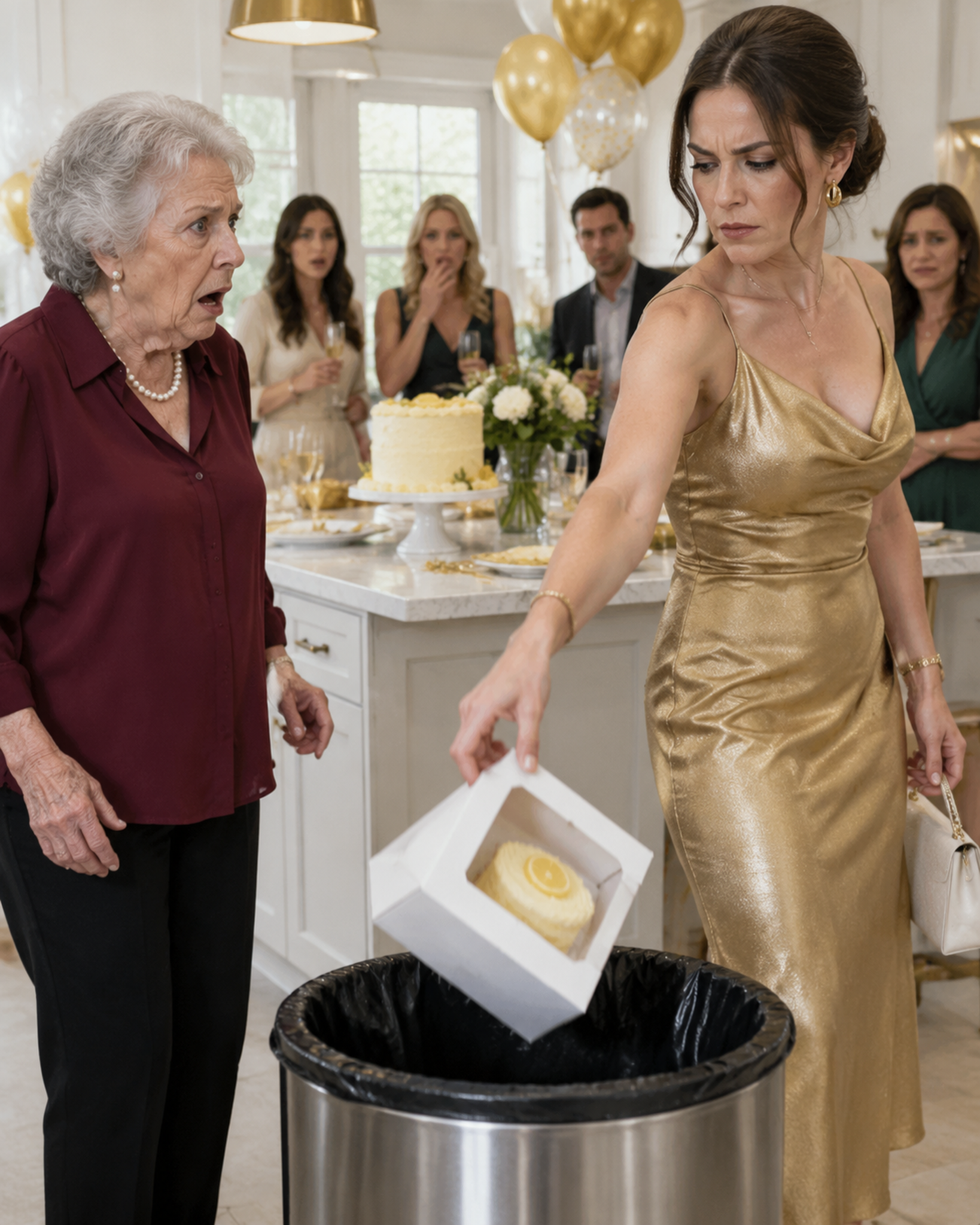
My daughter-in-law tossed my 75th birthday cake into the trash in front of her friends and asked why i still bothered celebrating at my age…
The Birthday Cake She Threw Away—and the Delivery That Changed Everything My daughter-in-law tossed my 75th birthday cake into the...
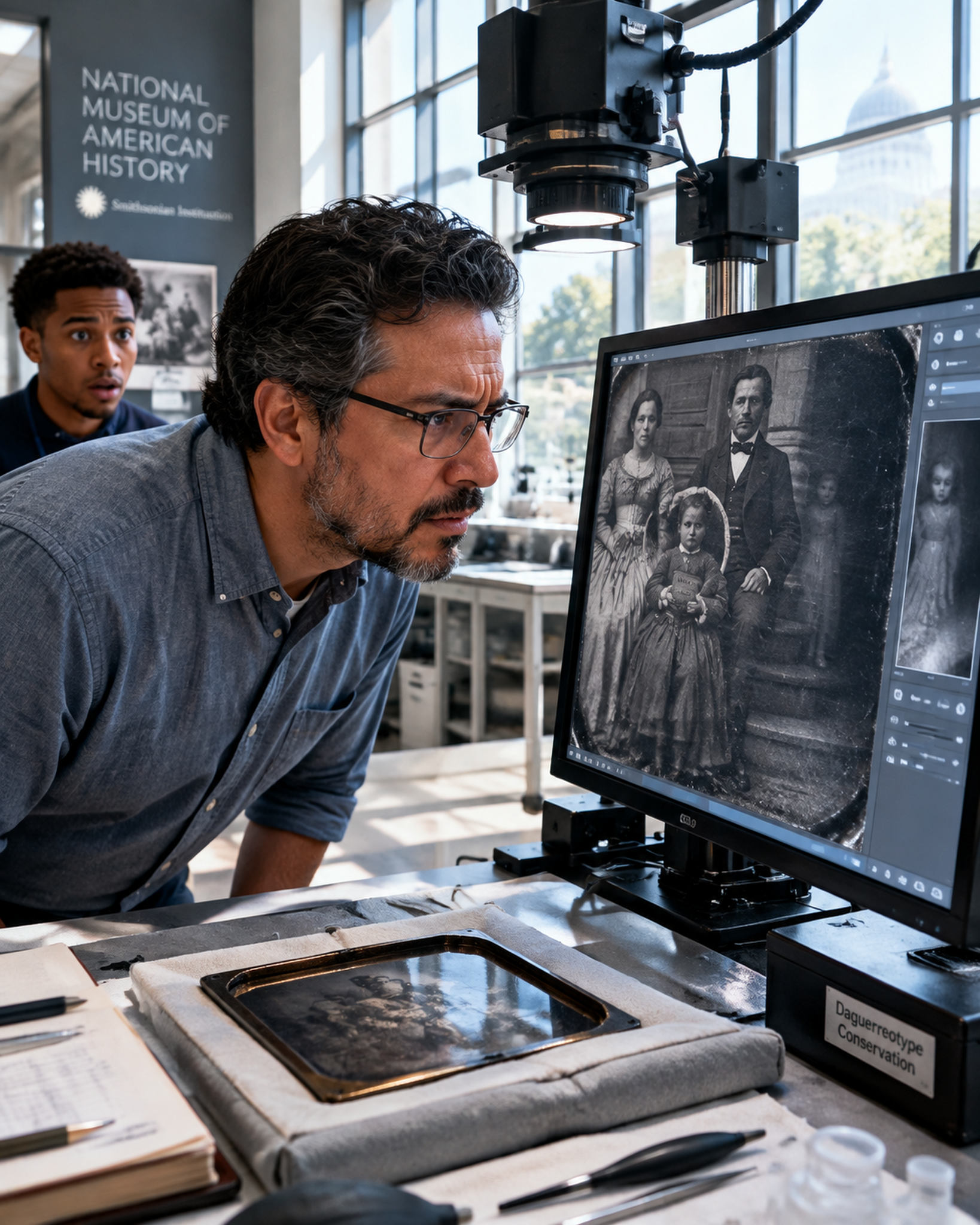
The restorers enlarged this portrait — what they found in the slave child’s hands shocked them
Part 1 The conservation laboratory on the 3rd floor of the National Museum of American History was almost entirely silent....

I Was Hired to Clean a Manhattan Penthouse—Then Its Owner Heard Me Whisper the Name of a Boy in His Painting.
Part 1: I clean houses for a living. Not the life I imagined when I left Wyoming two years ago...