John Bordon Nickerson watched Chicago burn from the shore of Lake Michigan in 1871. The flames raged for three days, consuming seventeen thousand buildings and leaving three hundred people dead and a hundred thousand homeless. Nickerson survived, but survival did not feel like safety. It felt like a warning.
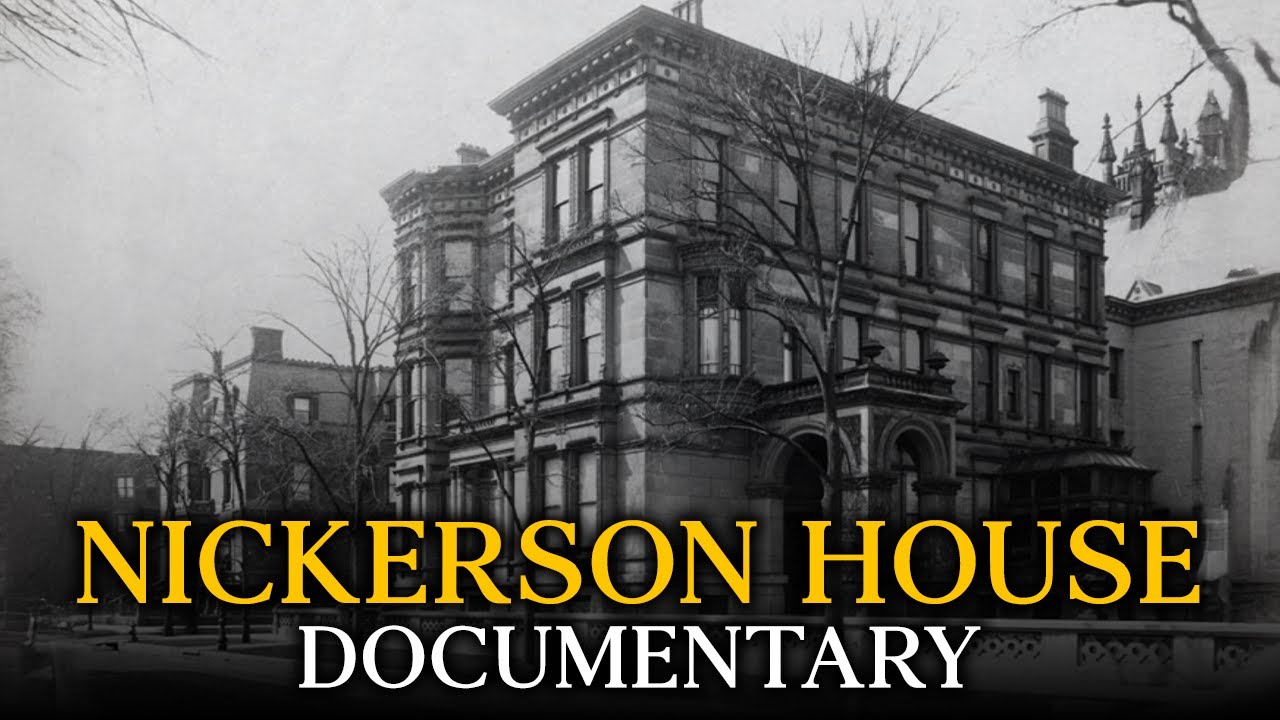
When he rebuilt and rose to become president of the First National Bank of Chicago, he decided to build something that could not burn, collapse, or be erased by accident, malice, or time. He chose Prairie Avenue, where Chicago’s elite had gathered with a density of millionaires unmatched anywhere in America. George Pullman built there. Marshall Field built there.
Philip Armour took an entire block. The combined wealth along that mile of cobblestones exceeded two hundred million dollars. Nickerson hired Solon Spencer Beman, the architect who had designed Pullman’s palace, and gave simple instructions. Use stone that would not crack.
Use wood that would not rot. Build walls thick enough to survive another fire, another panic, another collapse of everything he believed was stable. The foundation sank eight feet into Chicago clay. The exterior walls rose three feet thick at the base, built from Joliet limestone quarried forty miles southwest of the city.
The mansion consumed over six hundred tons of it. Inside, he imported mahogany from Honduras, cherry from Appalachia, and oak from ancient forests. The main staircase alone required four months of carving by German and Irish craftsmen brought to Chicago specifically for the project. The mansion covered nearly nine thousand square feet across three stories.
Fifteen rooms filled the main floors. Ceilings soared fourteen feet high, and windows flooded the interiors with light. But the details revealed the real purpose. The oak front doors were four inches thick, mounted on hinges designed for bank vaults.
Iron shutters concealed in the walls could seal the house against flames or riots. The roof used overlapping slate instead of wooden shingles, and the sixty-foot yard from street to steps created a buffer zone against an unpredictable world. Nickerson was building a fortress that looked like a palace. The total cost reached one hundred fifty thousand dollars, roughly four and a half million today.
For him, the expense was not extravagance. It was insurance. The house opened in 1885, and Nickerson believed he had won. But the mansion was never about beauty.
It was about fear. He had watched fortunes collapse during the panic of 1873 and seen railroad owners begging for loans by the end of the decade. So he built redundancy into everything. Three separate furnaces could each warm the whole house.
Oil lamps sat ready in every room in case the gas supply failed. The kitchen kept two sets of everything that might break or wear out. His banking practices followed the same logic. First National held double the reserves required, and he favored conservative investments while competitors speculated aggressively.
His colleagues called him overcautious. His balance sheets called him paranoid. Both were correct. The basement stored six months of coal, enough candles for a year of darkness, and preserved food in quantities that would feed a small army.
Nickerson’s personal ledgers, preserved in the Chicago History Museum, fill thirty-two volumes covering 1885 to 1890, roughly fifteen hundred pages of handwritten financial anxiety. He recorded the cost of coal down to the individual bucket. His wife Matilda tried to create warmth in a house designed for endurance. She hosted dinners and musicals, but in a letter to her sister in 1887, she described the house as beautiful but cold, elegant but somehow empty.
Nickerson had survived the fire by fleeing south to a hotel in Hyde Park while others fought to save their homes. The choice to run left a mark. The mansion was penance, proof he would never run again. By the late 1880s, the mansion reached its apex.
The entrance hall stretched forty feet with a floor of white marble and black walnut in a chessboard pattern. The dining room seated twenty-four beneath a ceiling painted with constellations in gold leaf. The ballroom occupied the entire eastern wing of the second floor, sixty feet long with three chandeliers holding forty-eight candles each. The walls were covered in crimson silk imported from Lyon at twelve dollars per yard.
The social calendar consumed Matilda’s energy, with dinners every Thursday, musicals every second Tuesday, and at least two grand balls each winter. A single ball might consume five hundred dollars in flowers, food, and wine. By 1890, First National’s assets had grown to over fifteen million dollars, and Nickerson’s personal wealth approached two million. He allowed himself to relax.
The house had made him permanent. The illusion lasted until November 1890, when Barings Brothers, one of London’s oldest merchant banks, collapsed after overextending itself in Argentine railway bonds. British investors withdrew capital from American ventures, and Chicago felt it immediately. Railroad construction slowed, real estate stalled, factories laid off workers.
By early 1891, Nickerson’s ledgers shifted from routine tracking to frantic calculation. By summer, First National had written off over three hundred thousand dollars in bad loans. The mansion’s expenses did not decline. Coal still cost fifteen hundred dollars a year, servants three thousand, and maintenance and taxes another three thousand.
The house consumed eight thousand dollars annually whether the economy thrived or collapsed. That was the trap of permanence. Once you built something that large, you could not easily shrink it. By 1892, loan losses exceeded half a million dollars.
Nickerson began selling personal assets. Railroad bonds went first, sold at a loss. Then real estate holdings outside the city. When the panic of 1893 arrived, over fifteen thousand businesses failed and unemployment reached twenty percent.
First National survived, but its assets shrank from fifteen million to ten million. That contraction saved the bank and destroyed Nickerson’s personal fortune. His wealth fell from two million to below six hundred thousand by the end of 1893, most of it tied up in a mansion no one would buy. The ballroom stood dark to save gas.
Matilda sold her jewelry. She wrote to her sister describing a Thanksgiving dinner attended only by family. Nickerson’s health failed. By 1895, he was sixty-two years old and looked seventy.
John Bordon Nickerson died on March 7, 1897. The official cause was heart failure. At the end, he weighed barely one hundred thirty pounds. The funeral was small.
Nickerson was buried in Graceland Cemetery with a modest stone that mentioned his role at First National but said nothing about the house he had built. Matilda inherited the mansion and roughly four hundred thousand dollars in remaining assets. Her annual income from investments totaled about twenty thousand dollars, and the mansion consumed eight thousand of that. The roof needed slate replaced.
The furnaces were wearing out. The limestone had cracked. She tried to maintain the social calendar, but Prairie Avenue society had noticed the financial collapse. By 1900, the maintenance issues had become critical.
Matilda began selling the mansion’s contents. Paintings went first, then rare volumes, then furniture piece by piece. Prairie Avenue was changing around her. The wealthy elite moved north to the Gold Coast.
The old palaces were converted to boarding houses or torn down. The Pullman Mansion had been divided into apartments. The Field Mansion was scheduled for demolition. Matilda refused to sell because selling meant accepting perhaps thirty thousand dollars and watching the house demolished brick by brick.
In the winter of 1904, a water pipe burst in the basement, causing fifteen hundred dollars in damage. She did not have fifteen hundred dollars. That February, she accepted an offer from her daughter and son-in-law to move in and take over expenses. In 1906, Matilda died quietly in her sleep at age seventy-four.
The mansion passed to her daughter Eliza, who could not afford to maintain it either. By 1913, the house stood empty. Franklin Martin, founder of the American College of Surgeons, walked through the empty rooms in December 1916. The organization had outgrown its downtown offices and needed a permanent headquarters with public rooms, library space, and administrative offices.
The mansion was in poor condition, but the bones were solid. He offered sixty thousand dollars, less than half what Nickerson had spent building it. The sale closed in February 1917. The renovation was practical, bordering on brutal.
The ballroom became an assembly hall. The drawing room was subdivided into offices. The crimson silk walls came down, replaced by institutional paint. The college built an operating theater in the largest second-floor bedroom, a room with fourteen-foot ceilings and windows on two walls offering natural light.
Workers stripped the room to bare walls, installed seamless tiles, covered the walls in white enamel, and cut a skylight through the ceiling. The operating table cost twelve hundred dollars. The first surgery took place on November 3, 1917, an appendectomy performed on a cadaver as a demonstration for fifty visiting surgeons. When it finished, the observers applauded.
The mansion had found its reason to live. The first living patient surgery came in March 1918, a hernia repair on a fifty-three-year-old laborer who could not afford hospital care. Twenty observers watched from tiered seats. The surgery took ninety minutes, and the patient recovered completely.
Over the following years, the theater hosted gallbladder removals, tumor resections, and amputations. In 1919, the college installed an X-ray machine in the basement. By 1924, the theater had hosted more than two hundred procedures. In November 1920, Dr.
John Benjamin Murphy performed a gastric resection watched by three hundred observers. Between 1922 and 1928, fifty-three cancer surgeries were performed there, with thirty-one patients surviving at least five years. The mansion survived as Prairie Avenue died around it. The Great Depression accelerated the demolitions.
By 1933, over half of the avenue’s grand estates had been torn down. The Nickerson mansion survived because it was useful. The college continued operating throughout the depression, spending about twelve thousand dollars annually on upkeep. The operating theater hosted 230 procedures between 1930 and 1937, many on charity patients.
In 1936, the college published a history of its first twenty years in the mansion, making its position clear. They valued the building’s history but prioritized its function. Original features would be preserved where possible, but usefulness would always take precedence over authenticity. By 1940, the mansion was the last grand estate standing on Prairie Avenue.
The college expanded in 1947 with a second annex that consumed the last of the original grounds. In 1956, they installed air conditioning, drilling through limestone walls for ductwork. In 1963, the operating theater closed permanently. Modern surgical standards required facilities the mansion could not provide.
The room was converted to archival storage. The college finally sold the building to the city of Chicago for one dollar, transferring responsibility for its preservation. The building was designated a Chicago landmark in 1972. It was not until 2003 that the Richard H.
Driehaus Museum took over the mansion, forty years after the city acquired it. The restoration took five years and cost over ten million dollars. Workers stripped away institutional modifications, uncovered original plaster, repaired woodwork, and recreated decorative elements. The operating theater was restored to suggest its medical use while acknowledging its domestic origins.
The museum opened in 2008. Attendance was modest initially, around fifteen thousand visitors per year, growing to forty thousand by 2015. A visitor center was added in 2014. The mansion had outlasted every neighboring palace.
In 1900, Prairie Avenue held forty-seven grand mansions. By 1960, only three remained, and the Nickerson mansion was the only one retaining its exterior integrity. The mansion survived not through strength but through surrender, not through resisting change but through embracing transformation. Nickerson built the house to prove that wealth could create permanence.
He was wrong. What created permanence was the building’s capacity to become something other than what was intended. The mansion outlived every assumption its builder made about it.
What endures is not what remains unchanged, but what remains relevant.






