In 1932, a family of five in rural Oklahoma ate for an entire week on 37 cents. They ate potato peel soup, lard sandwiches, and pots of beans stretched so thin the water ran clear. Some of those meals, by the testimony of those who lived through it, were the best food those families ever tasted. Hunger was the greatest cook there ever was.
These meals were not on menus. They were not in cookbooks. They were scratched in pencil on the backs of envelopes by mothers doing the impossible: feeding children when there was nothing left to feed them with. They are records of survival, and of quiet, fierce dignity.
Before the Depression, dandelions were weeds. After it, they were lunch. Families across Appalachia and the rural South sent children into fields with paper bags to harvest the young tender leaves before they turned bitter in the late spring heat. Wilted with hot bacon grease and a drizzle of apple cider vinegar, dandelion greens became a side dish that cost exactly nothing.
Mothers taught daughters which leaves to pick and which to leave. It was real botanical knowledge passed hand to hand out of necessity. Today restaurants charge fourteen dollars a plate for the same thing and call it foraged. Your great-grandmother called it Tuesday.
Cornmeal mush was supper: ground cornmeal simmered in salted water until thick, poured hot into bowls with a spoonful of bacon drippings melting across the top. A two-pound bag of cornmeal cost about eight cents in 1934 and could feed a family of four for three dinners. The next morning, mothers sliced whatever had congealed in the pot and fried it in lard until the edges crisped golden. Nothing was wasted.
Oral histories from the Tennessee Valley speak plainly. Mush again tonight. The children never said anything. They ate, they knew.
A side of salted fatback cost a few cents a pound and lasted weeks without refrigeration. Sliced thin and fried in cast iron, it crisped around the edges and filled the house with a smell that made mouths water before the table was set. The drippings in the pan became the base for gravy, the seasoning for beans, the fat for tomorrow’s cornbread. Nothing in a Depression kitchen had just one job.
Everything had three. Poke salad came with a warning every grandmother knew by heart. The leaves of the pokeweed plant are toxic raw, but Depression-era families across the Deep South knew exactly how to neutralize them. Boil the young leaves once, drain, boil again, and drain.
Then fry them with onion and fatback. One Alabama woman remembered it as tasting like spinach that had been through something. Poke grew wild in ditches and along fence rows, impossible to kill. For families with no garden and no money, the ditch was the grocery store.
You just had to know what to pick. Potato soup was three or four nights a week in homes from Montana to Mississippi during the worst years. Peel potatoes, dice them, boil with onion and water, add a little flour to thicken, season with salt. In 1933, a ten-pound bag of potatoes cost about nineteen cents.
Potatoes were the Depression’s foundation food, the reliable calorie when everything else ran out. Children remember the soup as thin and pale, but warm, always warm, in tin bowls that fogged with steam while wind pressed against the windows. Pinto or navy beans, cooked soft and mashed warm, spread thick on a slice of homemade bread, was lunch for millions of American schoolchildren. The beans provided protein, the bread provided bulk.
The whole thing cost less than a penny per child. Teachers in rural schools across Kansas and Missouri described children arriving with bean sandwiches so heavy with filling that the bread was already wet through by noon. Nobody complained. Some children had nothing at all and watched the others eat.
Tomato gravy and biscuits was where the Depression kitchen became something close to heart. Fry a tablespoon of lard. Whisk in flour until golden. Pour in a can of tomatoes and stir until the gravy thickens and turns a deep rust red.
Season with salt and pepper. Ladle it over split biscuits made from flour, lard, and water. A can of tomatoes ran about nine cents in 1935. The whole pot cost under fifteen cents and fed six people until they pushed back from the table.
Something from almost nothing that tasted like it came from a kitchen that had everything. Egg drop soup, American style, was not the restaurant version. Bring a pot of salted water to a boil. Crack one egg directly into it and stir.
Add whatever you had, a limp celery stalk, a wilted carrot, a pinch of dried parsley. The egg cooked in white wisps through the broth, adding protein and richness to what was otherwise hot water. In households where eggs were carefully rationed, one egg in a pot of broth became supper for three. In the South, pot liquor was never thrown away.
It was the dark salty liquid left in the pot after cooking greens, dense with flavor from whatever vegetable had simmered down into it. Poured over a bowl of plain grits, it turned a near-empty supper into something that actually tasted like a meal. A 1934 survey of rural Southern families found that pot liquor appeared on the dinner table more than five times a week in the counties hardest hit by the Depression. It was not desperation.
It was knowledge that the people who could afford to throw away the cooking water never bothered to learn. Bread and milk was supper on the nights when there was simply nothing else. Tear stale bread into a bowl, pour cold milk over it, season with a pinch of salt or a spoonful of sugar. A loaf of bread cost about seven cents in 1933.
Two people could eat on the leftover heels and half a cup of milk. Filling, cheap, and present on the table, which was the whole point. Here is what the history books leave out. During the worst years of the Depression, between 1932 and 1934, the USDA paid farmers to destroy food.
Millions of hogs were slaughtered and buried. Crops were plowed under. Fruit rotted on trees because the price of picking it exceeded what it would fetch at market. Meanwhile, in the cities, soup kitchen lines stretched around the block for hours.
Children fainted at school from hunger. The same government that buried pigs was telling families to make do with bean soup. Some people never forgave that. Their recipes carry that anger in every line.
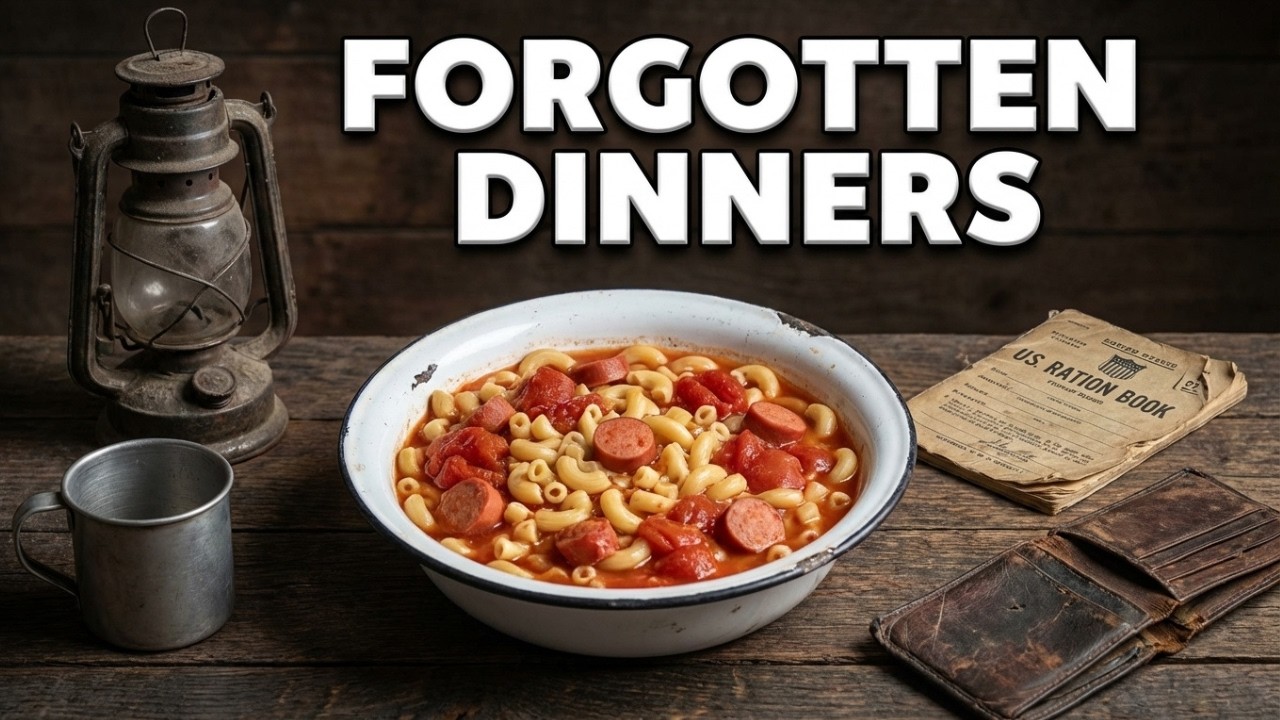
Hoover stew was named as an insult, but the dish fed hundreds of thousands of people living in the Hoovervilles that spread outside every major American city in the early 1930s. Boil water, add whatever canned goods you had, canned tomatoes, canned corn, canned beans, stir in macaroni, simmer until thick. An entire camp could be fed from a single large pot cooked over an open fire with ingredients scrounged from back doors and charity boxes. Families who were middle class in 1928 and homeless by 1932 ate it on tin plates with bent forks and remembered it, some of them for the rest of their lives.
A sleeve of soda crackers cost about a nickel. Crumbled into a bowl with cold milk, they dissolved into a paste that was filling without much pleasure, but with enough bulk to silence the stomach for a few hours. Urban families suddenly poor after the stock market wiped out decades of savings found themselves eating crackers and milk for dinner, and pretending to their children that it was a treat. Oral histories collected by the Federal Writers Project describe it appearing again and again in the accounts of city families who lost everything.
A simple, dignified humiliation. Navy bean soup was the Depression’s great equalizer. A pound of dried navy beans cost about seven cents in 1934. Soaked overnight, simmered for three hours with a ham hock or a soup bone borrowed from the butcher, sometimes just water and salt and a halved onion, it fed families in every region, in every state, in every kind of household.
The United States Senate has served bean soup every single day since 1903. The senators ate it because it was tradition. Millions of families ate it because it was all they had. Those two facts sit together in American history without resolving into anything comfortable.
Milk toast was the Depression-era sick meal. The convalescent supper. The thing given to children when they were unwell, and when the family could afford nothing more. Toast a slice of bread, place it in a bowl, pour warm salted milk over it.
The warm milk softened the bread into something pale and yielding. Families who had eaten well their whole lives found themselves giving milk toast to sick children in cold apartments and feeling the particular shame of not being able to do better. More than any other dish, milk toast is the taste of the Depression’s cruelty against people who never saw it coming. Vinegar pie was eggless Sunday custard.
No eggs, no butter, no fruit. Depression-era cooks across the Ozarks made pie from water, vinegar, sugar, and cornstarch, baked in a lard crust into a custard that set up pale, wobbly, and sharp. It was served as dessert on Sundays when dessert was otherwise impossible. Children remember the sting of vinegar softened by sugar, the way the custard trembled on the fork, the ceremony of it.
A whole pie cost under ten cents. Women who made vinegar pie were not pretending it was lemon custard. They were insisting that Sunday still meant something, that the Depression had not taken everything. An act of dignity disguised as pastry.
Before the frost ended the garden season, families harvested every tomato that had not ripened. Dredged in cornmeal and fried in lard, fried green tomatoes were sour, starchy, and hot from the pan. At three to four cents a pound in season, tomatoes were one of the most affordable garden crops. The technique mattered.
Too thin a slice and they fell apart. Too thick and the center stayed raw. The cornmeal crust had to be seasoned just right. The lard had to be hot enough to crisp without burning.
Women passed that technique between generations, the way other families passed money. The knowledge was all they had to leave, and unlike money, it could not be repossessed. Mock apple pie was where Depression ingenuity becomes something close to genius. Boil water with sugar, cream of tartar, and a squeeze of lemon juice.
Pour that syrup over a layer of Ritz crackers in an unbaked pie crust. Dot with butter and cinnamon. Bake until golden. It tastes implausibly like apple pie.
The cream of tartar mimics the tartness of fruit. The crackers absorb the syrup and soften into something that approximates cooked apple. Nabisco printed the recipe on the cracker box to help sell crackers to families who could not afford apples. Millions served it at Thanksgiving and Christmas.
Some of them, without apology, preferred it to the real thing. Depression-era cooking was not just poverty. It was innovation under extreme duress. The same catastrophe that emptied pantries forced a generation of cooks to understand their ingredients at a level modern home cooks rarely approach.
How fat behaves under heat. What acid does to starch. How salt changes the way protein cooks. Women with no formal education were, in their cast iron kitchens, working out problems that culinary schools teach in the third year.
And then the Depression ended, prosperity returned, and the knowledge was not passed on because people wanted to forget it. We threw away the wisdom along with the shame. Depression cake, also called wacky cake, required no eggs, no butter, no milk. Mix flour, sugar, cocoa, baking soda, and salt directly in the baking pan.
Make three wells in the dry ingredients. Pour vinegar in the first, vanilla in the second, vegetable oil in the third. Pour cold water over everything. Stir.
Bake at 350 degrees for 35 minutes. The result is a dense, fudgy chocolate cake that costs almost nothing and requires nothing that a Depression household could not keep on the shelf indefinitely. Home economists working with the government developed and tested this recipe. It worked so well, it never entirely disappeared.
Depression cake is still baked in American kitchens today. When the potatoes had been eaten, the peels went into a pot with water, an onion, and a knob of lard, and became soup. Boiled long enough, strained, seasoned with salt and pepper, potato peel broth had a thin, earthy, faintly sweet flavor that filled a bowl with something warm enough to fool the stomach into patience. The families eating this in 1932 were not making a recipe.
They were refusing to waste, refusing to give up. The peel that another generation would throw away without a second thought was the last meal before the relief line. Cornbread and buttermilk was a summer supper that required no cooking beyond the bread itself. Crumble hot cornbread into a tall glass of cold buttermilk.
The sour, cold liquid against the warm, crumbly bread, the way the cornbread absorbs the buttermilk and turns dense and tangy. In the Depression heat, with no refrigeration and no money for ice, it was not poverty. It was what people who had learned to want what they had called a proper supper. Mulligan stew, hobo stew, jungle stew.
The name changed depending on who was making it. The recipe did not change because there was no recipe. Every man who rode the rails during the Depression contributed whatever he had to the communal pot. A potato, a handful of barley, a tin of tomatoes, a marrow bone scrounged from a back door.
The pot hung over a fire in an empty lot outside a hundred American cities. You put in what you could. You took what you needed. Some men rode those rails for two and three years.
The stew pot was the one constant, the one place nobody was turned away. Creamed chipped beef on toast showed up on Depression-era tables in boarding houses, in diners, and in the cheapest lunch counters all through the 1930s. Thin slices of dried, salted beef were stirred into a white sauce of flour and milk, and poured over toast. The beef cost very little.
The milk cost very little. And the whole dish, despite its humble parts, had a salty richness from the concentrated beef that made it feel more substantial than it had any right to. Here is something that gets left out of the Depression story. Black families in the rural South entered the Depression already living in conditions that white families would not experience until the crash.
Sharecroppers who had never owned their land, who paid rent in crops, who bought on credit at the company store, were living the Depression years before they had a name. Their food, the field peas, the poke salad, the fatback, the pone bread, the stretching and saving and wasting nothing, predates 1929. When historians talk about Depression-era cooking as if it was invented by the crash, they are forgetting the people for whom it was never a temporary emergency. The recipes are the same.
The histories behind them are not. A pound of dried pinto beans cost about five cents during the Depression. Cooked for six hours with a piece of salt pork and served in a deep bowl with a wedge of cast-iron cornbread to soak up the pot liquor, pinto beans and cornbread was the foundational meal of Appalachian and Southern Depression cooking. It was not a side dish.
It was not a starter. It was everything. Families ate it for lunch, and they ate from the same pot for dinner. The beans got better as the week went on, the broth thickening, the salt pork giving up more fat with every hour of simmering.
There was something almost sacred in a pot of beans done right. An assurance, a promise that tomorrow was manageable. Lard sandwiches appeared in school lunch pails across the rural Midwest and South through the worst years. Two slices of bread, a layer of lard spread like butter, a pinch of salt.
Lard cost less than butter, lasted longer without refrigeration, and packed more calories into a single tablespoon than almost any other Depression ingredient. Children who carried lard sandwiches to school learned quickly not to open their pails near the children whose families still had butter. There was a social arithmetic to Depression poverty that adults rarely talked about directly, but children understood precisely. You ate the sandwich anyway, because your mother had gotten up that morning and made it for you, which meant she was still fighting.
Dinner oatmeal was a thick porridge seasoned with salt and topped with whatever fat was available, eaten from bowls as the main meal of the evening. Rolled oats cost about five cents a pound in 1933 and provided more sustained energy per cent spent than almost any Depression food available. Some mothers added a fried egg on top when eggs were available. Some stirred in dried onion for a savory version.
Children in farmhouses from Iowa to the Dakotas grew up eating oatmeal for supper as naturally as they ate it for breakfast, never questioning it because in a household where the answer to hunger was always the same pot, you stopped asking what time of day it was meant for. Bread pudding with whiskey sauce was what happened to bread too old to eat any other way. Stale bread, milk, eggs, a handful of raisins if you had them, and sugar, baked until golden and soft, served warm from the oven. In the South, in the rooming houses of New Orleans, the whiskey sauce, a simple pour of butter, sugar, and cheap whiskey, said the meal was finished.
That dessert happened. That the week was over. A tray of it fed a table of ten for under twenty cents. Women who made beautiful bread pudding were spoken of in their communities the way other generations speak of surgeons.
Potato and onion pie was Sunday dinner in Dust Bowl households when the cattle had gone and the pantry held potatoes, onions, flour, and lard, and nothing else. No meat. Sliced potatoes, sliced onions, salt, pepper, and lard layered into a cast iron skillet with a simple flour and lard crust pressed over the top. Baked until the crust turned golden and the potatoes went soft and sweet underneath.
The crust meant effort and the layering meant care. If the onions had caramelized right, it was genuinely good in a way that could almost make you forget what was missing. Depression soup, also called poorhouse soup, was not a recipe. It was a method adaptable to whatever you had on any given day.
Boil water and add whatever vegetables were in the cellar, cabbage, carrots, turnips, dried beans, and a diced potato. Season with salt and a heel of fatback. Simmer for two hours until everything has given everything it has to the broth. Thicken the broth with flour stirred smooth in cold water.
It appeared in every region under every name in every ethnicity of American Depression cooking because the same instinct was working everywhere at once. The instinct that nothing goes to waste. Their grandchildren eat artisan vegetable soup in restaurants and pay twelve dollars a bowl and do not know what they are tasting. Salt pork and gravy over biscuits was the meal.
Not one option among several. The meal. In the households of tenant farmers, sharecroppers, and rural laborers across the South and Midwest, it was eaten three times a week, sometimes more. Fry sliced salt pork until the fat renders and the edges become crisp.
Remove the meat. Whisk flour into the drippings and brown it slowly. Then add water or thin milk and stir until the gravy thickens, white and streaked with brown. Pour the gravy over split biscuits made from flour, lard, and water with the crisp pork laid alongside.
The biscuits cost almost nothing. The pork cost very little. And together they filled a grown man for a full day of physical labor. Farm wives who made this gravy without measuring, who knew the right heat and the right color of the roux at a glance, were practicing a form of mastery that deserved more than the name poor man’s supper.
And then there were the beans. Just beans. Not a clever recipe, not an elegant technique, just dried beans soaked overnight, simmered in water, served in a bowl. Navy beans in New England, pintos in Appalachia, black-eyed peas across the South.
The bean changed. The principle did not. Cheap, stable, filling. Relief workers recorded families in 1933 eating beans every single day for three weeks straight.
The families who survived those years never quite let the pantry run empty again. A pot of beans on the stove was not just dinner, it was proof that you were still standing. These thirty meals were not recipes. They were survival written down in the handwriting of women who had nothing left to waste.
We forgot that knowledge because we could afford to, but it is still there waiting in the back of the cabinet, in the cast iron, in the old cards. It is still there.